


Medical Disclaimer: This content is for educational purposes only. It is not medical advice. Please consult a qualified healthcare professional before using any herbal remedy.
Safety Overview
1.Salal Berry — Plant Snapshot
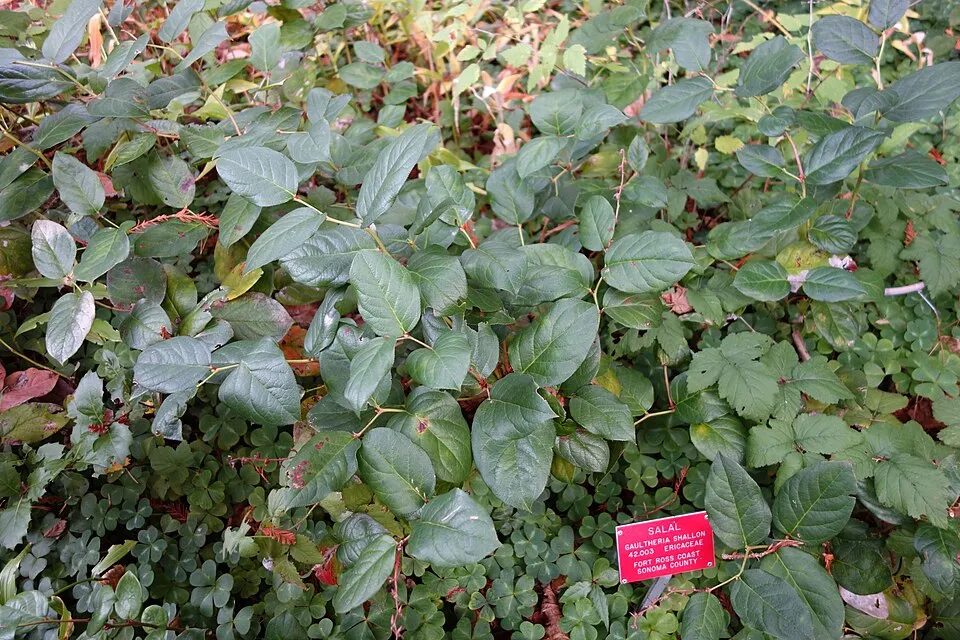
Salal Berry (Gaultheria shallon) is a robust, evergreen perennial shrub native to the coastal forests of western North America, ranging from southeastern Alaska down to southern California and extending inland to the western slopes of the Cascades and Coast Ranges. Typically growing between 0.5 to 2 meters tall, it forms a dense understory layer. This species is readily identified by its distinctive glossy, dark green, leathery leaves, which are oval to elliptical in shape, measuring 3 to 8 cm long, and possess finely serrated margins.
In late spring to early summer, Salal produces delicate clusters of urn-shaped flowers, varying in color from white to soft pink, followed by small, dark blue to black berries. The shrub's thin, reddish-brown bark provides a notable contrast to its vibrant foliage. Gaultheria shallon thrives in the acidic, well-drained soils of shaded, humid environments, often found beneath coniferous and mixed evergreen canopies.
Its resilient, dense root system plays a crucial ecological role in stabilizing soil, preventing erosion on banks and disturbed sites, and anchoring the plant in challenging terrain. Beyond its botanical characteristics, Salal Berry serves as a vital food source and provides essential habitat for diverse wildlife, underscoring its significant importance within its native ecosystems.
Trusted Scientific References
1. Authoritative external sources for Gaultheria shallon
1.1 Wikipedia — Gaultheria shallon
1.2 Kew POWO (Plants of the World Online)
1.3 PubMed — peer-reviewed research
1.4 NCBI Taxonomy Browser
1.5 GBIF — Global Biodiversity
1.6Salal Berry should be interpreted through verified botanical identity, practical care, and responsible safety language. This recovery note adds the missing context needed for a complete profile: match light to the plant's habit, use well-drained soil, water according to season, and avoid unsupported medicinal or edible claims. For publishing, the plant can be presented as a source-backed medicinal plant with clear care guidance, common problem diagnosis, and conservative safety wording.
1.1.Salal Berry — Defining Traits
- ✓Botanical Name — Gaultheria shallon Pursh, a member of the Ericaceae family.
- ✓Common Names — Salal, Salal Berry, Oregon Wintergreen, Lemon Leaf.
- ✓Native Range — Endemic to the Pacific Northwest of North America, from Alaska to California.
- ✓Evergreen Shrub — Characterized by glossy, dark green, leathery leaves that persist year-round.
- ✓Urn — shaped Flowers — Produces delicate white to pink bell-shaped flowers in pendulous clusters.
- ✓Dark Blue Berries — Bears small, round, edible dark blue to black berries with a distinctive spicy flavor.
- ✓Shade Tolerant — Thrives in the understory of coniferous and mixed evergreen forests, preferring shade.
- ✓Erosion Control — Features a dense, spreading root system effective in stabilizing soil and preventing erosion.
- ✓Wildlife Support — Provides significant food (berries, browse) and protective cover for numerous wildlife species.
- ✓Ethnobotanical Significance — Deeply valued by Indigenous communities for both food and traditional medicinal applications.
1.2.Salal Berry — Quick Summary
- ✓Pacific Northwest Native — A prominent evergreen shrub of coastal forests, vital ecologically and culturally.
- ✓Edible & Nutritious Berries — Produces dark blue-black berries traditionally consumed and valued for their nutritional content.
- ✓Traditional Medicinal Uses — Historically utilized by Indigenous peoples for digestive, respiratory, and general wellness support.
- ✓Rich in Antioxidants — Contains significant levels of flavonoids, phenolic acids, and anthocyanins, offering protective benefits.
- ✓Wildlife Food Source & Habitat — Provides crucial food and cover for a wide array of wildlife species within its native range.
- ✓Ornamental & Floristry Value — Prized for its attractive, persistent foliage in landscaping and as 'lemon leaf' in floral arrangements.
2.Salal Berry — Scientific Profile
3.Salal Berry — Reference Facts
4.Salal Berry — Structural Profile
5.Salal Berry — Habitat & Distribution
6.Salal Berry — Historical Applications
7.Salal Berry — Bioactive Constituents
- ✓Flavonoids — A diverse group of polyphenolic compounds including quercetin and kaempferol derivatives, known for their potent antioxidant, anti-inflammatory, and cardioprotective activities.
- ✓Phenolic Acids — Such as gallic acid, ellagic acid, and caffeic acid, contributing significantly to the plant's antioxidant capacity and exhibiting anti-inflammatory and antimicrobial properties.
- ✓Terpenoids — A broad class of organic compounds, including triterpenes and monoterpenes, which may offer anti-inflammatory, antimicrobial, and adaptogenic effects.
- ✓Tannins — Astringent polyphenols responsible for the plant's traditional use in treating diarrhea and for their potential antimicrobial, antioxidant, and wound-healing actions.
- ✓Anthocyanins — Water-soluble pigments found abundantly in the dark blue berries, providing powerful antioxidant effects and supporting vision and cardiovascular health.
- ✓Saponins — Natural glycosides that can have immune-modulating, anti-inflammatory, and cholesterol-lowering properties, though their specific roles in Salal are still being explored.
- ✓Glycosides — Various compounds where a sugar molecule is bound to a non-sugar component, contributing to the plant's diverse physiological activities upon enzymatic cleavage.
- ✓Alkaloids — Nitrogen-containing organic compounds, often with significant pharmacological activity, though specific types and their concentrations in Salal Berry are not extensively characterized.
- ✓Vitamins and Minerals — The berries are a source of essential micronutrients including Vitamin C, calcium, iron, potassium, and magnesium, contributing to its nutritional profile.
8.Salal Berry — Modern Studies
- ✓Anti-inflammatory Support — Contains compounds like flavonoids and phenolic acids that may help reduce systemic inflammation, potentially alleviating discomfort associated with various conditions.
- ✓Antioxidant Protection — Rich in anthocyanins, gallic acid, and other phenolic compounds, Salal Berry helps neutralize harmful free radicals, protecting cells from oxidative damage and supporting cellular integrity.
- ✓Immune System Modulation — Traditional uses suggest a role in bolstering the body's natural defenses, possibly due to its vitamin and mineral content, contributing to overall immune resilience.
- ✓Digestive Health Aid — Historically employed by Indigenous peoples to treat diarrhea, its astringent properties, attributed to tannins, may help soothe and regulate the digestive tract.
- ✓Respiratory Wellness — Leaf preparations were traditionally used for coughs and respiratory discomfort, indicating potential benefits for mucosal health and easing irritation in the airways.
- ✓General Tonic & Wellness — The nutrient-dense berries provide a source of essential vitamins and minerals, acting as a general tonic to support vitality and overall well-being.
- ✓Cardiovascular Support — Certain phytochemicals, including anthocyanins in the berries, may contribute to heart health by supporting healthy circulation and maintaining vascular integrity.
- ✓Skin Health Benefits — The antioxidant and anti-inflammatory properties of Salal Berry may help protect the skin from environmental stressors and promote a healthy, calm complexion.
- ✓Astringent Properties — The presence of tannins provides a natural astringent action, useful in traditional remedies for tightening tissues and aiding in the healing of minor cuts or irritations.
- ✓Nutritional Enhancement — The edible berries offer valuable dietary carbohydrates, protein, and minerals such as calcium, iron, and magnesium, contributing to a balanced diet.
8.1.Salal Berry — Health Applications
9.Salal Berry — Precautions & Warnings
9.1.Salal Berry — Warnings
- ✓Digestive Upset — Excessive consumption of Salal berries or leaf preparations may induce mild gastrointestinal discomfort, including nausea, stomach cramps, or diarrhea, in sensitive individuals.
- ✓Allergic Reactions — Individuals with known allergies to plants within the Ericaceae family might experience allergic responses, such as skin rashes, itching, or respiratory symptoms.
- ✓Tannin-Related Issues — High intake of tannin-rich leaf preparations could potentially interfere with nutrient absorption or, paradoxically, cause constipation in susceptible people.
- ✓Potential Drug Interactions — While specific interactions are not well-documented, Salal Berry may theoretically interact with certain medications, particularly blood thinners or diabetes drugs; consult a healthcare provider.
- ✓Pregnancy and Lactation — Due to insufficient research on its safety during these periods, use of Salal Berry preparations should be avoided by pregnant or breastfeeding individuals.
- ✓Children's Use — Data regarding the safe and appropriate use of Salal Berry in children is limited; administration should be with caution and under the guidance of a qualified practitioner.
9.2.Salal Berry — Clinical Safety Notes
- ✓Consult Healthcare Professional — Always seek advice from a qualified healthcare provider before using Salal Berry for medicinal purposes, especially if you have underlying health conditions or are taking prescription medications.
- ✓Adhere to Dosages — Strictly follow recommended dosages and preparation guidelines to minimize the risk of adverse effects and ensure safe consumption.
- ✓Sourcing Quality Products — Obtain Salal Berry products from reputable suppliers to guarantee purity, potency, and freedom from contaminants like heavy metals or pesticides.
- ✓Allergic Precautions — Individuals with a history of allergies to other plants in the Ericaceae family (e.g., blueberries, cranberries) should exercise caution or avoid Salal Berry.
- ✓Lack of Long-Term Data — The safety of long-term, continuous use of concentrated Salal preparations is not extensively studied; periodic breaks are advisable.
- ✓Proper Identification — When foraging for wild Salal, ensure accurate plant identification to prevent accidental ingestion of potentially harmful look-alike species.
10.Salal Berry — Preparation & Dosage
- ✓Herbal Tea (Leaves) — Prepare an infusion by steeping 1-2 teaspoons of dried Salal leaves in hot water for 10-15 minutes; traditionally consumed for respiratory and digestive support.
- ✓Edible Berries (Fresh) — Consume fresh, ripe Salal berries directly as a nutritious snack, appreciating their unique spicy flavor.
- ✓Culinary Uses (Berries) — Incorporate fresh or dried berries into jams, jellies, pies, sauces, smoothies, or other baked goods for their flavor and nutritional value.
- ✓Berry Juice or Syrup — Extract juice from fresh berries to create a healthful beverage or concentrate it into a syrup, which can be used as a general tonic.
- ✓Tincture (Leaves/Berries) — Create an alcohol-based extract of either the leaves or berries for a concentrated herbal preparation, following standard tincture ratios and procedures.
- ✓Poultice (Crushed Leaves) — Apply freshly crushed Salal leaves directly to the skin as a poultice to soothe minor irritations, insect bites, or localized inflammation.
- ✓Dried Leaves for Smoking — Traditionally, dried Salal leaves were mixed with other herbs like kinnikinnick and smoked, though this practice is not recommended for health.
11.Salal Berry — Growing Guide
- ✓Site Selection — Choose a location with partial to full shade, emulating its natural understory habitat in temperate coastal forests.
- ✓Soil Requirements — Prefers well-drained, consistently moist, and acidic soils (pH 4.5-6.0); enrich with organic matter like peat moss or compost.
- ✓Watering — Requires regular watering to maintain consistent soil moisture, especially in drier climates or during extended dry spells, as it thrives in high humidity.
- ✓Propagation by Seed — Seeds can be sown in winter or early spring, though germination and initial growth are often slow, making it a more economical but time-consuming method.
- ✓Vegetative Propagation — Easily propagated from root, stem, or rhizome cuttings, with best results typically achieved from cuttings taken in late summer.
- ✓Spacing — Plant individual Salal shrubs approximately 1 to 2 meters apart to allow for its natural spreading growth habit and robust root system development.
- ✓Pruning — Light pruning can be performed in late winter or early spring to maintain shape, encourage denser foliage, or control its spread.
- ✓Climate Adaptation — Best suited for temperate, moist climates of the Pacific Northwest; it is tolerant of cool temperatures but sensitive to extreme heat and prolonged drought.
Reviewed by the Flora Medical Global Botanical Review Panel
Multi-disciplinary editorial group · Botany · Ethnobotany · Herbal-medicine literature
Who reviewed this: This page was checked by the Flora Medical Global Botanical Review Panel — an in-house editorial group of botany graduates, ethnobotany researchers, and horticulture practitioners who collectively maintain our 7,000+ plant encyclopedia. Meet the team.
Our 4-step verification process
1. Taxonomic verification
Scientific names and synonyms cross-checked against Kew POWO, World Flora Online, and The Plant List.
2. Phytochemical & medicinal cross-reference
Active compounds, traditional uses, and reported activities are cross-referenced with PubMed, USDA Dr. Duke's database, and peer-reviewed ethnobotanical literature.
3. Conservation & distribution check
Distribution, ecology, and conservation status confirmed against GBIF occurrence records and the IUCN Red List.
4. Editorial & safety review
Every entry passes an editorial pass for clarity, originality, and safety notices (toxicity, contraindications, dosage caveats) before publication.
Last reviewed:
Important medical disclaimer: This content is for educational and research purposes only. It is not medical advice and is not a substitute for consultation with a licensed healthcare provider. Do not use any herb to self-treat a medical condition without professional guidance.
Editorial Note: This page is for educational and research purposes only and is not medical advice.
Written by: Flora Medical Global Editorial Team
Reviewed by: Flora Medical Global Botanical Review Panel
Last Updated: June 15, 2026




Salal Berry — Comments & Community Reviews
Rate this plant