
Medical Disclaimer: This content is for educational purposes only. It is not medical advice. Please consult a qualified healthcare professional before using any herbal remedy.
Safety Overview
1.Salam Panja — At a Glance
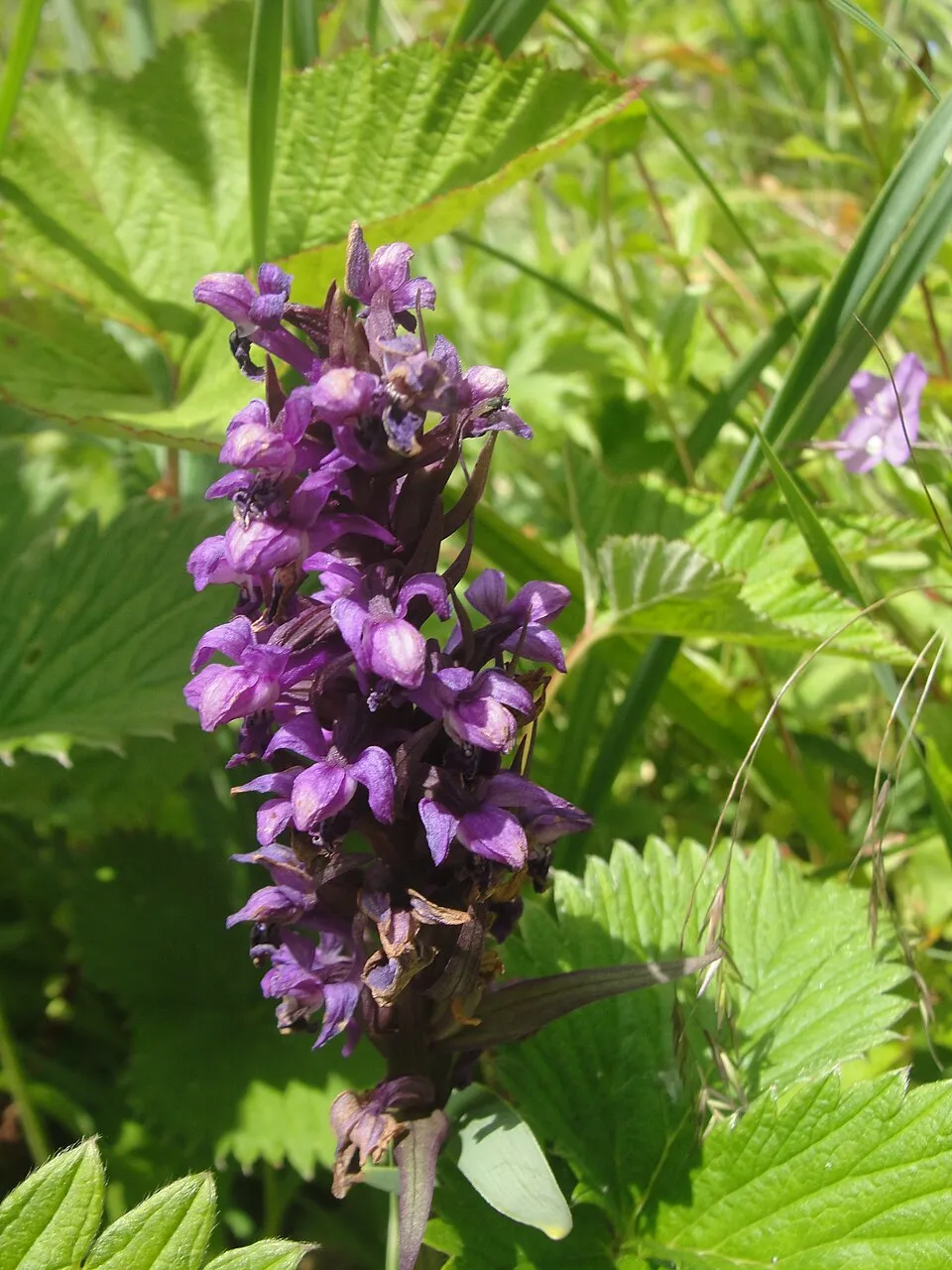
Dactylorhiza hatagirea, widely recognized as Salam Panja or Himalayan Marsh Orchid, is a resilient perennial herb belonging to the esteemed Orchidaceae family. This botanical marvel typically grows to heights of 30 to 60 centimeters. Its distinctive foliage consists of robust, lanceolate leaves, measuring approximately 15 to 30 centimeters in length, arranged in an attractive basal rosette pattern.
The plant's inflorescences are dense and captivating, showcasing a vibrant spectrum of colors including purple, magenta, and occasionally white, with individual flowers spanning about 2 to 4 centimeters. Each flower is characterized by a unique bilobed labellum and a slender, elongated spur, usually 1 to 2 centimeters long. The stem of Salam Panja is stout, upright, and typically covered in a verdant hue.
This high-altitude orchid thrives in the cool, moist alpine and subalpine meadows of the majestic Himalayas, often found at elevations ranging from 2,400 to 5,000 meters above sea level. It prefers volcanic soils rich in organic matter and flourishes under partial shade, frequently nestled among other herbaceous flora. Taxonomically, Dactylorhiza hatagirea is a prominent member of the Dactylorhiza genus, which encompasses numerous other orchid species.
Its natural distribution is concentrated across countries like Nepal, India, and Bhutan, underscoring its significance within the rich biodiversity of the Himalayan region. The plant’s adaptation to such harsh environments makes it a fascinating subject for botanical and ecological studies.
Trusted Scientific References
1. Authoritative external sources for Dactylorhiza hatagirea
1.1 Wikipedia — Dactylorhiza hatagirea
1.2 Kew POWO (Plants of the World Online)
1.3 PubMed — peer-reviewed research
1.4 NCBI Taxonomy Browser
1.5 GBIF — Global Biodiversity
1.6Salam Panja should be interpreted through verified botanical identity, practical care, and responsible safety language. This recovery note adds the missing context needed for a complete profile: match light to the plant's habit, use well-drained soil, water according to season, and avoid unsupported medicinal or edible claims. For publishing, the plant can be presented as a source-backed medicinal plant with clear care guidance, common problem diagnosis, and conservative safety wording.
1.1.Salam Panja — Notable Characteristics
- ✓Dactylorhiza hatagirea is — Dactylorhiza hatagirea is an alpine perennial orchid native to the Himalayas.
- ✓Known commonly as — Known commonly as Salam Panja or Himalayan Marsh Orchid.
- ✓Recognized for its — Recognized for its adaptogenic properties, enhancing stress resilience.
- ✓Historically utilized in — Historically utilized in Ayurveda and Tibetan medicine for vitality and strength.
- ✓Contains unique phytocompounds — Contains unique phytocompounds including dactylorhins and dactylose.
- ✓Exhibits a wide range of biological activities — anti-inflammatory, neuroprotective, antioxidant, aphrodisiac.
- ✓Critically endangered species — Critically endangered species facing significant threats from overexploitation and habitat loss.
- ✓Conservation efforts, including — Conservation efforts, including micropropagation, are vital for its survival.
- ✓The tubers are — The tubers are the primary medicinal part, traditionally processed into powders and tonics.
- ✓Characterized by lanceolate leaves, dense purple — magenta inflorescences, and a bilobed labellum.
1.2.Salam Panja — In Brief
- ✓Critically endangered Himalayan orchid with potent adaptogenic properties.
- ✓Revered in traditional medicine for boosting vitality, stamina, and sexual health.
- ✓Exhibits anti-inflammatory, neuroprotective, and antioxidant activities.
- ✓Rich in unique phytochemicals like dactylorhins and dactylose.
- ✓Requires sustainable sourcing and conservation efforts due to overexploitation.
- ✓Used traditionally as a tonic to combat weakness and support overall well-being.
2.Salam Panja — Scientific Identity
3.Salam Panja — Fact Sheet
4.Salam Panja — Physical Description
5.Salam Panja — Origin & Spread
6.Salam Panja — Traditional Uses
7.Salam Panja — Phytochemistry
- ✓Secondary metabolites, including alkaloids, terpenoids, flavonoids, phenolics, and saponins, were reported from the aerial and underground parts of this medicinal orchid.
- ✓Phytochemicals.
- ✓Phytochemicals / toxicity.
- ✓Phytochemicals / chemistry.
8.Salam Panja — Evidence-Based Benefits
- ✓Adaptogenic Support — Dactylorhiza hatagirea functions as a potent adaptogen, enhancing the body's natural capacity to resist and recover from various forms of physical, chemical, and biological stress.
- ✓Vitality and Stamina Enhancement — Traditionally used to boost overall vitality, stamina, and physical strength, helping to combat general weakness and fatigue.
- ✓Anti-inflammatory Action — Research indicates significant anti-inflammatory properties, potentially offering relief from conditions characterized by inflammation, such as joint pain and muscular discomfort.
- ✓Analgesic Effects — The plant is believed to possess analgesic qualities, contributing to pain reduction, particularly in musculoskeletal ailments.
- ✓Neuroprotective Properties — Studies suggest Dactylorhiza hatagirea may offer neuroprotective benefits, safeguarding neural cells and supporting cognitive function.
- ✓Antioxidant Activity — Rich in compounds with antioxidant capabilities, it helps neutralize free radicals, thereby reducing oxidative stress and cellular damage.
- ✓Hypoglycemic Effects — Exhibiting potential to lower blood glucose levels, it may be beneficial in managing or preventing certain aspects of metabolic dysregulation.
- ✓Immunomodulatory and Antimicrobial — It has demonstrated antiviral and antimicrobial activities, suggesting a role in bolstering the immune system and fighting infections.
- ✓Male Reproductive Health — Reported to boost testosterone levels and enhance sexual desire and arousal, contributing to improved male sexual health.
- ✓Wound Healing — Traditional applications and some studies point to its efficacy in promoting faster wound healing and tissue regeneration.
- ✓Antitumor and Anticancer Potential — Preliminary in vitro and in vivo assays have indicated potential antitumor and anticancer activities, warranting further investigation.
- ✓Diuretic Properties — May act as a diuretic, aiding in the elimination of excess fluids from the body.
8.1.Salam Panja — Reported Uses
9.Salam Panja — Safety & Side Effects
9.1.Salam Panja — Reported Side Effects
- ✓Allergic reactions such as skin rashes, itching, or digestive upset may occur in sensitive individuals.
- ✓Potential for interaction with blood-thinning medications due to possible anti-inflammatory effects.
- ✓May interact with hypoglycemic drugs or insulin due to its reported blood sugar-lowering properties.
- ✓Individuals with hormone-sensitive conditions should exercise caution due to reported testosterone-boosting effects.
- ✓High doses might lead to gastrointestinal discomfort or other unspecified adverse reactions.
- ✓Due to its rarity and overexploitation, consumption from unverified sources carries risks of adulteration.
- ✓Long-term safety data in humans is limited, suggesting cautious and monitored use.
9.2.Salam Panja — Toxicity Assessment
- ✓Pregnant and breastfeeding women should avoid Dactylorhiza hatagirea due to insufficient safety data.
- ✓Individuals on prescription medications, especially for diabetes, blood clotting, or hormonal imbalances, must consult a healthcare provider.
- ✓Children should not be given Salam Panja without explicit medical supervision.
- ✓Discontinue use if any adverse reactions or unusual symptoms appear.
- ✓It is crucial to source Salam Panja from reputable and sustainable suppliers to ensure authenticity and avoid contributing to overexploitation.
- ✓Due to its critically endangered status, ethical consumption and conservation-friendly harvesting approaches are paramount.
- ✓Limited human clinical trials mean that much of the safety profile is extrapolated from traditional use and preclinical studies.
10.Salam Panja — Preparations & Uses
- ✓The dried tubers are the primary part utilized, often powdered for various preparations.
- ✓For traditional tonics, the powdered tubers are commonly mixed with honey, milk, or clarified butter (ghee).
- ✓Decoctions can be prepared by simmering the dried and crushed tubers in water to extract medicinal compounds.
- ✓Infusions may also be made, though decoctions are more common for hard, fibrous plant parts like tubers.
- ✓Modern formulations include encapsulated powders or standardized extracts for convenient consumption.
- ✓Tinctures can be prepared by macerating the tubers in alcohol, allowing for concentrated liquid remedies.
- ✓Topical applications, such as poultices or pastes made from the powdered root, are used for local pain and inflammation.
- ✓Dosage should always be determined by a qualified medical herbalist, considering individual health status and specific conditions.
11.Salam Panja — Cultivation & Care
- ✓Requires specific cool, moist, high-altitude conditions mimicking its native Himalayan habitat.
- ✓Prefers well-draining, highly organic growing medium, often a mix of sphagnum moss, bark, and volcanic soil.
- ✓Thrives in partial shade, needing protection from intense direct sunlight, especially during peak hours.
- ✓Propagation is challenging; traditional methods often involve tuber division, but this puts wild populations at risk.
- ✓Micropropagation and synthetic seed generation are advanced in vitro techniques crucial for its conservation and sustainable cultivation.
- ✓Hairy root technology is also explored for the production of secondary metabolites in controlled environments.
- ✓Requires consistent moisture but is sensitive to waterlogging, necessitating careful irrigation practices.
- ✓Optimal growth temperature ranges are cool, typically between 10-20°C, with higher humidity levels.
Reviewed by the Flora Medical Global Botanical Review Panel
Multi-disciplinary editorial group · Botany · Ethnobotany · Herbal-medicine literature
Who reviewed this: This page was checked by the Flora Medical Global Botanical Review Panel — an in-house editorial group of botany graduates, ethnobotany researchers, and horticulture practitioners who collectively maintain our 7,000+ plant encyclopedia. Meet the team.
Our 4-step verification process
1. Taxonomic verification
Scientific names and synonyms cross-checked against Kew POWO, World Flora Online, and The Plant List.
2. Phytochemical & medicinal cross-reference
Active compounds, traditional uses, and reported activities are cross-referenced with PubMed, USDA Dr. Duke's database, and peer-reviewed ethnobotanical literature.
3. Conservation & distribution check
Distribution, ecology, and conservation status confirmed against GBIF occurrence records and the IUCN Red List.
4. Editorial & safety review
Every entry passes an editorial pass for clarity, originality, and safety notices (toxicity, contraindications, dosage caveats) before publication.
Last reviewed:
Important medical disclaimer: This content is for educational and research purposes only. It is not medical advice and is not a substitute for consultation with a licensed healthcare provider. Do not use any herb to self-treat a medical condition without professional guidance.
Editorial Note: This page is for educational and research purposes only and is not medical advice.
Written by: Flora Medical Global Editorial Team
Reviewed by: Flora Medical Global Botanical Review Panel
Last Updated: June 15, 2026





Salam Panja — Comments & Community Reviews
Rate this plant