
Medical Disclaimer: This content is for educational purposes only. It is not medical advice. Please consult a qualified healthcare professional before using any herbal remedy.
Safety Overview
1.Sanchezia Speciosa — Introduction & Highlights
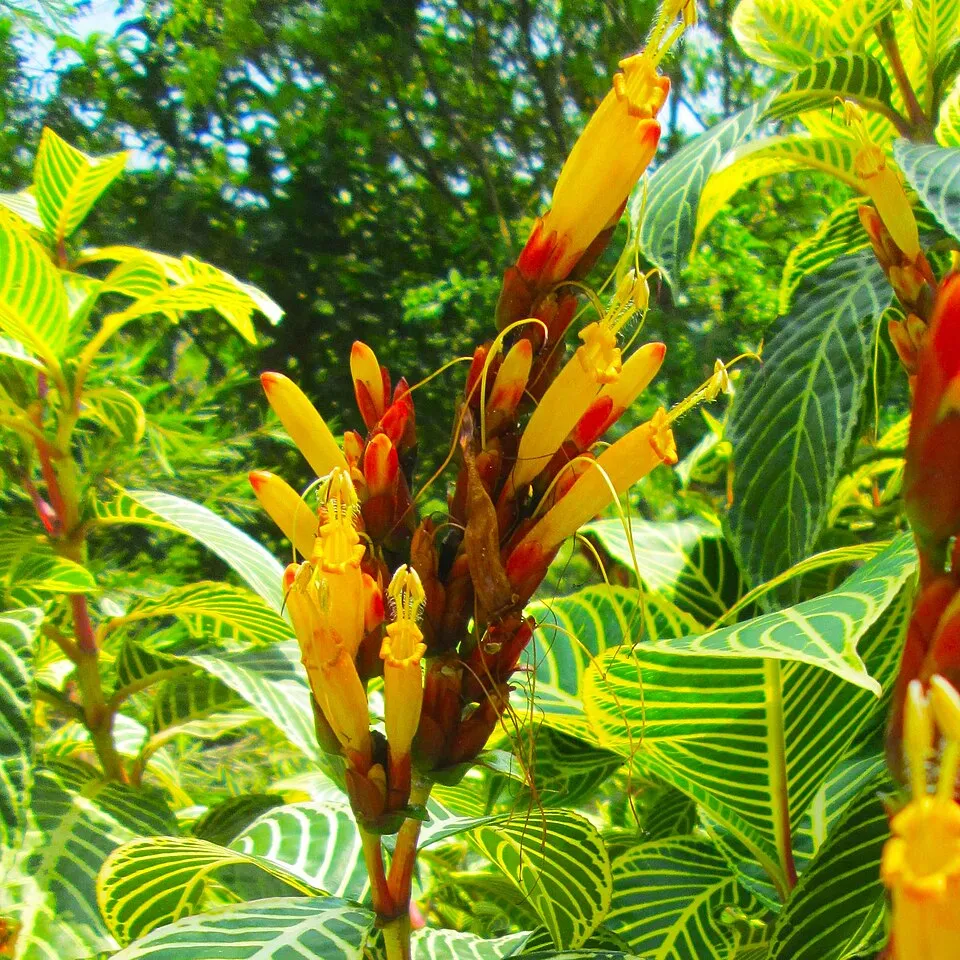
Sanchezia speciosa, commonly known as the 'Yellow Shrimp Plant' or 'Monkey's Comb', is an exquisitely ornamental evergreen shrub native to the lush tropical and subtropical regions of South America, particularly thriving in Ecuador and Peru. This member of the Acanthaceae family is celebrated for its distinctive morphology, featuring large, ovate to elliptic leaves that boast a deep, glossy green hue, often intricately patterned with prominent white or cream-colored veins. These striking foliar characteristics provide year-round visual interest, even when the plant is not in bloom.
Its most dramatic feature, however, is its upright, terminal inflorescences. These flower spikes emerge with vibrant orange-red to scarlet bracts, which are arranged in a comb-like fashion, giving rise to its evocative common names. Peeking through these colorful bracts are the delicate, tubular yellow flowers, creating a stunning contrast.
Sanchezia speciosa flourishes in warm, humid environments and prefers partial shade, making it an ideal candidate for understory planting in tropical landscapes or as a container specimen in cooler climates. Its relatively rapid growth rate and showy floral displays contribute to its popularity for adding an exotic flair to gardens, requiring consistent moisture and well-draining soil to thrive. Propagation is typically straightforward, achieved readily through stem cuttings under favorable conditions.
Trusted Scientific References
1. Authoritative external sources for Sanchezia Speciosa
1.1 Wikipedia — Sanchezia Speciosa
1.2 Kew POWO (Plants of the World Online)
1.3 PubMed — peer-reviewed research
1.4 NCBI Taxonomy Browser
1.5 GBIF — Global Biodiversity
1.6Sanchezia Speciosa should be interpreted through verified botanical identity, practical care, and responsible safety language. This recovery note adds the missing context needed for a complete profile: match light to the plant's habit, use well-drained soil, water according to season, and avoid unsupported medicinal or edible claims. For publishing, the plant can be presented as a source-backed garden plant with clear care guidance, common problem diagnosis, and conservative safety wording.
1.1.Sanchezia Speciosa — Standout Qualities
- ✓Striking ornamental foliage — Striking ornamental foliage with prominent white or cream-colored veins.
- ✓Vibrant yellow tubular flowers encased by showy orange — red to scarlet bracts.
- ✓Native to the — Native to the tropical regions of Ecuador and Peru in South America.
- ✓Member of the — Member of the diverse Acanthaceae plant family.
- ✓Contains potent anti — inflammatory flavonoid glycosides like quercitrin and hyperosid.
- ✓Exhibits strong antioxidant — Exhibits strong antioxidant capacity, protecting against cellular oxidative stress.
- ✓Traditionally employed in — Traditionally employed in Vietnamese medicine for gastric ailments and inflammation.
- ✓Easily propagated through — Easily propagated through stem cuttings, making it popular for cultivation.
- ✓Thrives in warm, — Thrives in warm, humid environments with partial shade and consistent moisture.
- ✓Identified compounds include — Identified compounds include a novel indole derivative, 3-Methyl-1H-benz[f]indole-4,9-dione.
1.2.Sanchezia Speciosa — Quick Summary
- ✓Sanchezia speciosa is a vibrant ornamental shrub from tropical South America.
- ✓Known for its striking variegated leaves and 'shrimp-like' yellow and orange-red flowers.
- ✓Traditionally used in Vietnam for treating gastritis and inflammation.
- ✓Scientific studies highlight its anti-inflammatory, antioxidant, and antimicrobial properties.
- ✓Contains beneficial flavonoids (quercitrin, hyperosid) and sterols (daucosterol).
- ✓Requires significant caution due to potent compounds, including potential cardiac glycosides, and limited human safety data.
2.Sanchezia Speciosa — Systematic Position
3.Sanchezia Speciosa — Reference Facts
4.Sanchezia Speciosa — Plant Morphology
5.Sanchezia Speciosa — Geographic Distribution
6.Sanchezia Speciosa — Historical Applications
7.Sanchezia Speciosa — Active Compounds
- ✓Flavonoid Glycosides — Key compounds identified include Quercetin 3-O-α-L-rhamnopyranoside (quercitrin) and Quercetin 3-O-β-D-galactopyranoside (hyperosid), both recognized for their potent antioxidant and anti-inflammatory activities.
- ✓Steroidal Glycosides — Beta-sitosterol 3-O-beta-D-glucopyranoside (daucosterol) is present, a common plant sterol known for its anti-inflammatory and immune-modulating properties.
- ✓Indole Derivatives — A unique compound, 3-Methyl-1H-benz[f]indole-4,9-dione, has been isolated, representing a novel finding with potential, yet unexplored, biological activities.
- ✓Cardiac Glycosides — General literature surveys indicate the presence of cardiac glycosides in some Sanchezia species, which are potent compounds capable of affecting heart function and require careful consideration.
- ✓Phenolic Acids — Beyond flavonoids, various phenolic acids contribute to the plant's overall antioxidant capacity, protecting against cellular damage.
- ✓Triterpenoids — These diverse compounds are often associated with anti-inflammatory, adaptogenic, and hepatoprotective effects, contributing to the plant's therapeutic profile.
- ✓Saponins — Frequently found alongside steroidal glycosides, saponins can exhibit a range of activities including immune stimulation and cholesterol-lowering effects.
- ✓Tannins — Possessing astringent properties, tannins contribute to the plant's potential antimicrobial and wound-healing actions.
- ✓Alkaloids — While specific types beyond the indole derivative are not fully characterized, alkaloids are a broad class of nitrogen-containing compounds with diverse pharmacological activities.
- ✓Chlorophylls and Carotenoids — These photosynthetic pigments contribute to the plant's antioxidant defense system and overall nutritional value.
8.Sanchezia Speciosa — What Research Suggests
- ✓Potential Anti-inflammatory Action — Research indicates that Sanchezia speciosa leaf extracts can significantly reduce inflammation, as demonstrated in carrageenan-induced paw edema models in mice, attributed to compounds like quercitrin and hyperosid.
- ✓Antioxidant Support — The plant is rich in phenolic compounds and flavonoids, which are potent antioxidants capable of scavenging free radicals, thereby protecting cellular structures from oxidative stress and supporting overall cellular integrity.
- ✓Antimicrobial Properties — Extracts of Sanchezia speciosa have shown inhibitory effects against various bacteria and fungi, suggesting its potential use in traditional remedies for minor infections and supporting broad-spectrum defense.
- ✓Gastritis Management — Traditionally, in regions like North Vietnam, Sanchezia speciosa leaves have been utilized as a folk remedy for treating gastritis, implying a soothing effect on stomach inflammation.
- ✓Potential Anticancer Activity — Preliminary literature surveys suggest that Sanchezia speciosa may possess anticancer properties, warranting further investigation into specific mechanisms and compounds.
- ✓Immunomodulatory Effects — By reducing inflammation and oxidative stress, the plant's compounds may contribute to modulating immune responses, fostering a balanced and healthy immune system.
- ✓Cardioprotective Potential — The presence of cardiac glycosides in some Sanchezia species suggests a potential, albeit potent and carefully managed, impact on heart function, requiring extensive research and caution.
- ✓Wound Healing Support — The combination of anti-inflammatory and antimicrobial properties could contribute to improved wound healing by reducing infection risk and promoting tissue repair.
- ✓Detoxification Aid — Through its robust antioxidant capacity, Sanchezia speciosa may assist the body's natural detoxification pathways by neutralizing harmful free radicals.
- ✓Digestive Health Enhancement — Beyond specific gastritis treatment, the plant's traditional use points to a general supportive role in maintaining digestive comfort and function.
- ✓Neuroprotective Potential — Flavonoids and other phenolic compounds often exhibit neuroprotective effects by combating oxidative stress and inflammation in neural tissues, suggesting a potential benefit for brain health.
- ✓Blood Sugar Regulation — Plant sterols such as daucosterol, found in Sanchezia speciosa, are sometimes associated with metabolic benefits, including a potential role in supporting healthy blood sugar levels, though more specific research is needed.
8.1.Sanchezia Speciosa — Conditions Traditionally Used For
9.Sanchezia Speciosa — Precautions & Warnings
9.1.Sanchezia Speciosa — Side Effects & Warnings
- ✓Gastrointestinal Upset — High doses may induce symptoms such as nausea, vomiting, or diarrhea.
- ✓Allergic Reactions — Individuals sensitive to plants in the Acanthaceae family may experience skin rashes, itching, or respiratory distress.
- ✓Cardiac Toxicity — The potential presence of cardiac glycosides necessitates extreme caution, as they can cause irregular heart rhythms and other cardiac side effects.
- ✓Drug Interactions — May interact with heart medications, anticoagulants, or diuretics due to its active compounds.
- ✓Hypotension — Potential to lower blood pressure, which could be problematic for individuals already on hypotensive medications.
- ✓Uterine Stimulation — Traditional use and phytochemical profile suggest a potential for uterine contractions, posing a risk during pregnancy.
- ✓Liver/Kidney Stress — Prolonged or excessive use might place undue stress on liver and kidney function, especially in susceptible individuals.
9.2.Sanchezia Speciosa — Safety Profile
- ✓Pregnancy and Lactation — Contraindicated due to lack of safety data and potential for uterine stimulation; avoid use.
- ✓Cardiac Conditions — Strictly contraindicated for individuals with heart disease or those taking cardiac medications due to potential cardiac glycoside content.
- ✓Children — Not recommended for use in infants or children due to insufficient safety information and potent compounds.
- ✓Pre-existing Conditions — Individuals with chronic health conditions, particularly kidney or liver disease, should consult a healthcare provider.
- ✓Drug Interactions — Exercise extreme caution and seek medical advice if taking any prescription medications, especially for heart conditions, blood thinning, or blood pressure.
- ✓Dosage Adherence — Adhere strictly to recommended dosages from a qualified practitioner; self-medication is not advised.
- ✓Professional Guidance — Always consult a qualified medical herbalist or physician before incorporating Sanchezia speciosa into any health regimen.
10.Sanchezia Speciosa — Application Forms
- ✓Herbal Tea/Infusion — Dried Sanchezia speciosa leaves can be steeped in hot water to prepare a tea for general wellness or digestive support.
- ✓Tincture — An ethanolic extract of the leaves, mirroring methods used in scientific studies, can be prepared for concentrated medicinal use.
- ✓Poultice/Compress — Freshly crushed leaves can be applied topically as a poultice to soothe inflammation or minor skin irritations.
- ✓Decoction — Simmering the leaves or stems in water for a longer period can create a more potent decoction for internal or external application.
- ✓Powdered Capsules — Dried and finely ground plant material can be encapsulated for convenient oral administration.
- ✓Topical Ointment — Extracts can be incorporated into salves or ointments for targeted application on skin conditions or painful areas.
- ✓Syrups — Infusions can be combined with natural sweeteners to create palatable syrups, particularly for remedies aimed at digestive issues.
11.Sanchezia Speciosa — Growing Guide
- ✓Climate Preference — Thrives in tropical to subtropical climates, highly sensitive to frost and cold temperatures.
- ✓Light Requirements — Prefers partial shade to bright indirect light; direct intense sun can scorch leaves.
- ✓Soil Conditions — Requires rich, well-draining soil with a slightly acidic to neutral pH (6.0-7.0).
- ✓Watering — Needs consistent moisture; keep soil evenly damp but avoid waterlogging to prevent root rot.
- ✓Humidity — High ambient humidity is crucial for optimal growth, especially in drier indoor environments.
- ✓Fertilization — Apply a balanced liquid fertilizer every 2-4 weeks during the active growing season (spring and summer).
- ✓Propagation — Easily propagated from stem cuttings, which root readily in warm, humid conditions.
- ✓Pruning — Prune regularly to maintain a bushy shape, encourage new growth, and remove spent flower spikes.
Reviewed by the Flora Medical Global Botanical Review Panel
Multi-disciplinary editorial group · Botany · Ethnobotany · Herbal-medicine literature
Who reviewed this: This page was checked by the Flora Medical Global Botanical Review Panel — an in-house editorial group of botany graduates, ethnobotany researchers, and horticulture practitioners who collectively maintain our 7,000+ plant encyclopedia. Meet the team.
Our 4-step verification process
1. Taxonomic verification
Scientific names and synonyms cross-checked against Kew POWO, World Flora Online, and The Plant List.
2. Phytochemical & medicinal cross-reference
Active compounds, traditional uses, and reported activities are cross-referenced with PubMed, USDA Dr. Duke's database, and peer-reviewed ethnobotanical literature.
3. Conservation & distribution check
Distribution, ecology, and conservation status confirmed against GBIF occurrence records and the IUCN Red List.
4. Editorial & safety review
Every entry passes an editorial pass for clarity, originality, and safety notices (toxicity, contraindications, dosage caveats) before publication.
Last reviewed:
Important medical disclaimer: This content is for educational and research purposes only. It is not medical advice and is not a substitute for consultation with a licensed healthcare provider. Do not use any herb to self-treat a medical condition without professional guidance.
Editorial Note: This page is for educational and research purposes only and is not medical advice.
Written by: Flora Medical Global Editorial Team
Reviewed by: Flora Medical Global Botanical Review Panel
Last Updated: June 15, 2026





Sanchezia Speciosa — Comments & Community Reviews
Rate this plant