
Medical Disclaimer: This content is for educational purposes only. It is not medical advice. Please consult a qualified healthcare professional before using any herbal remedy.
Safety Overview
1.Sansevieria Hahnii — At a Glance
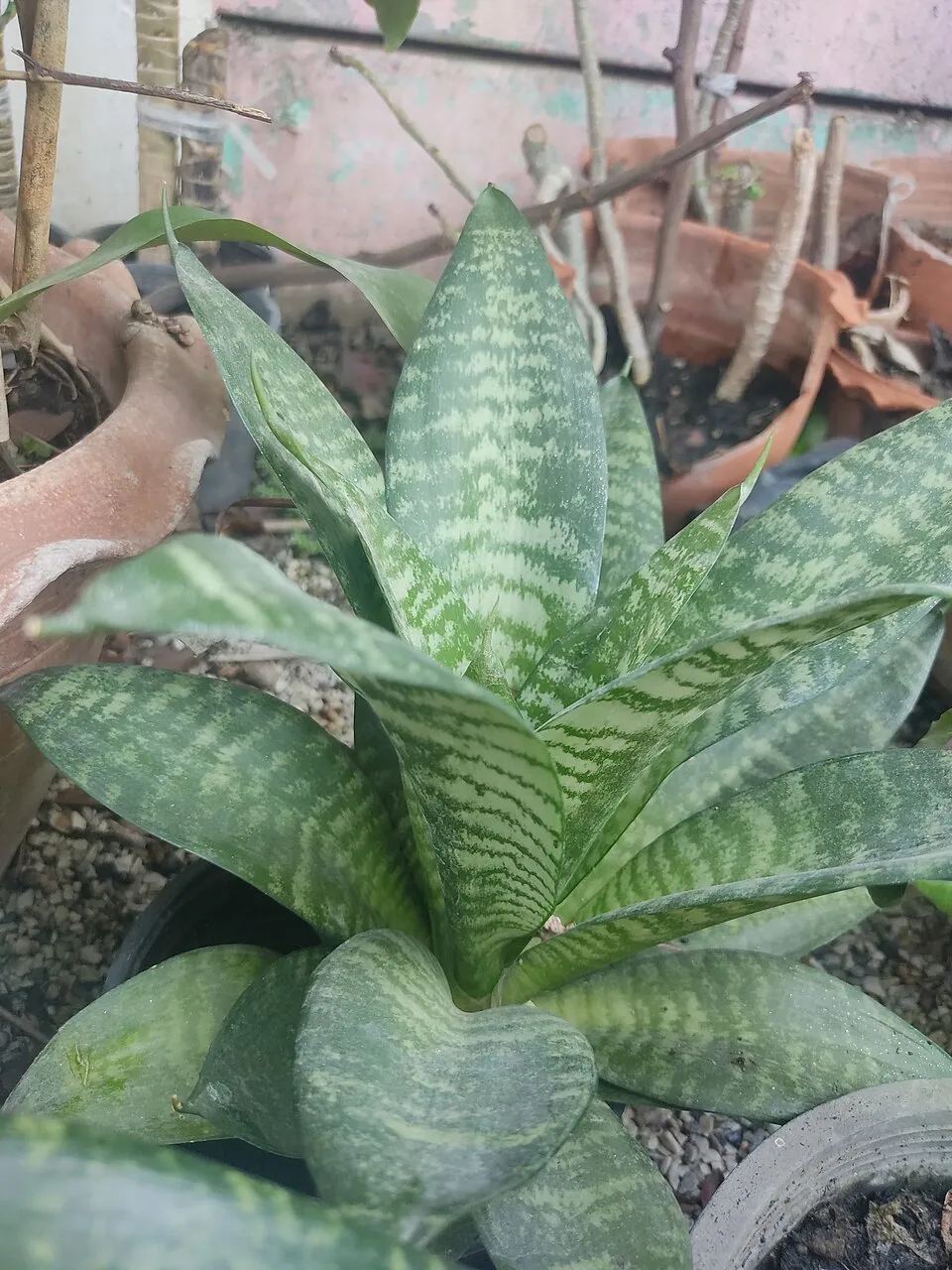
Dracaena trifasciata Hahnii, commonly known as Sansevieria Hahnii or the Dwarf Snake Plant, is a compact, perennial herbaceous plant belonging to the Asparagaceae family. This distinctive cultivar is celebrated for its rosette growth habit, forming a dense cluster of thick, sword-shaped leaves that typically reach 20-30 cm in height and spread. Native to the arid and semi-arid regions of West Africa, particularly Nigeria, it thrives in rocky, sandy soils and partial shade, demonstrating remarkable drought resistance due to its succulent leaves designed for water storage.
The foliage exhibits a striking deep green base color, often variegated with intricate patterns of light gray or yellowish banding, making each leaf a miniature work of art. While primarily cultivated as an indoor ornamental, Sansevieria Hahnii rarely produces flowers when grown indoors. However, under optimal conditions, it may send up a slender spike bearing small, tubular flowers that are typically white or pale green, sometimes exuding a subtle, pleasant fragrance.
Beyond its aesthetic appeal and low-maintenance nature, Sansevieria Hahnii is highly valued for its proven ability to purify indoor air by filtering common toxins such as formaldehyde, benzene, and xylene, contributing to healthier living environments. It is important to note that all parts of the plant are considered mildly toxic if ingested, posing a minimal risk to humans with appropriate handling and placement away from curious pets and children.
Trusted Scientific References
1. Authoritative external sources for Dracaena trifasciata Hahnii
1.1 Wikipedia — Dracaena trifasciata Hahnii
1.2 Kew POWO (Plants of the World Online)
1.3 PubMed — peer-reviewed research
1.4 NCBI Taxonomy Browser
1.5 GBIF — Global Biodiversity
1.6Sansevieria Hahnii should be interpreted through verified botanical identity, practical care, and responsible safety language. This recovery note adds the missing context needed for a complete profile: match light to the plant's habit, use well-drained soil, water according to season, and avoid unsupported medicinal or edible claims. For publishing, the plant can be presented as a source-backed indoor plant with clear care guidance, common problem diagnosis, and conservative safety wording.
1.1.Sansevieria Hahnii — Notable Characteristics
- ✓Compact Rosette Growth — Forms a tight cluster of leaves, ideal for small spaces.
- ✓Striking Variegated Leaves — Deep green foliage with distinctive light gray or yellowish banding.
- ✓Drought — Resistant Succulent — Stores water in its thick leaves, requiring infrequent watering.
- ✓Exceptional Air Purifier — Filters formaldehyde, benzene, and xylene from indoor air.
- ✓Low Light Tolerance — Adapts well to various light conditions, from low to bright indirect.
- ✓Minimal Maintenance — Requires very little care, making it perfect for beginners.
- ✓Native to West Africa — Thrives in arid and semi-arid climates.
- ✓Mildly Toxic if Ingested — Contains saponins that cause gastrointestinal upset.
- ✓Easy Propagation — Can be propagated readily from leaf cuttings or division.
- ✓Ornamental Value — Highly popular for its aesthetic appeal in home and office décor.
1.2.Sansevieria Hahnii — At-a-Glance Summary
- ✓Compact, low-maintenance indoor plant known for its striking foliage.
- ✓Highly effective at purifying indoor air by removing common toxins.
- ✓Traditionally used for anti-inflammatory, respiratory, and skin-soothing purposes.
- ✓Contains saponins, flavonoids, and alkaloids.
- ✓All parts are mildly toxic if ingested; keep away from children and pets.
- ✓Originates from West Africa, thriving in arid conditions.
2.Sansevieria Hahnii — Botanical Identity
3.Sansevieria Hahnii — Key Data
4.Sansevieria Hahnii — Botanical Description
5.Sansevieria Hahnii — Origin & Spread
6.Sansevieria Hahnii — Folk Medicine Applications
7.Sansevieria Hahnii — Key Phytochemicals
- ✓Saponins — Triterpenoid glycosides responsible for some anti-inflammatory and hemolytic properties, contributing to traditional medicinal uses.
- ✓Flavonoids — A diverse group of polyphenolic compounds known for their potent antioxidant and anti-inflammatory activities.
- ✓Alkaloids — Nitrogen-containing organic compounds that can have various physiological effects, often contributing to the plant's mild toxicity upon ingestion.
- ✓Phenolic Acids — Naturally occurring organic acids with antioxidant and potential antimicrobial properties, supporting the plant's defense mechanisms.
- ✓Phytosterols — Plant steroids that play structural roles in cell membranes and may possess anti-inflammatory and cholesterol-lowering potential.
- ✓Organic Acids — Various organic acids involved in plant metabolism, contributing to overall plant health and defensive chemistry.
- ✓Volatile Organic Compounds (VOCs) — The plant actively absorbs and metabolizes airborne VOCs from its environment as part of its air-purifying mechanism.
- ✓Carbohydrates — Primarily polysaccharides, serving as energy storage and structural components within the plant tissues.
8.Sansevieria Hahnii — Pharmacological Findings
- ✓Air Purification — Effectively removes common indoor air pollutants such as formaldehyde, benzene, and xylene, enhancing overall indoor air quality.
- ✓Anti-inflammatory Support — Traditionally, poultices made from the leaves have been applied topically to reduce localized inflammation and swelling.
- ✓Respiratory Health Aid — In some traditional African practices, preparations from Sansevieria were used to alleviate symptoms of respiratory conditions like coughs and colds.
- ✓Skin Irritation Relief — Topically, the plant's sap or crushed leaves have been used to soothe minor skin irritations, insect bites, and mild burns.
- ✓Wound Healing Potential — Traditional applications suggest the plant may possess properties that aid in the healing of small cuts and abrasions.
- ✓Antimicrobial Properties — Preliminary studies on other Sansevieria species indicate potential antimicrobial activity, which could contribute to traditional wound care.
- ✓Oxygen Production (Night) — As a CAM plant, Sansevieria Hahnii continues to produce oxygen at night, which can slightly improve air freshness in enclosed spaces.
- ✓Stress Reduction (Indirect) — The presence of living plants, including Sansevieria Hahnii, is often associated with improved mood, reduced stress, and enhanced well-being.
8.1.Sansevieria Hahnii — Indications & Uses
9.Sansevieria Hahnii — Cautions & Contraindications
9.1.Sansevieria Hahnii — Reported Side Effects
- ✓Gastrointestinal Upset — Ingestion of any part of the plant can cause nausea, vomiting, diarrhea, and stomach pain due to saponins.
- ✓Skin Irritation — Direct contact with the sap may cause mild dermatitis or skin irritation in sensitive individuals.
- ✓Pet Toxicity — Highly toxic to cats and dogs if ingested, leading to oral irritation, vomiting, and diarrhea.
- ✓Allergic Reactions — Although rare, some individuals may experience allergic reactions to plant compounds upon contact or inhalation.
- ✓Oral Discomfort — Ingesting the plant can lead to swelling and numbing of the mouth and throat.
9.2.Sansevieria Hahnii — Safety Profile
- ✓Ingestion Warning — All parts of Sansevieria Hahnii are considered mildly toxic; strictly avoid internal consumption by humans and animals.
- ✓Keep Out of Reach — Place plants in locations inaccessible to young children and pets to prevent accidental ingestion.
- ✓Handling Precautions — Individuals with sensitive skin should wear gloves when handling the plant to prevent potential dermatitis.
- ✓Topical Use Caution — For traditional topical applications, perform a patch test on a small skin area first to check for adverse reactions.
- ✓Pregnant/Nursing Women — Due to lack of safety data, pregnant or nursing individuals should avoid any traditional medicinal use.
- ✓Medical Consultation — Seek immediate medical attention if significant ingestion occurs or severe symptoms develop.
10.Sansevieria Hahnii — Preparations & Uses
- ✓Indoor Air Purification — Place living plants strategically in homes and offices to naturally filter airborne toxins like formaldehyde and benzene.
- ✓Topical Poultice — Traditionally, crushed or macerated leaves are applied directly to the skin to soothe minor irritations, insect bites, or localized inflammation.
- ✓External Wash — A decoction made by boiling the leaves in water can be cooled and used as an antiseptic wash for minor wounds or skin discomfort.
- ✓Compress Application — Infusions of the leaves can be soaked into a cloth and applied as a compress to relieve swelling or muscle aches (traditional use).
- ✓Ornamental Display — Primarily used as a decorative houseplant, enhancing indoor aesthetics and contributing to a green living space.
- ✓Root Division for Propagation — Mature plants can be divided at the root to create new plants, ensuring sustainable cultivation.
11.Sansevieria Hahnii — How to Grow
- ✓Soil — Prefers well-draining soil; a cactus or succulent mix, or a blend of potting soil with perlite and sand, is ideal.
- ✓Light — Thrives in bright, indirect light but tolerates low light conditions, making it versatile for various indoor settings.
- ✓Watering — Water sparingly, allowing the soil to dry out completely between waterings to prevent root rot, especially in cooler months.
- ✓Temperature — Prefers warm temperatures between 18-35°C (65-95°F) and should be protected from cold drafts and freezing temperatures.
- ✓Humidity — Tolerant of typical indoor humidity levels and does not require high humidity, adapting well to most home environments.
- ✓Fertilization — Fertilize sparingly during the growing season (spring and summer) with a balanced liquid fertilizer diluted to half strength.
- ✓Propagation — Easily propagated by leaf cuttings or by dividing the rhizomatous root system, allowing new plantlets to form.
- ✓Pests — Generally pest-resistant, but occasionally susceptible to mealybugs or spider mites, which can be treated with insecticidal soap.
Reviewed by the Flora Medical Global Botanical Review Panel
Multi-disciplinary editorial group · Botany · Ethnobotany · Herbal-medicine literature
Who reviewed this: This page was checked by the Flora Medical Global Botanical Review Panel — an in-house editorial group of botany graduates, ethnobotany researchers, and horticulture practitioners who collectively maintain our 7,000+ plant encyclopedia. Meet the team.
Our 4-step verification process
1. Taxonomic verification
Scientific names and synonyms cross-checked against Kew POWO, World Flora Online, and The Plant List.
2. Phytochemical & medicinal cross-reference
Active compounds, traditional uses, and reported activities are cross-referenced with PubMed, USDA Dr. Duke's database, and peer-reviewed ethnobotanical literature.
3. Conservation & distribution check
Distribution, ecology, and conservation status confirmed against GBIF occurrence records and the IUCN Red List.
4. Editorial & safety review
Every entry passes an editorial pass for clarity, originality, and safety notices (toxicity, contraindications, dosage caveats) before publication.
Last reviewed:
Important medical disclaimer: This content is for educational and research purposes only. It is not medical advice and is not a substitute for consultation with a licensed healthcare provider. Do not use any herb to self-treat a medical condition without professional guidance.
Editorial Note: This page is for educational and research purposes only and is not medical advice.
Written by: Flora Medical Global Editorial Team
Reviewed by: Flora Medical Global Botanical Review Panel
Last Updated: June 15, 2026





Sansevieria Hahnii — Comments & Community Reviews
Rate this plant