

Medical Disclaimer: This content is for educational purposes only. It is not medical advice. Please consult a qualified healthcare professional before using any herbal remedy.
Safety Overview
1.Savory Winter — Botanical Snapshot
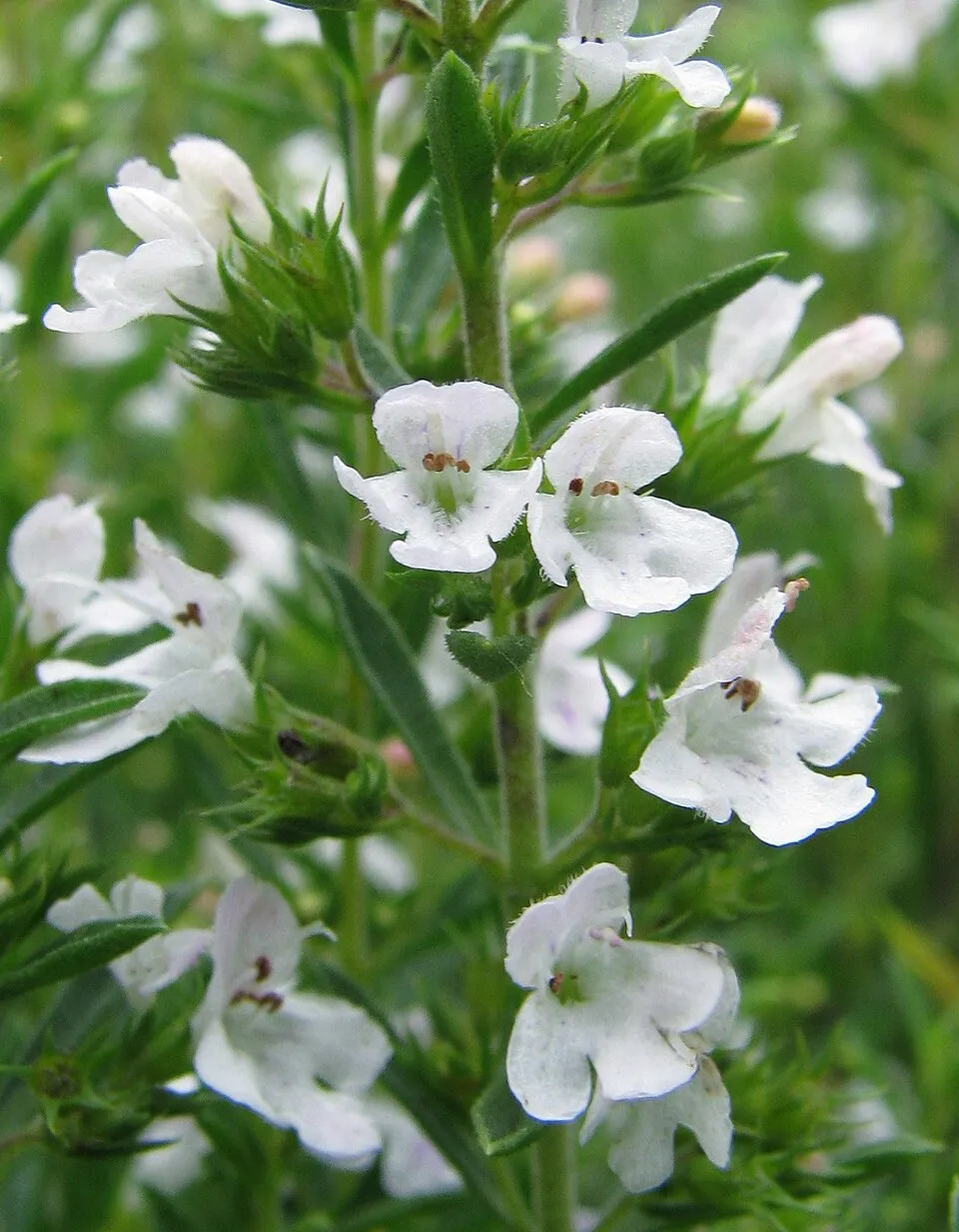
Savory Winter, scientifically known as Satureja montana, is a resilient perennial herbaceous plant belonging to the Lamiaceae family, commonly referred to as mountain savory. This species typically grows to a height of 20 to 50 centimeters, characterized by its semi-woody stems at the base that become more slender towards the apex, often forming dense, bushy clusters. Its small, lanceolate leaves, ranging from 1 to 4 cm in length, possess a distinctive glossy green hue and a subtly curled margin, contributing to the plant's renowned peppery and pungent aroma.
These aromatic leaves are the primary source of its culinary and medicinal appeal. During late summer and early autumn, Satureja montana adorns itself with delicate, tubular flowers, typically appearing in shades from pale violet to white. These blossoms are arranged in dense whorls within the leaf axils, serving as a vital nectar source for various pollinators, particularly bees, and enhancing its ornamental value in gardens.
Adapted to harsh conditions, Savory Winter thrives in rocky, well-drained soils and is naturally found on sunny, arid mountainous slopes and dry meadows throughout the Mediterranean basin, extending into southern European regions. Its robust nature and drought resistance make it a popular and sustainable choice for xeriscaping and herb cultivation in warmer, drier climates, reflecting its close botanical ties to other fragrant Lamiaceae members like thyme and mint through shared morphological traits such as square stems and intensely aromatic foliage.
Trusted Scientific References
1. Authoritative external sources for Satureja montana
1.1 Wikipedia — Satureja montana
1.2 Kew POWO (Plants of the World Online)
1.3 PubMed — peer-reviewed research
1.4 NCBI Taxonomy Browser
1.5 GBIF — Global Biodiversity
1.6Savory Winter should be interpreted through verified botanical identity, practical care, and responsible safety language. This recovery note adds the missing context needed for a complete profile: match light to the plant's habit, use well-drained soil, water according to season, and avoid unsupported medicinal or edible claims. For publishing, the plant can be presented as a source-backed medicinal plant with clear care guidance, common problem diagnosis, and conservative safety wording.
1.1.Savory Winter — Highlights
- ✓Perennial Herb — Long-lived plant, returning year after year, offering sustained yields.
- ✓Aromatic Foliage — Distinctive strong, peppery, and pungent scent and flavor.
- ✓Drought — Tolerant — Highly adaptable to dry, arid conditions, requiring minimal watering.
- ✓Pollinator Attractor — Its late summer flowers are a magnet for bees and other beneficial insects.
- ✓Mediterranean Origin — Thrives in rocky, sunny habitats typical of Southern Europe.
- ✓Medicinal and Culinary — Valued both for its therapeutic properties and as a versatile kitchen herb.
- ✓Essential Oil Rich — Contains high concentrations of carvacrol and thymol, key bioactive compounds.
- ✓Lamiaceae Family Member — Shares characteristics with mint, thyme, and oregano.
- ✓Low Maintenance — Easy to grow in suitable conditions, requiring minimal care.
- ✓Evergreen or Semi — Evergreen — Retains foliage through mild winters, providing year-round appeal.
1.2.Savory Winter — Quick Summary
- ✓Savory Winter (Satureja montana) is a hardy Mediterranean herb known for its peppery flavor and aromatic essential oil.
- ✓Traditionally used for digestive issues, respiratory complaints, and as an immune booster.
- ✓Rich in carvacrol, thymol, and rosmarinic acid, contributing to its strong antimicrobial and antioxidant properties.
- ✓Requires full sun and well-drained soil, highly drought-tolerant once established.
- ✓Used culinarily, in teas, tinctures, and as an essential oil for various therapeutic applications.
- ✓Caution advised for pregnant/breastfeeding individuals and those on lithium medication.
2.Savory Winter — Botanical Identity
3.Savory Winter — Vital Statistics
4.Savory Winter — Botanical Description
5.Savory Winter — Origin & Spread
6.Savory Winter — Traditional Uses
7.Savory Winter — Chemical Profile
- ✓Rosmarinic Acid — A potent antioxidant and anti-inflammatory phenolic acid found abundantly in winter savory.
- ✓Carvacrol — A monoterpenoid phenol that is a primary component of the essential oil, known for its strong antimicrobial, antioxidant, and anti-inflammatory properties.
- ✓Thymol — Another phenolic compound with significant antiseptic, antifungal, and expectorant qualities, often found alongside carvacrol.
- ✓Ursolic Acid — A triterpenoid found in the plant, exhibiting anti-inflammatory, antioxidant, and potential anticancer effects.
- ✓Oleanoic Acid — A triterpenoid similar to ursolic acid, contributing to the plant's anti-inflammatory and antioxidant profile.
- ✓Caffeic Acid — A phenolic acid that acts as an antioxidant and may have anti-inflammatory benefits.
- ✓Luteolin — A flavonoid with antioxidant and anti-inflammatory properties.
- ✓Apigenin — Another flavonoid known for its calming and anti-inflammatory effects.
- ✓Essential Oils — A complex mixture including monoterpenes and sesquiterpenes, responsible for the characteristic aroma and many of the plant's medicinal properties.
8.Savory Winter — Evidence-Based Benefits
- ✓Antioxidant Powerhouse — Winter savory is rich in potent antioxidants, particularly rosmarinic acid and carvacrol, which combat free radicals, thereby protecting cells from oxidative stress and potentially reducing the risk of chronic diseases like heart disease and certain cancers.
- ✓Digestive Aid — Traditionally used to alleviate digestive discomfort, winter savory can help stimulate appetite, reduce bloating, gas, and indigestion. Its carminative properties are effective in soothing an upset stomach and promoting healthy gut function.
- ✓Antimicrobial Agent — The essential oils of winter savory, especially carvacrol and thymol, exhibit strong antibacterial and antifungal properties. This makes it useful for combating various infections, including those affecting the respiratory and urinary tracts, and can be applied topically for minor skin infections.
- ✓Anti-inflammatory Effects — Compounds within winter savory possess significant anti-inflammatory capabilities, which can help reduce inflammation throughout the body. This is beneficial for conditions like arthritis and other inflammatory disorders, offering natural relief from pain and swelling.
- ✓Respiratory Support — Its expectorant and antispasmodic properties make winter savory an excellent remedy for coughs, colds, bronchitis, and other respiratory ailments. It helps to loosen mucus, making it easier to expel, and can soothe irritated airways.
- ✓Wound Healing — Applied topically, winter savory can promote faster wound healing due to its antiseptic and anti-inflammatory actions. It helps to cleanse wounds, prevent infection, and reduce inflammation, aiding in tissue repair.
- ✓Antispasmodic Action — Winter savory can help relieve spasms in various parts of the body, including the digestive tract and muscles. This makes it useful for conditions like irritable bowel syndrome (IBS) and muscle cramps.
- ✓Cardiovascular Health — The antioxidant and anti-inflammatory effects contribute to cardiovascular well-being by helping to protect blood vessels and reduce the risk of atherosclerosis.
- ✓Immune System Booster — By combating oxidative stress and fighting infections, winter savory can indirectly support and strengthen the immune system's ability to defend the body.
- ✓Mood Enhancement — Some traditional uses suggest that the aroma and properties of winter savory may have a mild uplifting effect on mood and can help reduce feelings of stress and anxiety.
- ✓Pain Relief — Its anti-inflammatory and antispasmodic properties can contribute to pain relief, particularly for muscle aches, cramps, and inflammatory pain.
- ✓Antiviral Properties — Research indicates that certain compounds in winter savory may possess antiviral activity, offering potential benefits against certain viral infections.
- ✓Blood Sugar Regulation — Preliminary studies suggest that winter savory may play a role in helping to regulate blood sugar levels, which could be beneficial for individuals managing diabetes.
- ✓Detoxification Support — Its diuretic properties can assist the body in flushing out toxins and excess fluids, supporting natural detoxification processes.
8.1.Savory Winter — Reported Uses
9.Savory Winter — Cautions & Contraindications
9.1.Savory Winter — Possible Adverse Reactions
- ✓Winter savory is generally considered safe when consumed in culinary amounts.
- ✓However, excessive consumption or prolonged use of concentrated extracts or essential oils may lead to gastrointestinal upset, such as nausea or stomach irritation.
- ✓Individuals with sensitive skin should exercise caution when applying topical preparations, as allergic reactions are possible.
9.2.Savory Winter — Safety Profile
- ✓When used appropriately in culinary or moderate medicinal doses, winter savory poses minimal safety risks for most adults.
- ✓Pregnant and breastfeeding women, as well as individuals with pre-existing medical conditions or those taking medications, should consult a healthcare professional before using winter savory medicinally. It is advisable to start with small doses to assess individual tolerance.
10.Savory Winter — Usage Guide
- ✓Herbal Tea Infusion — Steep 1-2 teaspoons of dried Savory Winter leaves in hot water for 5-10 minutes; traditionally consumed for digestive aid, respiratory relief, or as a general tonic.
- ✓Culinary Herb — Fresh or dried leaves are extensively used as a seasoning in Mediterranean cuisine, particularly with meats, beans, vegetables, and stews, imparting a peppery, pungent flavor.
- ✓Tincture Preparation — Macerate fresh or dried herb in alcohol (e.g., vodka or brandy) for several weeks; the resulting tincture can be taken orally in drops for concentrated therapeutic effects.
- ✓Essential Oil Topical Application — Dilute Savory Winter essential oil with a carrier oil (e.g., jojoba, almond) and apply topically for localized pain relief, muscle aches, or skin conditions, always performing a patch test first.
- ✓Essential Oil Aromatic Diffusion — Diffuse a few drops of the essential oil in an aromatherapy diffuser to purify the air, alleviate respiratory congestion, or create a stimulating atmosphere.
- ✓Poultice or Compress — Crush fresh leaves or use a strong tea as a compress applied externally to soothe skin irritations, minor wounds, or muscle soreness, utilizing its anti-inflammatory and antiseptic properties.
- ✓Herbal Bath — Add a strong infusion of Savory Winter to bathwater for a relaxing and invigorating soak, beneficial for muscle relaxation and skin health.
11.Savory Winter — Cultivation & Care
- ✓Soil Requirements — Thrives in well-drained, sandy or gravelly soil; prefers a neutral to slightly alkaline pH (6.5-7.5) and tolerates poor soil conditions, mimicking its natural Mediterranean habitat.
- ✓Sunlight Exposure — Requires full sun exposure for at least 6-8 hours daily to ensure robust growth and optimal essential oil production, which concentrates its flavor and medicinal compounds.
- ✓Watering Regimen — Once established, Savory Winter is highly drought-tolerant; water sparingly, allowing the soil to dry out completely between waterings to prevent root rot.
- ✓Climate Adaptability — Best suited for Mediterranean, temperate, or subtropical climates; it is hardy in USDA zones 5-8, tolerating cold winters better than summer savory.
- ✓Propagation Techniques — Can be propagated from seeds, cuttings (softwood or semi-hardwood taken in spring/summer), or by division of mature plants in spring, with cuttings being the most reliable method for genetic consistency.
- ✓Pruning and Maintenance — Prune regularly after flowering to maintain a compact shape, encourage new growth, and prevent the plant from becoming woody and leggy, also enhancing essential oil yield.
- ✓Fertilization — Generally requires minimal fertilization; a light application of compost or a balanced organic fertilizer in spring is sufficient, especially in very poor soils.
Reviewed by the Flora Medical Global Botanical Review Panel
Multi-disciplinary editorial group · Botany · Ethnobotany · Herbal-medicine literature
Who reviewed this: This page was checked by the Flora Medical Global Botanical Review Panel — an in-house editorial group of botany graduates, ethnobotany researchers, and horticulture practitioners who collectively maintain our 7,000+ plant encyclopedia. Meet the team.
Our 4-step verification process
1. Taxonomic verification
Scientific names and synonyms cross-checked against Kew POWO, World Flora Online, and The Plant List.
2. Phytochemical & medicinal cross-reference
Active compounds, traditional uses, and reported activities are cross-referenced with PubMed, USDA Dr. Duke's database, and peer-reviewed ethnobotanical literature.
3. Conservation & distribution check
Distribution, ecology, and conservation status confirmed against GBIF occurrence records and the IUCN Red List.
4. Editorial & safety review
Every entry passes an editorial pass for clarity, originality, and safety notices (toxicity, contraindications, dosage caveats) before publication.
Last reviewed:
Important medical disclaimer: This content is for educational and research purposes only. It is not medical advice and is not a substitute for consultation with a licensed healthcare provider. Do not use any herb to self-treat a medical condition without professional guidance.
Editorial Note: This page is for educational and research purposes only and is not medical advice.
Written by: Flora Medical Global Editorial Team
Reviewed by: Flora Medical Global Botanical Review Panel
Last Updated: June 15, 2026





Savory Winter — Comments & Community Reviews
Rate this plant