


Medical Disclaimer: This content is for educational purposes only. It is not medical advice. Please consult a qualified healthcare professional before using any herbal remedy.
Safety Overview
1.Schleichera — Essential Profile
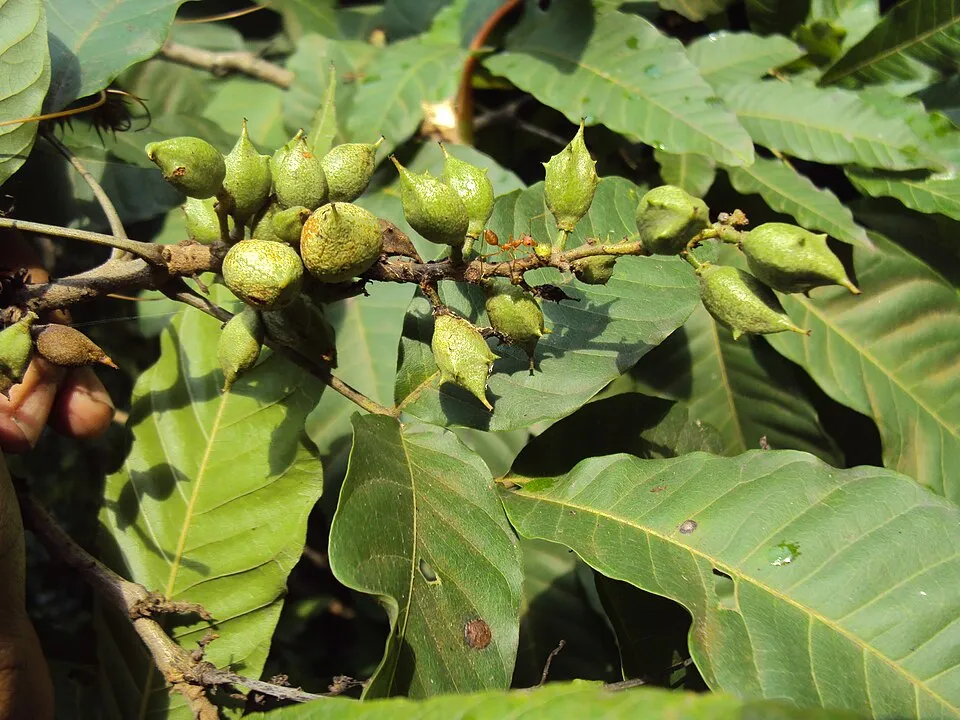
Schleichera oleosa, commonly known as the black olive tree or Kusum tree, is a prominent deciduous tree belonging to the Sapindaceae family, which also includes litchi and rambutan. This robust species typically attains a height of 10 to 15 meters, though it can grow taller under optimal conditions, and boasts a lifespan exceeding a century. Its botanical characteristics include glossy, dark green leaves that are pinnately compound, with individual leaflets measuring approximately 6 to 10 cm in length and 3 to 5 cm in width, arranged alternately along the stem.
The tree produces small, subtly fragrant white or yellowish-green flowers, clustered in terminal or axillary panicles, which later develop into distinct round, woody fruits. These fruits, about 2 cm in diameter, encase a single, valuable seed. The bark of Schleichera oleosa is notably rough and dark brown, often exhibiting a scaly or fissured texture, providing a stark contrast to its vibrant foliage.
Indigenous to the tropical and subtropical regions of South Asia, particularly abundant in India, Nepal, and Bangladesh, this species thrives in well-drained soils found in hilly and rocky terrains. Its remarkable adaptability allows it to flourish in diverse habitats, from coastal belts to dry deciduous forests, showcasing resilience to varying climatic conditions. Taxonomically, it is classified within the order Sapindales, underscoring its close kinship with other members of the soapberry family.
Trusted Scientific References
1. Authoritative external sources for Schleichera oleosa
1.1 Wikipedia — Schleichera oleosa
1.2 Kew POWO (Plants of the World Online)
1.3 PubMed — peer-reviewed research
1.4 NCBI Taxonomy Browser
1.5 GBIF — Global Biodiversity
1.6Schleichera should be interpreted through verified botanical identity, practical care, and responsible safety language. This recovery note adds the missing context needed for a complete profile: match light to the plant's habit, use well-drained soil, water according to season, and avoid unsupported medicinal or edible claims. For publishing, the plant can be presented as a source-backed medicinal plant with clear care guidance, common problem diagnosis, and conservative safety wording.
1.1.Schleichera — Notable Characteristics
- ✓Native to tropical — Native to tropical and subtropical regions of South Asia, including India, Nepal, and Bangladesh.
- ✓Deciduous tree capable — Deciduous tree capable of reaching significant heights and possessing a remarkable lifespan of over a century.
- ✓Characterized by glossy, — Characterized by glossy, pinnately compound leaves and distinctive round, woody fruits containing a single seed.
- ✓Bark and leaves — Bark and leaves are extensively utilized in traditional medicine for their anti-inflammatory and digestive support.
- ✓Seeds are the — Seeds are the source of Kusum oil, a highly prized emollient used for skin nourishment and hair care.
- ✓Contains a rich — Contains a rich array of phytochemicals, including triterpenoids (betulin, betulinic acid), flavonoids, and phenolic acids.
- ✓Demonstrates proven antimicrobial, — Demonstrates proven antimicrobial, antioxidant, and preliminary antimalarial activities in scientific studies.
- ✓Valued as a — Valued as a sustainable source of nutritious fodder for livestock due to its low tannin content in leaves.
- ✓Exhibits strong adaptability — Exhibits strong adaptability to various climatic conditions and soil types, including rocky and infertile grounds.
- ✓Holds significant ecological — Holds significant ecological importance and economic value within its native ecosystems and local communities.
1.2.Schleichera — In Brief
- ✓Schleichera oleosa, or the black olive tree, is a vital South Asian medicinal plant from the Sapindaceae family.
- ✓Renowned for its anti-inflammatory, analgesic, antimicrobial, and antioxidant properties, supported by traditional use.
- ✓The seeds yield precious Kusum oil, highly valued for its emollient benefits in skin and hair care.
- ✓Rich in diverse phytochemicals, including triterpenoids like betulin, flavonoids, and phenolic acids.
- ✓Traditional systems like Ayurveda utilize its bark and leaves for conditions ranging from dysentery to general wellness.
- ✓Emerging research highlights its potential antimalarial and anticancer activities.
- ✓Requires cautious use, emphasizing proper dosage, quality sourcing, and professional health consultation.
2.Schleichera — Scientific Identity
3.Schleichera — Vital Statistics
4.Schleichera — Botanical Features
5.Schleichera — Native Range & Habitat
6.Schleichera — Traditional Uses
7.Schleichera — Chemical Profile
- ✓Flavonoids — Compounds like quercetin and kaempferol derivatives are present, contributing significantly to the plant's potent antioxidant and anti-inflammatory activities by scavenging free radicals and modulating enzyme pathways.
- ✓Triterpenoids — Key triterpenes such as betulin and betulinic acid are found, recognized for their promising anticancer, anti-inflammatory, and antiviral properties, which are subjects of ongoing research.
- ✓Phenolic Acids — Gallic acid and ellagic acid are notable phenolic constituents, imparting strong antioxidant and antimicrobial effects, crucial for cellular protection and combating pathogens.
- ✓Tannins — Present in relatively low concentrations, these compounds contribute to the plant's astringent and antimicrobial actions, while their low levels make the leaves suitable as fodder.
- ✓Saponins — These glycosidic compounds contribute to the plant's diverse pharmacological profile, potentially offering anti-inflammatory and immune-modulating benefits.
- ✓Fatty Acids — The seed oil (Kusum oil) is particularly rich in unsaturated fatty acids, including oleic acid and linoleic acid, which are vital for skin nourishment, barrier function, and emollient properties.
- ✓Sterols — Compounds like beta-sitosterol are identified, known for their potential anti-inflammatory and cholesterol-lowering effects.
- ✓Glycosides — Various glycosides are part of the phytochemical makeup, contributing to the plant's overall medicinal efficacy through diverse biochemical interactions.
- ✓Alkaloids — While not the primary class, some alkaloidal compounds may be present in trace amounts, contributing to the plant's complex therapeutic actions.
8.Schleichera — Pharmacological Findings
- ✓Anti-inflammatory — The plant's extracts, rich in flavonoids and triterpenoids, help to modulate inflammatory pathways, offering relief from swelling and pain associated with various conditions.
- ✓Analgesic — Components within Schleichera oleosa exhibit pain-relieving properties, potentially by interfering with pain signal transmission or reducing inflammatory mediators.
- ✓Antimicrobial — Extracts from the bark and leaves have demonstrated significant activity against a range of bacteria and fungi, supporting traditional uses for infections and wound care.
- ✓Antioxidant — Abundant phenolic compounds and flavonoids act as potent free radical scavengers, protecting cells from oxidative damage and supporting overall cellular health.
- ✓Skin Health — The highly prized Kusum oil, extracted from the seeds, is renowned for its emollient and nourishing qualities, effectively treating dry skin, eczema, and promoting skin barrier function.
- ✓Digestive Health — Traditionally, the bark and leaves have been utilized to treat dysentery and other gastrointestinal disturbances, helping to restore gut balance and soothe the digestive tract.
- ✓Anticancer Potential — Preliminary research indicates that triterpenoids like betulin and betulinic acid present in the plant may possess cytotoxic activity against certain cancer cell lines, warranting further investigation.
- ✓Antimalarial Activity — Studies have shown that bark extracts can inhibit the growth of Plasmodium falciparum, the parasite responsible for malaria, suggesting a potential role in antimalarial drug development.
- ✓Wound Healing — Due to its combined antimicrobial and anti-inflammatory effects, topical application of plant preparations can aid in the faster healing of cuts, abrasions, and sores.
- ✓Hair Nourishment — Kusum oil is a traditional remedy for hair care, promoting scalp health, reducing hair fall, and imparting shine and strength to the hair strands.
- ✓Livestock Fodder — The leaves, characterized by their low tannin content, serve as a nutritious and palatable fodder for livestock, contributing to animal health and agricultural sustainability.
8.1.Schleichera — Conditions Traditionally Used For
9.Schleichera — Safety Considerations
9.1.Schleichera — Caution Notes
- ✓Skin Irritation — Topical application, especially of fresh plant material or concentrated extracts, may cause mild irritation or allergic contact dermatitis in sensitive individuals.
- ✓Allergic Reactions — Although rare, individuals may experience allergic responses such as itching, rash, or hives upon contact or ingestion of Schleichera oleosa products.
- ✓Gastrointestinal Upset — High doses of internal preparations might lead to mild digestive discomfort, including nausea or stomach upset in some users.
- ✓Drug Interactions — Components in Schleichera oleosa could potentially interact with certain medications, particularly anticoagulants or drugs metabolized by the liver, requiring caution.
- ✓Pregnancy and Lactation — Due to insufficient scientific safety data, the use of Schleichera oleosa is generally not recommended for pregnant or breastfeeding women.
- ✓Children — Specific safety studies on children are lacking, therefore, its use in pediatric populations should be approached with extreme caution and under medical supervision.
9.2.Schleichera — Safety Profile
- ✓Professional Consultation — Always consult a qualified healthcare professional or experienced medical herbalist before using Schleichera oleosa, especially if you have pre-existing conditions or are on medication.
- ✓Patch Test — Before extensive topical application, perform a patch test on a small skin area to check for any adverse reactions or sensitivities.
- ✓Adherence to Dosage — Strictly follow recommended dosages; exceeding these guidelines can increase the risk of side effects and is not advised.
- ✓Quality Sourcing — Ensure that all Schleichera oleosa plant material or products are sourced from reputable suppliers to guarantee purity, potency, and absence of contaminants.
- ✓Storage Conditions — Store dried plant parts and extracted oils in cool, dark, airtight containers away from direct sunlight and moisture to preserve their therapeutic efficacy and prevent degradation.
- ✓Monitoring for Adverse Reactions — Discontinue use immediately if any adverse reactions or unusual symptoms occur and seek prompt medical attention.
- ✓Avoid Self-Medication — Do not use Schleichera oleosa as a substitute for prescribed medical treatments without professional guidance.
10.Schleichera — Usage Guide
- ✓Seed Oil (Kusum oil) — Extracted from the seeds, this oil is applied topically as an emollient for dry skin, a massage oil, and a traditional hair tonic and conditioner.
- ✓Bark Decoction — The bark is boiled in water to prepare a potent liquid, traditionally consumed for digestive ailments like dysentery or used externally as an antiseptic wash for wounds.
- ✓Leaf Paste — Fresh leaves are crushed and macerated into a paste, which is then applied directly to the skin to alleviate swelling, inflammation, and minor skin irritations.
- ✓Powdered Bark/Leaves — Dried plant parts are finely ground into a powder, which can be encapsulated for internal consumption or mixed with water/honey to form a paste for topical use.
- ✓Herbal Extracts — Concentrated alcoholic or aqueous extracts are prepared from bark and leaves for more potent medicinal applications, often used in formulated herbal products.
- ✓Traditional Fodder — The low-tannin leaves are directly fed to livestock as a nutritious and palatable green fodder, particularly in agricultural communities.
- ✓Hair Oil Formulations — Kusum oil is often incorporated into commercial and homemade hair oil formulations to promote hair growth, reduce dandruff, and improve hair texture.
11.Schleichera — Cultivation & Care
- ✓Climate — Thrives in tropical and subtropical regions, preferring a climate with distinct wet and dry seasons and ample sunlight.
- ✓Soil — Prefers well-drained, sandy-loam to lateritic soils; tolerant of rocky, shallow, and even infertile conditions, demonstrating adaptability.
- ✓Propagation — Primarily propagated by seeds, which often require scarification or soaking in warm water to enhance and accelerate germination rates.
- ✓Sunlight — Requires full sun exposure for optimal growth, flowering, and fruit production, making it unsuitable for shaded understory planting.
- ✓Watering — Young saplings necessitate regular watering during establishment, while mature trees are highly drought-tolerant once their root systems are developed.
- ✓Spacing — Plant saplings with adequate spacing to accommodate their mature canopy spread, typically 8-10 meters apart, to ensure healthy growth.
- ✓Pests and Diseases — Generally robust against most common tree pests and diseases, though monitoring for scale insects or fungal spots in humid conditions is advisable.
- ✓Harvesting — Bark and leaves are collected sustainably, typically from mature trees, while seeds are harvested from fully ripened fruits.
Reviewed by the Flora Medical Global Botanical Review Panel
Multi-disciplinary editorial group · Botany · Ethnobotany · Herbal-medicine literature
Who reviewed this: This page was checked by the Flora Medical Global Botanical Review Panel — an in-house editorial group of botany graduates, ethnobotany researchers, and horticulture practitioners who collectively maintain our 7,000+ plant encyclopedia. Meet the team.
Our 4-step verification process
1. Taxonomic verification
Scientific names and synonyms cross-checked against Kew POWO, World Flora Online, and The Plant List.
2. Phytochemical & medicinal cross-reference
Active compounds, traditional uses, and reported activities are cross-referenced with PubMed, USDA Dr. Duke's database, and peer-reviewed ethnobotanical literature.
3. Conservation & distribution check
Distribution, ecology, and conservation status confirmed against GBIF occurrence records and the IUCN Red List.
4. Editorial & safety review
Every entry passes an editorial pass for clarity, originality, and safety notices (toxicity, contraindications, dosage caveats) before publication.
Last reviewed:
Important medical disclaimer: This content is for educational and research purposes only. It is not medical advice and is not a substitute for consultation with a licensed healthcare provider. Do not use any herb to self-treat a medical condition without professional guidance.
Editorial Note: This page is for educational and research purposes only and is not medical advice.
Written by: Flora Medical Global Editorial Team
Reviewed by: Flora Medical Global Botanical Review Panel
Last Updated: June 15, 2026





Schleichera — Comments & Community Reviews
Rate this plant