

Medical Disclaimer: This content is for educational purposes only. It is not medical advice. Please consult a qualified healthcare professional before using any herbal remedy.
Safety Overview
1.Scilla Bifolia — Essential Profile
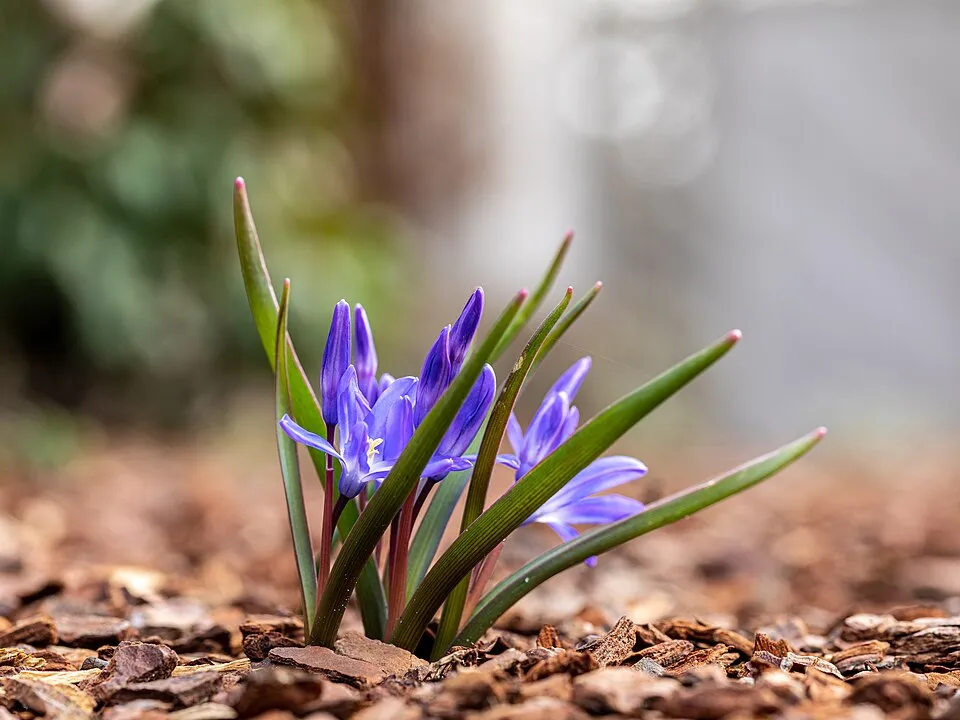
Scilla bifolia, commonly known as two-leaf squill or alpine squill, is a charming perennial herbaceous plant originating from an underground bulb, belonging to the Asparagaceae family. This species is celebrated for its vibrant blue, star-shaped flowers that emerge in early spring, typically from March to May, creating a striking visual display. The plant is characterized by two, or rarely three, narrow, lanceolate, fleshy, and glossy leaves that can reach up to 15 cm in length.
These distinctive leaves clasp the stem up to about its midpoint, providing a unique identification feature. Flowering stems are erect and unbranched, growing 10–20 cm high, bearing a raceme of 6-10 upward-facing flowers, each approximately 1 cm across. While deep violet-blue is most common, varieties with white, pink, or purple tepals also exist.
Native to moist woodlands, meadows, and grasslands across Europe and Western Asia, Scilla bifolia thrives in areas with partial to full shade, often found forming dense clusters under deciduous tree canopies. It prefers well-drained soil rich in organic matter. A key botanical distinction is its upward-facing flowers, differentiating it from the nodding blooms of species like Scilla siberica.
After its flowering period, the foliage persists until summer before dying back, signaling the plant's entry into dormancy until the following spring. Esteemed by gardeners for its beauty and ability to naturalize, Scilla bifolia has also earned the Royal Horticultural Society's Award of Garden Merit for its reliable performance and ornamental appeal.
Trusted Scientific References
1. Authoritative external sources for Scilla bifolia
1.1 Wikipedia — Scilla bifolia
1.2 Kew POWO (Plants of the World Online)
1.3 PubMed — peer-reviewed research
1.4 NCBI Taxonomy Browser
1.5 GBIF — Global Biodiversity
1.6Scilla Bifolia should be interpreted through verified botanical identity, practical care, and responsible safety language. This recovery note adds the missing context needed for a complete profile: match light to the plant's habit, use well-drained soil, water according to season, and avoid unsupported medicinal or edible claims. For publishing, the plant can be presented as a source-backed indoor plant with clear care guidance, common problem diagnosis, and conservative safety wording.
1.1.Scilla Bifolia — Notable Characteristics
- ✓Botanical Name — Scilla bifolia.
- ✓Common Names — Two-leaf Squill, Alpine Squill, Bluebell (caution: often confused with other species).
- ✓Family — Asparagaceae.
- ✓Active Compounds — Cardiac glycosides (Scillaren A, Scillaren B).
- ✓Traditional Use — Cardiotonic, diuretic in historical European folk medicine.
- ✓Toxicity — HIGHLY TOXIC if ingested; dangerous for humans and animals.
- ✓Bloom Time — Early spring (March to May).
- ✓Flower Color — Typically deep violet-blue, sometimes white, pink, or purple.
- ✓Habitat — Moist woodlands and meadows across Europe and Western Asia.
- ✓Growth Habit — Perennial herbaceous plant growing from an underground bulb.
1.2.Scilla Bifolia — Concise Overview
- ✓Potent Cardiac Glycosides — Contains Scillaren A and B, which are cardiotonic but also highly toxic.
- ✓Highly Toxic Plant — Ingestion of any part, especially the bulb, can be fatal; not for self-medication.
- ✓Traditional European Use — Historically used as a cardiotonic and diuretic in European folk medicine.
- ✓Early Spring Bloomer — Valued ornamentally for its vibrant blue flowers in early spring.
- ✓Botanical Identity — Scientific name is Scilla bifolia, belonging to the Asparagaceae family.
- ✓Distinctive Leaves — Characterized by two lanceolate leaves clasping the stem.
2.Scilla Bifolia — Nomenclature & Classification
3.Scilla Bifolia — Fact Sheet
4.Scilla Bifolia — Botanical Description
5.Scilla Bifolia — Native Range & Habitat
6.Scilla Bifolia — Heritage Uses
7.Scilla Bifolia — Key Phytochemicals
- ✓Cardiac Glycosides — The primary active compounds, including Scillaren A, Scillaren B, Proscillaridin A, and Scilliroside, responsible for cardiotonic, diuretic, and highly toxic effects.
- ✓Flavonoids — Compounds like quercetin glycosides, which possess antioxidant and anti-inflammatory properties, contributing to general plant defense.
- ✓Anthocyanins — Pigments such as delphinidin-3-glucoside, responsible for the plant's characteristic blue flower color and offering antioxidant benefits.
- ✓Saponins — Surface-active glycosides that may contribute to expectorant properties and have some anti-inflammatory potential, though less dominant than cardiac glycosides.
- ✓Steroidal Saponins — A specific class of saponins with a steroidal backbone, found in trace amounts, potentially influencing cellular membranes.
- ✓Polysaccharides — Complex carbohydrates that form part of the plant's structural components and energy reserves.
- ✓Sugars — Simple carbohydrates like glucose and fructose, essential for plant metabolism and energy.
- ✓Minerals — Various essential inorganic nutrients, including potassium, calcium, and magnesium, vital for physiological functions.
- ✓Organic Acids — Compounds like malic acid, contributing to plant metabolism and defense mechanisms.
8.Scilla Bifolia — Scientific Evidence
- ✓Cardiac Stimulant — Contains cardiac glycosides like Scillaren A and B, which historically were used to increase the force of heart muscle contractions, improving cardiac output.
- ✓Diuretic Action — Traditionally employed to promote the excretion of urine, helping to reduce fluid retention and alleviate conditions such as edema.
- ✓Anti-edematous — By increasing diuresis, Scilla bifolia was historically used to lessen swelling caused by excess fluid accumulation in tissues.
- ✓Cardiotonic Support — In historical European folk medicine, it was utilized to strengthen overall heart function, particularly in cases of cardiac weakness or insufficiency.
- ✓Expectorant Properties — Some historical accounts suggest its use in very small doses to stimulate respiratory secretions, potentially aiding in the expulsion of phlegm.
- ✓Blood Pressure Regulation (Traditional) — In extremely diluted forms or historically, it was sometimes considered for influencing blood pressure, though modern use is highly cautioned.
- ✓Traditional European Medicine — Formed a part of historical European herbal practices for managing 'dropsy' (edema) and certain heart ailments, emphasizing its long-standing, albeit risky, medicinal association.
- ✓Research Subject for Glycosides — The plant's potent cardiac glycosides continue to be a subject of pharmacological research for their potential mechanisms in cardiovascular health, distinct from direct human therapeutic application.
8.1.Scilla Bifolia — Therapeutic Indications
9.Scilla Bifolia — Safety & Side Effects
9.1.Scilla Bifolia — Reported Side Effects
- ✓Gastrointestinal Distress — Nausea, severe vomiting, diarrhea, and abdominal pain are common symptoms of ingestion.
- ✓Cardiac Arrhythmias — Can cause irregular heartbeats, bradycardia (slow heart rate), or tachycardia (rapid heart rate) due to cardiac glycoside effects.
- ✓Electrolyte Imbalance — May lead to hyperkalemia (elevated potassium levels) and other electrolyte disturbances.
- ✓Central Nervous System Effects — Dizziness, headache, blurred vision, confusion, and hallucinations can occur.
- ✓Skin Irritation — Direct contact with the sap or bulb can cause dermatitis, redness, and itching.
- ✓Allergic Reactions — Sensitive individuals may experience allergic responses such as rash, hives, or swelling.
- ✓Renal Impairment — High doses can potentially stress the kidneys, exacerbating existing renal conditions.
9.2.Scilla Bifolia — Clinical Safety Notes
- ✓HIGH TOXICITY — All parts of Scilla bifolia, particularly the bulb, are highly toxic if ingested, containing potent cardiac glycosides.
- ✓NOT FOR SELF-MEDICATION — Use of this plant for medicinal purposes is strictly contraindicated without explicit and continuous supervision by a qualified medical professional.
- ✓PREGNANCY AND LACTATION — Absolutely contraindicated during pregnancy due to potential abortifacient effects, and during lactation due to toxin transfer via breast milk.
- ✓DRUG INTERACTIONS — Can dangerously interact with other cardiac medications (e.g., digoxin, beta-blockers), diuretics, corticosteroids, and calcium channel blockers.
- ✓CHILDREN AND PETS — Keep Scilla bifolia plants and bulbs strictly out of reach of children and pets, as ingestion can be fatal.
- ✓LIVER AND KIDNEY DISEASE — Individuals with impaired liver or kidney function are at a significantly higher risk of toxicity due to reduced metabolism and excretion of compounds.
- ✓SYMPTOMS OF POISONING — Immediate medical attention is required if symptoms like nausea, vomiting, irregular heartbeat, or dizziness occur after potential exposure.
10.Scilla Bifolia — Preparation Methods
- ✓Traditional Tincture (Expert Use Only) — Historically, highly diluted alcoholic extracts of the bulb were prepared under strict guidance for cardiac conditions, never for self-administration.
- ✓Dried Bulb Powder (Historical & Dangerous) — Minute quantities of dried bulb powder were once used, but its potency variability and extreme toxicity make this method highly dangerous and obsolete.
- ✓Homeopathic Preparations — Highly diluted homeopathic remedies derived from Scilla bifolia are used in homeopathic practice, which operates on principles distinct from herbal medicine.
- ✓Research Extracts — Specific extracts are prepared for scientific pharmacological studies to isolate and analyze active compounds, not for human consumption.
- ✓External Poultice (Historical Caution) — Folk medicine sometimes applied crushed bulbs as external poultices for swelling, though this carries risks of skin irritation and absorption.
- ✓Infusion (Topical, Extreme Caution) — Very dilute infusions were historically used externally as washes, but risk of systemic absorption and irritation makes this practice highly questionable.
- ✓Avoid Ingestion — Due to extreme toxicity, direct ingestion of any part of the plant is strictly contraindicated and can be fatal.
11.Scilla Bifolia — How to Grow
- ✓Preferred Climate — Thrives in temperate zones (USDA hardiness zones 3-8), tolerating cold winters.
- ✓Soil Requirements — Prefers well-drained, humus-rich soil, ideally slightly acidic to neutral (pH 6.0-7.0).
- ✓Light Exposure — Best suited for partial to full shade, especially under deciduous trees where it receives early spring sun before leaf-out.
- ✓Watering — Requires consistent moisture during its active growth period in spring, becoming drought-tolerant during summer dormancy.
- ✓Planting — Plant bulbs in autumn, 5-10 cm deep and 10-15 cm apart, for spring bloom.
- ✓Propagation — Easily propagated by dividing offsets from mature bulbs in late summer or early autumn, or from fresh seeds.
- ✓Pests and Diseases — Generally robust, but occasionally susceptible to rodent damage to bulbs or slug predation on foliage.
- ✓Maintenance — Allow foliage to die back naturally after flowering to ensure the bulb stores sufficient energy for the next season.
Reviewed by the Flora Medical Global Botanical Review Panel
Multi-disciplinary editorial group · Botany · Ethnobotany · Herbal-medicine literature
Who reviewed this: This page was checked by the Flora Medical Global Botanical Review Panel — an in-house editorial group of botany graduates, ethnobotany researchers, and horticulture practitioners who collectively maintain our 7,000+ plant encyclopedia. Meet the team.
Our 4-step verification process
1. Taxonomic verification
Scientific names and synonyms cross-checked against Kew POWO, World Flora Online, and The Plant List.
2. Phytochemical & medicinal cross-reference
Active compounds, traditional uses, and reported activities are cross-referenced with PubMed, USDA Dr. Duke's database, and peer-reviewed ethnobotanical literature.
3. Conservation & distribution check
Distribution, ecology, and conservation status confirmed against GBIF occurrence records and the IUCN Red List.
4. Editorial & safety review
Every entry passes an editorial pass for clarity, originality, and safety notices (toxicity, contraindications, dosage caveats) before publication.
Last reviewed:
Important medical disclaimer: This content is for educational and research purposes only. It is not medical advice and is not a substitute for consultation with a licensed healthcare provider. Do not use any herb to self-treat a medical condition without professional guidance.
Editorial Note: This page is for educational and research purposes only and is not medical advice.
Written by: Flora Medical Global Editorial Team
Reviewed by: Flora Medical Global Botanical Review Panel
Last Updated: June 15, 2026





Scilla Bifolia — Comments & Community Reviews
Rate this plant