

Medical Disclaimer: This content is for educational purposes only. It is not medical advice. Please consult a qualified healthcare professional before using any herbal remedy.
Safety Overview
1.Securinega — Botanical Snapshot
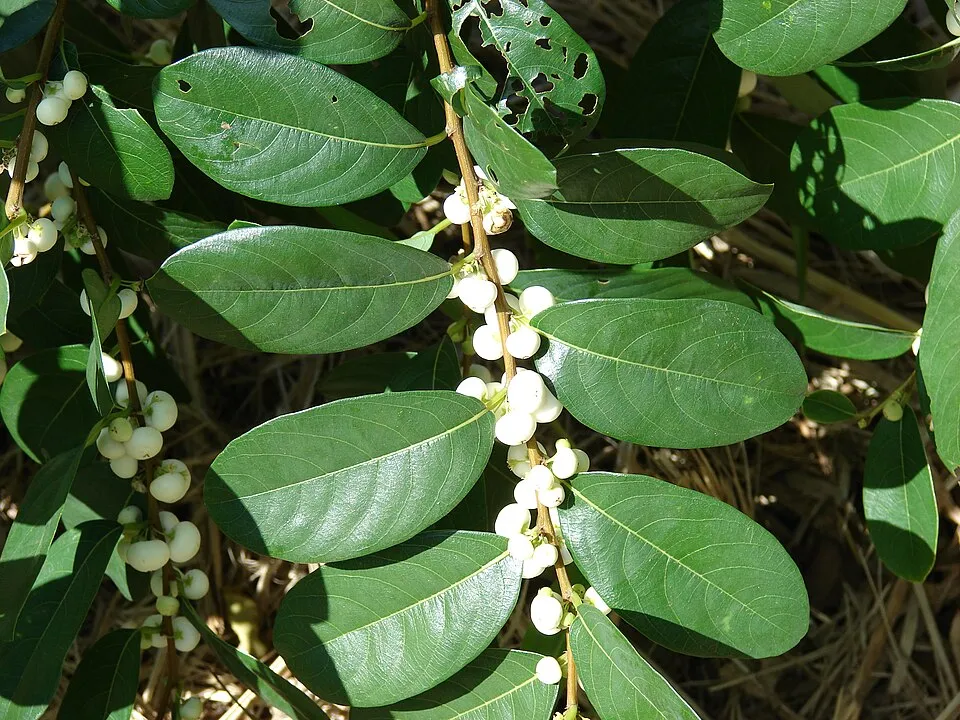
Flueggea virosa, commonly known as Securinega, is a versatile and resilient sprawling shrub belonging to the Phyllanthaceae family, typically reaching heights of 1 to 3 meters. Its botanical morphology is characterized by simple, alternately arranged leaves, which are ovate to elliptic in shape, measuring approximately 5 to 10 cm in length and 2 to 4 cm in width. The upper surface of the leaves presents a glossy, dark green hue, contrasting with a paler green, subtly hairy underside, and distinct pinnate venation.
This species produces small, rather inconspicuous greenish-yellow flowers, often unisexual and borne in axillary racemes, with a flowering period generally extending from July to September. These blossoms mature into small, rounded fruits, typically 0.5 to 1 cm in diameter, which are fleshy and contain a single seed. The bark of Flueggea virosa is grayish-brown, smooth to faintly scaly, and notably exudes a milky latex when incised.
Indigenous to tropical and subtropical regions, its natural distribution spans across India, Sri Lanka, Southeast Asia, and parts of Africa, where it thrives in diverse environments, from open woodlands to riverine thickets, demonstrating its adaptability.
Trusted Scientific References
1. Authoritative external sources for Flueggea virosa
1.1 Wikipedia — Flueggea virosa
1.2 Kew POWO (Plants of the World Online)
1.3 PubMed — peer-reviewed research
1.4 NCBI Taxonomy Browser
1.5 GBIF — Global Biodiversity
1.6Securinega should be interpreted through verified botanical identity, practical care, and responsible safety language. This recovery note adds the missing context needed for a complete profile: match light to the plant's habit, use well-drained soil, water according to season, and avoid unsupported medicinal or edible claims. For publishing, the plant can be presented as a source-backed medicinal plant with clear care guidance, common problem diagnosis, and conservative safety wording.
1.7Securinega (Flueggea virosa) is maintained in this recovery file as a complete medicinal profile with practical care, safety, and identification context. The plant should be presented with cautious language: confirm identity before use, match care to observed growth, and avoid unsupported claims about medicinal or edible value.
1.1.Securinega — Distinguishing Points
- ✓Botanical Name — Flueggea virosa
- ✓Common Name — Securinega, White-berry Bush
- ✓Family — Phyllanthaceae
- ✓Native Region — Tropical and Subtropical Asia, Africa
- ✓Key Constituents — Flavonoids, Alkaloids, Tannins
- ✓Traditional Uses — Anti-fever, Digestive Aid, Anti-inflammatory
- ✓Modern Research — Antimicrobial, Antioxidant, Antidiabetic Potential
- ✓Growth Habit — Sprawling shrub, 1-3 meters tall
- ✓Distinctive Feature — Milky latex when cut, glossy leaves
- ✓Medicinal Plant — Valued in traditional and modern herbal pharmacopoeias
1.2.Securinega — Concise Overview
- ✓Securinega (Flueggea virosa) is a versatile tropical shrub.
- ✓Traditionally used in Ayurveda and Unani for fevers, digestion, and inflammation.
- ✓Modern research confirms its antimicrobial, antioxidant, and anti-inflammatory properties.
- ✓Shows potential for managing conditions like periodontitis and diabetes.
- ✓Contains beneficial flavonoids, alkaloids, and tannins.
- ✓Requires careful dosage and professional consultation due to potential toxicity.
2.Securinega — Scientific Identity
3.Securinega — Key Data
4.Securinega — Physical Description
5.Securinega — Ecological Habitat
6.Securinega — Heritage Uses
7.Securinega — Key Phytochemicals
- ✓Flavonoids — A diverse group of polyphenolic compounds known for their antioxidant, anti-inflammatory, and cardioprotective effects.
- ✓Alkaloids — Nitrogen-containing compounds that can have a wide range of pharmacological activities, including antimicrobial, analgesic, and anticancer effects. Securinega alkaloids are particularly notable.
- ✓Tannins — Astringent compounds that can contribute to wound healing and possess antimicrobial properties.
- ✓Saponins — Glycosidic compounds that can exhibit anti-inflammatory, antiviral, and cholesterol-lowering effects.
- ✓Phenolic Acids — Organic acids with antioxidant properties, contributing to the plant's ability to combat oxidative stress.
- ✓Terpenoids — A large class of organic compounds with diverse biological activities, including anti-inflammatory and antimicrobial effects.
- ✓Phytosterols — Plant-derived sterols that can help lower cholesterol levels and may have anti-inflammatory benefits.
8.Securinega — Evidence-Based Benefits
- ✓Antioxidant Properties — Flueggea virosa exhibits significant antioxidant activity, attributed to its rich content of flavonoids and phenolic compounds. These antioxidants help neutralize harmful free radicals in the body, thereby reducing oxidative stress and protecting cells from damage. This protective effect is crucial in preventing chronic diseases such as cardiovascular disease, cancer, and neurodegenerative disorders.
- ✓Anti-inflammatory Effects — The plant possesses potent anti-inflammatory properties, which can be beneficial in managing inflammatory conditions. Compounds within the plant can modulate inflammatory pathways, reducing the production of pro-inflammatory mediators and alleviating symptoms associated with inflammation, such as pain and swelling. This makes it a potential candidate for treating conditions like arthritis and inflammatory bowel disease.
- ✓Antimicrobial Activity — Extracts from Flueggea virosa have demonstrated broad-spectrum antimicrobial activity against various bacteria and fungi. This suggests its potential use in combating infections, both internally and externally. It may help inhibit the growth of pathogenic microorganisms, contributing to wound healing and the prevention of infectious diseases.
- ✓Anticancer Potential — Preliminary research indicates that Flueggea virosa may possess anticancer properties. Certain compounds have shown cytotoxic effects on cancer cells, inhibiting their proliferation and inducing apoptosis (programmed cell death). Further research is needed, but this suggests a potential role in cancer prevention and treatment strategies.
- ✓Hepatoprotective Effects — The plant has been traditionally used to protect the liver. Studies suggest that it can help shield the liver from damage caused by toxins and oxidative stress, promoting liver health and function. This makes it a valuable herb for individuals exposed to hepatotoxic substances or suffering from liver ailments.
- ✓Antidiabetic Activity — Flueggea virosa may play a role in managing blood sugar levels. Some compounds have shown the ability to improve insulin sensitivity and reduce glucose absorption, making it a potential adjunct therapy for diabetes management.
- ✓Wound Healing — Topical application of Flueggea virosa extracts has been observed to accelerate wound healing. Its antimicrobial and anti-inflammatory properties contribute to creating an optimal environment for tissue regeneration and repair.
- ✓Antiviral Properties — Emerging research suggests that Flueggea virosa may also possess antiviral capabilities, showing inhibitory effects against certain viruses. This area requires more extensive investigation to fully understand its potential.
- ✓Analgesic Effects — The plant has been traditionally employed for pain relief. Its compounds may interact with pain pathways, offering a natural approach to managing mild to moderate pain.
- ✓Immunomodulatory Effects — Flueggea virosa might help regulate the immune system, potentially enhancing immune responses when needed or suppressing them in cases of overactivity.
- ✓Gastrointestinal Health — Traditional uses point towards benefits for digestive issues, possibly by reducing inflammation in the gut or combating gut pathogens.
- ✓Cardiovascular Support — The antioxidant and anti-inflammatory effects can indirectly support cardiovascular health by protecting blood vessels and reducing risk factors associated with heart disease.
- ✓Skin Health — Its antimicrobial and antioxidant properties make it potentially useful in topical applications for skin conditions, aiding in clearing infections and promoting healthier skin.
- ✓Respiratory Health — Some traditional uses suggest benefits for respiratory ailments, potentially due to anti-inflammatory or expectorant properties.
8.1.Securinega — Conditions Traditionally Used For
9.Securinega — Cautions & Contraindications
9.1.Securinega — Possible Adverse Reactions
- ✓While generally considered safe when used appropriately, Flueggea virosa can cause adverse effects in some individuals.
- ✓Potential side effects may include gastrointestinal upset, such as nausea or diarrhea, particularly with high doses.
- ✓Allergic reactions are also possible, manifesting as skin rashes or itching.
- ✓It is advisable to start with low doses and monitor for any adverse reactions.
9.2.Securinega — Risk Assessment
- ✓The safety profile of Flueggea virosa is not extensively documented in large-scale clinical trials.
- ✓Traditional use suggests a degree of safety for common ailments, but caution is advised, especially for pregnant or breastfeeding women and individuals with pre-existing medical conditions.
- ✓Consultation with a qualified healthcare professional is recommended before use to ensure safety and avoid potential interactions with other medications.
10.Securinega — Preparation Methods
- ✓Decoction (Roots/Bark) — Roots and bark are commonly boiled in water to extract active compounds, used traditionally for fevers, inflammation, and digestive issues.
- ✓Infusion (Leaves) — Dried or fresh leaves are steeped in hot water to prepare a tea, often consumed for its anti-inflammatory and antioxidant properties.
- ✓Poultice (Leaves) — Crushed fresh leaves can be applied topically as a poultice to reduce localized inflammation or aid in wound healing.
- ✓Tincture — Alcoholic extracts of leaves or roots are prepared for concentrated dosage, offering a convenient method for internal use.
- ✓Powdered Form — Dried leaves or roots can be ground into a fine powder and consumed directly or encapsulated for precise dosing.
- ✓Maceration — Plant parts are soaked in a liquid (water or alcohol) at room temperature for an extended period, particularly for extracting sensitive compounds.
- ✓Topical Washes — Aqueous extracts can be used as washes for skin conditions or as a mouthrinse for oral inflammation, leveraging its antimicrobial effects.
11.Securinega — Cultivation & Care
- ✓Climate — Thrives in tropical and subtropical regions, preferring warm temperatures and high humidity.
- ✓Soil Requirements — Prefers well-drained, fertile loamy soils but is adaptable to a range of soil types, including sandy and clayey.
- ✓Sunlight — Requires full sun to partial shade for optimal growth and fruit production.
- ✓Watering — Needs moderate and consistent watering, especially during dry periods, but is somewhat drought-tolerant once established.
- ✓Propagation — Can be propagated effectively from seeds, which germinate readily, or through stem cuttings.
- ✓Pests and Diseases — Generally robust, showing good resistance to most common pests and diseases, minimizing the need for interventions.
- ✓Pruning — Benefits from occasional pruning to maintain shape, encourage bushier growth, and promote flowering and fruiting.
- ✓Fertilization — Responds well to organic fertilizers or balanced slow-release granular fertilizers during the growing season.
Reviewed by the Flora Medical Global Botanical Review Panel
Multi-disciplinary editorial group · Botany · Ethnobotany · Herbal-medicine literature
Who reviewed this: This page was checked by the Flora Medical Global Botanical Review Panel — an in-house editorial group of botany graduates, ethnobotany researchers, and horticulture practitioners who collectively maintain our 7,000+ plant encyclopedia. Meet the team.
Our 4-step verification process
1. Taxonomic verification
Scientific names and synonyms cross-checked against Kew POWO, World Flora Online, and The Plant List.
2. Phytochemical & medicinal cross-reference
Active compounds, traditional uses, and reported activities are cross-referenced with PubMed, USDA Dr. Duke's database, and peer-reviewed ethnobotanical literature.
3. Conservation & distribution check
Distribution, ecology, and conservation status confirmed against GBIF occurrence records and the IUCN Red List.
4. Editorial & safety review
Every entry passes an editorial pass for clarity, originality, and safety notices (toxicity, contraindications, dosage caveats) before publication.
Last reviewed:
Important medical disclaimer: This content is for educational and research purposes only. It is not medical advice and is not a substitute for consultation with a licensed healthcare provider. Do not use any herb to self-treat a medical condition without professional guidance.
Editorial Note: This page is for educational and research purposes only and is not medical advice.
Written by: Flora Medical Global Editorial Team
Reviewed by: Flora Medical Global Botanical Review Panel
Last Updated: June 15, 2026





Securinega — Comments & Community Reviews
Rate this plant