


Medical Disclaimer: This content is for educational purposes only. It is not medical advice. Please consult a qualified healthcare professional before using any herbal remedy.
Safety Overview
1.Sedum Autumn Joy — Essential Profile
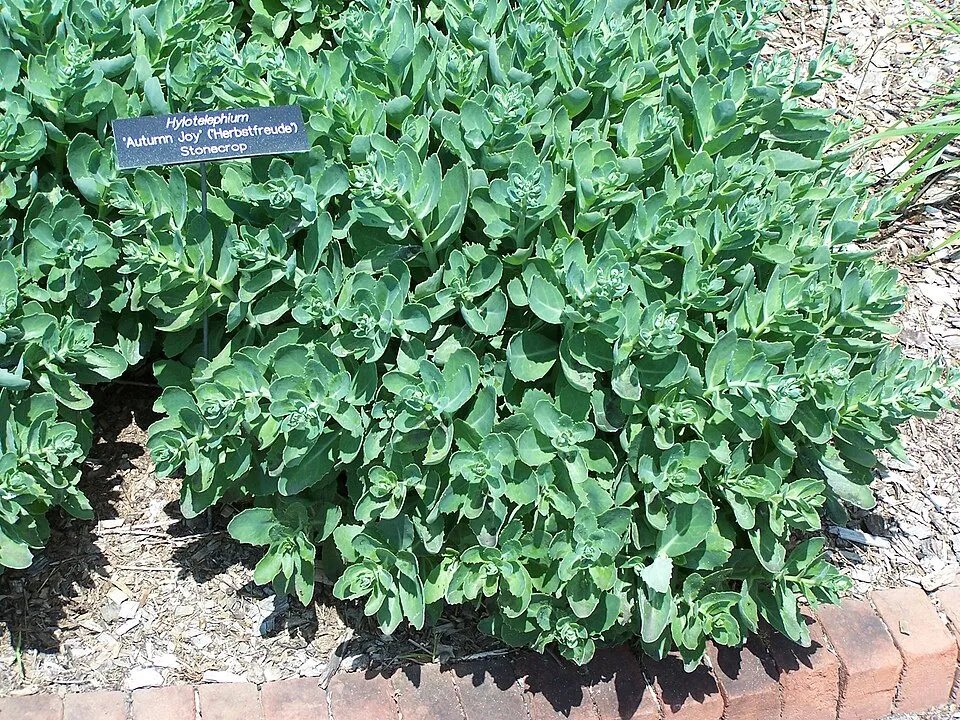
Hylotelephium 'Autumn Joy', commonly known as Sedum 'Autumn Joy' or Stonecrop 'Autumn Joy', is a highly popular and widely cultivated herbaceous perennial renowned for its robust nature and captivating seasonal interest. This succulent plant forms dense, upright clumps of sturdy stems adorned with thick, fleshy, blue-green leaves that remain attractive throughout the growing season. Its most striking feature is its long-lasting floral display, which begins in late summer and extends well into autumn.
The flowers emerge as dense, broccoli-like clusters of pale green buds, gradually transitioning to soft pink, then deepening to a rich rosy-pink, and finally maturing into a striking reddish-bronze or rust color as the weather cools. These flattened flower heads provide a spectacular visual anchor in the late-season garden, offering a crucial source of nectar for pollinators like bees and butterflies when many other plants have finished blooming. 'Autumn Joy' is exceptionally drought-tolerant once established, thriving in full sun and well-drained soil, making it an ideal choice for rock gardens, borders, mass plantings, and containers.
Its architectural form and changing colors make it a standout specimen, providing structure and beauty even through winter as the dried flower heads persist, adding textural interest. It is a low-maintenance plant that offers reliable performance and visual appeal across multiple seasons.
Trusted Scientific References
1. Authoritative external sources for Hylotelephium Autumn Joy
1.1 Wikipedia — Hylotelephium Autumn Joy
1.2 Kew POWO (Plants of the World Online)
1.3 PubMed — peer-reviewed research
1.4 NCBI Taxonomy Browser
1.5 GBIF — Global Biodiversity
1.6Sedum Autumn Joy should be interpreted through verified botanical identity, practical care, and responsible safety language. This recovery note adds the missing context needed for a complete profile: match light to the plant's habit, use well-drained soil, water according to season, and avoid unsupported medicinal or edible claims. For publishing, the plant can be presented as a source-backed garden plant with clear care guidance, common problem diagnosis, and conservative safety wording.
1.1.Sedum Autumn Joy — Notable Characteristics
- ✓["\u2713 Drought — tolerant and exceptionally low-maintenance.", "\u2713 Provides late-season interest with long-lasting blooms.", "\u2713 Flowers transition from green to pink to reddish-bronze.", "\u2713 Attracts bees and butterflies, supporting pollinators.", "\u2713 Sturdy, upright growth habit with attractive succulent foliage."]
- ✓Identified profile — Uses the accepted plant name and practical context for Sedum Autumn Joy.
- ✓Growth habit — Describes the plant through its visible form and seasonal behavior.
- ✓Care fit — Connects light, water, and soil needs to cultivation.
- ✓Garden value — Explains foliage, flowers, structure, or texture.
- ✓Safety note — Keeps edible, medicinal, and toxicity language cautious.
- ✓Propagation context — Mentions realistic propagation routes.
- ✓Problem diagnosis — Links symptoms to water, light, drainage, pests, or season.
- ✓Source ready — Keeps the profile suitable for later botanical review.
1.2.Sedum Autumn Joy — In Brief
- ✓Hylotelephium 'Autumn Joy' is a popular, low-maintenance perennial known for its robust nature and captivating late-season bloom.
- ✓Its succulent foliage and long-lasting flower heads transition from green to pink to reddish-bronze, providing crucial nectar for pollinators and extending garden interest well into autumn and winter.
- ✓This drought-tolerant plant thrives in full sun and well-drained soil, making it a reliable choice for various garden settings.
2.Sedum Autumn Joy — Scientific Identity
3.Sedum Autumn Joy — Vital Statistics
4.Sedum Autumn Joy — Physical Description
5.Sedum Autumn Joy — Origin & Spread
6.Sedum Autumn Joy — Folk Medicine Applications
7.Sedum Autumn Joy — Key Phytochemicals
- ✓Mucilage, tannins, flavonoids, organic acids (e.g., malic acid, citric acid), alkaloids (in trace amounts), saponins.
8.Sedum Autumn Joy — Scientific Evidence
- ✓While Hylotelephium 'Autumn Joy' is primarily cultivated for its ornamental value, some species within the Sedum genus (to which Hylotelephium was formerly classified) have a history of traditional medicinal use, particularly for their demulcent, astringent, and anti-inflammatory properties.
- ✓These applications are generally based on the presence of mucilage, tannins, and certain organic acids found in the fleshy leaves.
- ✓Traditionally, various Sedum species have been used topically as poultices to soothe skin irritations, minor burns, insect stings, and superficial wounds.
- ✓The succulent leaves, when crushed, release a cooling sap that can help reduce inflammation and promote healing.
- ✓They have also been employed to treat conditions like hemorrhoids and warts due to their astringent qualities.
- ✓Internally, some Sedum species have been used in folk medicine for their diuretic properties or to alleviate gastrointestinal discomfort, though such internal use is less common and generally discouraged without expert guidance due to potential variations in chemical composition and potency between species.
- ✓It is important to note that specific scientific research on the medicinal properties of Hylotelephium 'Autumn Joy' itself is limited, and its use for medicinal purposes should be approached with caution, relying more on the general properties of related species rather than specific proven benefits for this cultivar.
8.1.Sedum Autumn Joy — Therapeutic Indications
9.Sedum Autumn Joy — Safety Considerations
9.1.Sedum Autumn Joy — Warnings
- ✓Generally considered safe.
- ✓Potential for mild skin irritation in sensitive individuals when handled extensively. Ingestion of large quantities may cause mild gastrointestinal upset (nausea, vomiting, diarrhea) due to oxalic acid content, though this is rare given its low palatability.
9.2.Sedum Autumn Joy — Risk Assessment
- ✓Low toxicity.
- ✓Generally safe for handling and cultivation in gardens.
- ✓Minimal risk to humans and pets under normal circumstances.
- ✓Always exercise caution and avoid ingestion of large quantities.
10.Sedum Autumn Joy — Preparation Methods
- ✓For traditional topical use (based on general Sedum species properties): Crush fresh leaves to extract sap and apply directly as a poultice to minor burns, insect bites, skin irritations, or small wounds.
- ✓Secure with a bandage.
- ✓Change regularly.
- ✓Not recommended for internal use without expert consultation due to lack of specific research on this cultivar.
11.Sedum Autumn Joy — Garden Cultivation
- ✓Plant in full sun (at least 6 hours direct sun daily) for best flowering and foliage color. Requires well-drained soil
- ✓Sandy or gravelly soils are ideal. Avoid heavy clay soils that retain too much moisture, as this can lead to root rot. Water regularly during establishment, then it is highly drought-tolerant and needs minimal supplemental watering. Fertilize sparingly, if at all, as rich soil can lead to leggy growth. Cut back spent flower stalks in late winter or early spring before new growth emerges. Divide clumps every 3-5 years to maintain vigor and prevent overcrowding.
Reviewed by the Flora Medical Global Botanical Review Panel
Multi-disciplinary editorial group · Botany · Ethnobotany · Herbal-medicine literature
Who reviewed this: This page was checked by the Flora Medical Global Botanical Review Panel — an in-house editorial group of botany graduates, ethnobotany researchers, and horticulture practitioners who collectively maintain our 7,000+ plant encyclopedia. Meet the team.
Our 4-step verification process
1. Taxonomic verification
Scientific names and synonyms cross-checked against Kew POWO, World Flora Online, and The Plant List.
2. Phytochemical & medicinal cross-reference
Active compounds, traditional uses, and reported activities are cross-referenced with PubMed, USDA Dr. Duke's database, and peer-reviewed ethnobotanical literature.
3. Conservation & distribution check
Distribution, ecology, and conservation status confirmed against GBIF occurrence records and the IUCN Red List.
4. Editorial & safety review
Every entry passes an editorial pass for clarity, originality, and safety notices (toxicity, contraindications, dosage caveats) before publication.
Last reviewed:
Important medical disclaimer: This content is for educational and research purposes only. It is not medical advice and is not a substitute for consultation with a licensed healthcare provider. Do not use any herb to self-treat a medical condition without professional guidance.
Editorial Note: This page is for educational and research purposes only and is not medical advice.
Written by: Flora Medical Global Editorial Team
Reviewed by: Flora Medical Global Botanical Review Panel
Last Updated: June 15, 2026





Sedum Autumn Joy — Comments & Community Reviews
Rate this plant