


Medical Disclaimer: This content is for educational purposes only. It is not medical advice. Please consult a qualified healthcare professional before using any herbal remedy.
Safety Overview
1.Sedum Kamtschaticum — Essential Profile
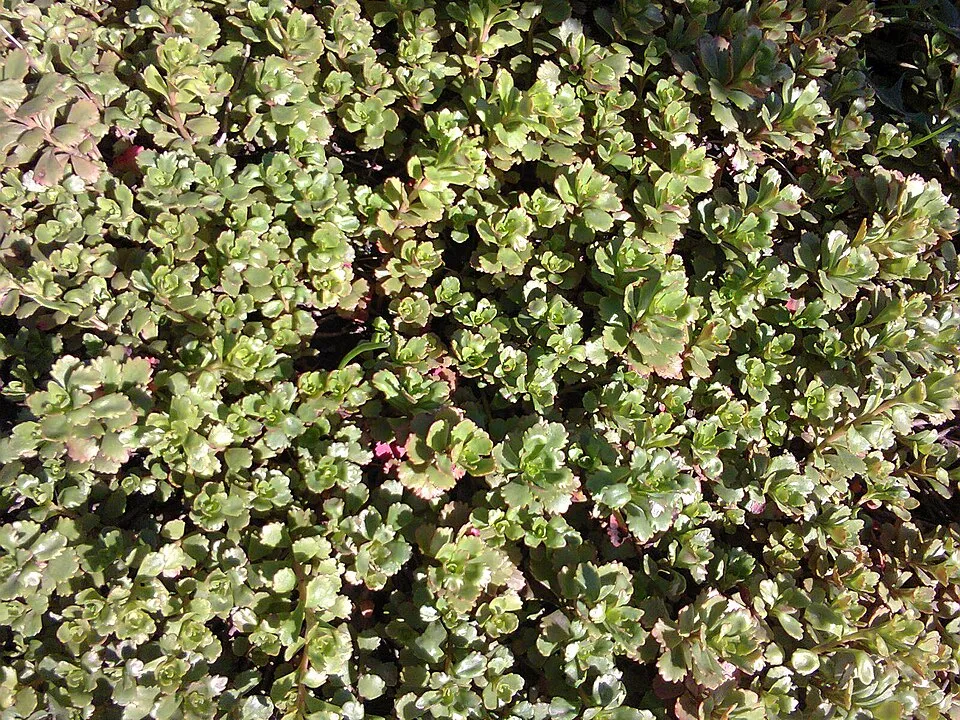
Sedum kamtschaticum, commonly known as Kamtchatka Stonecrop, is a remarkably resilient and visually appealing succulent perennial belonging to the Crassulaceae family. Native to the rugged, rocky slopes and coastal regions of Eastern Asia, including the Kamchatka Peninsula, Korea, and Japan, this low-growing plant forms a dense, spreading mat. Its characteristic bright green, spatulate leaves are fleshy and robust, often developing attractive reddish or bronze tints in response to cooler temperatures or intense sunlight, providing seasonal interest throughout the year.
In late spring to early summer, Sedum kamtschaticum produces abundant clusters of vibrant, star-shaped flowers that range from golden-yellow to deep orange, emerging from reddish buds and creating a striking display. Following the bloom, the spent flower heads mature into reddish-brown seed capsules, extending its ornamental appeal well into autumn and winter. This species is highly valued in horticulture for its ability to thrive in challenging conditions, making it an excellent choice for groundcover, rock gardens, borders, and extensive green roofs where many other plants struggle.
Its robust nature and aesthetic versatility make Kamtchatka Stonecrop a favored choice for sustainable landscaping, showcasing both beauty and hardiness.
Trusted Scientific References
1. Authoritative external sources for Sedum kamtschaticum
1.1 Wikipedia — Sedum kamtschaticum
1.2 Kew POWO (Plants of the World Online)
1.3 PubMed — peer-reviewed research
1.4 NCBI Taxonomy Browser
1.5 GBIF — Global Biodiversity
1.6Sedum Kamtschaticum should be interpreted through verified botanical identity, practical care, and responsible safety language. This recovery note adds the missing context needed for a complete profile: match light to the plant's habit, use well-drained soil, water according to season, and avoid unsupported medicinal or edible claims. For publishing, the plant can be presented as a source-backed garden plant with clear care guidance, common problem diagnosis, and conservative safety wording.
1.1.Sedum Kamtschaticum — Notable Characteristics
- ✓Scientific Name — Sedum kamtschaticum
- ✓Common Name — Kamtchatka Stonecrop
- ✓Family — Crassulaceae
- ✓Native Region — Eastern Asia (Kamchatka, Korea, Japan)
- ✓Key Bioactive Compound — Myricitrin
- ✓Primary Medicinal Action — Hypnotic/Sleep-promoting
- ✓Growth Habit — Low-growing, mat-forming succulent perennial
- ✓Ornamental Value — Vibrant green foliage with reddish tints, golden-yellow flowers
- ✓Resilience — Highly drought-tolerant, cold-hardy, and low maintenance
- ✓Traditional Use (Genus) — Wound healing, anti-inflammatory, demulcent
1.2.Sedum Kamtschaticum — Snapshot Summary
- ✓Kamtchatka Stonecrop is a resilient, ornamental succulent from Eastern Asia.
- ✓Recent research highlights its significant hypnotic effects, reducing sleep latency and prolonging sleep time.
- ✓Its sleep-promoting action is linked to the flavonoid myricitrin, which activates adenosine A2A receptors and enhances GABAergic activity.
- ✓Traditionally, the Sedum genus was used for wound healing, anti-inflammatory purposes, and as a demulcent.
- ✓While primarily grown for aesthetics, Sedum kamtschaticum shows promising medicinal potential for natural sleep support.
- ✓Internal medicinal use requires caution and professional guidance due to limited human safety data.
2.Sedum Kamtschaticum — Scientific Identity
3.Sedum Kamtschaticum — Vital Statistics
4.Sedum Kamtschaticum — Botanical Description
5.Sedum Kamtschaticum — Ecological Habitat
6.Sedum Kamtschaticum — Heritage Uses
7.Sedum Kamtschaticum — Chemical Profile
- ✓Flavonoids — Key compounds include myricitrin, which has been identified as a primary active constituent responsible for the hypnotic effects, along with other flavonoids like quercetin and kaempferol contributing antioxidant and anti-inflammatory actions.
- ✓Tannins — These polyphenolic compounds provide astringent properties, aiding in tissue contraction, wound healing, and exhibiting antioxidant and antimicrobial effects.
- ✓Mucilage — Composed of polysaccharides, mucilage imparts demulcent and soothing properties, beneficial for skin and mucous membrane protection.
- ✓Organic Acids — Various organic acids contribute to the plant's metabolic processes and may offer mild antiseptic and antioxidant benefits.
- ✓Alkaloids — Present in small, trace amounts, these nitrogen-containing compounds can have diverse physiological impacts, though their specific contributions in Sedum kamtschaticum are not extensively characterized.
- ✓Phenolic Acids — Beyond flavonoids, other phenolic acids such as gallic acid and ellagic acid contribute to the plant's overall antioxidant capacity and protective mechanisms.
- ✓Triterpenoids — A class of secondary metabolites often associated with anti-inflammatory and adaptogenic properties in plants, potentially present in Kamtchatka Stonecrop.
- ✓Saponins — Glycosides that can create a foaming action, sometimes linked to diuretic or expectorant traditional uses, may be found in varying concentrations.
- ✓Glycosides — A broad category of compounds where a sugar molecule is attached to one or more non-sugar molecules, including flavonoid glycosides like myricitrin, which are crucial for the plant's bioactivity.
8.Sedum Kamtschaticum — Pharmacological Findings
- ✓Hypnotic Effects — Recent research indicates that a 30% ethanol extract of Sedum kamtschaticum and its active compound, myricitrin, can significantly reduce sleep latency and prolong total sleep time by activating adenosine A2A receptors and enhancing GABAergic neural activity.
- ✓Anxiolytic Potential — The modulatory effects of Sedum kamtschaticum on GABAergic systems suggest a potential for reducing anxiety and promoting relaxation, though specific anxiolytic studies are still emerging.
- ✓Anti-inflammatory Support — Traditionally, some Sedum species have been utilized for their anti-inflammatory properties, a benefit potentially attributed to the flavonoid content found in Kamtchatka Stonecrop.
- ✓Wound Healing Acceleration — Historical applications of Sedum genus extracts for minor burns and skin irritations point to possible wound-healing capabilities, likely due to mucilage and astringent compounds that aid tissue repair.
- ✓Astringent Properties — The presence of tannins in Sedum kamtschaticum contributes to its astringent effects, which can help tighten tissues, reduce minor bleeding, and soothe irritated skin.
- ✓Demulcent Action — The mucilage content in Kamtchatka Stonecrop provides a soothing and protective effect on mucous membranes, making it potentially beneficial for topical skin conditions or mild gastrointestinal discomfort.
- ✓Antioxidant Activity — Flavonoids, including myricitrin, and other phenolic compounds within Sedum kamtschaticum contribute to its antioxidant defense, helping to neutralize free radicals and protect cellular integrity.
- ✓Diuretic Support (Traditional) — Some Sedum species were historically used as mild diuretics, suggesting a potential for promoting urine flow, though this specific application requires further validation for S. kamtschaticum.
- ✓Gastrointestinal Comfort (Traditional) — Traditional uses of the broader Sedum genus sometimes included applications for minor digestive complaints, possibly due to demulcent or mild astringent actions.
- ✓Neuroprotective Effects — Given its influence on neural activity and receptors involved in sleep regulation, Sedum kamtschaticum may offer broader neuroprotective benefits, warranting further investigation.
8.1.Sedum Kamtschaticum — Conditions Traditionally Used For
9.Sedum Kamtschaticum — Safety Considerations
9.1.Sedum Kamtschaticum — Caution Notes
- ✓Gastrointestinal Upset — High doses or individual sensitivities may lead to mild nausea, stomach discomfort, or diarrhea.
- ✓Allergic Reactions — Potential for skin irritation or allergic contact dermatitis in sensitive individuals when applied topically.
- ✓Sedation — Given its identified hypnotic effects, internal use could induce drowsiness, especially if combined with other central nervous system depressants or alcohol.
- ✓Drug Interactions — May potentially interact with sedative medications, anxiolytics, or drugs affecting adenosine A2A receptors, potentially amplifying their effects.
- ✓Unknown Long-Term Effects — Due to limited human clinical studies, the long-term safety of internal use of Sedum kamtschaticum extracts is not yet fully established.
- ✓Photosensitivity — While not specifically confirmed for S. kamtschaticum, some Sedum species can induce mild photosensitivity in susceptible individuals.
9.2.Sedum Kamtschaticum — Clinical Safety Notes
- ✓Pregnancy and Lactation — Not recommended for use during pregnancy or breastfeeding due to insufficient safety data and potential unknown effects on fetal or infant development.
- ✓Children — Avoid internal use in children as safety and appropriate dosages have not been established for this age group.
- ✓Pre-existing Conditions — Individuals with liver disease, kidney disease, neurological disorders, or those on sedative medications should exercise extreme caution and consult a healthcare professional prior to use.
- ✓Driving and Operating Machinery — Due to potential sedative effects, it is advisable to avoid driving or operating heavy machinery after internal consumption of Sedum kamtschaticum preparations.
- ✓Professional Guidance — Any internal medicinal use of Sedum kamtschaticum should only be undertaken under the direct supervision of a qualified medical herbalist or healthcare practitioner.
- ✓Topical Use — Generally considered safe for external application, but a patch test on a small area of skin is recommended to check for individual sensitivity or allergic reactions.
10.Sedum Kamtschaticum — Usage Guide
- ✓Ornamental Cultivation — Primarily cultivated for its aesthetic appeal as a resilient groundcover, rock garden specimen, border plant, or for green roof applications.
- ✓Topical Poultice (Traditional) — Historically, crushed fresh leaves of Sedum species might be applied externally as a poultice to soothe minor skin irritations, small burns, or insect bites.
- ✓Experimental Tincture — A 30% ethanol extract (ESK) has been utilized in scientific studies to investigate its hypnotic effects, but this is for research purposes and not recommended for general self-administration.
- ✓Infusion/Decoction (Caution Recommended) — While not specifically recommended for Sedum kamtschaticum, some Sedum species were traditionally prepared as infusions or decoctions for internal use, a practice that requires expert guidance due to limited safety data.
- ✓Culinary Use (Limited) — Some Sedum species have edible leaves, but Kamtchatka Stonecrop is not commonly consumed, and caution is advised due to specific compound concentrations or potential interactions.
- ✓Future Standardized Extracts — Ongoing research may lead to the development of standardized Sedum kamtschaticum extracts for specific therapeutic applications, particularly for sleep support, following rigorous clinical trials and safety assessments.
11.Sedum Kamtschaticum — Cultivation & Care
- ✓Light — Thrives in full sun to partial shade, requiring at least six hours of direct sunlight daily for optimal growth and vibrant foliage coloration.
- ✓Soil — Prefers well-drained, gritty, or sandy soil; tolerates poor soil conditions and is intolerant of heavy clay or prolonged waterlogging.
- ✓Water — Highly drought-tolerant once established, necessitating minimal watering; allow the soil to dry out completely between waterings to prevent root rot.
- ✓Temperature — Extremely cold-hardy, capable of withstanding a wide range of temperatures and significant frost, making it suitable for diverse climates.
- ✓Propagation — Easily propagated from stem cuttings taken in spring or summer, by division of mature clumps in early spring, or from collected seeds.
- ✓Maintenance — A low-maintenance plant that requires minimal fertilization and occasional deadheading of spent flowers to encourage new blooms and maintain a tidy appearance.
- ✓Pests/Diseases — Generally resistant to most common garden pests and diseases, though overwatering remains the primary concern, potentially leading to fungal issues or root rot.
Reviewed by the Flora Medical Global Botanical Review Panel
Multi-disciplinary editorial group · Botany · Ethnobotany · Herbal-medicine literature
Who reviewed this: This page was checked by the Flora Medical Global Botanical Review Panel — an in-house editorial group of botany graduates, ethnobotany researchers, and horticulture practitioners who collectively maintain our 7,000+ plant encyclopedia. Meet the team.
Our 4-step verification process
1. Taxonomic verification
Scientific names and synonyms cross-checked against Kew POWO, World Flora Online, and The Plant List.
2. Phytochemical & medicinal cross-reference
Active compounds, traditional uses, and reported activities are cross-referenced with PubMed, USDA Dr. Duke's database, and peer-reviewed ethnobotanical literature.
3. Conservation & distribution check
Distribution, ecology, and conservation status confirmed against GBIF occurrence records and the IUCN Red List.
4. Editorial & safety review
Every entry passes an editorial pass for clarity, originality, and safety notices (toxicity, contraindications, dosage caveats) before publication.
Last reviewed:
Important medical disclaimer: This content is for educational and research purposes only. It is not medical advice and is not a substitute for consultation with a licensed healthcare provider. Do not use any herb to self-treat a medical condition without professional guidance.
Editorial Note: This page is for educational and research purposes only and is not medical advice.
Written by: Flora Medical Global Editorial Team
Reviewed by: Flora Medical Global Botanical Review Panel
Last Updated: June 15, 2026





Sedum Kamtschaticum — Comments & Community Reviews
Rate this plant