


Medical Disclaimer: This content is for educational purposes only. It is not medical advice. Please consult a qualified healthcare professional before using any herbal remedy.
Safety Overview
1.Sedum Spectabile — Plant Snapshot
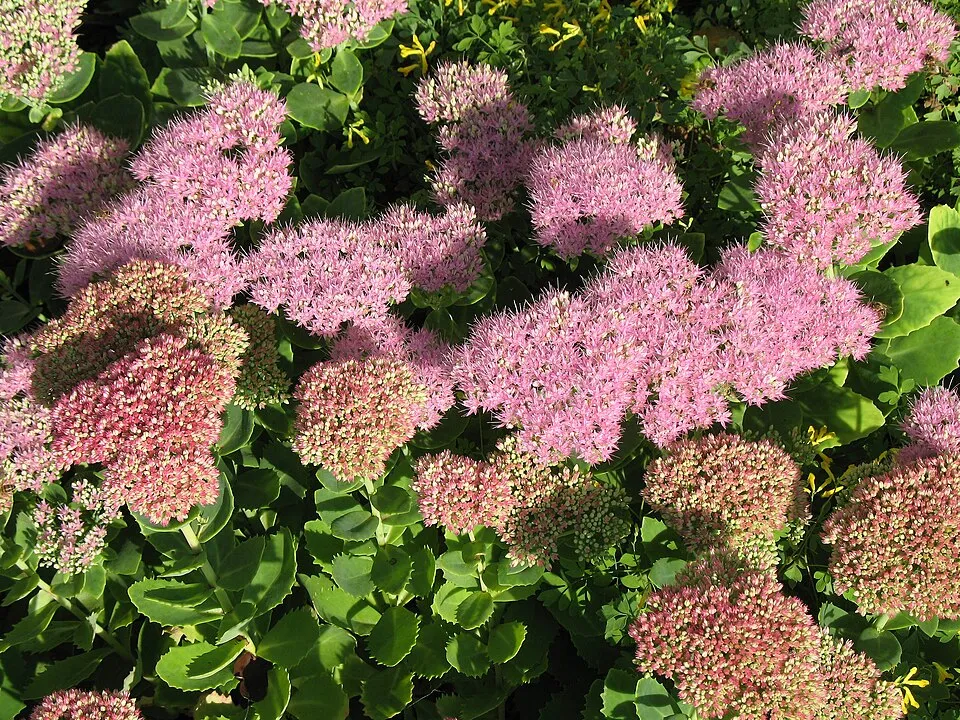
Hylotelephium spectabile, commonly known as 'Autumn Joy' or 'Showy Stonecrop', is a perennial succulent herb native to northeastern China and Korea. It is a popular garden plant prized for its late-season blooms and drought tolerance. The plant typically grows to a height of 30-60 cm (1-2 feet) and spreads to about 45 cm (1.5 feet). It features fleshy, obovate to oblong leaves, typically 5-10 cm long, arranged alternately along the stems.
The leaves are glaucous green, often with a slightly serrated margin. In late summer to early autumn, it produces large, flat-topped clusters (corymbs) of star-shaped flowers. The flowers initially emerge as greenish buds, then open to a vibrant pink or rose color, gradually deepening to a rusty red or bronze as they mature and persist into winter, providing excellent winter interest. The flower heads are attractive to a wide array of pollinators, including bees and butterflies, making it a valuable addition to wildlife gardens.
It is a hardy plant, well-suited to various soil types as long as they are well-draining, and thrives in full sun to partial shade. Its succulent nature allows it to store water in its leaves and stems, contributing to its remarkable drought resistance once established. Propagation is easily achieved through division of clumps in spring or by stem cuttings taken in summer.
Trusted Scientific References
1. Authoritative external sources for Sedum Spectabile
1.1 Wikipedia — Sedum Spectabile
1.2 Kew POWO (Plants of the World Online)
1.3 PubMed — peer-reviewed research
1.4 NCBI Taxonomy Browser
1.5 GBIF — Global Biodiversity
1.6Sedum Spectabile should be interpreted through verified botanical identity, practical care, and responsible safety language. This recovery note adds the missing context needed for a complete profile: match light to the plant's habit, use well-drained soil, water according to season, and avoid unsupported medicinal or edible claims. For publishing, the plant can be presented as a source-backed garden plant with clear care guidance, common problem diagnosis, and conservative safety wording.
1.1.Sedum Spectabile — Defining Traits
- ✓["\u2713 Succulent perennial — ["\u2713 Succulent perennial herb", "\u2713 Drought tolerant", "\u2713 Late-season blooms (late summer to autumn)", "\u2713 Flat-topped clusters of star-shaped flowers", "\u2713 Flowers change color from pink to rusty red", "\u2713 Attracts bees and butterflies", "\u2713 Provides winter interest", "\u2713 Easy to cultivate and propagate"]
- ✓Identified profile — Uses the accepted plant name and practical context for Sedum Spectabile.
- ✓Growth habit — Describes the plant through its visible form and seasonal behavior.
- ✓Care fit — Connects light, water, and soil needs to cultivation.
- ✓Garden value — Explains foliage, flowers, structure, or texture.
- ✓Safety note — Keeps edible, medicinal, and toxicity language cautious.
- ✓Propagation context — Mentions realistic propagation routes.
- ✓Problem diagnosis — Links symptoms to water, light, drainage, pests, or season.
- ✓Source ready — Keeps the profile suitable for later botanical review.
1.2.Sedum Spectabile — Snapshot Summary
- ✓Hylotelephium spectabile is a hardy, drought-tolerant perennial succulent known for its late-summer pink to rusty-red flower clusters that attract pollinators and provide winter interest.
2.Sedum Spectabile — Systematic Position
3.Sedum Spectabile — Reference Facts
4.Sedum Spectabile — Plant Morphology
5.Sedum Spectabile — Habitat & Distribution
6.Sedum Spectabile — Cultural & Traditional Roles
7.Sedum Spectabile — Secondary Metabolites
- ✓Flavonoids — Key compounds include quercetin, kaempferol, and their glycosides, known for potent antioxidant, anti-inflammatory, and anticarcinogenic activities.
- ✓Phenolic Acids — Contains caffeic acid, chlorogenic acid, and ferulic acid, which contribute significantly to the plant's antioxidant and free-radical scavenging capabilities.
- ✓Mucilages — High content of polysaccharides, providing demulcent, soothing, and wound-healing properties, particularly beneficial for skin and mucous membranes.
- ✓Tannins — Present in moderate amounts, conferring mild astringent properties that can help in wound contraction and reducing inflammation.
- ✓Organic Acids — Includes malic acid and succinic acid, common in Crassulaceae due to Crassulacean Acid Metabolism (CAM), contributing to the plant's overall metabolic functions.
- ✓Triterpenoids — Various triterpenoid compounds may be present, often associated with anti-inflammatory and adaptogenic effects.
- ✓Phytosterols — Plant sterols such as beta-sitosterol are found, which can have cholesterol-lowering and anti-inflammatory properties.
- ✓Alkaloids — Trace amounts of diverse alkaloids might be present, potentially contributing to various pharmacological effects, though usually not primary active constituents in this species.
- ✓Saponins — Glycosidic compounds that can exhibit detergent-like properties and have been linked to anti-inflammatory and immune-modulating effects.
- ✓Vitamins and Minerals — Contains essential vitamins (e.g., Vitamin C) and trace minerals (e.g., calcium, magnesium) vital for cellular function and overall health.
8.Sedum Spectabile — Research Insights
- ✓Anti-inflammatory Properties — Extracts of Sedum spectabile have been traditionally used to alleviate inflammation, potentially due to the presence of flavonoids and phenolic acids that modulate inflammatory pathways, reducing swelling and discomfort.
- ✓Antioxidant Activity — Rich in compounds like quercetin and kaempferol, the plant exhibits significant antioxidant capacity, helping to neutralize free radicals and protect cells from oxidative stress and damage.
- ✓Wound Healing Support — Traditionally applied as poultices, the succulent leaves are believed to aid in the healing of minor cuts, abrasions, and skin irritations by promoting tissue regeneration and providing a protective barrier.
- ✓Demulcent Effects — The mucilaginous content of the leaves offers soothing properties, making it traditionally useful for calming irritated skin and potentially internal mucous membranes when consumed cautiously.
- ✓Immunomodulatory Potential — Certain polysaccharides and phenolic compounds present in Sedum spectabile may help modulate immune responses, potentially enhancing the body's natural defense mechanisms.
- ✓Skin Soothing and Hydration — The fleshy leaves contain compounds that can help moisturize and soothe dry or irritated skin, contributing to overall skin health and barrier function.
- ✓Mild Astringent Action — Tannins within the plant may provide a mild astringent effect, which can help tone skin and reduce minor bleeding from superficial wounds.
- ✓Antipruritic Effects — Applied topically, the plant's extracts may help relieve itching associated with insect bites or minor skin rashes due to its soothing and anti-inflammatory components.
- ✓Pain Relief (Topical) — The anti-inflammatory properties can contribute to localized pain relief when applied externally to areas of minor muscle aches or joint discomfort.
- ✓Minor Burn Treatment — Traditional uses include applying crushed leaves to minor burns to provide cooling, reduce inflammation, and support skin recovery.
8.1.Sedum Spectabile — Indications & Uses
9.Sedum Spectabile — Risk Profile
9.1.Sedum Spectabile — Side Effects & Warnings
- ✓Skin Irritation — Direct contact with sap from fresh leaves may cause mild skin irritation or allergic dermatitis in sensitive individuals.
- ✓Allergic Reactions — Though rare, individuals with plant allergies may experience symptoms such as rash, itching, or swelling upon topical application.
- ✓Gastrointestinal Upset — Ingestion of large quantities, particularly of raw plant material, may lead to mild gastrointestinal discomfort, nausea, or vomiting.
- ✓Photosensitivity — Some Sedum species contain compounds that can induce photosensitivity; exercise caution with prolonged sun exposure after internal consumption.
- ✓Drug Interactions — Potential, though unconfirmed, for interaction with anticoagulant medications or drugs affecting blood sugar due to active compounds.
- ✓Toxicity Concerns — While generally considered low toxicity, internal use should be approached with caution due to limited safety data and potential for unknown compounds.
- ✓Hypotension — Theoretical risk of lowering blood pressure if consumed in very large amounts, especially in individuals on antihypertensive medications.
9.2.Sedum Spectabile — Safety Profile
- ✓Pregnancy and Lactation — Avoid internal use during pregnancy and breastfeeding due to insufficient research regarding safety and potential effects on fetal development or infant health.
- ✓Pediatric Use — Not recommended for internal use in children; topical application should be done with caution and under medical supervision.
- ✓External Use — Generally considered safe for topical application to intact skin; however, a patch test is advised for individuals with sensitive skin.
- ✓Internal Consumption — Internal use of Sedum spectabile is not widely documented in established medical herbalism and should be approached with extreme caution, preferably under the guidance of a qualified healthcare practitioner.
- ✓Allergic Sensitivity — Individuals with known allergies to plants in the Crassulaceae family should avoid using Sedum spectabile to prevent adverse reactions.
- ✓Identification — Ensure correct plant identification; avoid confusing Sedum spectabile with other Sedum species, some of which may have different chemical profiles or higher toxicity.
- ✓Medical Conditions — Individuals with pre-existing medical conditions, particularly those affecting liver or kidney function, should consult a doctor before using any plant-based remedy.
10.Sedum Spectabile — How to Use
- ✓Fresh Poultice — Crush fresh Sedum spectabile leaves and apply directly to minor cuts, abrasions, burns, or insect bites for soothing and wound-healing effects.
- ✓Infused Oil — Macerate chopped fresh or dried leaves in a carrier oil (e.g., olive, jojoba) for several weeks to create an infused oil for topical skin applications.
- ✓Herbal Compress — Steep dried Sedum spectabile leaves in hot water, strain, and use the cooled liquid with a cloth as a compress for inflamed or irritated skin areas.
- ✓Tincture — Prepare an alcohol-based tincture from fresh or dried plant material for concentrated extracts, primarily for external use or very cautious internal use under expert guidance.
- ✓Salve or Ointment — Incorporate Sedum spectabile infused oil or extract into a beeswax or shea butter base to create a topical salve for sustained skin nourishment and healing.
- ✓Juiced Leaves — Express juice from fresh leaves for direct topical application to specific skin blemishes, minor irritations, or as an ingredient in homemade skin care.
- ✓Herbal Tea (External) — Brew a strong infusion of dried leaves for use as a topical wash or rinse to soothe skin conditions or as a hair rinse for scalp health.
- ✓Glycerite — Extract the plant's beneficial compounds using vegetable glycerin for a non-alcoholic topical application, particularly suitable for sensitive skin.
11.Sedum Spectabile — Growing Guide
- ✓Plant in well-draining soil in a location that receives full sun to partial shade. Hylotelephium spectabile is very drought tolerant once established, so avoid overwatering. Water moderately during dry spells. For best flowering and to prevent flopping, ensure adequate sunlight. Divide clumps every 3-4 years in early spring to maintain vigor and propagate. Can also be propagated from stem cuttings taken in summer. Deadheading spent flowers is optional
- ✓Many gardeners leave them on for winter interest and to provide food for birds. Cut back dead foliage in late winter or early spring before new growth emerges.
Reviewed by the Flora Medical Global Botanical Review Panel
Multi-disciplinary editorial group · Botany · Ethnobotany · Herbal-medicine literature
Who reviewed this: This page was checked by the Flora Medical Global Botanical Review Panel — an in-house editorial group of botany graduates, ethnobotany researchers, and horticulture practitioners who collectively maintain our 7,000+ plant encyclopedia. Meet the team.
Our 4-step verification process
1. Taxonomic verification
Scientific names and synonyms cross-checked against Kew POWO, World Flora Online, and The Plant List.
2. Phytochemical & medicinal cross-reference
Active compounds, traditional uses, and reported activities are cross-referenced with PubMed, USDA Dr. Duke's database, and peer-reviewed ethnobotanical literature.
3. Conservation & distribution check
Distribution, ecology, and conservation status confirmed against GBIF occurrence records and the IUCN Red List.
4. Editorial & safety review
Every entry passes an editorial pass for clarity, originality, and safety notices (toxicity, contraindications, dosage caveats) before publication.
Last reviewed:
Important medical disclaimer: This content is for educational and research purposes only. It is not medical advice and is not a substitute for consultation with a licensed healthcare provider. Do not use any herb to self-treat a medical condition without professional guidance.
Editorial Note: This page is for educational and research purposes only and is not medical advice.
Written by: Flora Medical Global Editorial Team
Reviewed by: Flora Medical Global Botanical Review Panel
Last Updated: June 15, 2026





Sedum Spectabile — Comments & Community Reviews
Rate this plant