
Medical Disclaimer: This content is for educational purposes only. It is not medical advice. Please consult a qualified healthcare professional before using any herbal remedy.
Safety Overview
1.Sedum Spurium — Introduction & Highlights
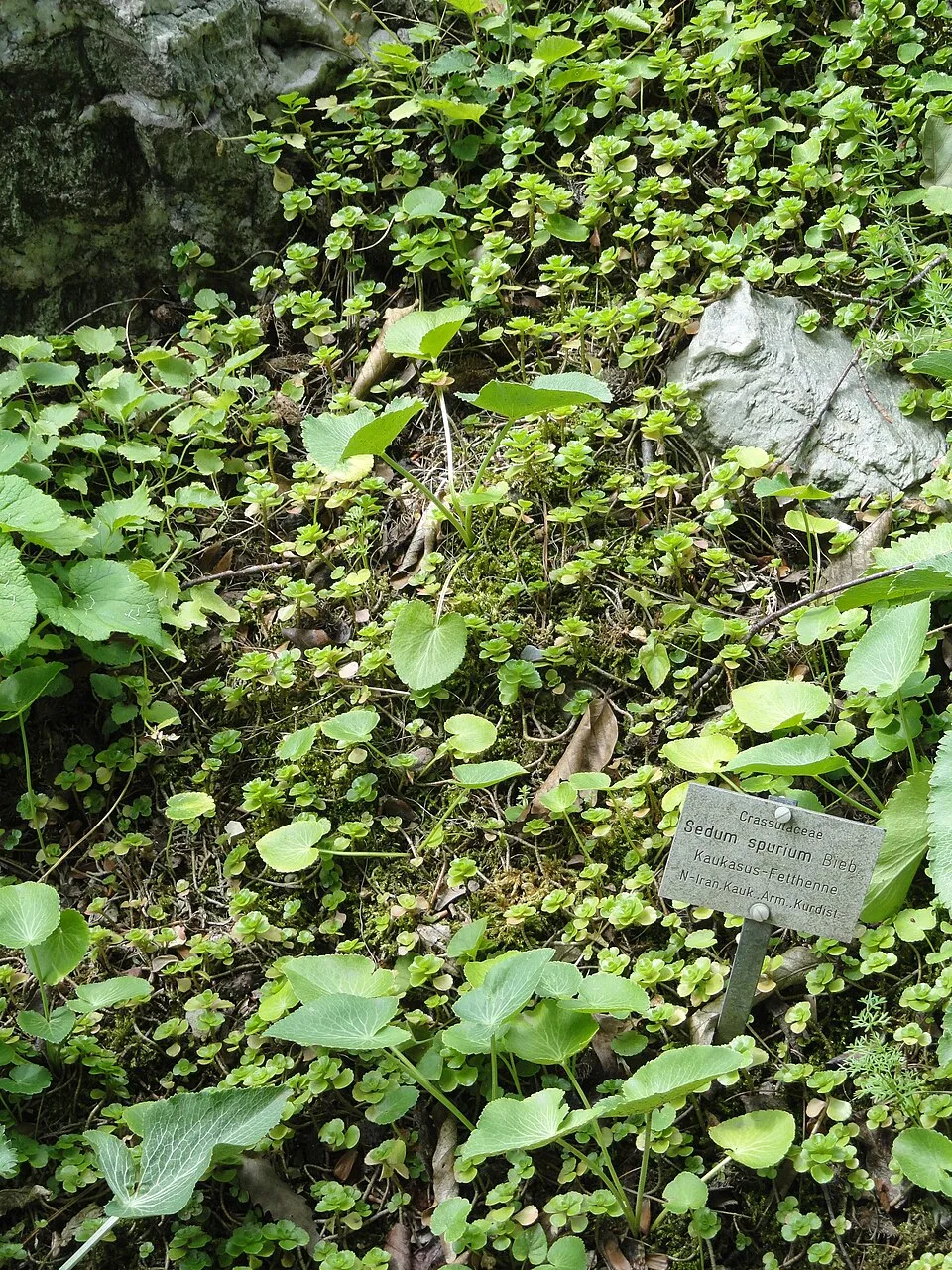
Sedum Spurium, widely recognized as Caucasian Stonecrop or Two-row Stonecrop, is a robust, mat-forming succulent perennial native to the Caucasus region and parts of Western Asia. This resilient plant typically forms dense carpets, spreading through creeping stems that root where they touch the soil, creating an effective ground cover. Its fleshy, spatulate to obovate leaves are arranged alternately or in two distinct rows along the stem, giving rise to one of its common names.
The foliage coloration varies from vibrant green to deep reddish-bronze, intensifying with exposure to full sun or cooler temperatures. During the summer months, Sedum Spurium produces abundant clusters of small, star-shaped flowers, typically arranged in cymes. These blooms come in an attractive spectrum of pink, red, or white hues, providing a striking contrast against the succulent leaves and attracting various pollinators.
As a member of the Crassulaceae family, it exhibits characteristic succulent adaptations, including thick cuticles and Crassulacean Acid Metabolism (CAM) photosynthesis, which enable it to thrive in arid conditions and poor, rocky soils. Its adaptability and aesthetic appeal have made it a popular choice for rock gardens, green roofs, and xeriscaping, showcasing its ornamental and ecological versatility.
Trusted Scientific References
1. Authoritative external sources for Sedum Spurium
1.1 Wikipedia — Sedum Spurium
1.2 Kew POWO (Plants of the World Online)
1.3 PubMed — peer-reviewed research
1.4 NCBI Taxonomy Browser
1.5 GBIF — Global Biodiversity
1.6Sedum Spurium should be interpreted through verified botanical identity, practical care, and responsible safety language. This recovery note adds the missing context needed for a complete profile: match light to the plant's habit, use well-drained soil, water according to season, and avoid unsupported medicinal or edible claims. For publishing, the plant can be presented as a source-backed garden plant with clear care guidance, common problem diagnosis, and conservative safety wording.
1.1.Sedum Spurium — Key Features
- ✓Botanical Name — Sedum Spurium
- ✓Common Names — Caucasian Stonecrop, Two-row Stonecrop, Dragon's Blood Sedum
- ✓Family — Crassulaceae (Stonecrop family)
- ✓Growth Habit — Perennial, low-growing, mat-forming succulent
- ✓Medicinal Use — Topical astringent, wound healer, skin soother for minor ailments
- ✓Key Constituents — Flavonoids, tannins, organic acids, mucilage
- ✓Cultivation — Prefers full sun to partial shade, well-drained soil, highly drought-tolerant
- ✓Hardiness — Extremely resilient, hardy in USDA Zones 3-9
- ✓Aesthetic Value — Excellent ornamental ground cover, rock garden plant, attracts pollinators
- ✓Safety Profile — For external use only; patch test advised; avoid internal ingestion.
1.2.Sedum Spurium — Snapshot Summary
- ✓Mat-forming succulent perennial with vibrant foliage and star-shaped flowers.
- ✓Traditionally used topically for its astringent, wound-healing, and skin-soothing properties.
- ✓Rich in beneficial phytochemicals including flavonoids, tannins, and mucilage.
- ✓Exceptionally hardy, drought-tolerant, and low-maintenance ornamental ground cover.
- ✓Primarily for external application; internal consumption is not recommended and should be avoided.
2.Sedum Spurium — Taxonomic Classification
3.Sedum Spurium — Quick Facts
4.Sedum Spurium — Plant Morphology
5.Sedum Spurium — Where It Grows
6.Sedum Spurium — Historical Applications
7.Sedum Spurium — Active Compounds
- ✓Flavonoids — Key compounds include quercetin and kaempferol derivatives, which are potent antioxidants and contribute to the plant's anti-inflammatory properties and cellular protection.
- ✓Tannins — Predominantly condensed tannins, these polyphenolic compounds are responsible for the plant's astringent action, aiding in wound healing and possessing mild antimicrobial effects.
- ✓Alkaloids — Present in trace amounts, these nitrogen-containing compounds can have diverse pharmacological activities, though specific roles in Sedum Spurium's medicinal profile are not fully elucidated.
- ✓Organic Acids — Malic acid and citric acid are notable, contributing to the plant's metabolic processes and potentially offering minor exfoliating or pH-balancing benefits for topical applications.
- ✓Mucilage — Composed of polysaccharides, mucilage provides a soothing, emollient, and protective layer when applied to the skin, helping to calm irritation and retain moisture.
- ✓Saponins — These glycosides are found in various Sedum species and may contribute to anti-inflammatory or mild surfactant properties, although their specific role in S. spurium requires further study.
- ✓Carotenoids — Pigments like beta-carotene are present, acting as antioxidants and contributing to the plant's vibrant foliage color, particularly under stress conditions.
- ✓Essential Sugars — Various simple and complex carbohydrates are present, serving as energy reserves and contributing to the plant's structural integrity and water retention.
8.Sedum Spurium — What Research Suggests
- ✓Astringent Action — The plant's tannins contribute to its astringent properties, helping to contract and tone skin tissues, which can reduce minor bleeding from superficial cuts and tighten pores.
- ✓Wound Healing Support — Traditionally, the succulent sap has been applied to minor cuts and abrasions to support the natural healing process by forming a protective layer and potentially aiding tissue regeneration.
- ✓Anti-inflammatory Effects — Compounds like flavonoids and organic acids may offer mild anti-inflammatory benefits, helping to soothe localized redness and swelling associated with minor skin irritations.
- ✓Antioxidant Properties — The presence of flavonoids suggests antioxidant activity, which can help protect skin cells from damage caused by free radicals and environmental stressors.
- ✓Minor Burn Relief — When applied topically, the fresh, cool leaves can provide a soothing and cooling sensation, offering temporary relief for superficial burns and mild sunburn.
- ✓Skin Irritation Soother — Its mucilage content contributes to an emollient effect, which can calm discomfort and itching from insect bites, rashes, or other general skin irritations.
- ✓Antimicrobial Potential — While not extensively studied for Sedum Spurium, some Sedum species exhibit mild antimicrobial activity, which could theoretically help prevent infection in minor skin injuries.
- ✓Hemostatic Properties — The combination of astringency and physical protection from the plant material can assist in stopping minor capillary bleeding on the skin surface.
8.1.Sedum Spurium — Reported Uses
9.Sedum Spurium — Adverse Effects
9.1.Sedum Spurium — Caution Notes
- ✓Skin Irritation — Some sensitive individuals may experience mild contact dermatitis, characterized by redness or itching, especially with prolonged or repeated topical application of fresh plant material.
- ✓Allergic Reactions — Although rare, allergic responses such as hives, rash, or localized swelling can occur in individuals sensitive to plants in the Crassulaceae family.
- ✓Photosensitivity — While not commonly reported for Sedum Spurium, some plant compounds can theoretically increase skin sensitivity to sunlight, warranting caution with sun exposure after application.
- ✓Internal Ingestion Concerns — Internal consumption is not recommended; large quantities may cause gastrointestinal upset, nausea, or vomiting due to the presence of oxalic acid and other compounds.
- ✓Interaction with Medications — Theoretical risk of interaction with topical corticosteroids or other dermatological treatments; consult a healthcare professional if using alongside other medications.
- ✓Wound Contamination — Improper application of unsterilized plant material to open wounds could potentially introduce pathogens, leading to infection.
- ✓Oxalate Sensitivity — Individuals prone to kidney stones or with oxalate sensitivity should strictly avoid internal use due to the plant's oxalic acid content.
9.2.Sedum Spurium — Safety Profile
- ✓External Use Only — Sedum Spurium is primarily recommended for topical application; internal consumption is generally not advised due to potential gastrointestinal upset and lack of safety data.
- ✓Patch Test Recommended — Always perform a small patch test on an inconspicuous area of skin (e.g., inner forearm) for 24 hours before widespread application to check for allergic reactions or irritation.
- ✓Pregnancy and Lactation — Due to insufficient scientific data on its safety during pregnancy and breastfeeding, pregnant or lactating individuals should avoid using Sedum Spurium.
- ✓Children — Use with caution on children; consult a pediatrician or qualified herbalist before applying to young, sensitive skin.
- ✓Open or Deep Wounds — Avoid applying directly to deep, infected, or profusely bleeding open wounds; seek professional medical advice for such injuries.
- ✓Allergic History — Individuals with known plant allergies, particularly to the Crassulaceae family, should exercise caution and consider avoiding use.
- ✓Medical Consultation — If you have underlying skin conditions, chronic illnesses, or are taking medications, consult a healthcare provider before using Sedum Spurium topically.
10.Sedum Spurium — How to Use
- ✓Fresh Poultice — Crush fresh Sedum Spurium leaves and apply the resulting pulp directly to minor cuts, scrapes, or insect bites; secure with a clean bandage for a soothing and astringent effect.
- ✓Infused Oil — Macerate dried or slightly wilted leaves in a carrier oil (e.g., olive or almond oil) for several weeks, then strain; use the infused oil topically for massage on sore muscles or as a base for salves.
- ✓Herbal Compress — Prepare a strong infusion by steeping fresh or dried leaves in hot water; allow to cool, then soak a clean cloth in the liquid and apply as a compress to irritated skin or minor burns.
- ✓Juice Extraction — Press fresh leaves to extract the succulent sap; this juice can be carefully dabbed onto small skin irritations or blemishes using a cotton swab for direct application of its soothing properties.
- ✓Salve or Ointment — Combine Sedum Spurium infused oil with beeswax and other skin-nourishing ingredients to create a topical salve, useful for chapped skin, minor abrasions, and general skin protection.
- ✓Decoction for Wash — Gently simmer fresh Sedum Spurium leaves in water for about 15-20 minutes, then strain; use the cooled decoction as a skin wash for cleansing minor wounds or alleviating widespread mild skin irritation.
- ✓Liniment Application — In some traditional practices, an alcoholic extract (liniment) of Sedum species is prepared for external application to sore joints or muscles, leveraging potential anti-inflammatory properties.
11.Sedum Spurium — Growing Guide
- ✓Soil Requirements — Thrives in exceptionally well-drained, gritty, or sandy soils with a neutral to slightly acidic pH; heavy, wet clays must be avoided to prevent root rot and ensure plant health.
- ✓Sunlight Exposure — Prefers full sun exposure, ideally 6 or more hours of direct sunlight daily, which encourages dense growth and vibrant foliage coloration; tolerates partial shade, especially in hotter climates, but may exhibit less intense color.
- ✓Watering Regime — Exceptionally drought-tolerant once established; water sparingly, allowing the soil to dry out completely between waterings, typically once a month or less in established plantings.
- ✓Propagation — Easily propagated by stem cuttings taken in spring or summer, which root readily in moist, well-drained soil; division of mature clumps in spring or fall is also effective, as is propagation from seeds.
- ✓Hardiness Zones — Highly resilient, Sedum Spurium is hardy in USDA Zones 3-9, demonstrating remarkable tolerance to both cold winters and hot, dry summers.
- ✓Pests and Diseases — Generally robust and resistant to most pests and diseases; occasional issues may arise with slugs, snails, or aphids, particularly in overly damp or shaded conditions; good air circulation helps prevent fungal problems.
- ✓Maintenance — Low maintenance requirements; needs minimal fertilization, typically once a year with a balanced slow-release formula if desired, and occasional trimming or deadheading to maintain desired shape and density.
- ✓Landscape Uses — Ideal for ground cover, rock gardens, green roofs, xeriscaping, and container plantings due to its spreading habit and ability to thrive in challenging environments.
Reviewed by the Flora Medical Global Botanical Review Panel
Multi-disciplinary editorial group · Botany · Ethnobotany · Herbal-medicine literature
Who reviewed this: This page was checked by the Flora Medical Global Botanical Review Panel — an in-house editorial group of botany graduates, ethnobotany researchers, and horticulture practitioners who collectively maintain our 7,000+ plant encyclopedia. Meet the team.
Our 4-step verification process
1. Taxonomic verification
Scientific names and synonyms cross-checked against Kew POWO, World Flora Online, and The Plant List.
2. Phytochemical & medicinal cross-reference
Active compounds, traditional uses, and reported activities are cross-referenced with PubMed, USDA Dr. Duke's database, and peer-reviewed ethnobotanical literature.
3. Conservation & distribution check
Distribution, ecology, and conservation status confirmed against GBIF occurrence records and the IUCN Red List.
4. Editorial & safety review
Every entry passes an editorial pass for clarity, originality, and safety notices (toxicity, contraindications, dosage caveats) before publication.
Last reviewed:
Important medical disclaimer: This content is for educational and research purposes only. It is not medical advice and is not a substitute for consultation with a licensed healthcare provider. Do not use any herb to self-treat a medical condition without professional guidance.
Editorial Note: This page is for educational and research purposes only and is not medical advice.
Written by: Flora Medical Global Editorial Team
Reviewed by: Flora Medical Global Botanical Review Panel
Last Updated: June 15, 2026





Sedum Spurium — Comments & Community Reviews
Rate this plant