

Medical Disclaimer: This content is for educational purposes only. It is not medical advice. Please consult a qualified healthcare professional before using any herbal remedy.
Safety Overview
1.Sempervivum Garden — Introduction & Highlights
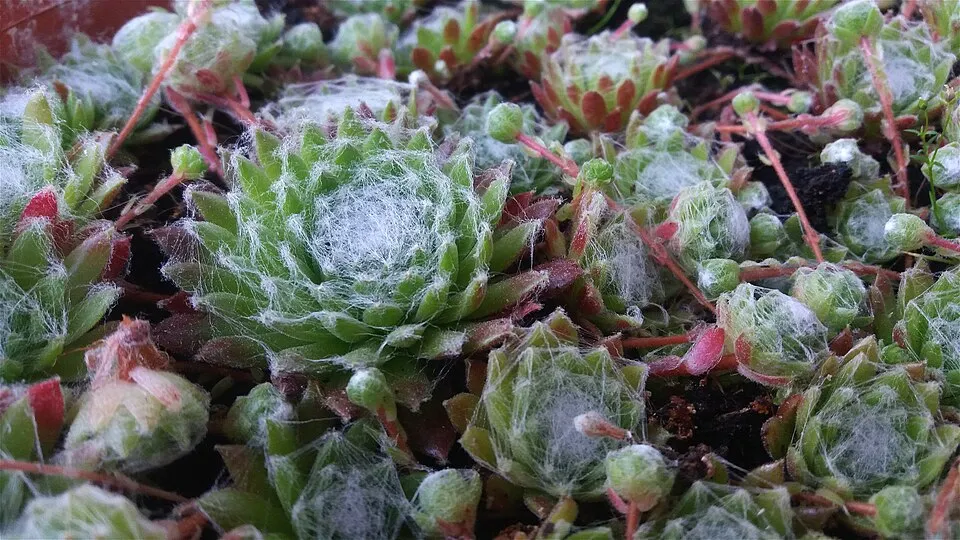
Sempervivum arachnoideum, widely recognized as Cobweb Houseleek or Spiderweb Hens and Chicks, is a distinctive succulent perennial belonging to the Crassulaceae family. This captivating species is indigenous to the rugged mountainous terrains of Europe, particularly thriving across the Alps, Pyrenees, and Carpathians, where it naturally colonizes rocky, exposed environments. Its defining feature is the intricate network of fine, silvery-white hairs that interconnect the tips of its fleshy, pointed leaves, forming a protective 'cobweb' across the rosette's surface. This unique adaptation serves a critical physiological role, shielding the plant from intense solar radiation and extreme temperature fluctuations, thereby significantly minimizing transpirational water loss in its arid habitats.
Individual rosettes typically achieve a diameter of 2-4 inches (5-10 cm) and proliferate by producing numerous offsets, or 'chicks,' which cluster around the mother plant, hence its charming common name. The leaves exhibit a vibrant green hue, often acquiring attractive red or purple tinges when subjected to cooler temperatures or direct sunlight. Mature rosettes may produce a tall, erect flowering stalk, reaching 6-10 inches (15-25 cm) in height, adorned with clusters of star-shaped, pinkish-red flowers during the summer. Post-flowering, the mother rosette senesces and dies, but the abundant offsets ensure the plant's continuous survival and spread.
Its remarkable resilience, unique aesthetic, and ease of cultivation make Cobweb Houseleek a favored choice for rock gardens, container plantings, green roofs, and xeriscaping, contributing texture and year-round visual interest. The genus name 'Sempervivum,' meaning 'always living,' aptly describes its extraordinary ability to withstand harsh environmental conditions, including severe drought and cold.
Trusted Scientific References
1. Authoritative external sources for Sempervivum arachnoideum
1.1 Wikipedia — Sempervivum arachnoideum
1.2 Kew POWO (Plants of the World Online)
1.3 PubMed — peer-reviewed research
1.4 NCBI Taxonomy Browser
1.5 GBIF — Global Biodiversity
1.1.Sempervivum Garden — Standout Qualities
- ✓Botanical Name — Sempervivum arachnoideum.
- ✓Common Names — Cobweb Houseleek, Spiderweb Hens and Chicks.
- ✓Family — Crassulaceae, known for succulent adaptations.
- ✓Morphology — Unique rosettes of fleshy leaves interwoven with silvery 'cobweb' hairs.
- ✓Habitat — Native to mountainous, rocky regions of Europe, thriving in harsh conditions.
- ✓Medicinal Use — Traditionally used topically for wound healing, anti-inflammatory, and skin soothing properties.
- ✓Key Constituents — Rich in mucilage, tannins, flavonoids, and organic acids.
- ✓Cultivation — Low-maintenance, drought-tolerant, and cold-hardy, ideal for rock gardens and xeriscaping.
- ✓Propagation — Easily propagates through abundant offsets (chicks) and seeds.
- ✓Safety — Primarily for external use; patch testing recommended for sensitive skin.
1.2.Sempervivum Garden — Quick Summary
- ✓Cobweb Houseleek is a distinctive succulent known for its unique web-like rosettes and resilience.
- ✓It boasts a rich history of traditional use for its anti-inflammatory, astringent, and wound-healing properties.
- ✓Primarily applied topically to soothe skin irritations, minor burns, cuts, and to address conditions like warts.
- ✓Its therapeutic effects are attributed to key constituents such as mucilage, tannins, and flavonoids.
- ✓This hardy plant thrives in well-drained, sunny, rocky environments, requiring minimal maintenance.
- ✓Strictly recommended for external application only, with a cautionary note for sensitive skin.
2.Sempervivum Garden — Scientific Profile
3.Sempervivum Garden — Reference Facts
4.Sempervivum Garden — Plant Morphology
5.Sempervivum Garden — Habitat & Distribution
6.Sempervivum Garden — Ethnobotanical Uses
7.Sempervivum Garden — Secondary Metabolites
- ✓Mucilage — Composed primarily of polysaccharides, these viscous compounds provide the plant with emollient, soothing, and protective properties, particularly beneficial for skin and mucous membranes.
- ✓Tannins — A class of polyphenols, including types like gallotannins, which are responsible for the plant's astringent, haemostatic, and anti-inflammatory actions by binding to and precipitating proteins.
- ✓Flavonoids — Important antioxidant and anti-inflammatory compounds such as quercetin and kaempferol, which contribute to cellular protection and overall therapeutic effects.
- ✓Organic Acids — Including malic acid and citric acid, these contribute to the plant's pH and may offer mild keratolytic properties, assisting in skin exfoliation and renewal.
- ✓Saponins — Glycosides that can exhibit anti-inflammatory and cleansing activities, though specific types and their precise roles in Sempervivum arachnoideum require further detailed investigation.
- ✓Triterpenes — Compounds often associated with anti-inflammatory and wound-healing properties, which may contribute to the plant's traditional uses in dermatological applications.
- ✓Phenolic Acids — Such as caffeic acid and ferulic acid, these possess antioxidant and mild antimicrobial characteristics, supporting the plant's protective and healing attributes.
- ✓Anthocyanins — Pigment compounds responsible for the red or purple coloration often seen in the leaves, acting as potent antioxidants and potentially offering photoprotective benefits.
- ✓Sterols — Plant sterols are present and can contribute to membrane stability and may have some anti-inflammatory effects.
- ✓Minerals — Essential minerals like potassium and calcium are vital for cellular function and plant health, indirectly supporting the plant's medicinal efficacy for tissue repair.
8.Sempervivum Garden — Modern Studies
- ✓Anti-inflammatory — The plant's compounds, including flavonoids and mucilage, help to soothe inflamed tissues, reducing redness, swelling, and discomfort associated with skin irritations and minor injuries.
- ✓Astringent — Tannins present in Sempervivum arachnoideum contribute to its astringent action, which helps to constrict tissues, reduce secretions, and promote the healing of superficial wounds.
- ✓Vulnerary (Wound Healing) — Applied topically, the fresh juice or crushed leaves accelerate the regeneration of skin cells and aid in the healing process of minor cuts, scrapes, and abrasions.
- ✓Emollient — The high mucilage content provides an emollient effect, softening and moisturizing the skin, which can be beneficial for dry, rough, or irritated skin conditions.
- ✓Haemostatic — Its astringent properties also lend to its haemostatic capabilities, making it traditionally useful for staunching minor bleeding, such as from small cuts or nosebleeds.
- ✓Analgesic (Topical) — When applied externally, the plant can offer localized pain relief, traditionally used for soothing discomfort from toothaches or ear inflammations.
- ✓Antiseptic — While not a strong antiseptic, compounds within the plant may possess mild antimicrobial properties that can help prevent infection in minor skin breaks.
- ✓Dermatological Soother — The cooling and emollient nature of the leaf pulp makes it an effective remedy for calming sunburnt skin, insect bites, and other forms of skin irritation.
- ✓Keratolytic — Traditionally, when macerated in vinegar, Sempervivum arachnoideum has been used to soften and aid in the removal of hardened skin growths like warts and corns.
- ✓Mucilaginous Protection — The mucilage forms a protective barrier over damaged skin, shielding it from external irritants and supporting the natural healing environment.
- ✓Ophthalmic Support — Historically, a diluted preparation was used for certain eye inflammations, though modern application requires extreme caution and professional guidance.
- ✓Sedative (Topical) — The soothing properties can provide a mild calming effect on irritated or inflamed skin areas, reducing localized discomfort.
8.1.Sempervivum Garden — Indications & Uses
9.Sempervivum Garden — Precautions & Warnings
9.1.Sempervivum Garden — Warnings
- ✓Skin Irritation — May cause mild skin irritation or contact dermatitis in individuals with sensitive skin, particularly with prolonged or undiluted topical application.
- ✓Allergic Reactions — Although rare, some individuals may experience allergic responses such as itching, redness, or rash, especially if sensitive to plants in the Crassulaceae family.
- ✓Photosensitivity — While generally protective, there is a theoretical, unconfirmed risk that certain plant compounds could increase skin sensitivity to sunlight in very rare instances.
- ✓Ingestion Risks — Sempervivum arachnoideum is not traditionally used internally; ingestion is not recommended and may lead to gastrointestinal upset or uncharacterized systemic effects.
- ✓Interaction with Topical Medications — Its astringent properties might theoretically interfere with the absorption or efficacy of other topically applied dermatological medications.
- ✓Eye Irritation — Direct contact with the eyes should be strictly avoided, as the fresh juice can cause temporary stinging or irritation.
- ✓Open Wound Sensitivity — Application to deep, open, or infected wounds should be approached with caution and preferably under medical guidance, despite traditional uses.
9.2.Sempervivum Garden — Toxicity Assessment
- ✓Patch Test Recommended — Always perform a small patch test on an inconspicuous area of skin before widespread topical application to assess for any sensitivity or allergic reactions.
- ✓External Use Only — Sempervivum arachnoideum is strictly for external, topical application; internal consumption is not advised due to insufficient safety data.
- ✓Pregnancy and Lactation — Due to a lack of comprehensive safety studies, use is contraindicated for pregnant or breastfeeding individuals.
- ✓Children — Exercise caution when applying to the delicate skin of young children; consult a healthcare professional before use on infants or toddlers.
- ✓Open Wounds — While traditionally used for minor wounds, avoid applying to deep, puncture, or infected wounds without professional medical supervision.
- ✓Medical Conditions — Individuals with pre-existing skin conditions, severe allergies, or compromised immunity should consult a healthcare provider before using this plant medicinally.
- ✓Storage and Freshness — Use fresh leaves or freshly prepared extracts promptly; dried material is difficult to prepare effectively, and potency may degrade quickly.
10.Sempervivum Garden — How to Use
- ✓Fresh Leaf Juice — Extract juice by crushing or pressing fresh Sempervivum arachnoideum leaves; apply directly to minor cuts, scrapes, burns, or insect bites for soothing and healing.
- ✓Poultice Application — Macerate fresh leaves into a fine pulp and apply as a poultice to boils, swollen areas, or skin irritations, securing with a clean bandage for several hours.
- ✓Infusion for Compresses — Gently warm a small amount of fresh leaf juice or a diluted extract; soak a cloth and apply as a compress to alleviate ear discomfort or localized inflammation.
- ✓Vinegar Maceration — Infuse crushed Sempervivum leaves in apple cider vinegar for several weeks in a sealed jar; strain the liquid and apply topically to warts and corns using a cotton swab.
- ✓Cooling Face Mask — Blend fresh leaf pulp with a minimal amount of water to create a smooth paste; apply as a soothing mask for reddened or sunburnt skin, rinsing after 15-20 minutes.
- ✓Oral Rinse/Chewing — For toothache relief, a fresh leaf can be chewed, or a diluted juice used as a temporary mouth rinse, ensuring it is not swallowed.
- ✓Nasal Application — Carefully apply a small drop of fresh juice or a juice-soaked cotton swab to the nostrils to help staunch minor nosebleeds.
- ✓Topical Ointment/Gel — The fresh juice can be incorporated into a base cream or gel for easier, targeted application on persistent skin issues, ensuring proper preservation.
11.Sempervivum Garden — Propagation & Care
- ✓Soil Requirements — Thrives in extremely well-drained, gritty, or sandy soils, ideally with some humus; avoid heavy, water-retentive clays to prevent root rot.
- ✓Light Exposure — Prefers full sun exposure to develop vibrant leaf coloration and compact growth; can tolerate partial shade, especially in very hot climates, but may become leggy.
- ✓Watering — Highly drought-tolerant once established; water sparingly and allow the soil to dry completely between waterings, particularly crucial during winter dormancy to prevent rot.
- ✓Temperature & Hardiness — Extremely cold-hardy, capable of enduring freezing temperatures; however, prolonged winter wetness is detrimental and should be avoided.
- ✓Propagation — Easily propagated by separating offsets ('chicks') in spring or early summer; can also be grown from seed (surface-sown in early spring) or stem cuttings.
- ✓Planting Location — Ideal for rock gardens, green roofs, xeriscaping, containers, and crevices in walls where excellent drainage is naturally provided.
- ✓Weed Control — Sensitive to competition; maintain a weed-free environment around the rosettes to ensure unimpeded growth and health.
- ✓Fertilization — Generally requires no fertilization; if grown in very poor soil, a light application of a balanced, slow-release granular fertilizer in spring may be beneficial.
Reviewed by the Flora Medical Global Botanical Review Panel
Multi-disciplinary editorial group · Botany · Ethnobotany · Herbal-medicine literature
Who reviewed this: This page was checked by the Flora Medical Global Botanical Review Panel — an in-house editorial group of botany graduates, ethnobotany researchers, and horticulture practitioners who collectively maintain our 7,000+ plant encyclopedia. Meet the team.
Our 4-step verification process
1. Taxonomic verification
Scientific names and synonyms cross-checked against Kew POWO, World Flora Online, and The Plant List.
2. Phytochemical & medicinal cross-reference
Active compounds, traditional uses, and reported activities are cross-referenced with PubMed, USDA Dr. Duke's database, and peer-reviewed ethnobotanical literature.
3. Conservation & distribution check
Distribution, ecology, and conservation status confirmed against GBIF occurrence records and the IUCN Red List.
4. Editorial & safety review
Every entry passes an editorial pass for clarity, originality, and safety notices (toxicity, contraindications, dosage caveats) before publication.
Last reviewed:
Important medical disclaimer: This content is for educational and research purposes only. It is not medical advice and is not a substitute for consultation with a licensed healthcare provider. Do not use any herb to self-treat a medical condition without professional guidance.
Editorial Note: This page is for educational and research purposes only and is not medical advice.
Written by: Flora Medical Global Editorial Team
Reviewed by: Flora Medical Global Botanical Review Panel
Last Updated: June 15, 2026





Sempervivum Garden — Comments & Community Reviews
Rate this plant