

Medical Disclaimer: This content is for educational purposes only. It is not medical advice. Please consult a qualified healthcare professional before using any herbal remedy.
Safety Overview
1.Sempervivum Arachnoideum — Botanical Snapshot
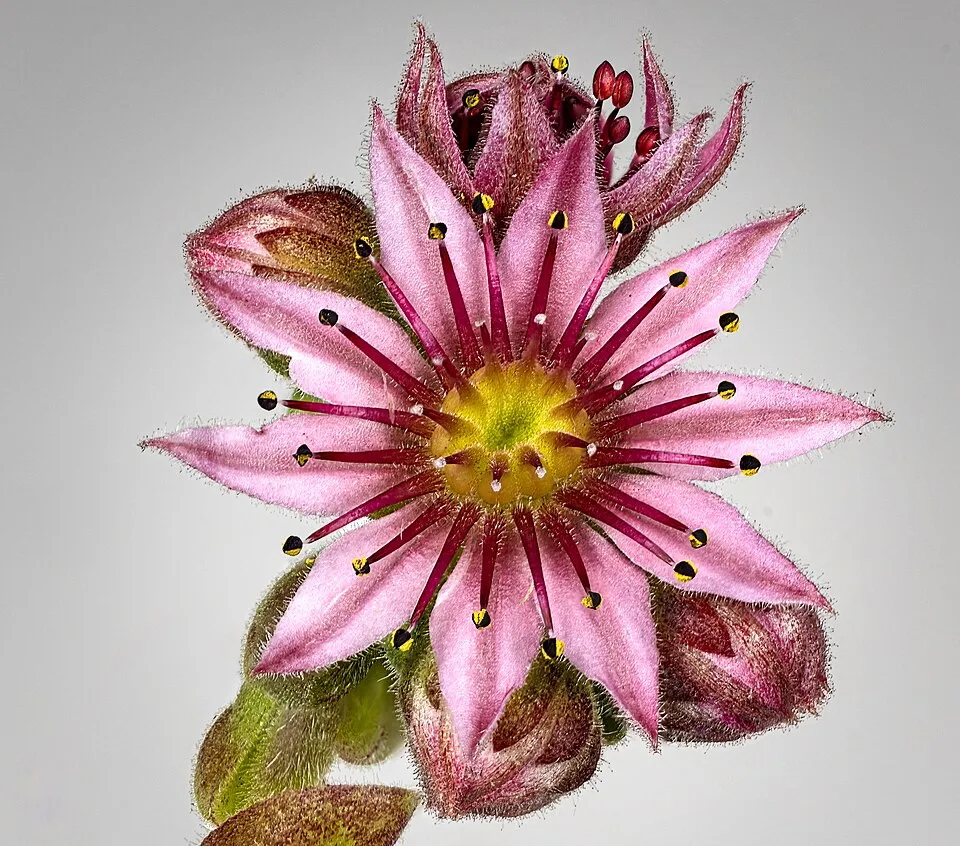
Sempervivum arachnoideum, commonly known as Cobweb Houseleek, is a captivating and remarkably resilient succulent perennial thriving in the challenging environments of southern and central European mountain ranges, including the Alps, Pyrenees, and Carpathians. A member of the Crassulaceae family, it forms compact rosettes, typically 1 to 5 cm in diameter, which aggregate into dense mats. Its most striking morphological feature is the intricate, silvery, web-like indumentum of fine hairs that interconnect the tips of its numerous, tightly packed leaves.
This distinctive 'cobweb' acts as a crucial adaptation, trapping atmospheric moisture from dew and significantly reducing water loss under harsh alpine conditions characterized by strong winds and intense solar radiation, thus enhancing its drought tolerance. The leaves themselves are fleshy, obovate to spatulate, often displaying a gradient of colors from reddish-green to purplish or bronze, especially when exposed to cold or high sun intensity, and feature ciliate margins.
Each individual rosette of Cobweb Houseleek exhibits a monocarpic life cycle, meaning it flowers only once before senescing, typically after several years of vegetative growth. However, the plant ensures its perpetuation by producing numerous small offsets, or 'chicks,' around the base of the mother rosette prior to flowering. In summer, an upright, leafy stalk emerges, reaching heights of 10-20 cm, bearing star-shaped flowers arranged in cymes.
These flowers are typically pink to reddish-purple, sometimes white, with sharply pointed petals and often contrasting yellow stamens. Interestingly, the flowering stalk often loses the characteristic 'cobweb' covering. Sempervivum arachnoideum prefers well-drained, gritty soils, often found nestled amongst rocks and stones, and shows adaptability to both siliceous and calcareous substrates, though it particularly dislikes winter wet conditions.
This species is known for its polymorphism, with some botanists recognizing various subspecies, and it readily hybridizes with other members of the Sempervivum genus.
Trusted Scientific References
1. Authoritative external sources for Sempervivum Arachnoideum
1.1 Wikipedia — Sempervivum Arachnoideum
1.2 Kew POWO (Plants of the World Online)
1.3 PubMed — peer-reviewed research
1.4 NCBI Taxonomy Browser
1.5 GBIF — Global Biodiversity
1.1.Sempervivum Arachnoideum — Notable Characteristics
- ✓Distinctive web — like hairs covering rosettes.
- ✓Succulent perennial forming — Succulent perennial forming dense mats.
- ✓Native to European — Native to European mountainous regions.
- ✓Monocarpic rosettes producing — Monocarpic rosettes producing numerous offsets.
- ✓Pink to reddish — purple star-shaped flowers.
- ✓Highly drought — tolerant and resilient.
- ✓Traditionally used for — Traditionally used for skin ailments and pain relief.
- ✓Rich in astringent — Rich in astringent tannins and soothing mucilage.
- ✓Prefers full sun and well — drained, gritty soil.
- ✓Adapts to various — Adapts to various soil pH, disliking winter wet.
1.2.Sempervivum Arachnoideum — Quick Summary
- ✓Cobweb Houseleek is a resilient succulent native to European mountains, known for its distinctive web-like hairs.
- ✓Traditionally used for its soothing, astringent, and anti-inflammatory properties, primarily for topical applications.
- ✓Key medicinal uses include wound healing, treating boils, alleviating toothaches, and soothing skin irritations.
- ✓Rich in flavonoids, tannins, and mucilage, contributing to its therapeutic effects.
- ✓Easy to cultivate in well-drained soil and full sun, highly drought-tolerant.
- ✓Generally considered safe for external use, with minimal known hazards.
2.Sempervivum Arachnoideum — Nomenclature & Classification
3.Sempervivum Arachnoideum — Vital Statistics
4.Sempervivum Arachnoideum — Physical Description
5.Sempervivum Arachnoideum — Ecological Habitat
6.Sempervivum Arachnoideum — Folk Medicine Applications
7.Sempervivum Arachnoideum — Phytochemistry
- ✓Flavonoids — Compounds like quercetin glycosides, kaempferol derivatives, and other polyphenols contribute to antioxidant and anti-inflammatory activities, protecting cells from oxidative stress.
- ✓Tannins — Both hydrolysable and condensed tannins are responsible for the plant's astringent properties, helping to constrict tissues and reduce inflammation.
- ✓Mucilage — Polysaccharides form a gelatinous substance, providing emollient and demulcent effects, soothing irritated skin and promoting hydration.
- ✓Organic Acids — Malic acid, a product of Crassulacean Acid Metabolism (CAM), and other organic acids may contribute to the plant's slight acidity and antimicrobial properties.
- ✓Triterpenes — These compounds, though specific ones are not fully characterized for S. arachnoideum, are often associated with anti-inflammatory and wound-healing effects in many medicinal plants.
- ✓Saponins — While potentially present in low concentrations, saponins can exhibit detergent-like properties and contribute to anti-inflammatory and antiseptic actions.
- ✓Phenolic Acids — Derivatives like caffeic acid and ferulic acid possess antioxidant and mild antiseptic properties, supporting skin health.
- ✓Anthocyanins — Pigments responsible for the reddish-purple coloration, also acting as antioxidants and potentially offering photoprotective benefits to the plant and when applied topically.
- ✓Mineral Salts — Succulents accumulate various mineral salts, which can contribute to overall cell health and osmotic balance, potentially beneficial for skin integrity.
- ✓Volatile Compounds — While not a primary constituent, trace amounts of volatile compounds might contribute to the plant's overall aroma and potential mild antimicrobial activity.
8.Sempervivum Arachnoideum — Scientific Evidence
- ✓Soothing Agent — The mucilaginous compounds in Cobweb Houseleek provide a demulcent effect, calming irritated skin and mucous membranes.
- ✓Astringent Properties — Tannins present in the plant help to constrict tissues, reducing swelling and secretions, beneficial for minor cuts and inflamed areas.
- ✓Anti-inflammatory Action — Traditional uses suggest a reduction in localized inflammation, potentially due to flavonoids and other phytocompounds modulating inflammatory pathways.
- ✓Wound Healing Support — Applied externally, the crushed plant or its juice is traditionally used to promote the healing of minor wounds and abrasions by protecting the area and supporting tissue regeneration.
- ✓Hemostatic Effect — Historically, the plant has been applied to stop nosebleeds, likely through its astringent action on superficial capillaries.
- ✓Boil and Abscess Treatment — The emollient and anti-inflammatory properties are utilized in folk medicine to draw out and soothe boils and other skin abscesses.
- ✓Relief for Ear Inflammation — Slightly warmed juice from the leaves has been traditionally instilled to alleviate discomfort associated with ear inflammation.
- ✓Toothache Alleviation — Chewing fresh leaves is a traditional remedy for toothaches, offering a temporary numbing or soothing effect.
- ✓Wart and Corn Removal — When macerated and infused in vinegar, the plant is traditionally employed as a topical application to soften and aid in the removal of warts and corns.
- ✓Skin Cooling Mask — The pulp from fresh leaves is used as a cooling facial mask, particularly effective for reddened or sunburnt skin, providing immediate relief and reducing erythema.
- ✓Emollient Qualities — The succulent nature of the leaves provides a moisturizing and softening effect on the skin, enhancing its barrier function.
- ✓Sedative for Topical Irritation — While not systemic, the localized soothing effect can be perceived as a mild sedative for irritated nerve endings in the skin.
8.1.Sempervivum Arachnoideum — Therapeutic Indications
9.Sempervivum Arachnoideum — Cautions & Contraindications
9.1.Sempervivum Arachnoideum — Warnings
- ✓Allergic Reactions — While rare, individuals with sensitive skin may experience localized irritation, redness, or itching upon topical application.
- ✓Skin Sensitivity — Prolonged application to very sensitive skin might cause mild irritation in some individuals.
- ✓Contamination Risk — Using plant material from potentially polluted environments can introduce contaminants to the skin.
- ✓Improper Preparation — Incomplete maceration or use of unhygienic plant material could lead to minor skin issues.
- ✓Photosensitivity — Although not commonly reported, some plant compounds can theoretically increase skin sensitivity to sunlight, especially with prolonged exposure after application.
- ✓Lack of Internal Safety Data — Sempervivum arachnoideum is primarily used externally; there is insufficient data to support or recommend internal consumption.
- ✓Interaction with Open Wounds — While traditionally used for wounds, application to deep or infected wounds without proper medical consultation is not advised.
9.2.Sempervivum Arachnoideum — Risk Assessment
- ✓External Use Only — Sempervivum arachnoideum is traditionally and primarily used topically; internal use is not recommended due to lack of safety data.
- ✓Patch Test Recommended — Always perform a small patch test on an inconspicuous area of skin to check for allergic reactions before widespread application.
- ✓Avoid Broken or Severely Damaged Skin — Refrain from applying to large areas of broken skin or deep, infected wounds without professional medical advice.
- ✓Pregnancy and Lactation — Due to limited research, pregnant or breastfeeding individuals should consult a healthcare professional before use.
- ✓Children — Use on infants and young children should be approached with caution and ideally under medical guidance.
- ✓Consult Healthcare Provider — Individuals with underlying health conditions or those taking medications should seek professional advice before using any herbal remedy.
- ✓Harvest from Clean Sources — Ensure plant material is harvested from areas free of pesticides, herbicides, and environmental pollutants to minimize contamination risks.
10.Sempervivum Arachnoideum — Preparation Methods
- ✓Fresh Leaf Juice — Crush fresh leaves to extract juice and apply directly to boils, minor wounds, insect bites, or abrasions for soothing and healing.
- ✓Topical Poultice — Macerate fresh Cobweb Houseleek leaves to create a pulp, then apply as a poultice to skin irritations, burns, or inflamed areas.
- ✓Ear Inflammation Remedy — Gently warm a small amount of fresh leaf juice and carefully apply a few drops to the affected ear to relieve inflammation.
- ✓Toothache Relief — Chew on a fresh leaf to numb or soothe the pain of a toothache, discarding the spent leaf afterwards.
- ✓Wart and Corn Treatment — Macerate the entire plant, infuse it in vinegar for several days, and then apply the infused liquid topically to warts and corns.
- ✓Cooling Face Mask — Blend fresh leaf pulp with a minimal amount of water to form a paste, then apply to reddened or sunburnt skin for a cooling and soothing effect.
- ✓Nosebleed Application — Apply crushed fresh leaves or a cotton swab soaked in the fresh juice directly to the nostril to help stop nosebleeds.
- ✓Herbal Infusion for Compresses — Steep fresh or carefully dried leaves in hot water to create an infusion, which can then be used as a cold compress for sprains or bruises.
11.Sempervivum Arachnoideum — How to Grow
- ✓Soil Preference — Thrives in well-drained, gritty soil; ideal for rock gardens, crevices, and walls with sufficient humus.
- ✓Light Requirements — Prefers full sun exposure for optimal growth and coloration.
- ✓Water Management — Established plants are highly drought-tolerant; avoid excessive watering, especially in winter, as they strongly dislike winter wet.
- ✓PH Tolerance — Succeeds on both acid and calcareous rocks, demonstrating adaptability to various soil pH levels.
- ✓Propagation — Easily propagated by dividing offsets (chicks) in spring or early summer; seeds can be sown in early spring in a cold frame.
- ✓Weed Control — Plants are not very tolerant of weed competition, so regular weeding around the rosettes is beneficial.
- ✓Winter Care — Ensure excellent drainage during winter to prevent rot, as excess moisture is detrimental.
- ✓Planting Location — Ideal for rock gardens, stone walls, containers, and green roofs where drainage is naturally excellent.
Reviewed by the Flora Medical Global Botanical Review Panel
Multi-disciplinary editorial group · Botany · Ethnobotany · Herbal-medicine literature
Who reviewed this: This page was checked by the Flora Medical Global Botanical Review Panel — an in-house editorial group of botany graduates, ethnobotany researchers, and horticulture practitioners who collectively maintain our 7,000+ plant encyclopedia. Meet the team.
Our 4-step verification process
1. Taxonomic verification
Scientific names and synonyms cross-checked against Kew POWO, World Flora Online, and The Plant List.
2. Phytochemical & medicinal cross-reference
Active compounds, traditional uses, and reported activities are cross-referenced with PubMed, USDA Dr. Duke's database, and peer-reviewed ethnobotanical literature.
3. Conservation & distribution check
Distribution, ecology, and conservation status confirmed against GBIF occurrence records and the IUCN Red List.
4. Editorial & safety review
Every entry passes an editorial pass for clarity, originality, and safety notices (toxicity, contraindications, dosage caveats) before publication.
Last reviewed:
Important medical disclaimer: This content is for educational and research purposes only. It is not medical advice and is not a substitute for consultation with a licensed healthcare provider. Do not use any herb to self-treat a medical condition without professional guidance.
Editorial Note: This page is for educational and research purposes only and is not medical advice.
Written by: Flora Medical Global Editorial Team
Reviewed by: Flora Medical Global Botanical Review Panel
Last Updated: June 15, 2026





Sempervivum Arachnoideum — Comments & Community Reviews
Rate this plant