

Medical Disclaimer: This content is for educational purposes only. It is not medical advice. Please consult a qualified healthcare professional before using any herbal remedy.
Safety Overview
1.Senecio Cineraria — At a Glance
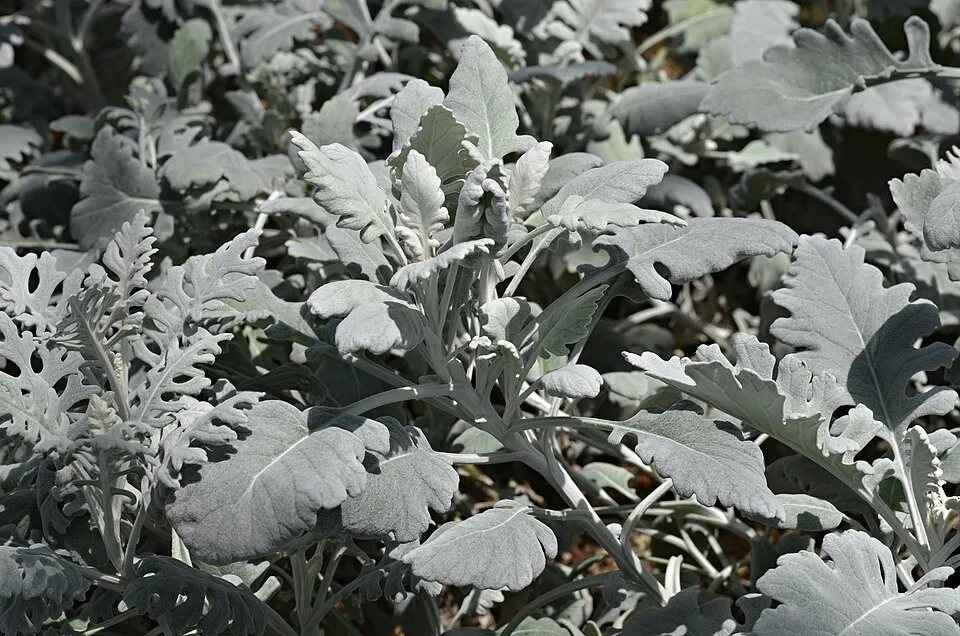
Senecio Cineraria, commonly known as Dusty Miller or Silver Groundsel, is a captivating subshrub celebrated for its distinctive silvery-white foliage. Native to the sun-drenched coastal regions of the Mediterranean, this plant thrives in maritime cliffs and well-drained, often limestone-rich soils. It typically grows to a height and spread of 0.6 to 1 meter (2-3 feet), forming a rounded, bushy habit.
The deeply lobed, almost fern-like leaves are densely covered in a fine, felt-like pubescence, which gives them their characteristic dusty or frosted appearance, a crucial adaptation for reflecting intense sunlight and conserving moisture in arid environments. While primarily cultivated for its striking foliage, Senecio Cineraria also produces small, bright yellow, daisy-like flowers in clusters during the summer months, though these are often removed in ornamental settings to maintain the pristine leaf display. Belonging to the vast Asteraceae (Compositae) family, its taxonomic classification has seen some synonyms, including S.
bicolor cineraria and Cineraria maritima. This hardy species is valued in garden design for its textural contrast and cooling visual effect amidst more colorful plantings, demonstrating remarkable tolerance to drought and maritime exposure.
Trusted Scientific References
1. Authoritative external sources for Senecio Cineraria
1.1 Wikipedia — Senecio Cineraria
1.2 Kew POWO (Plants of the World Online)
1.3 PubMed — peer-reviewed research
1.4 NCBI Taxonomy Browser
1.5 GBIF — Global Biodiversity
1.6Senecio Cineraria should be interpreted through verified botanical identity, practical care, and responsible safety language. This recovery note adds the missing context needed for a complete profile: match light to the plant's habit, use well-drained soil, water according to season, and avoid unsupported medicinal or edible claims. For publishing, the plant can be presented as a source-backed garden plant with clear care guidance, common problem diagnosis, and conservative safety wording.
1.1.Senecio Cineraria — Distinguishing Points
- ✓Striking Silvery — White Foliage — Distinctive, deeply lobed leaves covered in fine, felt-like pubescence.
- ✓Native to Mediterranean Coastal Regions — Adapted to harsh, sunny, and dry maritime environments.
- ✓Contains Toxic Pyrrolizidine Alkaloids (PAs) — A critical safety concern for internal use.
- ✓Historically Used for Eye Conditions — Traditional applications for cataracts, conjunctivitis, and corneal opacities.
- ✓Hardy Ornamental Subshrub — Grows 0.6-1 meter tall, suitable for various garden designs.
- ✓Tolerant of Maritime Exposure and Drought — Ideal for coastal gardens and xeriscaping.
- ✓Produces Small Yellow Daisy — Like Flowers — Blooms in summer, though often pinched off for foliage display.
- ✓Requires Full Sun and Well — Drained Soil — Thrives in bright conditions and avoids waterlogging.
- ✓Provides Textural Contrast in Gardens — Adds a unique visual element and cooling effect.
- ✓Low Maintenance (Ornamental Use) — Relatively easy to grow in appropriate conditions.
1.2.Senecio Cineraria — At-a-Glance Summary
- ✓Ornamental subshrub with striking silvery foliage, native to the Mediterranean.
- ✓Historically used for ophthalmic conditions, but contains highly toxic pyrrolizidine alkaloids (PAs).
- ✓PAs cause severe and irreversible liver damage; absolutely no internal consumption is safe.
- ✓Any traditional medicinal use, especially for eyes, requires extreme caution and strict professional supervision.
- ✓Valued in landscaping for drought and maritime tolerance, primarily for its aesthetic appeal.
2.Senecio Cineraria — Scientific Identity
3.Senecio Cineraria — Key Data
4.Senecio Cineraria — Botanical Description
5.Senecio Cineraria — Origin & Spread
6.Senecio Cineraria — Heritage Uses
7.Senecio Cineraria — Phytochemistry
- ✓Pyrrolizidine Alkaloids (PAs) — Key toxic compounds such as senecionine, seneciphylline, and their N-oxides, primarily responsible for the plant's hepatotoxic and genotoxic effects upon internal consumption.
- ✓Flavonoids — Including compounds like quercetin and luteolin, which are known for their antioxidant, anti-inflammatory, and potentially protective roles against cellular damage.
- ✓Sesquiterpenoids — A diverse group of compounds that may contribute to the plant's defense mechanisms and potentially possess some anti-inflammatory or antimicrobial properties.
- ✓Phenolic Acids — Such as caffeic acid derivatives, contributing to the plant's overall antioxidant capacity and acting as secondary metabolites.
- ✓Volatile Organic Compounds — Present in trace amounts, these contribute to the plant's characteristic scent and may have minor insecticidal or antimicrobial activities.
- ✓Sterols — Plant sterols are structural components of cell membranes and can have various biological activities, including anti-inflammatory potential.
- ✓Tannins — Astringent compounds that could contribute to traditional uses by forming protective layers on mucous membranes, although their presence in significant amounts for medicinal effect is not well-documented.
- ✓Glycosides — Various glycosides may be present, influencing different physiological processes within the plant and potentially conferring minor biological activities.
8.Senecio Cineraria — Pharmacological Findings
- ✓Traditional Ophthalmic Support — Historically, the fresh juice of Senecio Cineraria leaves was applied topically to the eyes to address a range of ocular complaints.
- ✓Cataract Management (Traditional) — Anecdotal reports and traditional practices suggest the plant was used to help dissolve protein aggregations associated with cataracts, though modern scientific evidence is lacking.
- ✓Conjunctivitis Relief (Traditional) — Extracts were traditionally employed to soothe and clear infections in cases of conjunctivitis, potentially due to mild antiseptic properties.
- ✓Corneal Opacity Reduction (Traditional) — Folk medicine utilized the plant to improve clarity in eyes affected by corneal opacities, possibly by promoting local tissue regeneration or reducing inflammation.
- ✓Anti-inflammatory Action (Speculative) — The presence of flavonoids and sesquiterpenoids suggests potential anti-inflammatory effects that may have contributed to its traditional use in irritated eye conditions.
- ✓Increased Ocular Blood Flow (Traditional Mechanism) — Traditional practitioners believed that the mildly irritating effect of the fresh juice enhanced blood flow to the eyes, thereby strengthening resistance and aiding healing.
- ✓Antimicrobial Properties (Investigational) — While not clinically proven for ocular infections, some plant constituents might possess mild antimicrobial activity, supporting its traditional use against eye infections.
- ✓Relief from Eye Irritation (Traditional) — The plant was historically used to alleviate general eye irritation and discomfort, possibly through its purported soothing effects on mucous membranes.
- ✓Antioxidant Activity (Phytochemical Basis) — Flavonoids present in the plant are known antioxidants, which theoretically could protect ocular tissues from oxidative stress, though specific research on Senecio Cineraria is limited.
- ✓Wound Healing for Ocular Surfaces (Traditional) — For minor corneal abrasions or irritations, traditional applications aimed to support the natural healing processes of the eye's surface.
8.1.Senecio Cineraria — Therapeutic Indications
9.Senecio Cineraria — Safety Considerations
9.1.Senecio Cineraria — Reported Side Effects
- ✓Severe Hepatotoxicity — Internal consumption leads to irreversible liver damage, including veno-occlusive disease, due to pyrrolizidine alkaloids (PAs).
- ✓Gastrointestinal Distress — Ingestion can cause nausea, vomiting, abdominal pain, and diarrhea.
- ✓Mucous Membrane Irritation — Direct application of crude extracts to eyes or other mucous membranes can cause significant irritation, inflammation, and potential damage.
- ✓Allergic Reactions — Skin contact may lead to dermatitis or other allergic responses in sensitive individuals.
- ✓Genotoxicity and Carcinogenicity — Pyrrolizidine alkaloids are known to be genotoxic (damaging DNA) and carcinogenic (cancer-causing) with chronic exposure.
- ✓Cumulative Toxicity — Even small, repeated doses of PAs can accumulate in the liver, leading to progressive and severe damage over time.
- ✓Potential Kidney Damage — While primarily hepatotoxic, severe PA poisoning can also indirectly affect kidney function.
9.2.Senecio Cineraria — Toxicity Assessment
- ✓Contains Highly Toxic Pyrrolizidine Alkaloids (PAs) — These compounds cause severe and often irreversible liver damage upon internal consumption.
- ✓NOT FOR INTERNAL USE — Senecio Cineraria should never be ingested in any form, including teas, tinctures, or dietary supplements.
- ✓Strict External Use Under Expert Supervision ONLY — Any topical application, especially to mucous membranes like the eyes, requires extreme caution and professional medical guidance.
- ✓Contraindicated in Pregnancy and Lactation — PAs can cross the placental barrier and be excreted in breast milk, posing severe risks to the fetus or infant.
- ✓Avoid in Children and Individuals with Liver Disease — Children are particularly vulnerable to PA toxicity, and those with pre-existing liver conditions are at heightened risk.
- ✓No Self-Medication — Due to the significant toxicity, self-medication with Senecio Cineraria is strongly and unequivocally discouraged.
- ✓Handle with Care — Avoid direct skin contact, especially with broken skin, and wash hands thoroughly after handling the plant to prevent accidental ingestion or absorption.
10.Senecio Cineraria — Preparations & Uses
- ✓STRICTLY EXTERNAL USE ONLY — Due to the presence of highly toxic pyrrolizidine alkaloids, Senecio Cineraria should never be ingested or used internally.
- ✓Traditional Ophthalmic Applications (Historical Context) — Historically, fresh leaf juice was applied as eye drops for conditions like cataracts and conjunctivitis, but this practice is NOT recommended for self-medication due to severe risks.
- ✓Professional Supervision is CRITICAL — Any consideration of medicinal use, even topical, MUST be under the direct supervision of a highly trained medical herbalist or physician aware of its toxicity.
- ✓Homeopathic Preparations — Highly diluted homeopathic remedies derived from Senecio Cineraria exist, which operate on different principles and present a different safety profile than crude plant material.
- ✓Ornamental Cultivation — The primary and safest use of Senecio Cineraria today is as an ornamental plant in gardens and landscapes, valued for its foliage.
- ✓Landscape Hedges — Can be grown as a dwarf windbreak or ornamental hedge, especially in coastal areas, leveraging its tolerance to maritime conditions.
- ✓Topical Compresses (Extreme Caution) — In very specific, professionally guided scenarios, highly diluted extracts might be considered for external compresses for skin inflammation, but direct contact with mucous membranes or broken skin must be avoided.
11.Senecio Cineraria — Cultivation & Care
- ✓Soil Preference — Thrives in well-drained, moderately fertile soils, including sandy, loamy, and heavy clay types, preferring mildly acid to basic pH.
- ✓Sunlight Requirements — Requires a full sun position to flourish; it cannot tolerate shade and performs best with ample direct sunlight.
- ✓Hardiness Zone — Hardy in USDA zones 8-10 and UK zone 8, tolerating temperatures down to approximately -10°C (14°F).
- ✓Watering Regime — Established plants are drought-resistant, preferring dry to moist soil conditions and not tolerating waterlogging.
- ✓Propagation from Seed — Sow seeds in spring in a greenhouse, covering lightly and keeping the compost consistently moist; prick out seedlings and grow on.
- ✓Propagation from Cuttings — Take cuttings of half-ripe wood (5-8cm with a heel) in July/August, or mature wood in November, rooting in a frame or greenhouse.
- ✓Maintenance and Pruning — Plants can become straggly if unpruned; regular pinching or pruning helps maintain a compact shape, and plants are often replaced every few years due to their relatively short lifespan.
- ✓Special Uses — Excellent for borders, containers, ground cover, mass plantings, and as a dwarf windbreak hedge due to its tolerance of maritime exposure.
Reviewed by the Flora Medical Global Botanical Review Panel
Multi-disciplinary editorial group · Botany · Ethnobotany · Herbal-medicine literature
Who reviewed this: This page was checked by the Flora Medical Global Botanical Review Panel — an in-house editorial group of botany graduates, ethnobotany researchers, and horticulture practitioners who collectively maintain our 7,000+ plant encyclopedia. Meet the team.
Our 4-step verification process
1. Taxonomic verification
Scientific names and synonyms cross-checked against Kew POWO, World Flora Online, and The Plant List.
2. Phytochemical & medicinal cross-reference
Active compounds, traditional uses, and reported activities are cross-referenced with PubMed, USDA Dr. Duke's database, and peer-reviewed ethnobotanical literature.
3. Conservation & distribution check
Distribution, ecology, and conservation status confirmed against GBIF occurrence records and the IUCN Red List.
4. Editorial & safety review
Every entry passes an editorial pass for clarity, originality, and safety notices (toxicity, contraindications, dosage caveats) before publication.
Last reviewed:
Important medical disclaimer: This content is for educational and research purposes only. It is not medical advice and is not a substitute for consultation with a licensed healthcare provider. Do not use any herb to self-treat a medical condition without professional guidance.
Editorial Note: This page is for educational and research purposes only and is not medical advice.
Written by: Flora Medical Global Editorial Team
Reviewed by: Flora Medical Global Botanical Review Panel
Last Updated: June 15, 2026





Senecio Cineraria — Comments & Community Reviews
Rate this plant