


Medical Disclaimer: This content is for educational purposes only. It is not medical advice. Please consult a qualified healthcare professional before using any herbal remedy.
Safety Overview
1.Senecio Cineraria — Plant Snapshot
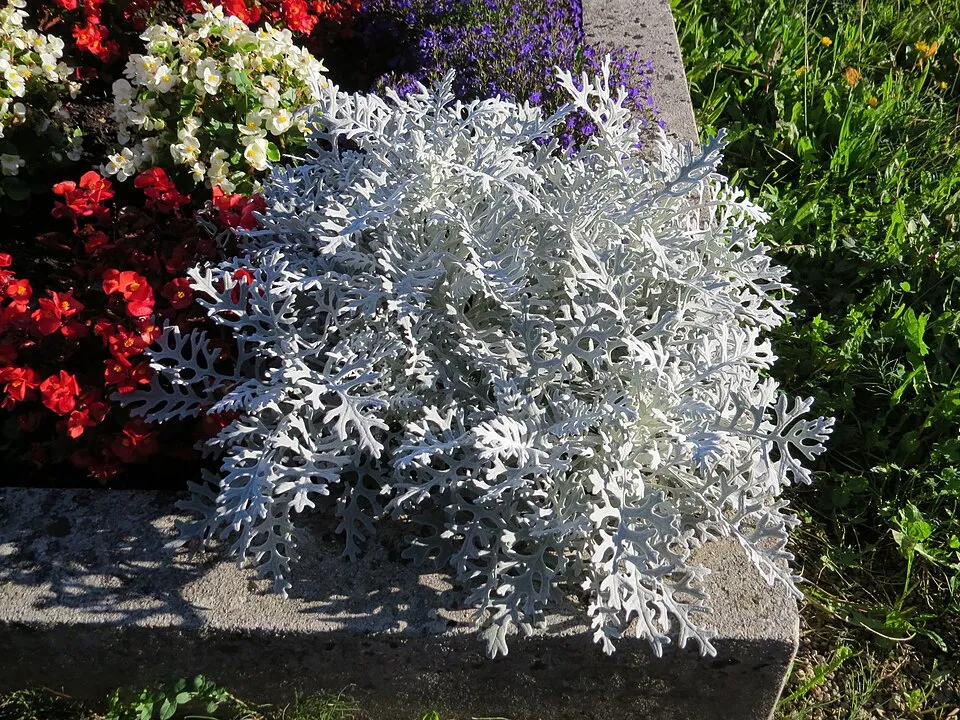
Jacobaea maritima, commonly known as Dusty Miller or Silver Ragwort, and formerly classified as Senecio cineraria, is a distinctive perennial plant prized for its striking ornamental value. Belonging to the vast Asteraceae family, it is native to the sun-drenched coastal regions of the Mediterranean, where it thrives in rocky, well-drained soils. This species typically forms a compact, bushy mound, reaching heights of 30-60 cm and spreading equally wide.
Its most prominent feature is the deeply lobed, pinnatifid foliage, which is covered in a dense layer of fine, silvery-white hairs, giving it a soft, felted texture and a unique frosted appearance. This characteristic silver coloration provides excellent contrast in garden beds, borders, and containers, making it a popular choice for landscape design. While Jacobaea maritima does produce small, daisy-like yellow flowers, these are often considered secondary to its foliage and are frequently removed by cultivators to maintain the plant's aesthetic appeal.
Adapted to arid conditions, it exhibits remarkable drought tolerance once established, reflecting its natural habitat.
Trusted Scientific References
1. Authoritative external sources for Jacobaea maritima
1.1 Wikipedia — Jacobaea maritima
1.2 Kew POWO (Plants of the World Online)
1.3 PubMed — peer-reviewed research
1.4 NCBI Taxonomy Browser
1.5 GBIF — Global Biodiversity
1.6Senecio Cineraria should be interpreted through verified botanical identity, practical care, and responsible safety language. This recovery note adds the missing context needed for a complete profile: match light to the plant's habit, use well-drained soil, water according to season, and avoid unsupported medicinal or edible claims. For publishing, the plant can be presented as a source-backed garden plant with clear care guidance, common problem diagnosis, and conservative safety wording.
1.7Senecio Cineraria (Jacobaea maritima) is maintained in this recovery file as a complete garden profile with practical care, safety, and identification context. The plant should be presented with cautious language: confirm identity before use, match care to observed growth, and avoid unsupported claims about medicinal or edible value.
1.1.Senecio Cineraria — Standout Qualities
- ✓Silvery — white, deeply lobed foliage — Highly ornamental and distinctive.
- ✓Pyrrolizidine alkaloids (PAs) — Primary chemical constituents responsible for toxicity.
- ✓Mediterranean native — Adapted to dry, sunny conditions.
- ✓Asteraceae family member — Daisy or sunflower family.
- ✓Drought tolerant — Low water requirements once established.
- ✓Historical ophthalmic use — Traditional remedies for eye conditions.
- ✓Hepatotoxic — Known to cause liver damage.
- ✓Common names 'Dusty Miller' or 'Silver Ragwort' — Widely recognized.
- ✓Bushy growth habit — Forms a compact, mounding plant.
- ✓Low maintenance (ornamental) — Easy to grow in suitable conditions.
1.2.Senecio Cineraria — Snapshot Summary
- ✓Ornamental beauty with silvery foliage.
- ✓Historically used in traditional ophthalmic remedies.
- ✓Contains highly toxic pyrrolizidine alkaloids (PAs).
- ✓Internal and external medicinal use is critically unsafe.
- ✓Primarily valued as a decorative garden plant.
- ✓Requires full sun and well-drained soil for cultivation.
2.Senecio Cineraria — Systematic Position
3.Senecio Cineraria — Reference Facts
4.Senecio Cineraria — Morphological Account
5.Senecio Cineraria — Geographic Distribution
6.Senecio Cineraria — Historical Applications
7.Senecio Cineraria — Bioactive Constituents
- ✓Pyrrolizidine Alkaloids (PAs) — Key toxic compounds such as senecionine, seneciphylline, and jacobine are present, known for their hepatotoxic (liver-damaging) and genotoxic effects.
- ✓Flavonoids — Compounds like quercetin and kaempferol are found, contributing to antioxidant and potential anti-inflammatory activities, though in quantities insufficient to offset PA toxicity for medicinal use.
- ✓Sesquiterpenes — A class of terpenes that may impart aromatic qualities and have shown some in vitro biological activities, but their therapeutic relevance in Jacobaea maritima is limited by the presence of PAs.
- ✓Volatile Compounds — Essential oils contain various monoterpenes and sesquiterpenes, contributing to the plant's scent, but not typically utilized medicinally due to safety concerns.
- ✓Phenolic Acids — Derivatives like caffeic acid and chlorogenic acid are present, acting as antioxidants.
- ✓Triterpenoids — These compounds are found in many plants and may contribute to general plant defense mechanisms.
- ✓Carbohydrates — Structural and storage polysaccharides are present, typical of plant biomass.
- ✓Lipids — Fatty acids and waxes contribute to the plant's protective surface layers and energy storage.
8.Senecio Cineraria — Modern Studies
- ✓Ophthalmic Support — Traditionally, Jacobaea maritima extracts were used topically in folk medicine for various eye conditions, believed to soothe irritation.
- ✓Cataract Management — Historical practices included applying preparations to the eyes to address cataracts, though without scientific validation for efficacy or safety.
- ✓Conjunctivitis Relief — Folk remedies suggested its use for reducing inflammation and discomfort associated with conjunctivitis.
- ✓Vision Improvement — In some traditional systems, it was believed to enhance overall vision and alleviate 'spots before the eyes,' primarily through topical application.
- ✓Migraine Alleviation — Certain historical accounts mention its internal use for migraine headaches, a practice now strongly discouraged due to toxicity.
- ✓Menstrual Regulation — Traditionally, the plant was ingested to induce or regulate menstrual periods, a method deemed highly unsafe today.
- ✓Anti-inflammatory Properties — While not for internal use, some compounds within the plant have shown in vitro anti-inflammatory potential, but this is overshadowed by its alkaloid content.
- ✓Antiseptic Qualities — Extracts were historically thought to possess antiseptic properties beneficial for ocular hygiene, though this lacks modern clinical evidence and is unsafe.
8.1.Senecio Cineraria — Health Applications
9.Senecio Cineraria — Risk Profile
9.1.Senecio Cineraria — Possible Adverse Reactions
- ✓Liver Damage — Contains hepatotoxic pyrrolizidine alkaloids (PAs) that can cause severe, irreversible liver damage, including veno-occlusive disease.
- ✓Carcinogenic Potential — PAs are known to be potentially carcinogenic and genotoxic, increasing the risk of cancer with exposure.
- ✓Birth Defects — Ingestion by pregnant individuals is highly unsafe, as PAs can cause birth defects and harm fetal development.
- ✓Allergic Reactions — Individuals sensitive to the Asteraceae/Compositae family (e.g., ragweed, marigolds) may experience allergic skin reactions or respiratory issues.
- ✓Systemic Toxicity — Application to broken skin allows rapid absorption of PAs, leading to dangerous body-wide toxicity.
- ✓Breastfeeding Risks — PAs can pass into breast milk, posing a serious threat of liver damage to nursing infants.
- ✓Gastrointestinal Distress — Internal ingestion can lead to nausea, vomiting, abdominal pain, and other severe digestive issues.
9.2.Senecio Cineraria — Clinical Safety Notes
- ✓Highly Toxic — Jacobaea maritima is considered unsafe for medicinal use due to hepatotoxic pyrrolizidine alkaloids (PAs).
- ✓Avoid Internal Use — Internal consumption is strictly contraindicated due to severe liver damage, potential cancer risk, and birth defects.
- ✓External Use Caution — Application to broken skin is dangerous; use on unbroken skin is not well-studied and generally advised against.
- ✓Pregnancy and Breastfeeding — Unsafe for use during pregnancy and breastfeeding; PAs can harm the fetus and nursing infant.
- ✓Allergy Risk — May cause allergic reactions in individuals with sensitivities to the Asteraceae family.
- ✓Liver Disease Contraindication — Individuals with pre-existing liver conditions should absolutely avoid any contact or use, as PAs can exacerbate liver damage.
- ✓'PA-Free' Certification — Only certified PA-free products should be considered for any application, though caution remains paramount.
10.Senecio Cineraria — Application Forms
- ✓Ornamental Gardening — Primarily cultivated for its striking silvery foliage, used in garden beds, borders, and containers for visual contrast.
- ✓Historical Eye Washes — Traditionally, plant extracts were prepared as eyewashes or compresses for conditions like conjunctivitis and cataracts, a practice now strongly discouraged due to toxicity.
- ✓Folk Remedies (External) — Past uses included poultices for skin irritations, though application to broken skin is highly unsafe due to rapid absorption of toxic compounds.
- ✓Avoid Internal Consumption — Due to the presence of highly hepatotoxic pyrrolizidine alkaloids, any internal consumption of Jacobaea maritima is strictly prohibited and dangerous.
- ✓Professional Formulation Only — If any 'PA-free' preparations exist for external use, they must be certified and used only under strict medical supervision due to potential risks.
- ✓Research Material — Plant material may be used in scientific research for phytochemical analysis or study of its toxicological profile, under controlled laboratory conditions.
- ✓Educational Display — Often featured in botanical gardens and educational settings to showcase its unique appearance and discuss its complex medicinal history and dangers.
11.Senecio Cineraria — Propagation & Care
- ✓Full Sun Exposure — Requires at least 6 hours of direct sunlight daily for optimal growth and foliage coloration.
- ✓Well-Drained Soil — Essential to prevent root rot; tolerates a wide range of soil types but thrives in sandy or gravelly, moderately fertile to poor soils.
- ✓Moderate Watering — Water regularly until established, then reduce frequency as it becomes highly drought-tolerant.
- ✓Propagation — Easily propagated from seeds sown indoors 8-10 weeks before the last frost, or from stem cuttings taken in late spring or early summer.
- ✓Pinching Back — Pinch young plants to encourage a bushier growth habit and denser foliage.
- ✓Flower Removal — Deadhead or remove yellow flower stalks to maintain the plant's silvery foliage aesthetic, which is its primary ornamental appeal.
- ✓Minimal Fertilization — Generally does not require heavy feeding; excessive nutrients can reduce the intensity of its silvery leaf color.
- ✓Pest and Disease Resistance — Generally robust, with few serious pest or disease issues when grown in appropriate conditions.
Reviewed by the Flora Medical Global Botanical Review Panel
Multi-disciplinary editorial group · Botany · Ethnobotany · Herbal-medicine literature
Who reviewed this: This page was checked by the Flora Medical Global Botanical Review Panel — an in-house editorial group of botany graduates, ethnobotany researchers, and horticulture practitioners who collectively maintain our 7,000+ plant encyclopedia. Meet the team.
Our 4-step verification process
1. Taxonomic verification
Scientific names and synonyms cross-checked against Kew POWO, World Flora Online, and The Plant List.
2. Phytochemical & medicinal cross-reference
Active compounds, traditional uses, and reported activities are cross-referenced with PubMed, USDA Dr. Duke's database, and peer-reviewed ethnobotanical literature.
3. Conservation & distribution check
Distribution, ecology, and conservation status confirmed against GBIF occurrence records and the IUCN Red List.
4. Editorial & safety review
Every entry passes an editorial pass for clarity, originality, and safety notices (toxicity, contraindications, dosage caveats) before publication.
Last reviewed:
Important medical disclaimer: This content is for educational and research purposes only. It is not medical advice and is not a substitute for consultation with a licensed healthcare provider. Do not use any herb to self-treat a medical condition without professional guidance.
Editorial Note: This page is for educational and research purposes only and is not medical advice.
Written by: Flora Medical Global Editorial Team
Reviewed by: Flora Medical Global Botanical Review Panel
Last Updated: June 15, 2026





Senecio Cineraria — Comments & Community Reviews
Rate this plant