
Medical Disclaimer: This content is for educational purposes only. It is not medical advice. Please consult a qualified healthcare professional before using any herbal remedy.
Safety Overview
1.Senecio Serpens — Introduction & Highlights
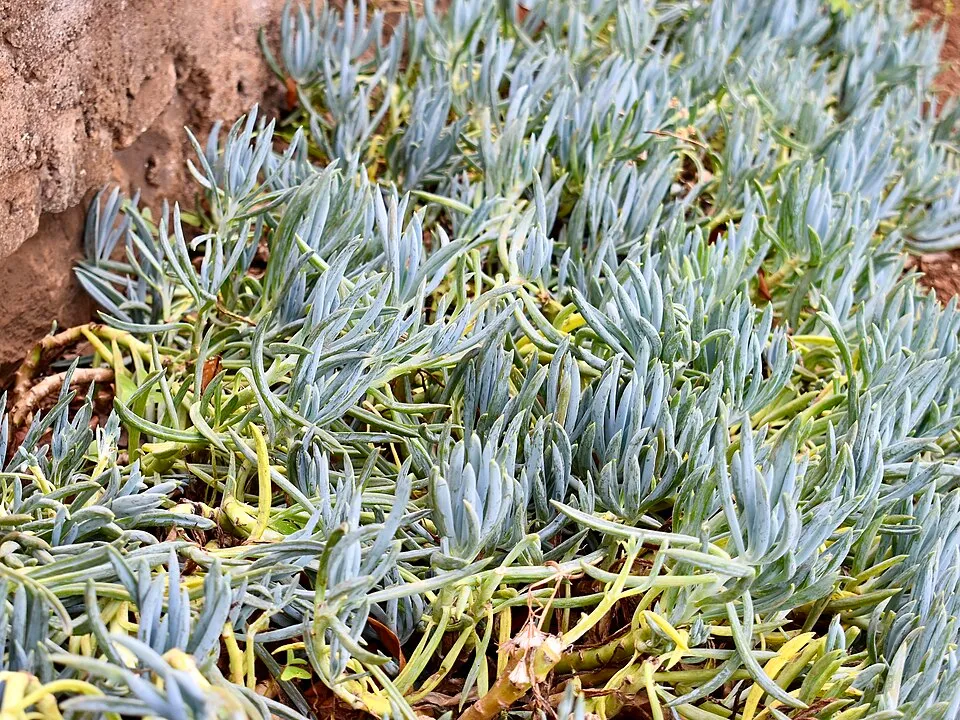
Curio repens, commonly known as Blue Chalksticks or formerly Senecio serpens, is a distinctive succulent species belonging to the Asteraceae family. This captivating, low-growing plant typically reaches a height of 15 to 30 cm, exhibiting a unique trailing and spreading habit. Its most striking features are its thick, fleshy, and cylindrical leaves, which measure approximately 2 to 5 cm in length and are adorned with a remarkable blue-gray, powdery coating, providing a stunning visual contrast.
During the summer months, small, vibrant yellow flowers may emerge, though indoor flowering is a rare occurrence. The stems are also fleshy and smooth, gradually thickening towards the base.
Native to the sun-drenched, rocky outcrops of South Africa, Curio repens is highly adapted to warm, arid conditions, thriving in environments with minimal moisture. It is a resilient succulent, perfectly suited for well-draining soil, where it can efficiently store water in its specialized leaves, making it exceptionally drought-tolerant.
Taxonomically, it now resides within the genus Curio, a reclassification that highlights its unique succulent adaptations distinct from the broader Senecio genus. Beyond its resilience and ease of care, its architectural form and striking coloration make it a popular choice for modern interior designs, hanging baskets, and diverse succulent displays, offering both aesthetic appeal and a low-maintenance solution for plant enthusiasts.
Trusted Scientific References
1. Authoritative external sources for Curio repens
1.1 Wikipedia — Curio repens
1.2 Kew POWO (Plants of the World Online)
1.3 PubMed — peer-reviewed research
1.4 NCBI Taxonomy Browser
1.5 GBIF — Global Biodiversity
1.6Senecio Serpens should be interpreted through verified botanical identity, practical care, and responsible safety language. This recovery note adds the missing context needed for a complete profile: match light to the plant's habit, use well-drained soil, water according to season, and avoid unsupported medicinal or edible claims. For publishing, the plant can be presented as a source-backed indoor plant with clear care guidance, common problem diagnosis, and conservative safety wording.
1.1.Senecio Serpens — Key Features
- ✓Distinctive Blue — Gray Foliage
- ✓Cylindrical, Fleshy, and — Cylindrical, Fleshy, and Powdery Leaves
- ✓Low — Growing and Trailing Habit
- ✓Exceptional Drought Tolerance — Exceptional Drought Tolerance
- ✓Minimal Watering Needs — Minimal Watering Needs
- ✓Adaptable to Various — Adaptable to Various Bright Light Conditions
- ✓High Ornamental and — High Ornamental and Aesthetic Value
- ✓Symbol of Resilience — Symbol of Resilience and Tenacity
- ✓Attracts Pollinators (when — Attracts Pollinators (when flowering outdoors)
- ✓Effective for Soil — Effective for Soil Stabilization (in outdoor landscaping)
1.2.Senecio Serpens — In Brief
- ✓Blue Chalksticks (Curio repens) is a striking blue-gray succulent.
- ✓Native to South Africa, it thrives in arid, warm conditions.
- ✓Valued primarily for its low-maintenance care and ornamental appeal.
- ✓All parts are toxic if ingested due to the presence of pyrrolizidine alkaloids.
- ✓Offers aesthetic, symbolic, and indirect environmental benefits, enhancing well-being.
- ✓Requires extremely well-draining soil and minimal, infrequent watering.
2.Senecio Serpens — Scientific Profile
3.Senecio Serpens — Botanical Stats
4.Senecio Serpens — Plant Morphology
5.Senecio Serpens — Geographic Distribution
6.Senecio Serpens — Cultural & Traditional Roles
7.Senecio Serpens — Active Compounds
- ✓Flavonoids — These polyphenolic compounds are present in Curio repens, known for their antioxidant properties that contribute to plant defense mechanisms and often impart color.
- ✓Phenolic Compounds — A diverse group including phenolic acids like caffeic and chlorogenic acids, which in plants often exhibit antioxidant, anti-inflammatory, and antimicrobial activities.
- ✓Pyrrolizidine Alkaloids (PAs) — These are characteristic secondary metabolites found in many species of the Asteraceae family, including Curio repens. PAs are hepatotoxic and are the primary compounds responsible for the plant's toxicity if ingested.
- ✓Terpenoids — A broad class of organic compounds, often contributing to plant aromas and playing roles in defense against herbivores and pathogens. Specific terpenoids in Curio repens contribute to its unique chemical profile.
- ✓Fatty Acids — Essential components of cell membranes and critical for energy storage in succulent plants, these compounds are vital for Curio repens' adaptation to arid conditions.
- ✓Waxes and Cuticular Lipids — These form a protective layer on the plant's surface, significantly reducing water loss through transpiration and contributing to the distinctive blue-gray, powdery appearance of the leaves.
- ✓Sugars and Polysaccharides — Primary energy storage molecules and structural components, crucial for the plant's metabolic processes, growth, and efficient water retention in its succulent tissues.
8.Senecio Serpens — What Research Suggests
- ✓Mental Well-being Enhancement — The aesthetic appeal of Curio repens, with its calming blue-gray foliage and unique form, contributes to a serene indoor environment, which can help reduce stress and promote a sense of tranquility.
- ✓Aesthetic Therapeutic Value — Its distinctive architectural structure and striking color serve as a visual focal point in living spaces, known to improve mood and overall satisfaction with one's surroundings.
- ✓Air Quality Improvement (Indirect) — Like many green plants, Curio repens contributes to indoor air quality by absorbing some airborne toxins, although its succulent nature means this effect is less pronounced compared to large-leafed plants.
- ✓Symbol of Resilience and Endurance — Culturally, its ability to thrive in harsh, arid conditions with minimal care positions it as an inspiring emblem of tenacity, survival, and flourishing against odds.
- ✓Feng Shui Harmony Promotion — In the practice of Feng Shui, the blue-gray hues of Blue Chalksticks are believed to foster tranquility and repel negative energy, contributing to a balanced and positive atmospheric flow.
- ✓Minor Topical Irritation Relief (Traditional Folk Use, Extreme Caution) — Historically, some related Senecio species have been used in folk remedies for minor skin irritations, but this is not well-documented for Curio repens and any such application is highly inadvisable due to potential toxicity and skin reactions.
- ✓Enhanced Biodiversity (Outdoor Application) — When cultivated outdoors in appropriate climates, the small yellow flowers of Curio repens can attract beneficial pollinators such as bees and butterflies, supporting local ecosystem health.
- ✓Soil Erosion Prevention (Outdoor Application) — Its spreading habit and root system can help stabilize soil, particularly on slopes or in arid landscapes, making it a valuable plant for environmental conservation efforts.
- ✓Tactile Sensory Engagement — The unique powdery texture of its cylindrical foliage offers a distinctive tactile experience, enriching sensory gardens and encouraging a hands-on approach to plant appreciation.
- ✓Low-Stress Plant Care — The inherent ease of care and exceptional drought tolerance of Curio repens reduces the burden on gardeners, making it a therapeutic and satisfying hobby for beginners or busy individuals.
8.1.Senecio Serpens — Indications & Uses
9.Senecio Serpens — Precautions & Warnings
9.1.Senecio Serpens — Warnings
- ✓Gastrointestinal Upset — Ingestion of any part of Curio repens can cause acute symptoms such as nausea, vomiting, diarrhea, and severe abdominal pain due to its toxic compounds.
- ✓Liver Toxicity (Hepatotoxicity) — The presence of pyrrolizidine alkaloids (PAs) means that ingestion can lead to severe liver damage, potentially causing veno-occlusive disease and liver failure, particularly with chronic or significant exposure.
- ✓Skin Irritation — Direct contact with the plant's sap can cause dermatological reactions, including redness, itching, and contact dermatitis in sensitive individuals.
- ✓Allergic Reactions — Some individuals may experience localized allergic reactions or more widespread allergic contact dermatitis upon handling the plant, characterized by rashes or hives.
- ✓Systemic Poisoning — Beyond gastrointestinal and liver issues, severe poisoning from ingestion can affect other organ systems, leading to more generalized systemic distress and potentially life-threatening complications.
9.2.Senecio Serpens — Safety Overview
- ✓Highly Toxic Upon Ingestion — All parts of Curio repens are considered toxic if ingested by humans or animals, primarily due to the presence of hepatotoxic pyrrolizidine alkaloids.
- ✓Avoid Internal Use — This plant should never be consumed internally as a food, medicine, or supplement under any circumstances due to its significant and potentially fatal hepatotoxic potential.
- ✓Handle with Care — Always wear protective gloves when handling the plant, especially during pruning, repotting, or propagation, to prevent skin irritation from its sap.
- ✓Keep Away from Children and Pets — Ensure the plant is placed in locations that are entirely inaccessible to curious children and household pets who might accidentally ingest its toxic foliage.
- ✓Seek Immediate Medical Attention — In case of suspected ingestion or a severe contact reaction, immediately contact Poison Control (e.g., (800) 222-1222 in the US) or a medical professional for urgent guidance.
- ✓Not for Traditional Medicinal Application — Despite its genus, Curio repens lacks established safe traditional medicinal uses and should never be employed for self-medication due to its inherent toxicity.
10.Senecio Serpens — Application Forms
- ✓Ornamental Display — Primarily cultivated as an attractive indoor or outdoor ornamental plant, valued for its distinctive blue-gray foliage and trailing habit in succulent arrangements, rock gardens, or hanging baskets.
- ✓Xeriscaping Element — Highly utilized in arid and low-water landscaping designs due to its exceptional drought tolerance and minimal irrigation requirements, promoting water conservation.
- ✓Container Gardening — Ideal for container planting, allowing for flexible placement in patios or balconies and easy relocation to protect the plant from adverse weather conditions.
- ✓Groundcover Plant — In suitable warm climates, Curio repens can be effectively used as a low-maintenance groundcover, helping to stabilize soil and add visual interest to garden beds.
- ✓Folk Topical Application (Extreme Caution) — Historically, sap from some related Senecio species has been applied externally for minor skin irritations, but this is NOT recommended for Curio repens due to potential dermatological reactions and systemic toxicity risks.
- ✓Educational Specimen — Serves as an excellent botanical specimen for demonstrating succulent adaptations, drought tolerance mechanisms, and the remarkable diversity within the Asteraceae family.
11.Senecio Serpens — Growth Requirements
- ✓Light Requirements — Thrives in full sun to partial shade; at least 6 hours of bright, indirect light daily is ideal for maintaining its vibrant blue-gray coloration and compact growth.
- ✓Soil Composition — Requires a very well-draining succulent or cactus potting mix, typically a blend of potting soil, coarse sand, and perlite or pumice to effectively prevent root rot.
- ✓Watering Schedule — Water thoroughly only when the soil has completely dried out, typically every 2-4 weeks during the active growing season (spring/summer) and much less frequently in winter.
- ✓Temperature and Humidity — Prefers warm temperatures between 18-24°C (65-75°F) and low humidity; it is not cold-hardy and must be protected from frost.
- ✓Fertilization Needs — Fertilize sparingly, once or twice during the active growing season (spring/summer) with a diluted, balanced liquid fertilizer formulated specifically for succulents.
- ✓Propagation Techniques — Easily propagated from stem cuttings; allow fresh cuttings to callus for a few days in a dry spot before planting them in well-draining soil.
- ✓Potting and Repotting — Use pots with ample drainage holes; repot only when the plant becomes root-bound, typically every 2-3 years, to refresh the soil and provide adequate space.
Reviewed by the Flora Medical Global Botanical Review Panel
Multi-disciplinary editorial group · Botany · Ethnobotany · Herbal-medicine literature
Who reviewed this: This page was checked by the Flora Medical Global Botanical Review Panel — an in-house editorial group of botany graduates, ethnobotany researchers, and horticulture practitioners who collectively maintain our 7,000+ plant encyclopedia. Meet the team.
Our 4-step verification process
1. Taxonomic verification
Scientific names and synonyms cross-checked against Kew POWO, World Flora Online, and The Plant List.
2. Phytochemical & medicinal cross-reference
Active compounds, traditional uses, and reported activities are cross-referenced with PubMed, USDA Dr. Duke's database, and peer-reviewed ethnobotanical literature.
3. Conservation & distribution check
Distribution, ecology, and conservation status confirmed against GBIF occurrence records and the IUCN Red List.
4. Editorial & safety review
Every entry passes an editorial pass for clarity, originality, and safety notices (toxicity, contraindications, dosage caveats) before publication.
Last reviewed:
Important medical disclaimer: This content is for educational and research purposes only. It is not medical advice and is not a substitute for consultation with a licensed healthcare provider. Do not use any herb to self-treat a medical condition without professional guidance.
Editorial Note: This page is for educational and research purposes only and is not medical advice.
Written by: Flora Medical Global Editorial Team
Reviewed by: Flora Medical Global Botanical Review Panel
Last Updated: June 15, 2026





Senecio Serpens — Comments & Community Reviews
Rate this plant