

Medical Disclaimer: This content is for educational purposes only. It is not medical advice. Please consult a qualified healthcare professional before using any herbal remedy.
Safety Overview
1.Senecio Vitalis — Plant Snapshot
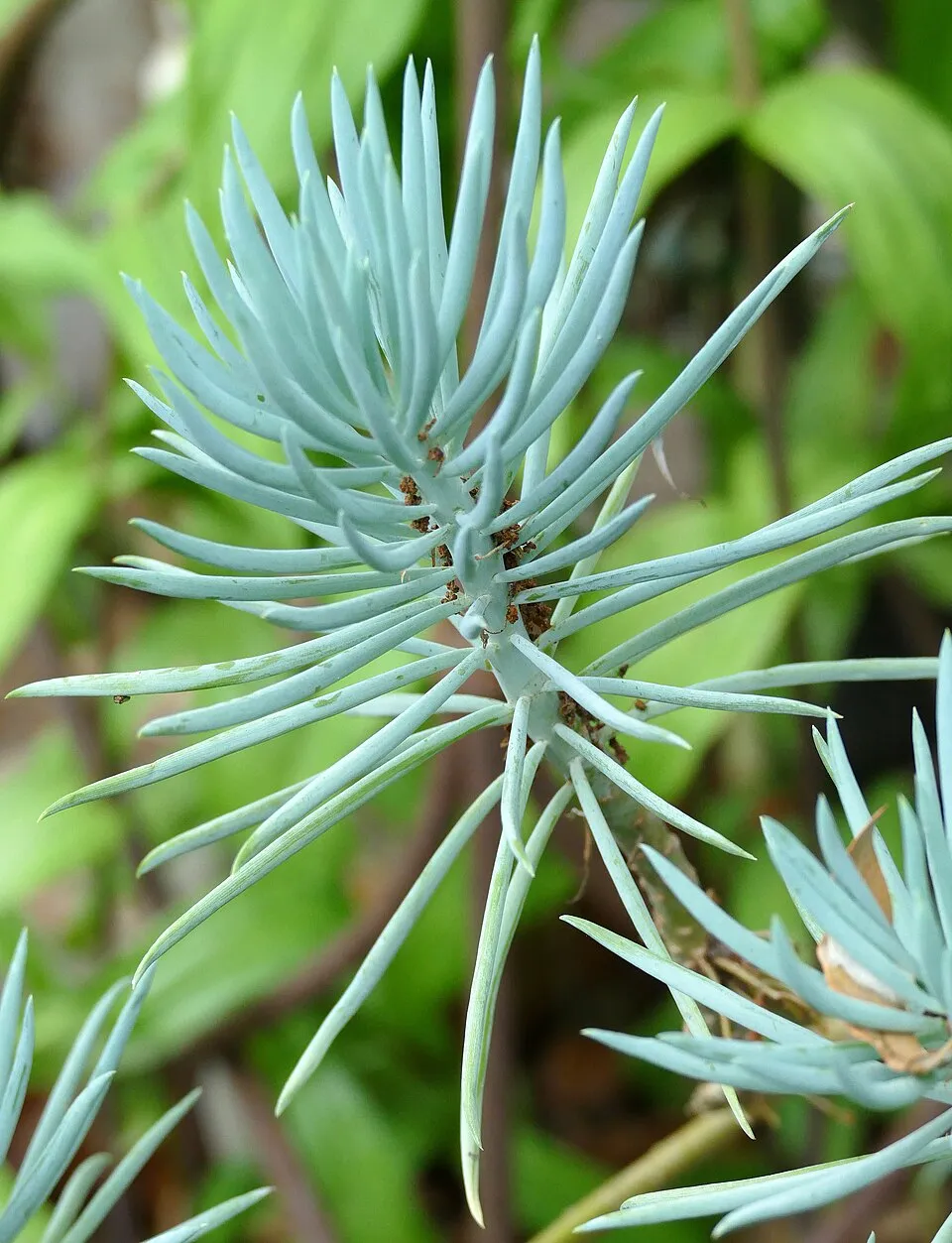
Senecio vitalis, commonly known as the Trailing Ice Plant or Blue Chalksticks, is a captivating perennial succulent herb indigenous to the arid and semi-arid landscapes of South Africa. This resilient species belongs to the vast Asteraceae family, one of the largest and most diverse plant families globally. Its morphology is meticulously adapted to survive in challenging, well-drained, often rocky or sandy soils.
The plant is characterized by remarkably thick, fleshy, and elongated leaves, typically displaying a striking glaucous green to silvery grey-green hue. These leaves are often coated with a subtle waxy cuticle, a key adaptation that significantly minimizes water loss and enhances its renowned drought resistance.
Senecio vitalis exhibits a prostrate or sprawling growth habit, with robust, cylindrical stems that can extend several feet in length. These stems gracefully trail over embankments, cascade elegantly from hanging baskets, or form a dense, attractive ground cover. Individual leaves are oblong to linear-lanceolate, measuring up to 8 cm (approximately 3 inches) long, and are typically arranged spirally along the stems, culminating in a more compact, rosette-like formation at the stem tips.
The inflorescence consists of small, cheerful, bright yellow capitula, characteristic of the Asteraceae family. These button-like flowers emerge predominantly from late winter through early spring, offering a vibrant contrast to its cool-toned foliage. Each flower head is composed of numerous tiny disc florets, with ray florets usually absent or inconspicuous in this particular species.
The root system is generally shallow and fibrous, efficiently designed to absorb surface moisture. Taxonomically, while Senecio vitalis is primarily valued for its ornamental appeal and ease of cultivation, it is part of a diverse genus where many species are known for either medicinal properties, ornamental value, or significant toxicity due to pyrrolizidine alkaloids.
Trusted Scientific References
1. Authoritative external sources for Senecio vitalis
1.1 Wikipedia — Senecio vitalis
1.2 Kew POWO (Plants of the World Online)
1.3 PubMed — peer-reviewed research
1.4 NCBI Taxonomy Browser
1.5 GBIF — Global Biodiversity
1.1.Senecio Vitalis — Key Features
- ✓Glaucous Foliage — Distinctive silvery-blue-green, fleshy leaves.
- ✓Succulent Nature — Highly adapted for water storage and drought tolerance.
- ✓Trailing Growth Habit — Ideal for groundcover, hanging baskets, or cascading over walls.
- ✓South African Native — Originates from arid and semi-arid regions.
- ✓Low Maintenance — Requires minimal watering and care once established.
- ✓Bright Yellow Flowers — Small, button-like blooms appearing in late winter to early spring.
- ✓Ornamental Value — Highly prized for its unique aesthetic in gardens and containers.
- ✓Asteraceae Family Member — Part of a large and diverse plant family.
- ✓Pyrrolizidine Alkaloid Risk (Genus) — Shares genus with species known for severe toxicity.
- ✓Adaptable to Poor Soils — Thrives in well-drained, sandy, or rocky substrates.
1.2.Senecio Vitalis — In Brief
- ✓Senecio vitalis is an ornamental succulent, known as Blue Chalksticks or Trailing Ice Plant.
- ✓Native to South Africa, it thrives in arid conditions with glaucous, fleshy leaves.
- ✓Belongs to the Senecio genus, which is notorious for containing toxic pyrrolizidine alkaloids (PAs).
- ✓Primarily cultivated for its aesthetic appeal, it is NOT recommended for internal medicinal use.
- ✓Ingestion of any Senecio species can lead to severe liver damage and other adverse health effects.
- ✓Requires minimal water and bright sunlight, making it an easy-care ornamental.
2.Senecio Vitalis — Systematic Position
3.Senecio Vitalis — Quick Facts
4.Senecio Vitalis — Morphological Account
5.Senecio Vitalis — Habitat & Distribution
6.Senecio Vitalis — Cultural & Traditional Roles
7.Senecio Vitalis — Active Compounds
- ✓The phytochemistry of the Senecio genus is complex and diverse, with pyrrolizidine alkaloids (PAs) being the most significant and often toxic class of compounds. While specific profiles for Senecio vitalis are less studied due to its ornamental primary use, the genus generally contains:
- ✓Pyrrolizidine Alkaloids (PAs) — Key compounds like senecionine, seneciphylline, and retrorsine are common in many Senecio species; these are hepatotoxic, genotoxic, and potentially carcinogenic.
- ✓Flavonoids — Compounds such as quercetins and kaempferols are often present, contributing to antioxidant and anti-inflammatory potential in plants, though their specific role in Senecio vitalis is not well-documented.
- ✓Terpenoids — Various mono-, sesqui-, and diterpenoids may be found, contributing to plant defense mechanisms and aromatic profiles.
- ✓Phenolic Acids — Derivatives of cinnamic and benzoic acids, like caffeic and chlorogenic acids, are common in Asteraceae and offer antioxidant properties.
- ✓Fatty Acids — Essential fatty acids and their derivatives can be found in seed oils and plant tissues.
- ✓Volatile Oils — Trace amounts of essential oils may be present, contributing to subtle fragrances.
- ✓Polysaccharides — Structural carbohydrates found in plant cell walls, contributing to the plant's overall physiology.
- ✓Triterpenes and Sterols — Compounds like beta-sitosterol are generally present in plant membranes and can have various biological activities.
8.Senecio Vitalis — Research Insights
- ✓Given the significant toxicity concerns within the Senecio genus, Senecio vitalis itself is not recommended for internal medicinal use. The following benefits are historically attributed to other species within the broader Senecio genus, often with serious safety caveats, and are presented for historical context only, NOT as recommendations for Senecio vitalis:
- ✓Respiratory Support (Historical) — Traditionally, some Senecio species were used as expectorants to help clear airways and alleviate symptoms of bronchitis and asthma, though this practice is now largely abandoned due to toxicity.
- ✓Gynaecological Aid (Historical) — Senecio aureus, or Golden Ragwort, has been historically investigated in homeopathic and traditional settings for menstrual irregularities and menopausal symptoms, requiring extreme caution and professional oversight.
- ✓Anti-inflammatory Properties (Historical) — Certain ragwort species (like Senecio jacobaea) were traditionally applied topically for joint inflammation and rheumatic complaints, but this carried significant systemic absorption risks.
- ✓Dermatological Conditions (Historical) — Some folk medicine traditions used specific Senecio preparations for skin irritations and stubborn dermatological issues, albeit with a high risk of adverse reactions.
- ✓Diuretic Effects (Historical) — A few Senecio species were believed to possess diuretic properties, promoting increased urine flow, but this was never widely accepted or proven safe.
- ✓Wound Healing (Historical, Topical) — In some cultures, poultices from certain Senecio plants were applied to wounds, though the risk of systemic absorption of toxic compounds was always present.
- ✓Antispasmodic Actions (Historical) — Traditional texts mention the use of some Senecio species for their potential to relieve muscle spasms, particularly in the digestive or respiratory systems.
- ✓Immune Modulation (Hypothetical) — Limited historical accounts suggest some species might have been used to influence immune responses, but this remains speculative and unverified by modern science.
8.1.Senecio Vitalis — Reported Uses
9.Senecio Vitalis — Adverse Effects
9.1.Senecio Vitalis — Warnings
- ✓The primary concern with the Senecio genus, including potential risks for Senecio vitalis if ingested, revolves around pyrrolizidine alkaloids (PAs). These compounds are highly toxic.
- ✓Hepatotoxicity — PAs can cause severe liver damage, leading to veno-occlusive disease, cirrhosis, and liver failure.
- ✓Gastrointestinal Distress — Symptoms may include nausea, vomiting, abdominal pain, and diarrhea.
- ✓Genotoxicity — PAs can damage DNA, posing a risk for mutations and potential carcinogenicity.
- ✓Cumulative Toxicity — Repeated exposure to even small doses can lead to a build-up of PAs in the liver, causing insidious long-term damage.
- ✓Allergic Reactions — Topical contact with sap may cause skin irritation or dermatitis in sensitive individuals.
- ✓Central Nervous System Effects — In severe cases of poisoning, neurological symptoms such as lethargy or confusion may occur.
9.2.Senecio Vitalis — Safety Profile
- ✓The safety profile for Senecio vitalis, within the context of the Senecio genus, is dominated by the significant risk of pyrrolizidine alkaloid (PA) toxicity. Therefore, extreme caution is paramount.
- ✓Avoid Internal Use — Senecio vitalis and other Senecio species should NEVER be ingested due to the risk of severe liver damage.
- ✓Pregnancy & Lactation — Absolutely contraindicated for pregnant or breastfeeding individuals due to the high risk of fetal or infant harm from PAs.
- ✓Liver Disease — Individuals with pre-existing liver conditions are at extremely high risk and must avoid all Senecio products.
- ✓Drug Interactions — PAs can interact with liver-metabolized medications, increasing toxicity or altering drug efficacy.
- ✓External Use Caution — While primarily ornamental, handle with care; sap may cause skin irritation in sensitive individuals.
- ✓Children & Pets — Keep away from children and pets who might accidentally ingest plant parts.
- ✓Professional Consultation — Always consult a healthcare professional before considering any herbal remedy, especially those from genera known for toxicity like Senecio.
10.Senecio Vitalis — Preparation & Dosage
- ✓Due to the potential presence of pyrrolizidine alkaloids (PAs) in the Senecio genus, Senecio vitalis is NOT recommended for any internal medicinal consumption. Its primary use is ornamental.
- ✓Ornamental Groundcover — Plant Senecio vitalis as an attractive, drought-tolerant groundcover in rock gardens or succulent beds.
- ✓Hanging Baskets & Containers — Allow its trailing stems to cascade gracefully from hanging baskets, pots, or elevated planters.
- ✓Xeriscaping — Integrate into water-wise landscapes due to its low water requirements and distinctive aesthetic.
- ✓Edging Plant — Use along pathways or borders to create a striking textural contrast with other plants.
- ✓Indoor Specimen — Grow in bright, sunny indoor locations as a unique houseplant, ensuring good air circulation.
- ✓Floral Arrangements (External) — Occasionally used for its distinctive foliage in fresh or dried floral arrangements, ensuring no contact with skin if sensitive.
11.Senecio Vitalis — Propagation & Care
- ✓Sunlight — Requires full sun to partial shade; prefers bright, direct sunlight for best growth and color.
- ✓Soil — Thrives in well-drained, sandy, or rocky soil; prefers a slightly acidic to neutral pH.
- ✓Watering — Drought-tolerant; water sparingly, allowing soil to dry out completely between waterings, especially in winter.
- ✓Temperature — Prefers warm temperatures (18-24°C / 65-75°F); not frost-tolerant and requires protection in colder climates.
- ✓Propagation — Easily propagated by stem cuttings; allow cuttings to callus for a few days before planting in well-drained soil.
- ✓Fertilization — Low feeder; a diluted balanced liquid fertilizer can be applied once a year during the growing season.
- ✓Pruning — Prune as needed to maintain shape, control spread, and remove leggy growth or spent flowers.
- ✓Pests & Diseases — Generally pest-resistant but can be susceptible to mealybugs and aphids, especially in humid conditions.
Reviewed by the Flora Medical Global Botanical Review Panel
Multi-disciplinary editorial group · Botany · Ethnobotany · Herbal-medicine literature
Who reviewed this: This page was checked by the Flora Medical Global Botanical Review Panel — an in-house editorial group of botany graduates, ethnobotany researchers, and horticulture practitioners who collectively maintain our 7,000+ plant encyclopedia. Meet the team.
Our 4-step verification process
1. Taxonomic verification
Scientific names and synonyms cross-checked against Kew POWO, World Flora Online, and The Plant List.
2. Phytochemical & medicinal cross-reference
Active compounds, traditional uses, and reported activities are cross-referenced with PubMed, USDA Dr. Duke's database, and peer-reviewed ethnobotanical literature.
3. Conservation & distribution check
Distribution, ecology, and conservation status confirmed against GBIF occurrence records and the IUCN Red List.
4. Editorial & safety review
Every entry passes an editorial pass for clarity, originality, and safety notices (toxicity, contraindications, dosage caveats) before publication.
Last reviewed:
Important medical disclaimer: This content is for educational and research purposes only. It is not medical advice and is not a substitute for consultation with a licensed healthcare provider. Do not use any herb to self-treat a medical condition without professional guidance.
Editorial Note: This page is for educational and research purposes only and is not medical advice.
Written by: Flora Medical Global Editorial Team
Reviewed by: Flora Medical Global Botanical Review Panel
Last Updated: June 15, 2026





Senecio Vitalis — Comments & Community Reviews
Rate this plant