
Medical Disclaimer: This content is for educational purposes only. It is not medical advice. Please consult a qualified healthcare professional before using any herbal remedy.
Safety Overview
1.Shallaki (Boswellia) — Plant Snapshot
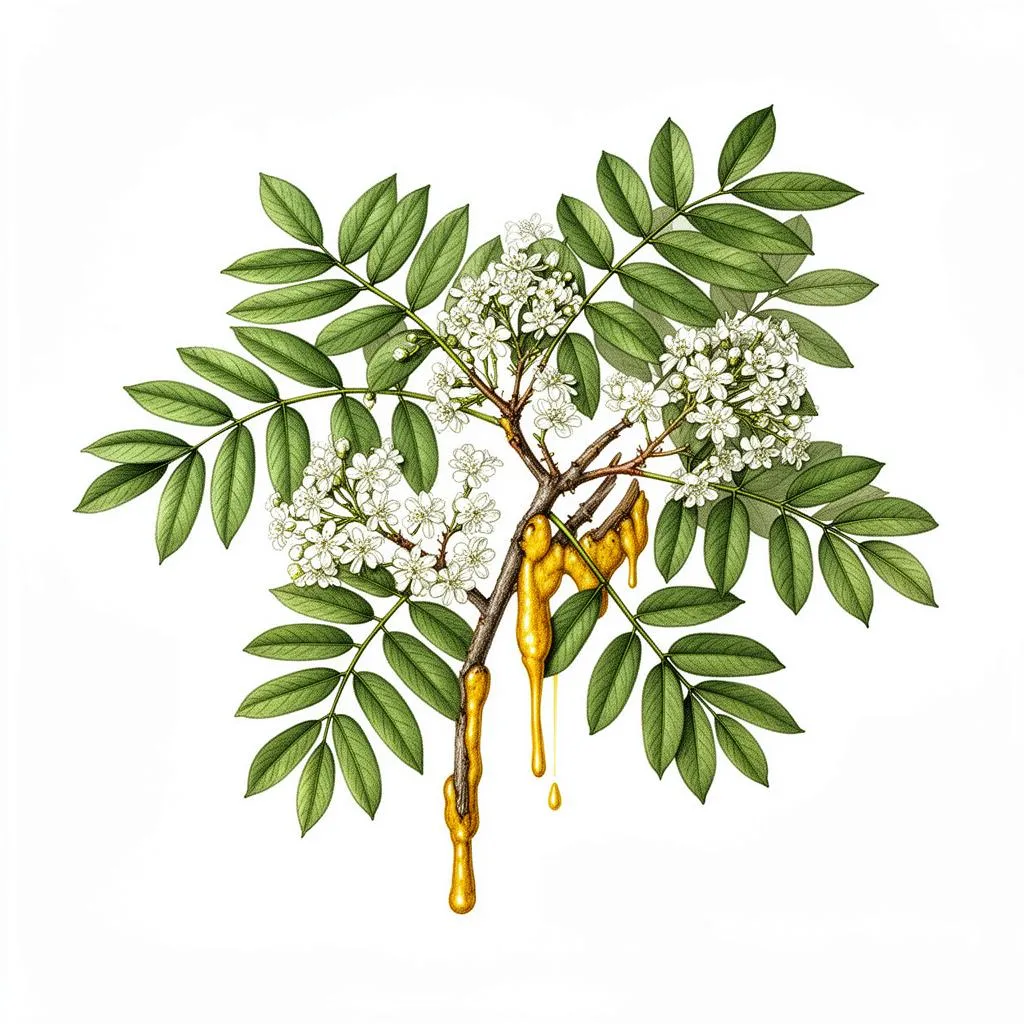
Boswellia serrata, commonly known as Shallaki or Indian Frankincense, is a remarkable large deciduous tree belonging to the Burseraceae family, which also encompasses other resin-producing species. This resilient tree can reach impressive heights of up to 10 meters (33 feet), featuring a characteristically straight trunk that often attains a diameter of 50 cm (20 inches). Its bark is rough, fissured, and exfoliates in thin, papery flakes, revealing a reddish inner bark, contributing to its distinctive appearance.
The leaves are compound and spirally arranged, typically comprising 10 to 12 lanceolate leaflets, each measuring between 8 to 20 cm (3 to 8 inches) long. During the spring, the tree adorns itself with small, unassuming white to pale yellow flowers, arranged in elongated clusters. These blossoms eventually give way to the production of its most valued asset: a fragrant oleo-gum resin that exudes naturally or through deliberate incisions in the bark.
This precious gum resin, known for its potent therapeutic properties, is a cornerstone of traditional medicine systems. Boswellia serrata thrives in arid, hilly environments across India, Africa, and the Arabian Peninsula, showing a particular preference for sandy, well-drained soils. In India, it is extensively found in the dry hilly forests of states like Gujarat, Madhya Pradesh, Bihar, Rajasthan, Orissa, Assam, and the central peninsular regions including Andhra Pradesh.
Taxonomically, its placement within the Burseraceae family highlights its close relationship to other frankincense and myrrh trees. Modern research extensively validates its traditional uses, particularly focusing on its anti-inflammatory potential in managing a range of conditions, making it a highly sought-after ingredient in contemporary herbal formulations and supplements aimed at promoting joint health and general wellness.
Trusted Scientific References
1. Authoritative external sources for Boswellia serrata
1.1 Wikipedia — Boswellia serrata
1.2 Kew POWO (Plants of the World Online)
1.3 PubMed — peer-reviewed research
1.4 NCBI Taxonomy Browser
1.5 GBIF — Global Biodiversity
1.1.Shallaki (Boswellia) — Defining Traits
- ✓Ancient Ayurvedic Herb — Revered in traditional Indian medicine for thousands of years.
- ✓Potent Anti — inflammatory — Main active compounds, boswellic acids, are powerful inhibitors of inflammation.
- ✓Joint Health Support — Widely used to alleviate symptoms of arthritis and improve joint mobility.
- ✓Digestive System Aid — Beneficial for inflammatory bowel conditions like Crohn's and ulcerative colitis.
- ✓Respiratory Relief — Possesses anti-asthmatic properties, helping to manage airway inflammation.
- ✓Immunomodulatory Action — Helps balance and support the immune system rather than suppressing it.
- ✓Liver Protective Qualities — Contributes to hepatoprotection and lipid regulation.
- ✓Aromatic Resin — Known as Indian Frankincense, used historically in spiritual and aromatic practices.
- ✓Sustainable Sourcing Focus — Efforts are increasingly directed towards ethical and sustainable harvesting of its resin.
- ✓Standardized Extracts Available — Modern supplements offer precise dosages of active boswellic acids.
1.2.Shallaki (Boswellia) — Concise Overview
- ✓Boswellia serrata (Shallaki) is an ancient Ayurvedic herb known for its powerful anti-inflammatory gum resin.
- ✓Rich in boswellic acids, it effectively reduces joint pain, stiffness, and inflammation.
- ✓Benefits extend to digestive health, supporting conditions like ulcerative colitis and Crohn's disease.
- ✓Also traditionally used for respiratory issues, immune modulation, and liver protection.
- ✓Available as standardized extracts, powders, and essential oils; requires careful dosing and attention to contraindications.
- ✓A natural alternative for managing inflammatory conditions, rooted in centuries of traditional use and modern research.
2.Shallaki (Boswellia) — Taxonomic Classification
3.Shallaki (Boswellia) — Reference Facts
4.Shallaki (Boswellia) — Morphological Account
5.Shallaki (Boswellia) — Where It Grows
6.Shallaki (Boswellia) — Historical Applications
7.Shallaki (Boswellia) — Secondary Metabolites
- ✓Boswellic Acids — A group of pentacyclic triterpenes, including alpha-boswellic acid, beta-boswellic acid, acetyl-alpha-boswellic acid, and acetyl-beta-boswellic acid, which are the primary active compounds responsible for the anti-inflammatory and therapeutic effects.
- ✓Olibanum — A resinous exudate containing essential oils and other aromatic compounds, contributing to its fragrance and some of its medicinal properties.
- ✓Ursolic Acid — A triterpenoid found in many plants, known for its anti-inflammatory, antioxidant, and potential anti-cancer properties.
- ✓Oleanolic Acid — Another triterpenoid with similar pharmacological activities to ursolic acid, including anti-inflammatory and hepatoprotective effects.
- ✓Essential Oils — Including monoterpenes and sesquiterpenes, which contribute to the aroma and may have antimicrobial and anti-inflammatory properties.
8.Shallaki (Boswellia) — Research Insights
- ✓Anti-inflammatory Action — Boswellia serrata, commonly known as Shallaki, is renowned for its potent anti-inflammatory properties, primarily attributed to its unique triterpenoid compounds called boswellic acids. These acids work by inhibiting key inflammatory enzymes such as 5-lipoxygenase (5-LOX), which plays a crucial role in the production of leukotrienes, inflammatory mediators that contribute to conditions like arthritis, asthma, and inflammatory bowel diseases. This targeted inhibition helps to reduce swelling, pain, and stiffness associated with chronic inflammatory disorders.
- ✓Osteoarthritis Management — Shallaki has shown significant efficacy in alleviating symptoms of osteoarthritis, a degenerative joint disease characterized by cartilage breakdown and inflammation. Clinical studies suggest that boswellic acids can reduce joint pain, improve joint function, and increase mobility in individuals suffering from osteoarthritis, particularly in the knee and hip joints. The anti-inflammatory effects help to protect cartilage from degradation and reduce the inflammatory processes that cause pain and discomfort.
- ✓Rheumatoid Arthritis Relief — Beyond osteoarthritis, Shallaki also demonstrates benefits for rheumatoid arthritis, an autoimmune condition where the immune system attacks the body's own joints. By modulating the immune response and reducing inflammation, boswellic acids can help to decrease joint swelling, tenderness, and morning stiffness, thereby improving the quality of life for patients with this chronic autoimmune disease.
- ✓Asthma Symptom Improvement — The anti-inflammatory action of Boswellia serrata extends to the respiratory system, making it a valuable natural remedy for asthma. By inhibiting leukotriene synthesis, which contributes to bronchoconstriction and airway inflammation in asthma, Shallaki can help to reduce the frequency and severity of asthma attacks, improve lung function, and ease breathing difficulties.
- ✓Inflammatory Bowel Disease (IBD) Support — Shallaki has been explored for its potential in managing inflammatory bowel diseases like Crohn's disease and ulcerative colitis. Its ability to reduce inflammation in the digestive tract may help to alleviate symptoms such as abdominal pain, diarrhea, and rectal bleeding, promoting remission and improving gut health in individuals with these chronic conditions.
- ✓Skin Health and Wound Healing — The anti-inflammatory and antimicrobial properties of Shallaki contribute to its benefits for skin health. It can help to reduce redness and irritation associated with inflammatory skin conditions like eczema and psoriasis. Furthermore, its ability to promote blood circulation and reduce inflammation may aid in faster wound healing and scar reduction.
- ✓Pain Reduction — The analgesic properties of Shallaki, stemming from its anti-inflammatory mechanisms, make it effective in reducing various types of pain, including joint pain, muscle pain, and headaches. By targeting inflammatory pathways, it helps to alleviate the discomfort and pain associated with inflammation.
- ✓Cholesterol Management — Some research suggests that Boswellia serrata may have a positive impact on lipid profiles. It has been observed to help lower levels of LDL (bad) cholesterol and triglycerides while potentially increasing HDL (good) cholesterol, contributing to cardiovascular health.
- ✓Antioxidant Properties — Shallaki contains compounds that exhibit antioxidant activity, helping to combat oxidative stress caused by free radicals. This protection against cellular damage can contribute to overall health and may play a role in preventing chronic diseases.
- ✓Brain Health Support — Emerging research indicates that the anti-inflammatory and antioxidant effects of Boswellia serrata may offer neuroprotective benefits. By reducing inflammation and oxidative stress in the brain, it could potentially support cognitive function and protect against neurodegenerative conditions.
- ✓Cancer Research — While still in early stages of research, some studies have explored the potential anti-cancer properties of boswellic acids. They have shown promise in inhibiting the growth of certain cancer cells and inducing apoptosis (programmed cell death) in laboratory settings.
- ✓Oral Health — The anti-inflammatory and antimicrobial properties of Shallaki can also benefit oral health. It may help to reduce gum inflammation, prevent periodontal disease, and alleviate symptoms of gingivitis.
- ✓Liver Protection — Preliminary studies suggest that Boswellia serrata may possess hepatoprotective effects, helping to protect the liver from damage caused by toxins and certain medications.
- ✓Menstrual Pain Relief — Due to its anti-inflammatory and antispasmodic properties, Shallaki may help to alleviate menstrual cramps and associated pain by reducing uterine contractions and inflammation.
8.1.Shallaki (Boswellia) — Indications & Uses
9.Shallaki (Boswellia) — Precautions & Warnings
9.1.Shallaki (Boswellia) — Caution Notes
- ✓Shallaki is generally considered safe for most individuals when taken orally for short periods.
- ✓However, some people may experience mild gastrointestinal side effects such as nausea, diarrhea, or stomach upset.
- ✓Allergic reactions are also possible, though rare.
- ✓It is advisable to start with a low dose to assess individual tolerance.
9.2.Shallaki (Boswellia) — Risk Assessment
- ✓Boswellia serrata has a good safety profile, with most reported side effects being mild and transient.
- ✓It is not recommended for pregnant or breastfeeding women due to a lack of sufficient safety data.
- ✓Individuals with pre-existing medical conditions or those taking medications should consult a healthcare professional before use, especially if they have bleeding disorders or are undergoing surgery, as it may affect blood clotting.
10.Shallaki (Boswellia) — Application Forms
- ✓Oral Supplements — Most commonly consumed as encapsulated extracts standardized for boswellic acid content, particularly AKBA, for systemic anti-inflammatory effects.
- ✓Powders — Dried and powdered gum resin is used in traditional Ayurvedic formulations, often mixed with water, honey, or ghee.
- ✓Topical Applications — Resin extracts can be incorporated into creams, balms, and oils for localized pain relief and reducing inflammation in joints or skin conditions.
- ✓Essential Oil — Derived from the resin, the essential oil is used in aromatherapy for its calming and uplifting properties, or diluted for topical use.
- ✓Incense and Fumigation — The raw resin is burned as incense (frankincense) in spiritual practices and for its aromatic, purifying, and calming effects.
- ✓Herbal Teas/Decoctions — Less common, but the resin or bark can be decocted, though the resin's insolubility in water limits its efficacy in this form.
- ✓Traditional Formulations — Integrated into complex polyherbal remedies in Ayurveda and Unani medicine for a wide range of ailments, often combined with other synergistic herbs.
- ✓Tinctures — Alcoholic extracts can be prepared, offering a concentrated liquid form for internal consumption, though less common than standardized capsules.
11.Shallaki (Boswellia) — Growth Requirements
- ✓Climate Preference — Thrives in hot, dry climates with distinct rainy and dry seasons, characteristic of its native habitats.
- ✓Soil Requirements — Prefers well-drained, sandy, or stony soils, often found on degraded or rocky slopes and hillsides.
- ✓Propagation — Primarily propagated by seeds, which require scarification for better germination, or through stem cuttings.
- ✓Water Management — Highly drought-tolerant once established, requiring minimal irrigation; excessive moisture can be detrimental.
- ✓Sunlight Exposure — Requires full sun exposure for optimal growth and resin production.
- ✓Harvesting — The oleo-gum resin is harvested through a process called tapping, where incisions are made in the bark during the dry season, allowing the resin to exude and harden.
- ✓Pest and Disease Resistance — Generally robust, showing good resistance to common pests and diseases in its natural environment.
- ✓Sustainable Practices — Encouraging sustainable harvesting methods is crucial to prevent over-exploitation and ensure long-term viability of wild populations.
Reviewed by the Flora Medical Global Botanical Review Panel
Multi-disciplinary editorial group · Botany · Ethnobotany · Herbal-medicine literature
Who reviewed this: This page was checked by the Flora Medical Global Botanical Review Panel — an in-house editorial group of botany graduates, ethnobotany researchers, and horticulture practitioners who collectively maintain our 7,000+ plant encyclopedia. Meet the team.
Our 4-step verification process
1. Taxonomic verification
Scientific names and synonyms cross-checked against Kew POWO, World Flora Online, and The Plant List.
2. Phytochemical & medicinal cross-reference
Active compounds, traditional uses, and reported activities are cross-referenced with PubMed, USDA Dr. Duke's database, and peer-reviewed ethnobotanical literature.
3. Conservation & distribution check
Distribution, ecology, and conservation status confirmed against GBIF occurrence records and the IUCN Red List.
4. Editorial & safety review
Every entry passes an editorial pass for clarity, originality, and safety notices (toxicity, contraindications, dosage caveats) before publication.
Last reviewed:
Important medical disclaimer: This content is for educational and research purposes only. It is not medical advice and is not a substitute for consultation with a licensed healthcare provider. Do not use any herb to self-treat a medical condition without professional guidance.
Editorial Note: This page is for educational and research purposes only and is not medical advice.
Written by: Flora Medical Global Editorial Team
Reviewed by: Flora Medical Global Botanical Review Panel
Last Updated: June 15, 2026





Shallaki (Boswellia) — Comments & Community Reviews
Rate this plant