

Medical Disclaimer: This content is for educational purposes only. It is not medical advice. Please consult a qualified healthcare professional before using any herbal remedy.
Safety Overview
1.Sidalcea Malviflora — Botanical Snapshot
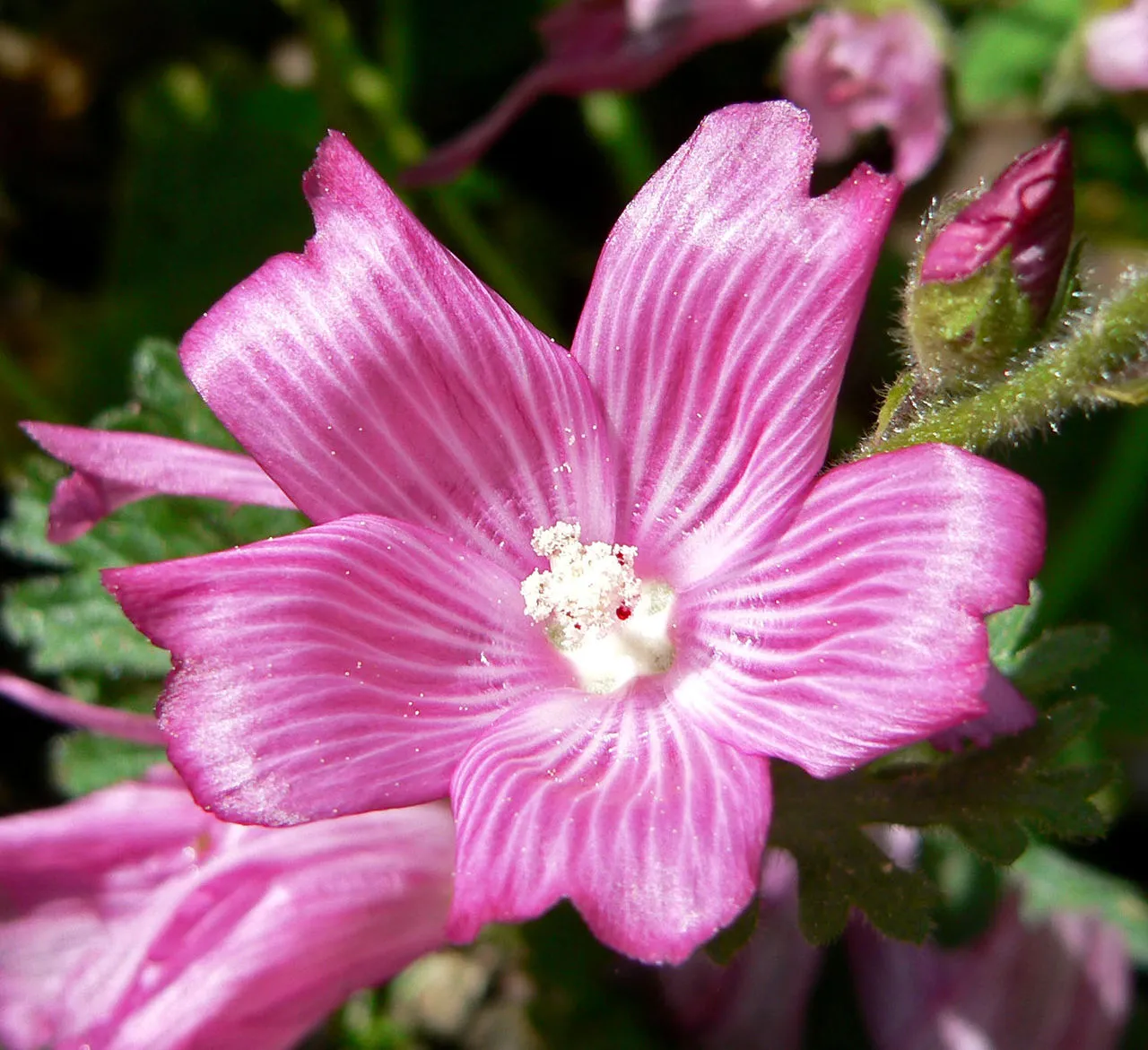
Sidalcea malviflora, commonly known as checkerbloom, prairie mallow, or pink mallow, is a captivating perennial herbaceous plant indigenous to western North America, primarily found across California, Oregon, and extending into southwestern Washington. Belonging to the Malvaceae family, which includes well-known relatives like hollyhocks and cotton, this species typically reaches heights of 30 to 90 cm (1 to 3 feet). Its morphology is characterized by attractive, mallow-like flowers, generally ranging from soft pink to vibrant purplish-magenta, occasionally appearing in white or deeper rose hues. These flowers are arranged in erect, often branched racemes atop slender stems, each featuring five petals, frequently notched at the apex, and numerous stamens fused into a central column.
Sidalcea malviflora is gynodioecious, meaning populations contain both hermaphrodite and female-only flowering plants. The leaves exhibit dimorphism: basal leaves are broadly ovate and distinctly lobed, while upper leaves become progressively smaller and more deeply divided, often palmately lobed or dissected. Stems are erect, slender, and can be covered in soft, branched (stellate) hairs, often trailing or reclining and capable of rooting at the base. The plant possesses a strong taproot and short rhizomes, enabling it to form clumps over time.
S. malviflora is remarkably adaptable, thriving in diverse habitats from grasslands and open woodlands to serpentine soils, and tolerating conditions ranging from moist meadows to seasonally dry, upland slopes. Its resilience, attractive floral display, and role as a crucial nectar source for pollinators, including specialist native bees and the federally endangered Fender's blue butterfly, make it invaluable for native plant gardens and ecological restoration efforts.
Trusted Scientific References
1. Authoritative external sources for Sidalcea malviflora
1.1 Wikipedia — Sidalcea malviflora
1.2 Kew POWO (Plants of the World Online)
1.3 PubMed — peer-reviewed research
1.4 NCBI Taxonomy Browser
1.5 GBIF — Global Biodiversity
1.1.Sidalcea Malviflora — Notable Characteristics
- ✓Perennial herbaceous plant, typically 30 — 90 cm tall.
- ✓Features attractive pink to purplish, mallow — like flowers.
- ✓Native to Western — Native to Western North America, particularly California and Oregon.
- ✓Abundant in mucilage, — Abundant in mucilage, providing significant demulcent properties.
- ✓Contains anti — inflammatory flavonoids and phenolic compounds.
- ✓Young leaves are — Young leaves are edible, suitable for raw or cooked consumption.
- ✓Important pollinator plant, — Important pollinator plant, supporting bees and the Fender's blue butterfly.
- ✓Resilient and adaptable — Resilient and adaptable to various grassland and woodland habitats.
- ✓Exhibits gynodioecious reproductive — Exhibits gynodioecious reproductive characteristics.
- ✓Spreads via rhizomes, — Spreads via rhizomes, forming clumps, and is generally pest-resistant.
1.2.Sidalcea Malviflora — Snapshot Summary
- ✓Native to Western North America, Sidalcea malviflora is a perennial mallow known for its attractive pink-purplish flowers.
- ✓Rich in soothing mucilage, anti-inflammatory flavonoids, and phenolic compounds.
- ✓Traditionally valued for its demulcent, anti-inflammatory, and emollient properties, aiding respiratory, digestive, and skin health.
- ✓Its young leaves are edible, offering a mild flavor for culinary use.
- ✓Serves as an important pollinator plant, attracting specialist bees and butterflies.
- ✓Generally considered safe for use, though caution is advised regarding medication interactions and use during pregnancy.
2.Sidalcea Malviflora — Botanical Identity
3.Sidalcea Malviflora — Fact Sheet
4.Sidalcea Malviflora — Botanical Description
5.Sidalcea Malviflora — Origin & Spread
6.Sidalcea Malviflora — Folk Medicine Applications
7.Sidalcea Malviflora — Key Phytochemicals
- ✓Mucilage — Composed primarily of polysaccharides like arabinogalactans and rhamnogalacturonans, responsible for the plant's characteristic demulcent, emollient, and soothing properties.
- ✓Flavonoids — Includes compounds such as quercetin and kaempferol derivatives, which are potent antioxidants and contribute significantly to the plant's anti-inflammatory effects.
- ✓Phenolic Acids — Contains caffeic acid and ferulic acid, known for their antioxidant activity and their role in mitigating inflammatory processes within the body.
- ✓Tannins — Present in varying amounts, these compounds offer mild astringent properties, which can be beneficial for tissue toning and minor wound healing.
- ✓Anthocyanins — Pigments that give the flowers their characteristic pink to purplish hues, also acting as antioxidants and contributing to cellular protection.
- ✓Phytosterols — Compounds like beta-sitosterol may be present, potentially contributing to anti-inflammatory and cholesterol-modulating effects.
- ✓Vitamins — Contains trace amounts of essential vitamins, including vitamin C and precursors to vitamin A, supporting general nutritional well-being.
- ✓Minerals — Provides various essential minerals such as calcium, magnesium, and potassium, vital for numerous physiological functions.
- ✓Fatty Acids — Found in the plant's tissues, particularly seeds, these contribute to the emollient and nourishing properties.
8.Sidalcea Malviflora — Scientific Evidence
- ✓Demulcent Action — Sidalcea malviflora is rich in mucilage, which creates a soothing, protective layer over irritated mucous membranes, offering significant relief for conditions affecting the digestive and respiratory tracts.
- ✓Anti-inflammatory Properties — The plant's phytochemical profile, including various flavonoids and phenolic compounds, contributes to reducing inflammation, making it particularly beneficial for skin irritations and minor internal inflammatory states.
- ✓Emollient Effects — When applied topically, preparations from pink mallow can soften and moisturize the skin, providing relief for dry, rough, or irritated skin conditions.
- ✓Digestive Support — Its mucilaginous content helps to calm and protect the gastrointestinal lining, alleviating discomfort associated with mild indigestion, gastritis, or irritable bowel syndrome.
- ✓Respiratory Comfort — The soothing mucilage aids in mitigating coughs, sore throats, and bronchitis by forming a protective film that reduces irritation and promotes healing.
- ✓Skin Healing — Topical applications can support the healing of minor wounds, reduce redness, and soothe burns or insect bites, leveraging its demulcent and anti-inflammatory compounds.
- ✓Urinary Tract Relief — Similar to other mallow species, Sidalcea malviflora may offer soothing effects for irritated urinary passages, helping to alleviate discomfort.
- ✓Mild Expectorant — The mucilage can help to loosen thick phlegm in the respiratory tract, facilitating easier expulsion and clearer breathing.
- ✓Antioxidant Activity — Flavonoids and phenolic acids present in the plant contribute to antioxidant defenses, protecting cells from oxidative stress and free radical damage.
- ✓Immunomodulatory Potential — While not extensively studied for this species, some mallow relatives exhibit mild immune-modulating effects, suggesting a potential for broader systemic support.
- ✓Topical Pain Relief — When applied externally, its anti-inflammatory properties can mildly reduce localized pain associated with skin inflammation or minor injuries.
- ✓Gastroprotective Qualities — The protective mucilage may help shield the stomach lining from mild irritants, contributing to overall gastrointestinal health.
8.1.Sidalcea Malviflora — Indications & Uses
9.Sidalcea Malviflora — Safety Considerations
9.1.Sidalcea Malviflora — Caution Notes
- ✓Allergic Reactions — While rare, individuals sensitive to plants in the Malvaceae family may experience mild skin rashes or respiratory symptoms.
- ✓Gastrointestinal Upset — Very high doses of mucilage, particularly when not adequately hydrated, could potentially lead to mild bloating or loose stools in sensitive individuals.
- ✓Medication Interaction — The high mucilage content may theoretically interfere with the absorption of orally administered medications if taken concurrently; a separation of doses is recommended.
- ✓Pregnancy/Lactation — Insufficient scientific data exists regarding its safety during pregnancy or breastfeeding; therefore, use is generally advised against without professional medical consultation.
- ✓Topical Irritation — Extremely rare, but direct application of fresh plant material might cause mild irritation in individuals with highly sensitive skin.
- ✓Hypotension — Although not specifically documented for Sidalcea malviflora, some mallow species may exhibit very mild hypotensive effects, generally not clinically significant.
9.2.Sidalcea Malviflora — Safety Overview
- ✓Generally Regarded as Safe (GRAS) — For culinary use of its leaves, similar to other mallow species, when consumed in moderate amounts.
- ✓Consult Healthcare Professional — Essential for pregnant or breastfeeding women, young children, and individuals with pre-existing medical conditions or those on medication.
- ✓Avoid Concurrent Medication — To prevent potential interference with drug absorption, separate doses of Sidalcea preparations and other oral medications by at least 2 hours.
- ✓Patch Test Recommended — For any topical application, perform a small patch test on the skin first to check for potential sensitivities or allergic reactions.
- ✓Proper Identification Crucial — Always ensure correct botanical identification of Sidalcea malviflora to avoid confusion with potentially toxic look-alike plants.
- ✓Adhere to Dosage Guidelines — Follow recommended dosages; excessive consumption or application is not advised without expert guidance.
- ✓Quality Sourcing — Obtain plant material from reputable and sustainable sources to ensure purity and minimize the risk of contaminants.
10.Sidalcea Malviflora — Preparations & Uses
- ✓Infusion/Tea — Steep dried leaves and flowers in hot water to create a soothing tea for internal demulcent and anti-inflammatory benefits.
- ✓Poultice — Crush fresh leaves and apply directly to the skin to soothe irritations, minor burns, insect bites, or rashes.
- ✓Decoction — Boil roots or tougher plant parts in water to extract compounds for more concentrated internal or external applications.
- ✓Tincture — Prepare an alcohol-based extract using fresh or dried plant material for a potent, shelf-stable medicinal preparation.
- ✓Topical Cream/Salve — Incorporate Sidalcea extracts into a suitable base for an emollient and anti-inflammatory skin treatment.
- ✓Compress — Soak a cloth in a strong infusion or decoction and apply externally to localized areas for relief from inflammation or swelling.
- ✓Edible Greens — Young leaves can be consumed raw in salads, offering a mild flavor and mucilaginous texture, or cooked as a nutritious green vegetable.
- ✓Gargle/Mouthwash — Use a cooled infusion as a gargle to alleviate sore throats or as a mouthwash for oral irritations.
11.Sidalcea Malviflora — How to Grow
- ✓Prefers a deep, fertile, well-drained but moisture-retentive soil for optimal growth.
- ✓Thrives in full sun to partial shade, especially benefiting from some afternoon shade in hotter climates.
- ✓Tolerates temperatures down to approximately -15°C, but benefit from winter mulching in areas with prolonged cold without snow cover.
- ✓Propagate from seed sown in spring in a greenhouse; prick out seedlings into individual pots and plant out in summer.
- ✓Division of mature clumps in early spring is an effective method for propagation and revitalization.
- ✓Cut back spent flower stalks immediately after the first flush of blooms to encourage a second flowering period in late summer.
- ✓Requires adequate drainage to prevent root rot, though it is adaptable to a range of soil types.
- ✓Attracts a variety of pollinators, including bees and butterflies, making it an excellent choice for biodiversity gardens.
Reviewed by the Flora Medical Global Botanical Review Panel
Multi-disciplinary editorial group · Botany · Ethnobotany · Herbal-medicine literature
Who reviewed this: This page was checked by the Flora Medical Global Botanical Review Panel — an in-house editorial group of botany graduates, ethnobotany researchers, and horticulture practitioners who collectively maintain our 7,000+ plant encyclopedia. Meet the team.
Our 4-step verification process
1. Taxonomic verification
Scientific names and synonyms cross-checked against Kew POWO, World Flora Online, and The Plant List.
2. Phytochemical & medicinal cross-reference
Active compounds, traditional uses, and reported activities are cross-referenced with PubMed, USDA Dr. Duke's database, and peer-reviewed ethnobotanical literature.
3. Conservation & distribution check
Distribution, ecology, and conservation status confirmed against GBIF occurrence records and the IUCN Red List.
4. Editorial & safety review
Every entry passes an editorial pass for clarity, originality, and safety notices (toxicity, contraindications, dosage caveats) before publication.
Last reviewed:
Important medical disclaimer: This content is for educational and research purposes only. It is not medical advice and is not a substitute for consultation with a licensed healthcare provider. Do not use any herb to self-treat a medical condition without professional guidance.
Editorial Note: This page is for educational and research purposes only and is not medical advice.
Written by: Flora Medical Global Editorial Team
Reviewed by: Flora Medical Global Botanical Review Panel
Last Updated: June 15, 2026





Sidalcea Malviflora — Comments & Community Reviews
Rate this plant