

Medical Disclaimer: This content is for educational purposes only. It is not medical advice. Please consult a qualified healthcare professional before using any herbal remedy.
Safety Overview
1.Sisyrinchium Striatum — At a Glance
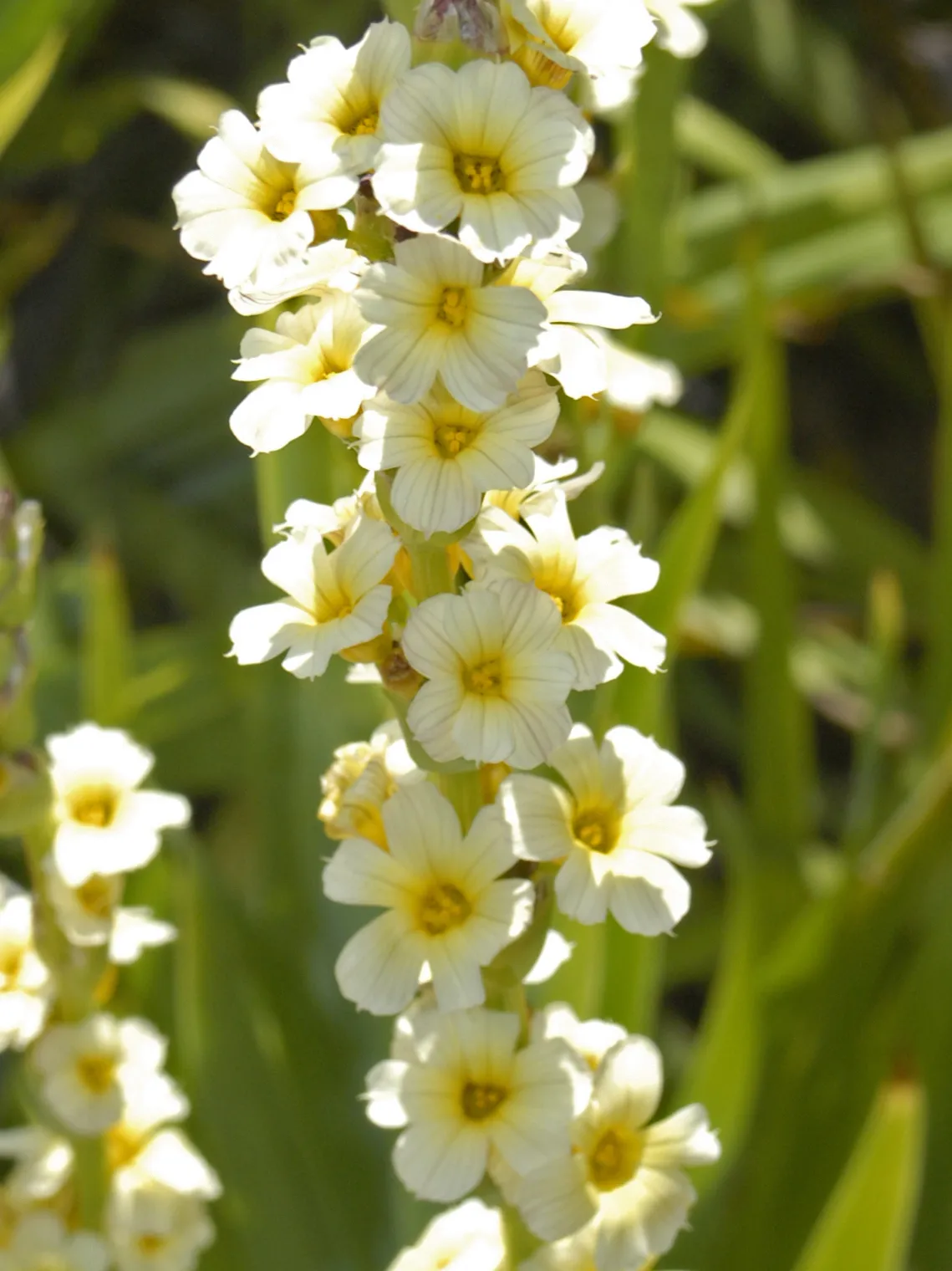
Sisyrinchium striatum, often known as Pale Yellow-eyed Grass or Satin Flower, is a captivating herbaceous perennial native to the temperate grasslands and open woodlands of Chile and Argentina, belonging to the Iridaceae family. This species is admired globally for its striking architectural form and elegant flower spikes, making it a popular choice in ornamental horticulture. The plant establishes dense, fan-like clumps of sword-shaped, glaucous grey-green leaves, which can reach up to 60 cm in length and 1-2 cm in width, providing a strong vertical accent in garden designs. But the real showstopper appears in late spring and early summer, typically from May to July in the Northern Hemisphere: tall, erect flower stalks, often rising 60-75 cm above the foliage.
These spikes are adorned with numerous small, star-shaped flowers, approximately 2-3 cm in diameter, in delicate creamy-yellow hues, frequently exhibiting subtle darker striping on their six tepals. The sequential opening of these blossoms ensures a prolonged and visually appealing display, attracting various pollinators like bees and butterflies, thereby enhancing garden biodiversity. Post-pollination, the plant forms small, spherical capsules filled with tiny, dark seeds, which can readily self-sow and contribute to its gradual spread. Its robust rhizomatous root system allows for the formation of increasingly larger clumps over time.
Sisyrinchium striatum is highly valued for its notable drought tolerance once established, its adaptability to a wide range of well-draining soil types, and its ability to flourish in conditions from full sun to partial shade. Hardy in USDA zones 7-10, it is generally low-maintenance, resistant to most pests and diseases, and ideal for mass plantings, borders, or gravel gardens.
Trusted Scientific References
1. Authoritative external sources for Sisyrinchium Striatum
1.1 Wikipedia — Sisyrinchium Striatum
1.2 Kew POWO (Plants of the World Online)
1.3 PubMed — peer-reviewed research
1.4 NCBI Taxonomy Browser
1.5 GBIF — Global Biodiversity
1.1.Sisyrinchium Striatum — Notable Characteristics
- ✓Architectural Foliage — Dense clumps of upright, sword-shaped, grey-green leaves.
- ✓Elegant Flower Spikes — Tall, slender stalks bearing clusters of delicate pale yellow flowers.
- ✓Extended Bloom Period — Flowers open sequentially, providing a long-lasting display from late spring to summer.
- ✓Drought Tolerance — Highly adaptable to dry conditions once established, reducing water needs.
- ✓Low Maintenance — Generally pest and disease-free, requiring minimal care.
- ✓Pollinator Friendly — Flowers attract bees and butterflies, supporting garden biodiversity.
- ✓Rhizomatous Growth — Spreads gradually to form larger clumps, making it effective for mass planting.
- ✓Versatile Landscape Use — Ideal for borders, gravel gardens, rockeries, and naturalistic designs.
- ✓Evergreen Foliage — Retains its attractive leaves year-round in milder climates.
- ✓Self — Sowing Potential — Produces seeds that can readily germinate in favorable conditions.
1.2.Sisyrinchium Striatum — Concise Overview
- ✓Ornamental perennial with striking architectural form.
- ✓Native to Chile and Argentina, popular in temperate gardens.
- ✓Features sword-shaped, glaucous leaves and pale yellow, star-shaped flowers.
- ✓Drought-tolerant and low-maintenance once established.
- ✓Primarily valued for aesthetic appeal; medicinal uses are not widely documented.
- ✓Propagates by seeds and division, thrives in full sun to partial shade.
2.Sisyrinchium Striatum — Nomenclature & Classification
3.Sisyrinchium Striatum — Vital Statistics
4.Sisyrinchium Striatum — Physical Description
5.Sisyrinchium Striatum — Native Range & Habitat
6.Sisyrinchium Striatum — Traditional Uses
7.Sisyrinchium Striatum — Chemical Profile
- ✓Flavonoids — Hypothetically contains compounds such as quercetin, kaempferol, and their glycosides, potentially contributing to antioxidant and anti-inflammatory activities.
- ✓Saponins — Triterpenoid or steroidal saponins may be present, which might influence membrane permeability and exhibit foaming properties, though not confirmed for this species.
- ✓Iridoids — A class of monoterpenoids characteristic of some Iridaceae members, potentially responsible for defensive properties and exhibiting various biological activities, if present.
- ✓Phenolic Acids — Could include compounds like caffeic acid, gallic acid, and ferulic acid, known for their antioxidant and free-radical scavenging capabilities in other plants.
- ✓Anthocyanins — Pigments responsible for various colors in plants, though less prominent in pale yellow flowers, they can still be present in trace amounts, offering antioxidant benefits.
- ✓Polysaccharides — Complex carbohydrates that can contribute to mucilaginous properties, potentially offering demulcent or immune-modulating effects if abundant.
- ✓Sterols — Plant sterols like beta-sitosterol, which can have anti-inflammatory and cholesterol-lowering properties, may be present in trace amounts.
- ✓Volatile Compounds — Although not strongly aromatic, trace amounts of terpenoids or other volatile organic compounds might be present, contributing to subtle scent or defense mechanisms.
- ✓Alkaloids — While not widely reported for Sisyrinchium, certain plant families contain nitrogenous compounds that can exhibit potent pharmacological activities, requiring specific investigation.
- ✓Glycosides — Various types of glycosides, where a sugar molecule is attached to a non-sugar component, often influencing solubility and bioavailability of active compounds, are generally found in plants.
8.Sisyrinchium Striatum — Scientific Evidence
- ✓Antioxidant Support — Hypothetically, Sisyrinchium striatum may contain phenolic compounds or flavonoids that could contribute to antioxidant activity, helping to neutralize free radicals and reduce oxidative stress.
- ✓Anti-inflammatory Potential — While not specifically studied for this species, compounds such as certain iridoids or triterpenes, if present, could theoretically exhibit mild anti-inflammatory effects, potentially aiding in soothing minor irritations.
- ✓Digestive Aid (Hypothetical) — Some plants in the Iridaceae family have been traditionally associated with mild digestive effects; Sisyrinchium striatum might, in theory, possess compounds that support gut motility or comfort, though this is speculative.
- ✓Skin Soothing Properties — Should it contain mucilage or specific glycosides, topical application could potentially offer a mild emollient or soothing effect for superficial skin irritations, awaiting scientific confirmation.
- ✓Diuretic Action (Speculative) — General plant extracts often demonstrate mild diuretic properties; if Sisyrinchium striatum contains relevant saponins or minerals, it could hypothetically support fluid balance.
- ✓Antimicrobial Activity (Under Research) — Certain plant extracts are known to possess broad-spectrum antimicrobial properties; future research might explore if Sisyrinchium striatum holds compounds effective against common pathogens.
- ✓Mood Support (Exploratory) — While not established, some phytochemicals in plants can interact with neurotransmitter pathways; this plant could, in theory, be a subject for research into minor mood-modulating effects.
- ✓Cardiovascular Health (Pre-clinical) — Polyphenols often support vascular integrity; if abundant in Sisyrinchium striatum, these compounds could hypothetically contribute to maintaining healthy circulation.
- ✓Immune System Modulation — Plant polysaccharides or specific alkaloids can sometimes influence immune responses; Sisyrinchium striatum might contain components that subtly modulate the immune system.
- ✓Detoxification Support — Flavonoids and other plant antioxidants often support liver function and detoxification pathways; the presence of such compounds could theoretically aid in metabolic waste elimination.
- ✓Minor Pain Relief — If it contains mild analgesic compounds (like certain glycosides), it could hypothetically contribute to alleviating minor aches, though this is not documented for this species.
- ✓Respiratory Comfort — Mucilaginous compounds, if present, could potentially offer a soothing effect on mucous membranes, aiding in minor respiratory discomfort, pending further study.
8.1.Sisyrinchium Striatum — Therapeutic Indications
9.Sisyrinchium Striatum — Safety Considerations
9.1.Sisyrinchium Striatum — Possible Adverse Reactions
- ✓Allergic Reactions — Potential for contact dermatitis or respiratory irritation in sensitive individuals upon direct contact with plant sap or pollen.
- ✓Gastrointestinal Upset — Ingestion of plant material could hypothetically lead to mild nausea, vomiting, or diarrhea, particularly if consumed in large quantities.
- ✓Photosensitivity — While not documented for Sisyrinchium striatum, some plant compounds can increase skin sensitivity to sunlight.
- ✓Drug Interactions — Unknown compounds could theoretically interact with prescription medications, especially blood thinners or sedatives, warranting caution.
- ✓Pregnancy/Lactation Risks — Lack of specific safety data means use should be avoided during pregnancy and breastfeeding due to potential unknown effects.
- ✓Toxicity (Unconfirmed) — Although generally considered non-toxic, ingestion of large amounts of any unfamiliar plant should be approached with caution due to potential unknown compounds.
- ✓Diuretic Effects — If the plant possesses diuretic properties, excessive consumption could potentially lead to electrolyte imbalance or dehydration.
9.2.Sisyrinchium Striatum — Safety Profile
- ✓Limited Research — Due to the lack of specific studies on Sisyrinchium striatum's medicinal properties, its safety profile for internal use is largely undetermined.
- ✓Topical Caution — Direct skin contact with plant sap should be approached with caution, as it may cause irritation in individuals with sensitive skin.
- ✓Avoid Internal Use — Without clear scientific data or traditional medicinal history, internal consumption of Sisyrinchium striatum is generally not recommended.
- ✓Pregnancy & Lactation — Pregnant and breastfeeding individuals should strictly avoid use due to insufficient safety information and potential unknown effects.
- ✓Children — Not recommended for use in children due to the absence of specific safety data and potential unknown effects on developing systems.
- ✓Allergic Sensitivities — Individuals with known allergies to the Iridaceae family or other plants should exercise caution to avoid potential cross-reactivity.
- ✓Consult Healthcare Professional — Always advise consulting a qualified healthcare provider before using any herbal preparation, especially with existing health conditions or medications.
10.Sisyrinchium Striatum — Preparation Methods
- ✓Herbal Infusion (Hypothetical) — If medicinal properties were confirmed, dried leaves or flowers could be steeped in hot water for a mild tea, though not traditionally documented for this plant.
- ✓Decoction (Exploratory) — For tougher plant parts like rhizomes, simmering in water could extract compounds, a method that would be used if specific internal uses were identified.
- ✓Tincture (Potential) — An alcoholic extract of the plant material, allowing for a concentrated preparation, could be made if active compounds and their uses were established.
- ✓Poultice (External, Speculative) — Crushed fresh leaves or rhizomes might hypothetically be applied topically for skin soothing, but specific efficacy is unproven.
- ✓Topical Oil Infusion (Experimental) — Macerating dried plant material in a carrier oil could create an infused oil for external use, pending research on skin benefits.
- ✓Powdered Herb Capsules (Future) — If active compounds were identified and standardized, dried and ground plant material could be encapsulated for convenient oral dosing.
- ✓Glycerite (Alternative Extract) — A non-alcoholic extract using vegetable glycerin could be prepared, suitable for those avoiding alcohol, if internal uses were found.
- ✓Hydroalcoholic Extract (Research) — A combination of water and alcohol could be used in research settings to extract a broad spectrum of compounds for analysis.
11.Sisyrinchium Striatum — How to Grow
- ✓Soil Preference — Thrives in fertile, well-draining soil enriched with organic matter; tolerates various soil types but dislikes heavy clay or waterlogging.
- ✓Light Requirements — Prefers full sun (at least 6 hours daily) for optimal flowering, but can tolerate partial shade, especially in hotter climates.
- ✓Watering Regime — Water regularly during the growing season to keep soil consistently moist but not waterlogged; established plants are drought-tolerant.
- ✓Temperature & Hardiness — Optimal growth between 10–28°C (50–82°F); hardy in USDA Zones 7-10, tolerating minimum temperatures of -3°C (27°F).
- ✓Fertilization — Apply a balanced, general-purpose liquid fertilizer monthly during the active growing season (spring to early summer).
- ✓Propagation — Primarily propagated by seeds sown in spring or by dividing established clumps in spring or autumn.
- ✓Mulching — Apply a layer of organic mulch to help retain soil moisture, suppress weeds, and regulate soil temperature.
- ✓Pest & Disease Resistance — Generally robust and resistant to most common garden pests and diseases, making it low-maintenance.
Reviewed by the Flora Medical Global Botanical Review Panel
Multi-disciplinary editorial group · Botany · Ethnobotany · Herbal-medicine literature
Who reviewed this: This page was checked by the Flora Medical Global Botanical Review Panel — an in-house editorial group of botany graduates, ethnobotany researchers, and horticulture practitioners who collectively maintain our 7,000+ plant encyclopedia. Meet the team.
Our 4-step verification process
1. Taxonomic verification
Scientific names and synonyms cross-checked against Kew POWO, World Flora Online, and The Plant List.
2. Phytochemical & medicinal cross-reference
Active compounds, traditional uses, and reported activities are cross-referenced with PubMed, USDA Dr. Duke's database, and peer-reviewed ethnobotanical literature.
3. Conservation & distribution check
Distribution, ecology, and conservation status confirmed against GBIF occurrence records and the IUCN Red List.
4. Editorial & safety review
Every entry passes an editorial pass for clarity, originality, and safety notices (toxicity, contraindications, dosage caveats) before publication.
Last reviewed:
Important medical disclaimer: This content is for educational and research purposes only. It is not medical advice and is not a substitute for consultation with a licensed healthcare provider. Do not use any herb to self-treat a medical condition without professional guidance.
Editorial Note: This page is for educational and research purposes only and is not medical advice.
Written by: Flora Medical Global Editorial Team
Reviewed by: Flora Medical Global Botanical Review Panel
Last Updated: June 15, 2026





Sisyrinchium Striatum — Comments & Community Reviews
Rate this plant