

Medical Disclaimer: This content is for educational purposes only. It is not medical advice. Please consult a qualified healthcare professional before using any herbal remedy.
Safety Overview
1.Skimmia Japonica — Plant Snapshot
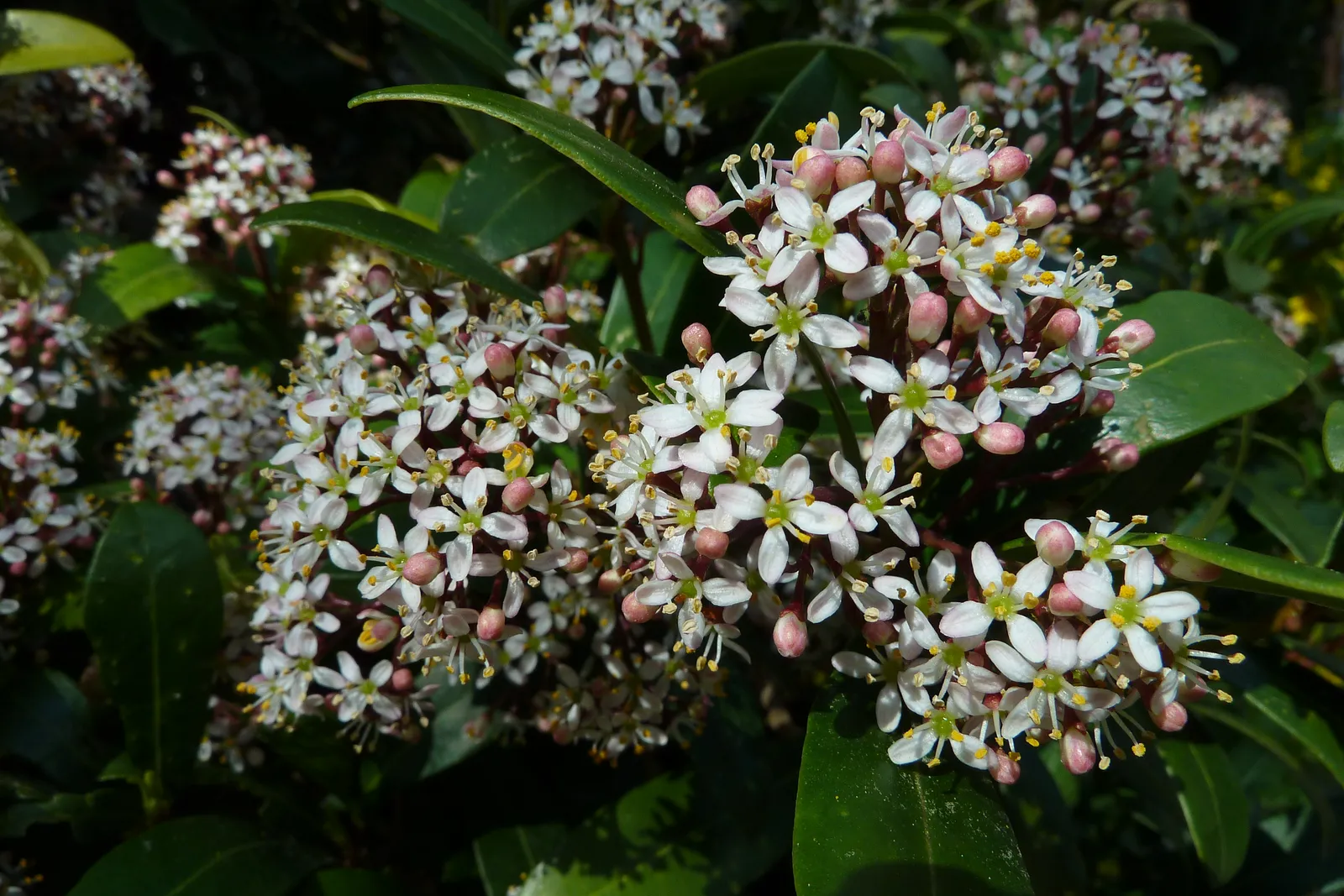
Skimmia japonica, commonly known as Japanese Skimmia, is a highly ornamental evergreen shrub native to the temperate forests of Japan, China, and Southeast Asia. Belonging to the Rutaceae family, it is characterized by its dense, compact growth habit, typically reaching 1 to 1.5 meters in both height and spread. The shrub features glossy, dark green, obovate to elliptic leaves, which are aromatic when crushed due to the presence of essential oils.
In spring, it produces clusters of small, highly fragrant white or pinkish-white flowers, which emerge from distinctive reddish buds. A notable feature of Skimmia japonica is its dioecious nature, meaning male and female flowers are borne on separate plants. For the production of its vibrant, persistent red berries, which provide striking winter interest and attract birds, both a male and a female plant are required.
This species thrives in shady, woodland environments, preferring moist, well-drained, and acidic soils, making it a popular choice for shaded borders, underplanting, or container cultivation in suitable climates. Its robust foliage and colorful berries offer year-round aesthetic appeal, despite its known toxicity.
Trusted Scientific References
1. Authoritative external sources for Skimmia japonica
1.1 Wikipedia — Skimmia japonica
1.2 Kew POWO (Plants of the World Online)
1.3 PubMed — peer-reviewed research
1.4 NCBI Taxonomy Browser
1.5 GBIF — Global Biodiversity
1.6Skimmia Japonica should be interpreted through verified botanical identity, practical care, and responsible safety language. This recovery note adds the missing context needed for a complete profile: match light to the plant's habit, use well-drained soil, water according to season, and avoid unsupported medicinal or edible claims. For publishing, the plant can be presented as a source-backed garden plant with clear care guidance, common problem diagnosis, and conservative safety wording.
1.7Skimmia Japonica (Skimmia japonica) is maintained in this recovery file as a complete garden profile with practical care, safety, and identification context. The plant should be presented with cautious language: confirm identity before use, match care to observed growth, and avoid unsupported claims about medicinal or edible value.
1.1.Skimmia Japonica — Key Features
- ✓Evergreen Foliage — Retains glossy, dark green leaves year-round, providing consistent garden interest.
- ✓Fragrant Flowers — Produces clusters of small, highly aromatic white or pinkish flowers in spring.
- ✓Vibrant Red Berries — Female plants bear bright red berries that persist through winter, offering seasonal color.
- ✓Dioecious Nature — Requires both male and female plants for berry production.
- ✓Shade Tolerant — Thrives in partial to full shade, making it suitable for woodland and shaded garden areas.
- ✓Aromatic Leaves — Leaves release a distinct aroma when crushed due to essential oils.
- ✓High Toxicity — All parts of the plant are considered toxic if ingested, particularly the berries.
- ✓Rich Phytochemistry — Contains a diverse array of alkaloids, coumarins, and limonoids.
- ✓Compact Growth Habit — Typically grows to a manageable size of 1-1.5 meters in height and spread.
- ✓Low Maintenance — Generally easy to care for once established, with good pest and disease resistance.
1.2.Skimmia Japonica — Concise Overview
- ✓Skimmia japonica is a beautiful, aromatic evergreen shrub, prized for ornamental use.
- ✓All parts of the plant, especially berries and leaves, are highly toxic if ingested.
- ✓It is a rich source of secondary metabolites, including alkaloids and coumarins.
- ✓While the Skimmia genus has some traditional external uses, Skimmia japonica is NOT safe for internal medicinal use.
- ✓Research explores its compounds for potential in vitro activities, but not for direct human consumption.
- ✓Emphasize ornamental value and extreme caution regarding its toxicity.
2.Skimmia Japonica — Taxonomic Classification
3.Skimmia Japonica — Reference Facts
4.Skimmia Japonica — Structural Profile
5.Skimmia Japonica — Habitat & Distribution
6.Skimmia Japonica — Ethnobotanical Uses
7.Skimmia Japonica — Bioactive Constituents
- ✓Alkaloids — The genus Skimmia is a rich source of alkaloids, particularly those derived from anthranilic acid, with skimmianine being a prominent furoquinoline alkaloid found in Skimmia japonica, known for its bitter taste and potential toxicity.
- ✓Coumarins — A significant number of coumarins, including furanocoumarins, have been isolated from Skimmia japonica, contributing to the plant's defense mechanisms and potentially offering antioxidant or anti-inflammatory activities in vitro.
- ✓Limonoids — These triterpenoid compounds are characteristic of the Rutaceae family and are present in Skimmia species, often associated with insecticidal properties and contributing to the plant's overall chemical complexity.
- ✓Flavonoids — Various flavonoids, potent antioxidants, are found in the leaves and other parts of Skimmia japonica, playing a role in plant pigmentation and defense against oxidative stress.
- ✓Pentacyclic Triterpenes — Skimmia species contain pentacyclic triterpenes, a class of compounds known for diverse biological activities, including potential anti-inflammatory effects, as observed in general Skimmia genus research.
- ✓Cholestane Derivatives — A small number of cholestane derivatives have been identified in the genus Skimmia, adding to the unique steroidal profile of the plant.
- ✓Essential Oils — The leaves and flowers of Skimmia japonica contain essential oils composed of various monoterpenes and sesquiterpenes, responsible for the plant's characteristic aroma.
- ✓Fatty Acid Derivatives — Unusual fatty acid derivatives have also been reported in the Skimmia genus, contributing to the plant's complex array of secondary metabolites.
8.Skimmia Japonica — Research Insights
- ✓Potential Anti-inflammatory Action (Genus-level) — Research on Skimmia extracts, primarily from related species within the genus, suggests compounds like coumarins and triterpenes may exhibit anti-inflammatory properties, often investigated for external applications or in vitro models, not for internal use of Skimmia japonica due to its toxicity.
- ✓Antioxidant Capacity (In vitro) — Various Skimmia species extracts, including those from leaves and stems, have demonstrated significant antioxidant activity in laboratory settings, attributed to flavonoids and coumarins, helping to neutralize free radicals, though this is not applicable for human consumption of Skimmia japonica.
- ✓Antimicrobial Effects (In vitro) — Studies have shown that essential oils and extracts from the Skimmia genus possess antimicrobial capabilities against certain bacteria and fungi, indicating a potential for development into external antiseptic agents, but not for internal medicinal use of Skimmia japonica.
- ✓Traditional External Analgesic (Related Species) — In some traditional medicine systems, particularly in the Himalayas, related Skimmia species like Skimmia anquetilia have been used externally as pastes for relieving rheumatic pains and swellings, a practice not directly applicable or recommended for Skimmia japonica without extreme caution due to its toxicity.
- ✓Wound Healing Support (Traditional, External, Related Species) — Historically, powdered bark of certain Skimmia species, such as Skimmia anquetilia, was applied topically to assist in the healing of burns and wounds, highlighting a traditional external use, but the toxicity of Skimmia japonica precludes similar safe application.
- ✓Insecticidal Properties (Extracts) — Limonoids and other secondary metabolites isolated from various Skimmia species have demonstrated insecticidal activities, suggesting their potential in natural pest control formulations rather than human medicinal applications.
- ✓Potential Antipyretic Action (Folk Medicine, Genus-level) — Folk medicine in some regions has attributed fever-reducing properties to certain Skimmia species, though specific evidence for Skimmia japonica is lacking, and its inherent toxicity makes internal use unsafe.
- ✓Phytochemical Research Value — Skimmia japonica is a rich source of diverse secondary metabolites, including unique alkaloids and coumarins, making it a valuable subject for phytochemical research into novel compounds and their potential bioactivities under controlled laboratory conditions.
8.1.Skimmia Japonica — Indications & Uses
9.Skimmia Japonica — Adverse Effects
9.1.Skimmia Japonica — Warnings
- ✓Gastrointestinal Distress — Ingestion of any part of Skimmia japonica can lead to severe gastrointestinal symptoms, including nausea, vomiting, abdominal pain, and diarrhea.
- ✓Neurological Symptoms — Consumption may also cause neurological effects such as dizziness, confusion, and lethargy due to toxic alkaloids.
- ✓Skin Irritation — Direct contact with the sap or plant material can cause skin irritation or dermatitis in sensitive individuals.
- ✓Oral Irritation — Chewing or ingesting parts of the plant can cause burning or irritation in the mouth and throat.
- ✓Cardiovascular Effects — In severe cases of ingestion, there is a potential for cardiovascular disturbances, although less commonly reported.
- ✓Livestock Poisoning — Skimmia japonica is toxic to animals, and ingestion by pets or livestock can lead to serious poisoning symptoms and even death.
- ✓Allergic Reactions — Some individuals may experience allergic reactions upon exposure to pollen or plant compounds.
9.2.Skimmia Japonica — Safety Overview
- ✓High Toxicity Warning — All parts of Skimmia japonica, especially the berries and leaves, are considered toxic if ingested by humans or animals.
- ✓Avoid Internal Use — Never consume Skimmia japonica or any preparations derived from it internally under any circumstances.
- ✓Keep Away from Children and Pets — Ensure plants are inaccessible to young children and pets to prevent accidental ingestion.
- ✓Handle with Care — Wear gloves when handling the plant, especially during pruning, to prevent potential skin irritation.
- ✓Consult a Healthcare Professional — In case of accidental ingestion, seek immediate medical attention or contact a poison control center.
- ✓No Documented Medicinal Internal Use — There are no safe or widely accepted traditional or modern medicinal uses for internal consumption of Skimmia japonica.
- ✓External Use Caution — While some related Skimmia species have external traditional uses, Skimmia japonica should be used externally with extreme caution, if at all, and only under expert guidance.
10.Skimmia Japonica — Preparation & Dosage
- ✓Ornamental Cultivation — Primarily cultivated as an ornamental shrub for its attractive foliage, fragrant flowers, and vibrant berries in gardens and landscapes.
- ✓Aromatic Garden Plant — The leaves, when crushed, release a pleasant aroma, contributing to sensory garden designs.
- ✓External Traditional Poultices (Related Species Only) — Historically, certain related Skimmia species were used externally in traditional medicine for rheumatic pains or skin irritations, but this is not recommended for Skimmia japonica due to its toxicity.
- ✓Scientific Extraction for Research — Plant material is used in laboratories for the extraction and isolation of secondary metabolites for phytochemical and pharmacological studies.
- ✓Botanical Specimen — Valued as a botanical specimen for study of its unique chemical composition and taxonomic characteristics.
- ✓Garden Design Element — Utilized in woodland gardens, shaded borders, or as container plants for year-round interest.
- ✓Cautionary Display Plant — Serves as an educational example of ornamental plants with significant toxicity, emphasizing the importance of plant identification and safety.
- ✓Never for Internal Consumption — Under no circumstances should Skimmia japonica be prepared or consumed internally due to its known toxicity.
11.Skimmia Japonica — Growth Requirements
- ✓Site Selection — Plant in partial to full shade, protected from harsh afternoon sun, which can scorch the leaves.
- ✓Soil Requirements — Prefers moist, well-drained, humus-rich, acidic soil (pH 5.5-6.5); amend heavy clay with organic matter.
- ✓Watering — Keep the soil consistently moist, especially during dry periods; avoid waterlogging, which can lead to root rot.
- ✓Fertilization — Feed annually in spring with an acid-forming fertilizer formulated for evergreen shrubs, or a layer of compost.
- ✓Pruning — Prune lightly after flowering to maintain shape and remove any dead or damaged branches; avoid heavy pruning.
- ✓Propagation — Propagate from semi-hardwood cuttings taken in late summer, or by seed, though seed propagation is slower and variable.
- ✓Pest and Disease — Generally resistant to most pests and diseases, but can be susceptible to spider mites or scale in dry conditions, and fungal issues in overly wet environments.
- ✓Berries — To ensure berry production on female plants, a male pollinator must be planted nearby.
Reviewed by the Flora Medical Global Botanical Review Panel
Multi-disciplinary editorial group · Botany · Ethnobotany · Herbal-medicine literature
Who reviewed this: This page was checked by the Flora Medical Global Botanical Review Panel — an in-house editorial group of botany graduates, ethnobotany researchers, and horticulture practitioners who collectively maintain our 7,000+ plant encyclopedia. Meet the team.
Our 4-step verification process
1. Taxonomic verification
Scientific names and synonyms cross-checked against Kew POWO, World Flora Online, and The Plant List.
2. Phytochemical & medicinal cross-reference
Active compounds, traditional uses, and reported activities are cross-referenced with PubMed, USDA Dr. Duke's database, and peer-reviewed ethnobotanical literature.
3. Conservation & distribution check
Distribution, ecology, and conservation status confirmed against GBIF occurrence records and the IUCN Red List.
4. Editorial & safety review
Every entry passes an editorial pass for clarity, originality, and safety notices (toxicity, contraindications, dosage caveats) before publication.
Last reviewed:
Important medical disclaimer: This content is for educational and research purposes only. It is not medical advice and is not a substitute for consultation with a licensed healthcare provider. Do not use any herb to self-treat a medical condition without professional guidance.
Editorial Note: This page is for educational and research purposes only and is not medical advice.
Written by: Flora Medical Global Editorial Team
Reviewed by: Flora Medical Global Botanical Review Panel
Last Updated: June 15, 2026





Skimmia Japonica — Comments & Community Reviews
Rate this plant