
Medical Disclaimer: This content is for educational purposes only. It is not medical advice. Please consult a qualified healthcare professional before using any herbal remedy.
Safety Overview
1.Sloe Berry — Introduction & Highlights
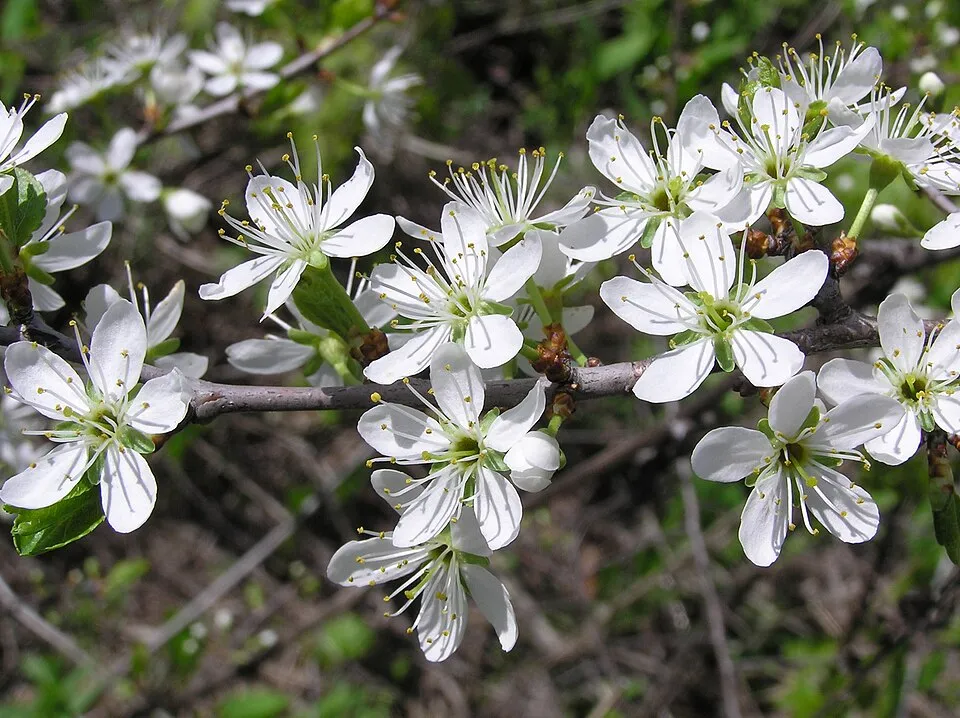
Sloe Berry, scientifically known as Prunus spinosa, is a resilient deciduous shrub belonging to the Rosaceae family, making it a close relative of cultivated cherries and plums. This robust plant typically grows to a height of 1 to 3 meters, forming a dense, often impenetrable thicket due to its numerous sharp thorns. Its branches are a dark, almost black hue, contributing to its common name, Blackthorn. The leaves are small, oval to lanceolate in shape, measuring between 3 and 6 centimeters, with finely serrated margins and a rich, dark green color that transitions to striking yellow or reddish tones in the autumn.
Before the leaves fully unfurl, typically in early spring, the shrub is adorned with a profusion of delicate white flowers, each about 2.5 cm in diameter, featuring five distinct petals and prominent yellow stamens. These flowers are a vital early nectar source for pollinators. The fruit, a small, spherical drupe commonly called a sloe, ripens from late summer through autumn. It measures approximately 1 to 2 cm in diameter, displaying a characteristic dark purple to blackish-blue color and a distinctively tart, astringent flavor.
The bark on older specimens becomes rough and develops deep fissures, enhancing its gnarled, ancient appearance. Prunus spinosa is native across a wide expanse of Europe, extending into western Asia and parts of Northern Africa. It thrives in diverse environments, frequently found in hedgerows, woodland edges, scrublands, and open fields, showcasing its adaptability and hardiness. Its ecological role is significant, providing shelter and food for wildlife while also serving as a natural barrier.
Trusted Scientific References
1. Authoritative external sources for Prunus spinosa
1.1 Wikipedia — Prunus spinosa
1.2 Kew POWO (Plants of the World Online)
1.3 PubMed — peer-reviewed research
1.4 NCBI Taxonomy Browser
1.5 GBIF — Global Biodiversity
1.6Sloe Berry should be interpreted through verified botanical identity, practical care, and responsible safety language. This recovery note adds the missing context needed for a complete profile: match light to the plant's habit, use well-drained soil, water according to season, and avoid unsupported medicinal or edible claims. For publishing, the plant can be presented as a source-backed medicinal plant with clear care guidance, common problem diagnosis, and conservative safety wording.
1.1.Sloe Berry — Key Features
- ✓Botanical Identity — Prunus spinosa, a thorny deciduous shrub of the Rosaceae family.
- ✓Distinctive Fruit — Small, dark purple, astringent drupes known as sloes.
- ✓Early Spring Blooms — Abundant white flowers appear before leaves, vital for early pollinators.
- ✓Rich in Antioxidants — High concentration of anthocyanins and flavonoids.
- ✓Traditional Medicinal Uses — Employed for digestive, anti-inflammatory, and immune support.
- ✓Adaptable and Hardy — Thrives in diverse European habitats, often forming dense hedgerows.
- ✓Culinary Versatility — Famous for sloe gin, jams, and other preserves.
- ✓Ecologically Significant — Provides food and shelter for wildlife.
- ✓Thorny Protection — Dense, thorny branches offer natural barriers and defense.
- ✓Phytochemical Diversity — Contains a wide array of phenolic acids, triterpenes, and vitamins.
1.2.Sloe Berry — Concise Overview
- ✓Prunus spinosa, or Sloe Berry, is a thorny shrub native to Europe, valued for its tart, dark purple fruits.
- ✓Rich in antioxidants like anthocyanins and flavonoids, offering immune and anti-inflammatory benefits.
- ✓Traditionally used for digestive issues, oral health, and as a general tonic.
- ✓Contains compounds such as quercetin, rutin, and oleanolic acid, contributing to its medicinal profile.
- ✓Fruits are commonly used in culinary preparations like sloe gin, jams, and herbal teas.
- ✓Exercise caution with raw seeds and consult a healthcare provider if on medication, especially during pregnancy.
2.Sloe Berry — Scientific Profile
3.Sloe Berry — Quick Facts
4.Sloe Berry — Structural Profile
5.Sloe Berry — Habitat & Distribution
6.Sloe Berry — Cultural & Traditional Roles
7.Sloe Berry — Active Compounds
- ✓Anthocyanins — These are potent antioxidants responsible for the deep color of the berries and help combat oxidative stress.
- ✓Flavonoids — Including quercetin and kaempferol, these compounds possess antioxidant and anti-inflammatory properties.
- ✓Tannins — Known for their astringent effects, tannins can help tighten tissues and have been used for digestive and wound healing purposes.
- ✓Phenolic Acids — Such as chlorogenic acid, contributing to the antioxidant capacity of the berries.
- ✓Vitamins — Notably Vitamin C, which supports the immune system and acts as an antioxidant.
- ✓Minerals — Including potassium and calcium, important for various bodily functions.
- ✓Cyanogenic Glycosides — Present in the seeds and leaves, these compounds can release hydrogen cyanide and require careful processing or avoidance of these parts.
8.Sloe Berry — Modern Studies
- ✓Digestive Aid — Sloe berries have traditionally been used to alleviate digestive discomfort. Their astringent properties can help to tighten the mucous membranes of the intestines, potentially reducing diarrhea and improving overall gut function. They may also act as a mild laxative in some individuals, promoting regularity.
- ✓Antioxidant Powerhouse — Rich in anthocyanins, the pigments that give sloe berries their deep blue-black color, these fruits are potent antioxidants. Antioxidants help to combat oxidative stress in the body by neutralizing harmful free radicals, which are implicated in aging and various chronic diseases.
- ✓Anti-inflammatory Properties — The various phenolic compounds found in sloe berries, including flavonoids and tannins, exhibit anti-inflammatory effects. This can be beneficial in reducing inflammation throughout the body, potentially easing symptoms associated with inflammatory conditions.
- ✓Urinary Tract Health — Some traditional uses suggest sloe berries can support urinary tract health. Their diuretic properties may help to flush out the urinary system, potentially preventing infections or aiding in their resolution.
- ✓Immune System Support — The vitamin C content and other bioactive compounds in sloe berries can contribute to a strengthened immune system. They may help the body fight off infections and bolster its natural defenses.
- ✓Cardiovascular Benefits — The antioxidants and anti-inflammatory compounds present in sloe berries may contribute to heart health. By reducing inflammation and oxidative stress, they could help protect blood vessels and improve circulation.
- ✓Skin Health — Applied topically or consumed, the astringent and antioxidant properties of sloe berries may benefit the skin. They can help to tone the skin, reduce inflammation, and protect against environmental damage.
- ✓Wound Healing — Traditionally, sloe berry extracts have been used to promote wound healing. Their astringent nature can help to stop minor bleeding and their anti-inflammatory properties may reduce swelling and discomfort.
- ✓Soothing Sore Throats — The astringent qualities of sloe berries can provide relief from sore throats by constricting tissues and reducing inflammation. A sloe berry infusion or gargle may offer comfort.
- ✓Detoxification Support — The diuretic and antioxidant actions of sloe berries can assist the body's natural detoxification processes by helping to eliminate waste products and neutralize toxins.
- ✓Antimicrobial Activity — Certain compounds within sloe berries have demonstrated mild antimicrobial properties in laboratory studies, suggesting a potential role in inhibiting the growth of certain bacteria.
- ✓Nutrient Rich — Beyond their medicinal properties, sloe berries are a source of essential vitamins and minerals, including vitamin C, contributing to overall nutritional intake.
8.1.Sloe Berry — Reported Uses
9.Sloe Berry — Risk Profile
9.1.Sloe Berry — Possible Adverse Reactions
- ✓Sloe berries are generally considered safe when consumed in moderation, particularly when processed into jams, jellies, or liqueurs, which reduces the concentration of potentially harmful compounds.
- ✓However, consuming large quantities of raw berries or seeds may lead to digestive upset due to their high tannin content, potentially causing nausea or constipation.
- ✓The seeds, leaves, and bark contain cyanogenic glycosides, which can release hydrogen cyanide and should be avoided.
9.2.Sloe Berry — Safety Overview
- ✓While the ripe fruit is generally safe for consumption, it's important to note that unripe berries are very tart and astringent.
- ✓The seeds, leaves, and bark of the Prunus spinosa plant contain cyanogenic glycosides and should not be ingested.
- ✓Proper identification and preparation are crucial, especially when considering medicinal use, and consulting with a healthcare professional or qualified herbalist is recommended before use, particularly for pregnant or breastfeeding women or individuals with pre-existing medical conditions.
10.Sloe Berry — Application Forms
- ✓Culinary Applications — Sloe berries are primarily used in traditional cuisine to make jams, jellies, fruit leathers, and especially sloe gin or other alcoholic infusions, often after the first frost to mellow their astringency.
- ✓Herbal Teas — Dried sloe flowers, leaves, or fruits can be steeped to make a mild herbal tea, traditionally used for digestive support or as a general tonic.
- ✓Tinctures and Extracts — Alcoholic or aqueous extracts of the berries can be prepared for concentrated medicinal use, allowing for easier dosage and absorption of bioactive compounds.
- ✓Syrups and Cordials — Fresh or frozen sloe berries can be cooked down with sugar to create medicinal syrups or refreshing cordials, often used for coughs or sore throats.
- ✓Supplements — Available in capsule or powder form, sloe berry extracts can be taken as dietary supplements to harness their antioxidant and anti-inflammatory benefits.
- ✓Topical Applications — Infusions or decoctions can be used externally as gargles for mouth and throat inflammation or as compresses for minor skin irritations.
- ✓Juices and Smoothies — Fresh or frozen sloe berries can be juiced or added to smoothies, though their tartness usually requires sweetening.
11.Sloe Berry — Growing Guide
- ✓Soil Preference — Thrives in well-drained, moderately fertile to poor soils, tolerating a wide pH range from acidic to alkaline.
- ✓Sunlight Exposure — Prefers full sun to partial shade; optimal fruiting occurs with ample sunlight.
- ✓Watering — Established plants are drought-tolerant but benefit from moderate watering during prolonged dry spells, especially when young.
- ✓Hardiness — Extremely hardy, tolerating harsh winters and exposed conditions typical of its native European range.
- ✓Propagation — Can be propagated by seed (requires stratification), hardwood cuttings, or by transplanting suckers that readily form around the parent plant.
- ✓Pruning — Minimal pruning is required; remove dead or diseased wood and thin out overcrowded branches to maintain shape and encourage air circulation, best done in late winter.
- ✓Pest and Disease Resistance — Generally robust, but can be susceptible to common Prunus diseases like canker or fungal leaf spots in very humid conditions.
- ✓Ideal for Hedges — Its thorny, dense growth habit makes it an excellent choice for protective hedges and wildlife habitats.
Reviewed by the Flora Medical Global Botanical Review Panel
Multi-disciplinary editorial group · Botany · Ethnobotany · Herbal-medicine literature
Who reviewed this: This page was checked by the Flora Medical Global Botanical Review Panel — an in-house editorial group of botany graduates, ethnobotany researchers, and horticulture practitioners who collectively maintain our 7,000+ plant encyclopedia. Meet the team.
Our 4-step verification process
1. Taxonomic verification
Scientific names and synonyms cross-checked against Kew POWO, World Flora Online, and The Plant List.
2. Phytochemical & medicinal cross-reference
Active compounds, traditional uses, and reported activities are cross-referenced with PubMed, USDA Dr. Duke's database, and peer-reviewed ethnobotanical literature.
3. Conservation & distribution check
Distribution, ecology, and conservation status confirmed against GBIF occurrence records and the IUCN Red List.
4. Editorial & safety review
Every entry passes an editorial pass for clarity, originality, and safety notices (toxicity, contraindications, dosage caveats) before publication.
Last reviewed:
Important medical disclaimer: This content is for educational and research purposes only. It is not medical advice and is not a substitute for consultation with a licensed healthcare provider. Do not use any herb to self-treat a medical condition without professional guidance.
Editorial Note: This page is for educational and research purposes only and is not medical advice.
Written by: Flora Medical Global Editorial Team
Reviewed by: Flora Medical Global Botanical Review Panel
Last Updated: June 15, 2026





Sloe Berry — Comments & Community Reviews
Rate this plant