


Medical Disclaimer: This content is for educational purposes only. It is not medical advice. Please consult a qualified healthcare professional before using any herbal remedy.
Safety Overview
1.Small Caltrops — Essential Profile
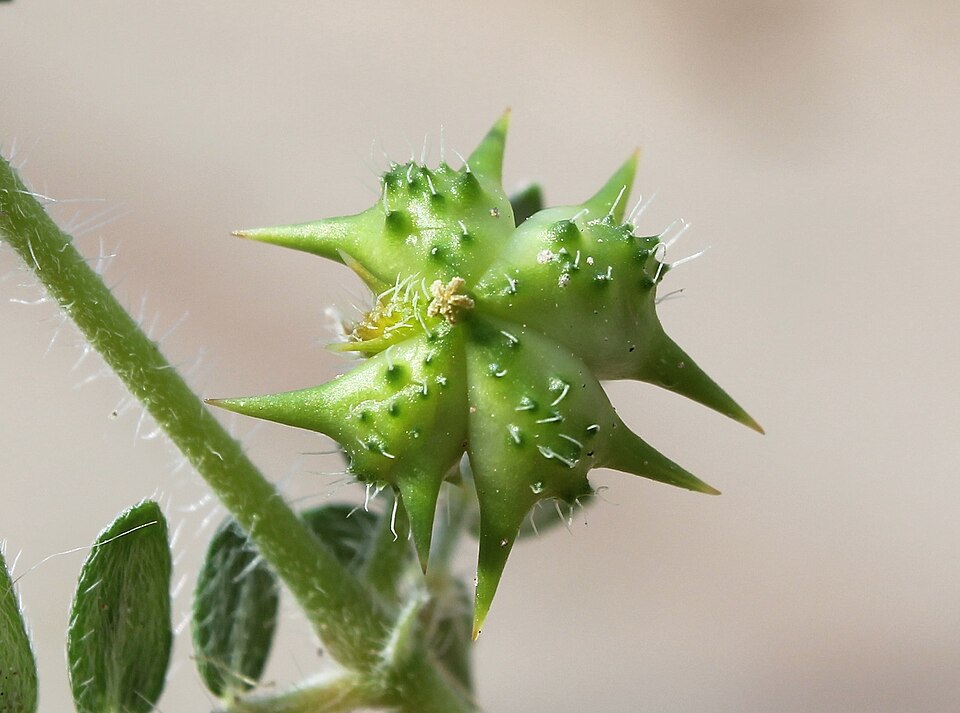
Small Caltrops, scientifically known as Tribulus terrestris var. minor, is a resilient herbaceous plant renowned for its distinctive morphology and widespread distribution. It typically exhibits a prostrate to sprawling growth habit, with slender, often hairy stems that can extend 30-70 cm across the ground, branching extensively from a central taproot.
Its pinnately compound leaves are arranged oppositely, usually measuring 1-5 cm in length, and comprise 5-10 pairs of small, ovate to oblong leaflets, each about 1-2 cm long, giving the foliage a delicate, feathery appearance. The plant produces solitary, axillary flowers that are small, bright yellow, and approximately 1-2 cm in diameter, blooming from spring through early summer. Each flower features five conspicuous yellow petals and numerous stamens, attracting various pollinators.
Perhaps its most distinctive feature is the fruit—a hard, spiny schizocarp that breaks into five mericarps upon maturity. Each mericarp is roughly 1-2 cm long and bears sharp, stiff spines, which earned the plant its common name 'Puncture Vine' due to its ability to puncture bicycle tires and animal hooves. Small Caltrops thrives in well-drained, often sandy or loamy soils, preferring full sunlight and dry, disturbed habitats such as roadsides, fields, and waste areas.
Its natural range is remarkably broad, encompassing tropical and subtropical regions across Africa, the Mediterranean basin, and significant parts of Asia, including India. Taxonomically, it belongs to the Zygophyllaceae family, a group known for its adaptability to arid conditions. The plant's overall structure, from its fibrous base to its unique reproductive mechanisms, underscores its ability to flourish in challenging environments.
Trusted Scientific References
1. Authoritative external sources for Tribulus terrestris var. minor
1.1 Wikipedia — Tribulus terrestris var. minor
1.2 Kew POWO (Plants of the World Online)
1.3 PubMed — peer-reviewed research
1.4 NCBI Taxonomy Browser
1.5 GBIF — Global Biodiversity
1.1.Small Caltrops — Highlights
- ✓Common Name — Small Caltrops, Puncture Vine, Gokhru.
- ✓Scientific Name — Tribulus terrestris var. minor.
- ✓Family — Zygophyllaceae.
- ✓Key Compounds — Protodioscin, steroidal saponins, flavonoids.
- ✓Primary Uses — Sexual health, diuretic, cardiovascular support.
- ✓Growth Habit — Prostrate, sprawling herbaceous annual.
- ✓Distinctive Fruit — Hard, spiny, star-shaped schizocarp.
- ✓Habitat — Dry, sunny, disturbed areas across tropical/subtropical regions.
- ✓Traditional Systems — Ayurveda, Traditional Chinese Medicine, Unani.
- ✓Caution — Significant contraindications and drug interactions.
1.2.Small Caltrops — At-a-Glance Summary
- ✓Small Caltrops (Tribulus terrestris) is a spiny-fruited herb, traditionally known for sexual health support.
- ✓Rich in furostanol saponins like protodioscin, contributing to its aphrodisiac and adaptogenic properties.
- ✓Supports libido, urinary tract health, and cardiovascular function; traditionally used in Ayurveda and TCM.
- ✓May interact with medications for diabetes, high blood pressure, and lithium; consult a healthcare professional.
- ✓Contraindicated during pregnancy, breastfeeding, and prior to surgery.
- ✓Direct ingestion of the spiny fruit is unsafe and can cause serious lung problems.
2.Small Caltrops — Scientific Identity
3.Small Caltrops — Key Data
4.Small Caltrops — Botanical Features
5.Small Caltrops — Origin & Spread
6.Small Caltrops — Heritage Uses
7.Small Caltrops — Key Phytochemicals
- ✓Saponins — Furostanol saponins, including protodioscin, tribulosin, and terrestrinins, are the primary bioactive compounds responsible for many of Tribulus terrestris's effects. These steroidal glycosides are linked to its adaptogenic, aphrodisiac, and cardioprotective activities.
- ✓Alkaloids — The plant contains beta-carboline alkaloids such as harmane and norharmane. These compounds are known for their neuroactive properties and may contribute to the plant’s overall physiological effects.
- ✓Flavonoids — Important antioxidant compounds like kaempferol, quercetin, rutin, and astragalin are present. These flavonoids contribute to the plant's anti-inflammatory, antioxidant, and cardioprotective benefits.
- ✓Glycosides — Beyond saponins, other glycosides such as beta-sitosterol-D-glucoside have been identified. Beta-sitosterol-D-glucoside is noted for its anthelmintic and anti-inflammatory actions.
- ✓Phenolic Acids — Various phenolic acids, including caffeic acid and ferulic acid, are found in Small Caltrops. These compounds are potent antioxidants that protect against oxidative stress.
- ✓Terpenoids — A diverse group of organic compounds, terpenoids contribute to the plant's aroma and various biological activities, including anti-inflammatory and antimicrobial effects.
- ✓Lignanamides — Compounds like tribulusamide A and B have been isolated. These unique nitrogen-containing compounds may contribute to the plant's anti-inflammatory and other pharmacological properties.
- ✓Fatty Acids — Essential fatty acids, such as linoleic acid and oleic acid, are present in the plant, providing general nutritional support and contributing to cell membrane integrity.
- ✓Amino Acids — Small Caltrops contains a range of amino acids, the building blocks of proteins, which support overall plant metabolism and may offer nutritional value.
- ✓Phytosterols — Compounds like beta-sitosterol are present, known for their potential cholesterol-lowering effects and anti-inflammatory properties.
8.Small Caltrops — Scientific Evidence
- ✓Sexual Health Enhancement — Small Caltrops is widely recognized as a natural aphrodisiac, supporting libido and sexual satisfaction in both men and women. It is believed to improve sexual desire and performance, potentially by influencing nitric oxide pathways.
- ✓Urinary Tract Support — Traditionally used as a diuretic, Tribulus terrestris helps promote healthy urine flow and is often employed to alleviate urinary discomfort and support kidney function. It may assist in the management of kidney stones and general urinary tract health.
- ✓Cardiovascular Health — This plant has been traditionally applied to support heart health, including managing conditions like chest pain (angina pectoris) and hypertension. Research suggests it may help lower blood pressure by inhibiting angiotensin-converting enzyme (ACE) activity.
- ✓Anti-inflammatory Effects — Small Caltrops possesses compounds that exhibit anti-inflammatory properties, which can help reduce swelling and pain. In vitro studies indicate its potential to inhibit inflammatory mediators like COX-2 and iNOS.
- ✓Antioxidant Protection — Rich in flavonoids and phenolic acids, Tribulus terrestris provides significant antioxidant activity, helping to neutralize harmful free radicals and protect cells from oxidative damage. This contributes to overall cellular health and anti-aging.
- ✓Digestive Aid — Historically, the plant has been used to support digestive wellness and address various gastrointestinal issues. It may act as a mild laxative and aid in promoting a healthy gut environment.
- ✓Immune System Modulation — Small Caltrops is considered to have adaptogenic qualities that can help modulate and support the body's immune response. It contributes to general wellness and resilience against stressors.
- ✓Pain Management — Due to its anti-inflammatory and analgesic properties, Tribulus terrestris has been traditionally used to alleviate various forms of pain. Its phytochemicals may interact with pain pathways to provide relief.
- ✓Blood Sugar Regulation — Some studies, particularly in animal models, suggest that saponins from Tribulus terrestris may have hypoglycemic effects, helping to lower blood sugar levels. This indicates potential for metabolic support.
- ✓Anthelmintic Properties — Specific compounds within Small Caltrops, such as tribulosin, have demonstrated anthelmintic activity, suggesting its traditional use in expelling parasitic worms from the body.
8.1.Small Caltrops — Conditions Traditionally Used For
9.Small Caltrops — Cautions & Contraindications
9.1.Small Caltrops — Possible Adverse Reactions
- ✓Gastrointestinal Upset — May cause mild stomach pain, cramping, nausea, or diarrhea in some individuals, particularly with higher doses.
- ✓Lung Problems — Direct ingestion of the spine-covered fruit is considered unsafe and has been linked to serious lung issues, including pneumothorax.
- ✓Allergic Reactions — Rare instances of allergic reactions, such as skin rashes or respiratory discomfort, may occur in sensitive individuals.
- ✓Hormonal Imbalance — While marketed for hormonal effects, some users might experience unintended shifts, though human studies do not consistently show increased testosterone.
- ✓Photosensitivity — Animal studies have suggested potential for photosensitivity, making skin more susceptible to sunburn in direct sunlight.
- ✓Insomnia/Restlessness — High doses, particularly when taken late in the day, may lead to overstimulation, resulting in difficulty sleeping or restlessness.
- ✓Liver/Kidney Strain — Prolonged use or excessive doses might potentially put strain on the liver and kidneys, although specific human data is limited.
9.2.Small Caltrops — Safety Profile
- ✓Pregnancy & Breastfeeding — Possibly unsafe during pregnancy due to animal research suggesting potential harm to fetal development; avoidance is advised during breastfeeding due to insufficient reliable information.
- ✓Surgery — Discontinue use of Tribulus terrestris at least two weeks before any scheduled surgery, as it may affect blood sugar levels and blood pressure, potentially interfering with surgical procedures.
- ✓Lithium Interaction — Tribulus may act as a diuretic, potentially decreasing the body's elimination of lithium, which could lead to increased lithium levels and serious side effects. Consult a healthcare provider if taking lithium.
- ✓Diabetes Medications — May lower blood sugar levels; concurrent use with antidiabetic drugs could cause blood sugar to drop too low (hypoglycemia). Monitor blood sugar closely and adjust medication under medical supervision.
- ✓Antihypertensive Medications — May lower blood pressure; taking Tribulus with medications for high blood pressure could cause blood pressure to drop too low (hypotension). Monitor blood pressure carefully.
- ✓Fruit Ingestion — The spiny fruit of Tribulus terrestris is considered highly unsafe for direct consumption due to reports of serious lung problems.
- ✓Duration of Use — Generally considered possibly safe for oral use at doses of 750-1500 mg daily for up to 90 days; long-term safety beyond this period is not well-established.
10.Small Caltrops — Preparation Methods
- ✓Decoction — Dried fruits or roots are simmered in water for 15-30 minutes to create a concentrated tea, often consumed for urinary or cardiovascular support.
- ✓Tincture — Plant material is steeped in alcohol for several weeks to extract active compounds, resulting in a potent liquid extract for precise dosing.
- ✓Capsules/Tablets — Standardized extracts or finely powdered plant material are encapsulated or pressed into tablets for convenient and consistent oral administration.
- ✓Powder — Dried aerial parts or fruits are ground into a fine powder, which can be mixed into water, juices, smoothies, or incorporated into culinary preparations.
- ✓Infusion — Dried leaves and flowers are steeped in hot water for 5-10 minutes to create a milder herbal tea, often consumed for general wellness.
- ✓Topical Paste — Traditionally, crushed fresh leaves or fruit powder mixed with a carrier (like water or oil) can be applied externally for local pain or inflammation.
- ✓Syrups — Herbal extracts of Tribulus terrestris can be combined with natural sweeteners to create palatable syrups, especially for children or those who prefer liquid forms.
- ✓Herbal Oil — Infusing dried plant material into a carrier oil can create a topical oil for massage, though this method is less common for Tribulus.
11.Small Caltrops — Cultivation & Care
- ✓Climate Preference — Thrives in warm, arid to semi-arid tropical and subtropical climates, preferring long, hot growing seasons.
- ✓Soil Requirements — Prefers well-drained, sandy, or loamy soils; it is highly adaptable and can tolerate poor fertility and even saline conditions.
- ✓Sunlight Exposure — Requires full sun exposure for optimal growth, flowering, and fruit production, needing at least 6-8 hours of direct sunlight daily.
- ✓Watering — Drought-tolerant once established, requiring minimal water; moderate watering is beneficial during germination and early growth phases.
- ✓Propagation — Primarily propagated from seeds; direct sow seeds in spring after the last frost, at a depth of about 1-2 cm.
- ✓Spacing — Allow ample space for its sprawling habit, typically planting seeds or seedlings 30-60 cm apart to ensure good air circulation.
- ✓Pests & Diseases — Generally robust and resistant to most common pests and diseases; however, monitor for occasional fungal issues in overly moist conditions.
- ✓Harvesting — Aerial parts, especially the leaves and fruits, are typically harvested when mature, usually before the fruits fully dry and disperse their spines.
Reviewed by the Flora Medical Global Botanical Review Panel
Multi-disciplinary editorial group · Botany · Ethnobotany · Herbal-medicine literature
Who reviewed this: This page was checked by the Flora Medical Global Botanical Review Panel — an in-house editorial group of botany graduates, ethnobotany researchers, and horticulture practitioners who collectively maintain our 7,000+ plant encyclopedia. Meet the team.
Our 4-step verification process
1. Taxonomic verification
Scientific names and synonyms cross-checked against Kew POWO, World Flora Online, and The Plant List.
2. Phytochemical & medicinal cross-reference
Active compounds, traditional uses, and reported activities are cross-referenced with PubMed, USDA Dr. Duke's database, and peer-reviewed ethnobotanical literature.
3. Conservation & distribution check
Distribution, ecology, and conservation status confirmed against GBIF occurrence records and the IUCN Red List.
4. Editorial & safety review
Every entry passes an editorial pass for clarity, originality, and safety notices (toxicity, contraindications, dosage caveats) before publication.
Last reviewed:
Important medical disclaimer: This content is for educational and research purposes only. It is not medical advice and is not a substitute for consultation with a licensed healthcare provider. Do not use any herb to self-treat a medical condition without professional guidance.
Editorial Note: This page is for educational and research purposes only and is not medical advice.
Written by: Flora Medical Global Editorial Team
Reviewed by: Flora Medical Global Botanical Review Panel
Last Updated: June 15, 2026




Small Caltrops — Comments & Community Reviews
Rate this plant