

Medical Disclaimer: This content is for educational purposes only. It is not medical advice. Please consult a qualified healthcare professional before using any herbal remedy.
Safety Overview
1.Soldanella — Essential Profile
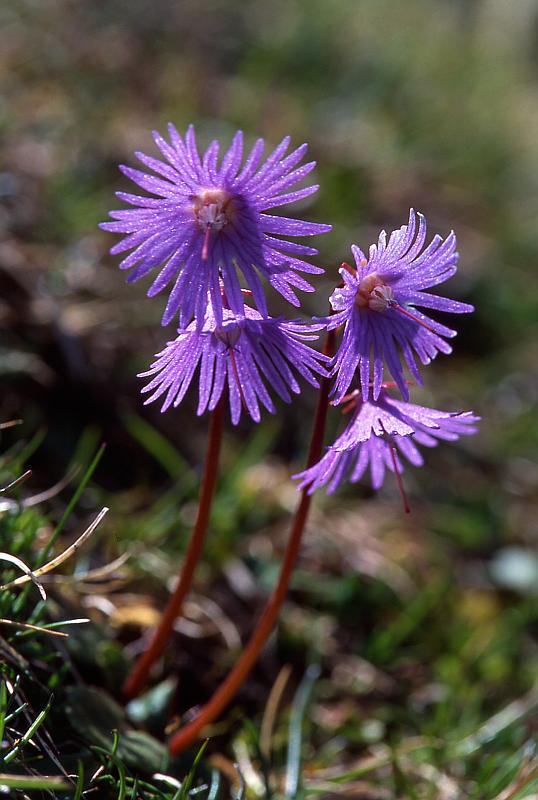
Soldanella alpina, commonly known as the Alpine Snowbell, is a captivating perennial herbaceous plant belonging to the Primulaceae family. It is indigenous to the mountainous regions of central and southern Europe, specifically thriving in alpine meadows, rocky slopes, and near snowfields, typically at altitudes ranging from 1,500 to 3,000 meters across the Pyrenees and the Alps. This diminutive species rarely exceeds 15 cm in height, forming an attractive basal rosette of leathery, rounded to kidney-shaped leaves that are often evergreen, persisting through the harsh winter months. The foliage is characteristically dark green with slightly crenate margins.
In late spring to early summer, immediately following the snowmelt, Soldanella alpina produces its signature delicate, bell-shaped flowers that gracefully hang downwards. These blossoms typically display a beautiful shade of lilac-blue, though color variations can occur, and feature five distinct lobes that are often finely fringed or toothed at their apex, lending them a ruffled appearance. The inflorescence is a sparse cyme, bearing one to a few exquisite flowers on slender, erect scapes. Its fibrous and relatively shallow root system is expertly adapted to anchoring the plant in thin, nutrient-poor alpine soils.
Recognized as a pioneer species, the Alpine Snowbell often colonizes disturbed areas and contributes significantly to the early floral displays of the high-altitude landscape, showcasing its remarkable adaptation to cold, challenging environments. It is hardy to USDA zones 4-8 and UK zone 5.
Trusted Scientific References
1. Authoritative external sources for Soldanella alpina
1.1 Wikipedia — Soldanella alpina
1.2 Kew POWO (Plants of the World Online)
1.3 PubMed — peer-reviewed research
1.4 NCBI Taxonomy Browser
1.5 GBIF — Global Biodiversity
1.6Soldanella should be interpreted through verified botanical identity, practical care, and responsible safety language. This recovery note adds the missing context needed for a complete profile: match light to the plant's habit, use well-drained soil, water according to season, and avoid unsupported medicinal or edible claims. For publishing, the plant can be presented as a source-backed garden plant with clear care guidance, common problem diagnosis, and conservative safety wording.
1.1.Soldanella — Highlights
- ✓Botanical Name — Soldanella alpina.
- ✓Common Name — Alpine Snowbell.
- ✓Family — Primulaceae (Primrose family).
- ✓Native Range — Central and Southern European Alps, Pyrenees.
- ✓Habitat — Alpine meadows, rocky slopes, near snowfields (1500-3000m altitude).
- ✓Floral Display — Delicate lilac-blue, bell-shaped, fringed flowers blooming post-snowmelt.
- ✓Medicinal Uses — Respiratory support, diuretic action, gentle laxative effect.
- ✓Key Constituents — Saponins, flavonoids, and phenolic acids are primary active compounds.
- ✓Cultivation — Prefers cool, moist, well-drained, semi-shaded conditions; sensitive to slugs.
- ✓Conservation — Historically, its wild populations have become rare due to over-collection.
1.2.Soldanella — Snapshot Summary
- ✓Alpine Snowbell (Soldanella alpina) is a delicate perennial native to European alpine regions.
- ✓Traditionally valued for its respiratory, diuretic, and gentle laxative properties.
- ✓Key compounds include saponins, flavonoids, and phenolic acids, contributing to its efficacy.
- ✓Requires cool, moist, well-drained soil and semi-shade for successful cultivation.
- ✓Primarily used as teas, decoctions, or tinctures for internal therapeutic applications.
- ✓Exercise caution in pregnancy, lactation, and with pre-existing kidney/heart conditions or medications.
2.Soldanella — Botanical Identity
3.Soldanella — Fact Sheet
4.Soldanella — Botanical Description
5.Soldanella — Ecological Habitat
6.Soldanella — Heritage Uses
7.Soldanella — Key Phytochemicals
- ✓Saponins — These triterpenoid glycosides are often responsible for the plant's expectorant and mucolytic actions, helping to thin respiratory secretions and facilitate their removal, and may also contribute to diuretic effects.
- ✓Flavonoids — Key compounds like quercetin and kaempferol glycosides are known for their potent antioxidant and anti-inflammatory properties, protecting cells from oxidative damage and modulating immune responses.
- ✓Phenolic Acids — Derivatives of caffeic and gallic acids contribute to the plant's overall antioxidant capacity and may also possess mild anti-inflammatory and antimicrobial activities.
- ✓Triterpenes — A diverse group of compounds, triterpenes can exhibit various biological activities including anti-inflammatory and adaptogenic effects, supporting overall plant defense mechanisms.
- ✓Coumarins — While less prominent, some coumarin derivatives may be present, potentially contributing to anti-inflammatory, anticoagulant, or antimicrobial properties.
- ✓Polysaccharides — These complex carbohydrates can offer immune-modulating effects and contribute to the soothing properties on mucous membranes, particularly in the respiratory and digestive tracts.
- ✓Tannins — Astringent compounds found in the plant, tannins can help reduce inflammation, act as antioxidants, and contribute to the plant's mild laxative effect by gently influencing intestinal motility.
- ✓Volatile Oils — Although in trace amounts, specific volatile compounds may contribute mild antiseptic or antispasmodic qualities, enhancing the plant's traditional use for respiratory ailments.
8.Soldanella — Scientific Evidence
- ✓Respiratory Support — Traditionally, Soldanella alpina has been employed in European folk medicine to soothe respiratory discomforts, potentially due to its mucolytic and expectorant properties that help thin mucus, clear airways, and ease congestion.
- ✓Diuretic Action — The plant is recognized for its traditional use as a diuretic, aiding the body in expelling excess fluids and supporting healthy kidney function, particularly in cases of mild edema and fluid retention.
- ✓Anti-inflammatory Properties — Preliminary research and traditional use suggest Soldanella alpina may possess anti-inflammatory compounds, potentially reducing swelling, pain, and discomfort associated with inflammatory conditions.
- ✓Gentle Laxative Effect — A decoction of the root has been traditionally utilized to provide a gentle laxative effect, promoting digestive regularity and assisting in the relief of occasional constipation.
- ✓Detoxification Support — By stimulating both diuretic and mild laxative actions, Soldanella alpina may subtly assist the body’s natural detoxification pathways, helping to eliminate metabolic waste products.
- ✓Immune Modulatory Potential — As with many alpine plants, it may contain compounds that offer mild immune-modulating effects, potentially supporting the body’s general resilience against environmental stressors.
- ✓Pain Relief — Its observed anti-inflammatory activity suggests a secondary potential for mild analgesic effects, contributing to the alleviation of minor aches and discomforts.
- ✓Antioxidant Activity — The presence of phenolic compounds, such as flavonoids, suggests that Soldanella alpina may exhibit antioxidant properties, helping to protect cells from oxidative stress.
- ✓Antispasmodic Qualities — For respiratory applications, the plant may also offer mild antispasmodic effects, which could help calm coughs and alleviate bronchial spasms.
8.1.Soldanella — Conditions Traditionally Used For
9.Soldanella — Safety & Side Effects
9.1.Soldanella — Side Effects & Warnings
- ✓Gastrointestinal Upset — Overconsumption, particularly of the root decoction, may lead to mild stomach discomfort, nausea, or diarrhea due to its laxative properties.
- ✓Dehydration — Excessive or prolonged use of the plant's diuretic preparations could potentially lead to fluid and electrolyte imbalance, especially if fluid intake is insufficient.
- ✓Allergic Reactions — As with any plant, individuals sensitive to members of the Primulaceae family may experience allergic skin reactions or respiratory symptoms.
- ✓Hypotension — Due to its diuretic action, Soldanella alpina could theoretically lower blood pressure, especially when combined with antihypertensive medications.
- ✓Drug Interactions — Potential for interaction with diuretic medications, blood thinners (if coumarins are significant), or other drugs due to its active compounds.
- ✓Uterine Stimulation — Some traditional plants with diuretic or laxative properties may have mild uterine stimulating effects, making caution necessary during pregnancy.
- ✓Kidney Strain — While traditionally used for kidney support, prolonged high-dose use in individuals with pre-existing kidney conditions could potentially exacerbate issues.
9.2.Soldanella — Safety Overview
- ✓Pregnancy and Lactation — Avoid use during pregnancy and lactation due to insufficient safety data and potential mild uterine stimulating or unknown effects on infants.
- ✓Children — Not recommended for use in infants and young children, as research on its safety and appropriate dosing for this demographic is lacking.
- ✓Pre-existing Conditions — Individuals with kidney disease, heart conditions, or electrolyte imbalances should consult a healthcare professional before use due to its diuretic properties.
- ✓Medication Interactions — Exercise caution if taking diuretics, blood pressure medications, or blood thinners; consult with a physician to avoid potential adverse interactions.
- ✓Allergic Sensitivities — People with known allergies to plants in the Primulaceae family or other botanical allergens should approach use with caution.
- ✓Dosage Adherence — Always adhere to recommended dosages and duration of use; avoid prolonged high-dose consumption to minimize potential side effects.
- ✓Professional Guidance — Prior to incorporating Soldanella alpina into a therapeutic regimen, it is advisable to seek guidance from a qualified medical herbalist or healthcare provider.
10.Soldanella — Preparation Methods
- ✓Herbal Tea/Infusion — Prepare a tea by steeping 1-2 teaspoons of dried Soldanella alpina leaves or flowers in hot water for 10-15 minutes; strain and consume for respiratory or diuretic support.
- ✓Root Decoction — For a gentle laxative effect, simmer 1 teaspoon of dried, chopped Soldanella alpina root in a cup of water for 15-20 minutes; strain and drink, typically before bedtime.
- ✓Tincture — Macerate dried plant material (leaves, flowers, roots) in a high-proof alcohol solution for several weeks, then strain; use diluted drops as directed by a qualified herbalist.
- ✓Poultice (External) — Crush fresh leaves to make a poultice, apply directly to areas of mild inflammation or discomfort, and cover with a clean cloth for external soothing.
- ✓Standardized Extract — Look for commercially available standardized extracts for precise dosing, particularly when seeking specific phytochemical concentrations for targeted therapeutic effects.
- ✓Topical Application (Infused Oil) — Infuse dried flowers and leaves in a carrier oil like olive or almond oil for several weeks, then strain; use the oil for gentle massage on sore muscles or skin irritations.
- ✓Traditional Syrups — Combine a strong tea or decoction with honey or natural sweeteners to create a soothing syrup, particularly beneficial for coughs and respiratory discomforts.
11.Soldanella — Cultivation & Care
- ✓Soil Requirements — Prefers well-drained, humus-rich soil with a neutral to slightly acidic pH (6.0-7.0), mimicking its natural alpine environment.
- ✓Light & Aspect — Thrives in an open position with a cool aspect, requiring semi-shade or protection from intense midday sun, especially in warmer climates.
- ✓Moisture Needs — Requires consistently moist soil but is intolerant of waterlogging; ensure excellent drainage to prevent root rot, particularly during winter.
- ✓Winter Protection — In regions with heavy winter rainfall or extreme cold, provide some protection from excessive winter wet to prevent crown rot.
- ✓Pest Management — Be vigilant against slugs, which can damage young flowering shoots, especially in early spring; consider organic slug control methods.
- ✓Propagation by Seed — Sow fresh seeds directly after ripening in a cold greenhouse; seeds have limited viability, so prompt sowing is crucial for successful germination.
- ✓Propagation by Division — Established clumps can be carefully divided in spring as new growth emerges, ensuring each division has a healthy root system and crown.
- ✓Transplanting — Pot seedlings into individual containers and grow them in a greenhouse for their first winter before transplanting to their permanent outdoor location in late spring or early summer after the last frost.
Reviewed by the Flora Medical Global Botanical Review Panel
Multi-disciplinary editorial group · Botany · Ethnobotany · Herbal-medicine literature
Who reviewed this: This page was checked by the Flora Medical Global Botanical Review Panel — an in-house editorial group of botany graduates, ethnobotany researchers, and horticulture practitioners who collectively maintain our 7,000+ plant encyclopedia. Meet the team.
Our 4-step verification process
1. Taxonomic verification
Scientific names and synonyms cross-checked against Kew POWO, World Flora Online, and The Plant List.
2. Phytochemical & medicinal cross-reference
Active compounds, traditional uses, and reported activities are cross-referenced with PubMed, USDA Dr. Duke's database, and peer-reviewed ethnobotanical literature.
3. Conservation & distribution check
Distribution, ecology, and conservation status confirmed against GBIF occurrence records and the IUCN Red List.
4. Editorial & safety review
Every entry passes an editorial pass for clarity, originality, and safety notices (toxicity, contraindications, dosage caveats) before publication.
Last reviewed:
Important medical disclaimer: This content is for educational and research purposes only. It is not medical advice and is not a substitute for consultation with a licensed healthcare provider. Do not use any herb to self-treat a medical condition without professional guidance.
Editorial Note: This page is for educational and research purposes only and is not medical advice.
Written by: Flora Medical Global Editorial Team
Reviewed by: Flora Medical Global Botanical Review Panel
Last Updated: June 15, 2026





Soldanella — Comments & Community Reviews
Rate this plant