

Medical Disclaimer: This content is for educational purposes only. It is not medical advice. Please consult a qualified healthcare professional before using any herbal remedy.
Safety Overview
1.Solidago — Botanical Snapshot
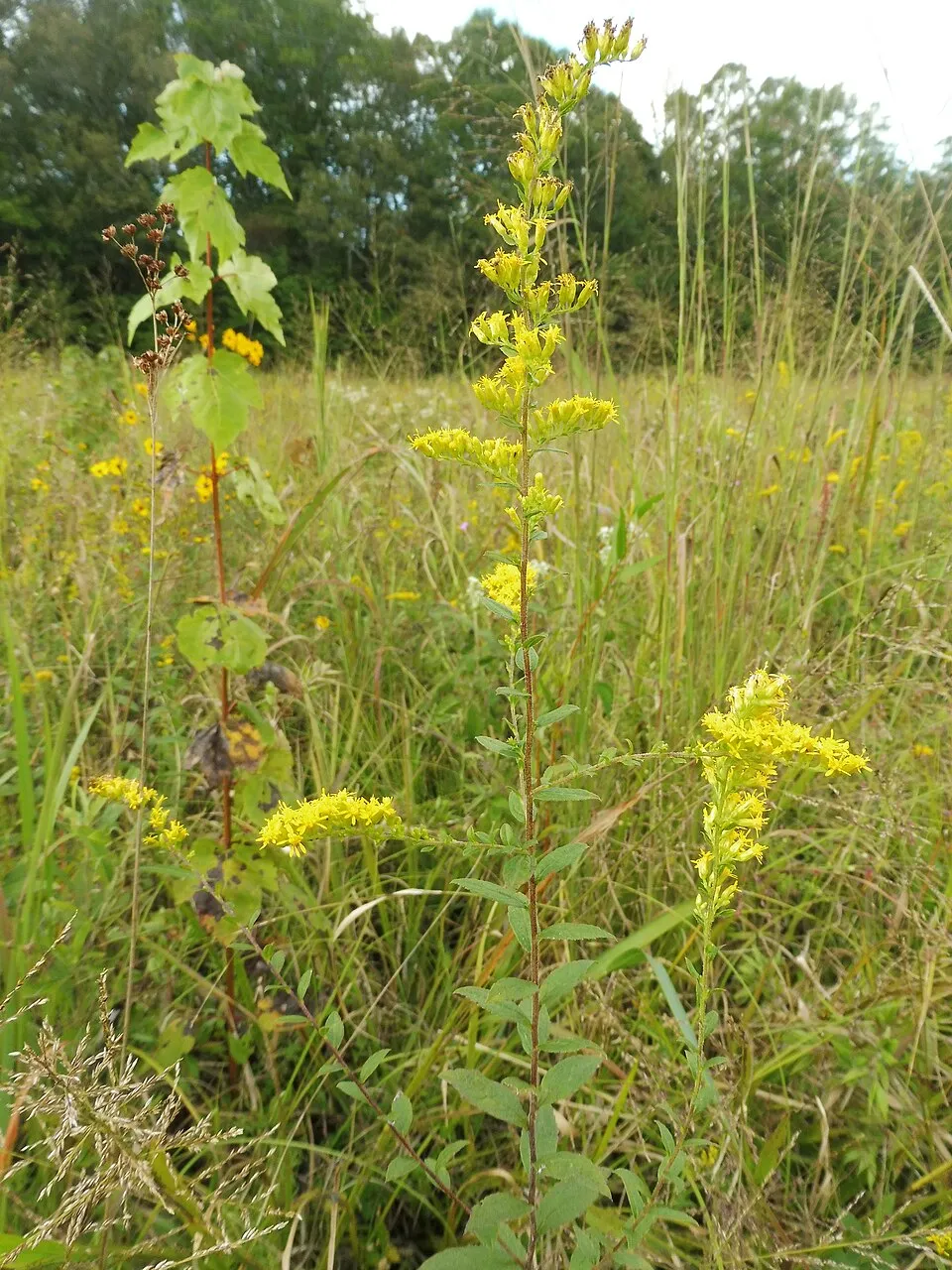
Solidago rugosa, commonly known as rough-stemmed goldenrod or wrinkleleaf goldenrod, is a robust and resilient perennial herb native to a broad expanse of eastern North America, spanning from Newfoundland to Florida and west to Texas. This striking member of the Asteraceae (Daisy) family typically reaches heights of 3 to 7 feet, characterized by its distinctive hairy, often reddish, and rough-textured stems that give it its common name. The leaves are alternate, lance-shaped, and also possess a rough texture, contributing to the plant's rugged appearance.
In late summer and throughout the fall, Solidago rugosa produces dense, showy clusters of small, vibrant yellow flowers, forming plume-like inflorescences that are a vital late-season nectar source for pollinators. It thrives in a variety of habitats, including woodlands, meadows, fields, and along roadsides, demonstrating a remarkable adaptability to different soil conditions, from well-drained to moist. Its vigorous growth habit allows it to spread readily via rhizomes, forming impressive colonies, making it a prominent feature in its native landscapes.
The plant's widespread distribution and adaptability underscore its ecological importance and traditional value.
Trusted Scientific References
1. Authoritative external sources for Solidago rugosa
1.1 Wikipedia — Solidago rugosa
1.2 Kew POWO (Plants of the World Online)
1.3 PubMed — peer-reviewed research
1.4 NCBI Taxonomy Browser
1.5 GBIF — Global Biodiversity
1.6Solidago should be interpreted through verified botanical identity, practical care, and responsible safety language. This recovery note adds the missing context needed for a complete profile: match light to the plant's habit, use well-drained soil, water according to season, and avoid unsupported medicinal or edible claims. For publishing, the plant can be presented as a source-backed garden plant with clear care guidance, common problem diagnosis, and conservative safety wording.
1.1.Solidago — Notable Characteristics
- ✓Native to Eastern — Native to Eastern North America, a prominent indigenous plant.
- ✓Robust perennial herb, — Robust perennial herb, forming impressive, spreading colonies.
- ✓Distinctive rough, hairy stems and rough — textured leaves.
- ✓Produces dense clusters — Produces dense clusters of bright yellow flowers in late summer and fall.
- ✓Potent natural diuretic, — Potent natural diuretic, supporting kidney and bladder function.
- ✓Exhibits significant anti — inflammatory and antiseptic properties.
- ✓Rich phytochemical profile, — Rich phytochemical profile, including beneficial flavonoids and saponins.
- ✓Traditionally valued for — Traditionally valued for urinary tract, respiratory, and skin health.
- ✓Attracts pollinators, contributing — Attracts pollinators, contributing to local biodiversity.
- ✓Adaptable to a — Adaptable to a wide range of soil and light conditions.
1.2.Solidago — At-a-Glance Summary
- ✓Rough-stemmed goldenrod (Solidago rugosa) is a North American perennial known for its vibrant fall blooms.
- ✓It possesses significant diuretic, anti-inflammatory, and antiseptic properties, supporting urinary, respiratory, and skin health.
- ✓The plant is rich in beneficial phytochemicals, including flavonoids, saponins, and phenolic acids.
- ✓Traditionally used for urinary tract infections, kidney stones, colds, and topical wound care.
- ✓It is easy to cultivate but can spread vigorously in garden settings.
- ✓Caution is advised for individuals with allergies to the Asteraceae family, kidney/heart conditions, or during pregnancy/lactation.
2.Solidago — Nomenclature & Classification
3.Solidago — Fact Sheet
4.Solidago — Physical Description
5.Solidago — Native Range & Habitat
6.Solidago — Folk Medicine Applications
Often mistakenly blamed for hay fever (which is typically caused by wind-pollinated ragweed, blooming at the same time). It is a symbol of late summer and autumn in North America. Valued in native plant gardens for its ecological benefits.
7.Solidago — Key Phytochemicals
- ✓Flavonoids — Key compounds include rutin, quercetin, kaempferol, and their glycosides, which are largely responsible for goldenrod's potent antioxidant and anti-inflammatory effects.
- ✓Saponins — Triterpenoid saponins, such as leiocarposide, contribute significantly to the plant's well-known diuretic properties and also exhibit anti-inflammatory activity.
- ✓Phenolic Acids — Caffeic acid, chlorogenic acid, and their derivatives are present, providing additional antioxidant, anti-inflammatory, and antimicrobial benefits.
- ✓Diterpenes — Various labdane diterpenes have been identified, which are recognized for their anti-inflammatory and antimicrobial potential.
- ✓Essential Oils — Contains volatile compounds including monoterpenes (e.g., alpha-pinene, limonene) and sesquiterpenes, contributing to its aromatic profile and offering antiseptic and antispasmodic actions.
- ✓Tannins — Possess astringent properties, contributing to its traditional use for wound healing and as an internal tonic for mucous membranes.
- ✓Coumarins — Minor constituents that may contribute to its anti-inflammatory and spasmolytic effects.
- ✓Polysaccharides — Complex carbohydrates that can have immunomodulatory effects, supporting the body's natural defense mechanisms.
- ✓Glycosides — Various glycosidic compounds, beyond flavonoids, contribute to the diverse pharmacological profile of the plant.
- ✓Phytosterols — Plant sterols are present and may offer additional anti-inflammatory and cholesterol-lowering properties.
8.Solidago — Pharmacological Findings
- ✓Diuretic — Solidago rugosa promotes increased urine production and excretion, aiding in the flushing of the urinary tract and reducing fluid retention.
- ✓Anti-inflammatory — The plant's compounds help to mitigate inflammatory responses, offering relief from various forms of internal and external inflammation.
- ✓Antiseptic — It exhibits properties that can inhibit the growth of microorganisms, making it beneficial for preventing infections, particularly in the urinary system.
- ✓Urinary Tract Health Support — Traditionally and currently used to soothe and cleanse the urinary tract, assisting in the management of conditions like cystitis and preventing kidney stone formation.
- ✓Antioxidant Activity — Rich in flavonoids and phenolic acids, rough-stemmed goldenrod helps to neutralize free radicals, protecting cells from oxidative damage.
- ✓Respiratory System Relief — Used in traditional remedies to alleviate symptoms of colds, sore throats, and mild coughs due to its anti-inflammatory and soothing effects.
- ✓Wound Healing — When applied topically, its antiseptic and astringent qualities can aid in the healing of minor cuts, abrasions, and skin irritations.
- ✓Detoxification Aid — By supporting kidney function and promoting urination, it assists the body in eliminating metabolic waste products and toxins.
- ✓Antispasmodic — Certain constituents may help relax smooth muscles, potentially easing spasms associated with conditions like bladder irritation.
- ✓Lymphatic Support — Traditional practitioners suggest it can support lymphatic drainage and reduce swelling, particularly in congested states.
- ✓Astringent — The presence of tannins contributes to its ability to constrict tissues, useful for reducing secretions and toning mucous membranes.
- ✓Antifungal Properties — Preliminary research indicates potential inhibitory effects against certain fungal strains, adding to its broad antimicrobial spectrum.
8.1.Solidago — Reported Uses
9.Solidago — Safety & Side Effects
9.1.Solidago — Possible Adverse Reactions
- ✓Allergic Reactions — Individuals sensitive to the Asteraceae family (e.g., ragweed, daisies) may experience allergic reactions, including skin rash or respiratory symptoms.
- ✓Diuretic Effect — Excessive use can lead to dehydration or electrolyte imbalance, especially if fluid intake is insufficient.
- ✓Drug Interactions — May interact with diuretic medications, lithium, and potentially blood-thinning agents due to coumarin content.
- ✓Kidney Issues — Contraindicated in cases of severe kidney disease or edema caused by impaired heart or kidney function, as it may exacerbate fluid retention in these specific conditions.
- ✓Digestive Upset — Some sensitive individuals may experience mild gastrointestinal discomfort, such as nausea or stomach upset.
- ✓Skin Irritation — Topical application may occasionally cause contact dermatitis in susceptible individuals.
- ✓Pregnancy/Lactation — Insufficient safety data, therefore use should be avoided during pregnancy and breastfeeding.
9.2.Solidago — Safety Overview
- ✓Consult Healthcare Provider — Always consult a qualified healthcare professional before using Solidago rugosa, especially if you have pre-existing medical conditions or are taking medications.
- ✓Allergy Warning — Avoid use if you have a known allergy to ragweed or other plants in the Asteraceae family, as cross-reactivity is possible.
- ✓Hydration — When using as a diuretic, ensure adequate fluid intake to prevent dehydration and electrolyte imbalances.
- ✓Kidney/Heart Conditions — Contraindicated in cases of fluid retention due to impaired heart or kidney function; consult a doctor for any edema.
- ✓Pregnancy/Breastfeeding — Avoid use during pregnancy and lactation due to the lack of sufficient safety research and potential emmenagogue effects.
- ✓Children — Administer to children only under the direct supervision and guidance of a healthcare professional.
- ✓Dosage Adherence — Strictly adhere to recommended dosages and preparation guidelines to minimize the risk of adverse effects.
10.Solidago — Usage Guide
- ✓Herbal Tea/Infusion — Prepare by steeping 1-2 teaspoons of dried leaves and flowers in hot water for 10-15 minutes, typically consumed 2-3 times daily for urinary support or cold symptoms.
- ✓Tincture — A liquid extract made by macerating fresh or dried aerial parts in alcohol, usually taken in drops or small doses diluted in water.
- ✓Decoction — For more potent extraction of tougher plant parts like roots (though less common for S. rugosa), simmer in water for 15-30 minutes.
- ✓Poultice/Compress — Crush fresh leaves and flowers or soak a cloth in a strong infusion, then apply topically to minor wounds, skin irritations, or aching joints.
- ✓Ointment/Salve — Infuse dried goldenrod in a carrier oil (e.g., olive oil), then combine with beeswax to create a topical balm for skin conditions.
- ✓Capsules/Tablets — Standardized extracts or powdered plant material available in encapsulated form for convenient oral administration.
- ✓Gargle/Mouthwash — A cooled, strong infusion can be used as a gargle for sore throats or as a natural mouthwash for oral hygiene.
- ✓Steam Inhalation — Add a few drops of goldenrod essential oil or a strong infusion to hot water for steam inhalation to relieve respiratory congestion.
11.Solidago — Garden Cultivation
- ✓Propagation — Easily grown from seed, which can be direct-sown in fall or stratified and sown in spring, or propagated via root division in spring or fall.
- ✓Sunlight — Prefers full sun to partial shade for optimal growth and flowering; too much shade can lead to leggy plants and reduced bloom.
- ✓Soil — Adaptable to a wide range of soil types, but thrives best in well-drained to moist, average garden soil; tolerates poor soils.
- ✓Watering — Requires moderate watering, especially during dry periods, but established plants are quite drought-tolerant.
- ✓Spacing — Allow ample space (18-24 inches apart) as Solidago rugosa is a vigorous grower and spreads readily to form colonies.
- ✓Maintenance — Deadhead spent flowers to prevent excessive self-seeding and control spread; cut back foliage in late fall or early spring.
- ✓Pests and Diseases — Generally robust and resistant to most pests and diseases, making it a low-maintenance addition to gardens.
- ✓Hardiness — A cold-hardy perennial, typically thriving in USDA Hardiness Zones 3-8.
Reviewed by the Flora Medical Global Botanical Review Panel
Multi-disciplinary editorial group · Botany · Ethnobotany · Herbal-medicine literature
Who reviewed this: This page was checked by the Flora Medical Global Botanical Review Panel — an in-house editorial group of botany graduates, ethnobotany researchers, and horticulture practitioners who collectively maintain our 7,000+ plant encyclopedia. Meet the team.
Our 4-step verification process
1. Taxonomic verification
Scientific names and synonyms cross-checked against Kew POWO, World Flora Online, and The Plant List.
2. Phytochemical & medicinal cross-reference
Active compounds, traditional uses, and reported activities are cross-referenced with PubMed, USDA Dr. Duke's database, and peer-reviewed ethnobotanical literature.
3. Conservation & distribution check
Distribution, ecology, and conservation status confirmed against GBIF occurrence records and the IUCN Red List.
4. Editorial & safety review
Every entry passes an editorial pass for clarity, originality, and safety notices (toxicity, contraindications, dosage caveats) before publication.
Last reviewed:
Important medical disclaimer: This content is for educational and research purposes only. It is not medical advice and is not a substitute for consultation with a licensed healthcare provider. Do not use any herb to self-treat a medical condition without professional guidance.
Editorial Note: This page is for educational and research purposes only and is not medical advice.
Written by: Flora Medical Global Editorial Team
Reviewed by: Flora Medical Global Botanical Review Panel
Last Updated: June 15, 2026





Solidago — Comments & Community Reviews
Rate this plant