

Medical Disclaimer: This content is for educational purposes only. It is not medical advice. Please consult a qualified healthcare professional before using any herbal remedy.
Safety Overview
1.Song of Jamaica — Botanical Snapshot
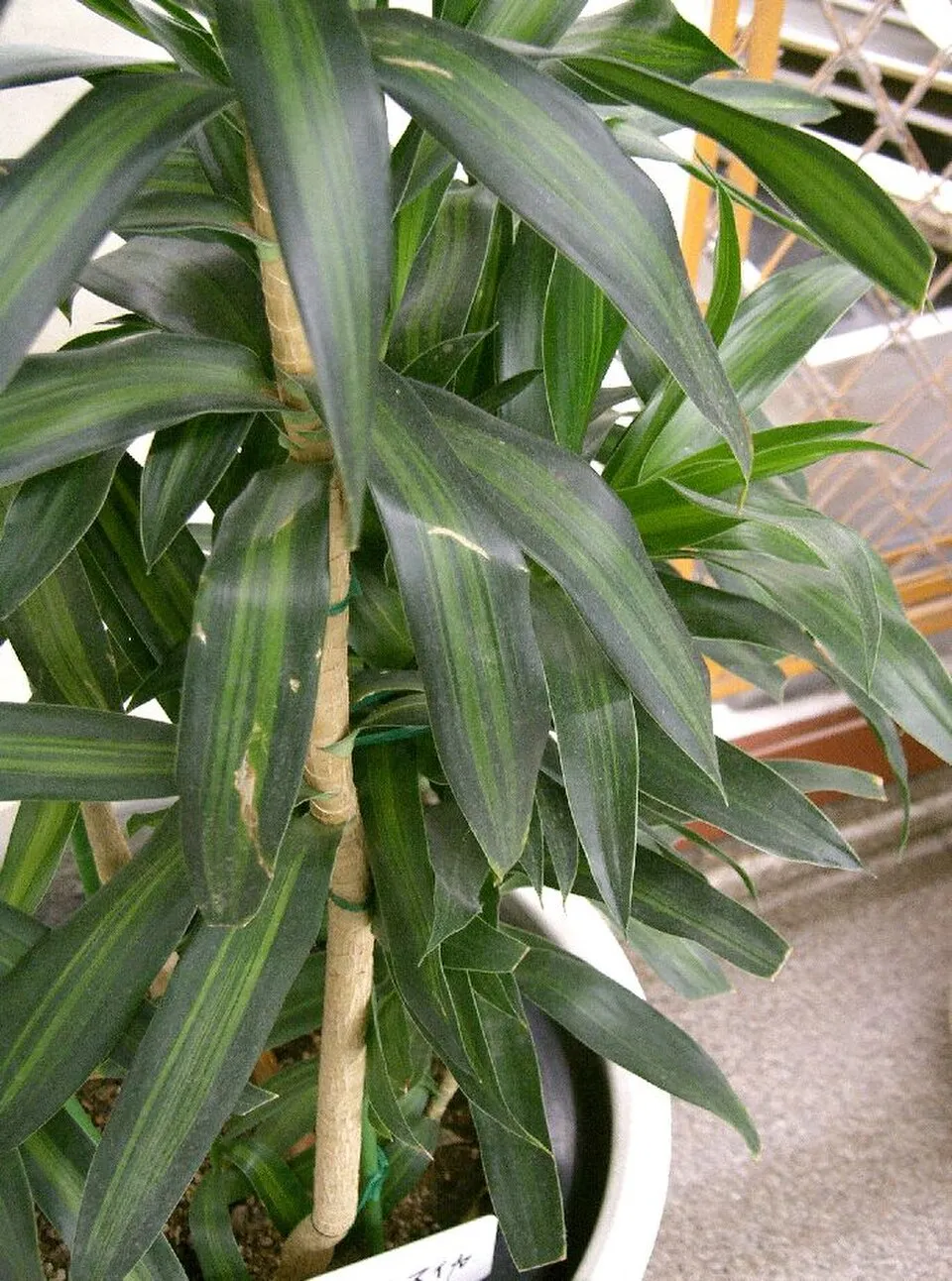
Dracaena reflexa Jamaica, commonly known as Song of Jamaica, is an elegant and popular ornamental houseplant within the Asparagaceae family. This specific cultivar is highly valued for its striking variegated foliage, which typically presents as rich green leaves adorned with creamy white or yellow margins, giving it a vibrant and distinctive appearance. The lanceolate leaves are spirally arranged in a rosette pattern, often reaching lengths of 30 to 60 centimeters and widths of 3 to 5 centimeters.
While cultivated indoors, the plant usually attains a height of 1 to 2 meters, but in its natural outdoor habitat, it can grow up to 4 to 6 meters tall, developing a slow, upright habit with an oval form and an open crown. The bark is smooth and greyish, adding to its aesthetic appeal. Native to the tropical regions of Madagascar, Dracaena reflexa Jamaica thrives best in warm, humid conditions, which makes it well-suited for indoor environments.
Although rare in indoor cultivation, mature plants can produce small, fragrant white flowers that bloom in clusters. Beyond its decorative qualities, this Dracaena species is renowned for its air-purifying capabilities, effectively filtering common indoor pollutants and contributing to a healthier living space.
Trusted Scientific References
1. Authoritative external sources for Dracaena reflexa Jamaica
1.1 Wikipedia — Dracaena reflexa Jamaica
1.2 Kew POWO (Plants of the World Online)
1.3 PubMed — peer-reviewed research
1.4 NCBI Taxonomy Browser
1.5 GBIF — Global Biodiversity
1.6Song of Jamaica should be interpreted through verified botanical identity, practical care, and responsible safety language. This recovery note adds the missing context needed for a complete profile: match light to the plant's habit, use well-drained soil, water according to season, and avoid unsupported medicinal or edible claims. For publishing, the plant can be presented as a source-backed indoor plant with clear care guidance, common problem diagnosis, and conservative safety wording.
1.1.Song of Jamaica — Distinguishing Points
- ✓Striking Variegated Foliage — Features vibrant green leaves with creamy white or yellow margins, enhancing aesthetic appeal.
- ✓Natural Air Purifier — Excellently filters common indoor air pollutants, contributing to a healthier environment.
- ✓Rich in Antioxidants — High concentration of phenolic compounds and flavonoids provides strong antioxidant protection.
- ✓Traditional Medicinal Plant — Valued in various cultural traditions for its healing and protective properties.
- ✓Antimicrobial Activity — Exhibits significant antibacterial and antifungal properties, supporting immune health.
- ✓Potential Cardioprotective Effects — Research suggests benefits for heart health by mitigating oxidative stress.
- ✓Low — Maintenance Houseplant — Relatively easy to care for indoors, making it popular for homes and offices.
- ✓Slow Growth Rate — An upright, bushy plant with an oval form, ideal for stable indoor decor.
- ✓Native to Madagascar — Thrives in warm, humid tropical conditions, reflecting its origin.
- ✓Mildly Toxic to Pets — Contains saponins that can cause gastrointestinal upset in cats and dogs.
1.2.Song of Jamaica — In Brief
- ✓Ornamental and Medicinal — Dracaena reflexa Jamaica is cherished for its decorative foliage and diverse health benefits.
- ✓Air Purification Power — Highly effective at removing indoor air toxins like formaldehyde and benzene.
- ✓Rich Phytochemistry — Contains beneficial compounds including flavonoids, saponins, alkaloids, and tannins.
- ✓Traditional Healing Uses — Historically employed for wound healing, fever reduction, and as an antiseptic.
- ✓Modern Research Backed — Studies indicate antioxidant, anti-inflammatory, antimicrobial, and cardioprotective potential.
- ✓Pet Safety Concern — Important to note its mild toxicity to cats and dogs if ingested.
2.Song of Jamaica — Nomenclature & Classification
3.Song of Jamaica — Vital Statistics
4.Song of Jamaica — Physical Description
5.Song of Jamaica — Native Range & Habitat
6.Song of Jamaica — Heritage Uses
7.Song of Jamaica — Phytochemistry
- ✓Flavonoids — These polyphenolic compounds are abundant, contributing significantly to the plant's potent antioxidant and anti-inflammatory activities.
- ✓Saponins — Glycosides with detergent-like properties, saponins are responsible for some antimicrobial actions and are also implicated in the plant's mild toxicity to pets.
- ✓Alkaloids — Nitrogen-containing organic compounds that often exhibit diverse and potent pharmacological effects, including potential analgesic properties.
- ✓Tannins — Astringent polyphenols that contribute to the plant's antimicrobial and wound-healing capabilities, often binding to proteins.
- ✓Glycosides — A broad class of compounds, including specific hemostatic glycosides, which contribute to various biological activities, such as blood clotting.
- ✓Terpenoids — A diverse group of organic compounds often responsible for the plant's aromatic qualities and contributing to its anti-inflammatory and other therapeutic effects.
- ✓Steroids — Plant-derived steroids may play roles in anti-inflammatory processes or possess other physiological activities.
- ✓Carbohydrates — Essential structural components and energy sources within the plant, supporting its metabolic functions.
- ✓Proteins and Amino Acids — Fundamental building blocks of life, involved in enzymatic reactions and cellular structure, detected in the plant's composition.
- ✓Lipids and Oils — Various fatty acids and lipid components are present, which can have their own medicinal properties or serve as carriers for other active compounds.
- ✓Phenolic Compounds — A general category encompassing flavonoids and phenolic acids, which collectively contribute to the plant's high antioxidant capacity.
8.Song of Jamaica — Scientific Evidence
- ✓Potent Antioxidant — Rich in phenolic compounds and flavonoids, Dracaena reflexa exhibits strong antioxidant activity, effectively neutralizing free radicals and reducing oxidative stress within the body.
- ✓Anti-inflammatory Action — Extracts have demonstrated anti-swelling properties, suggesting its potential in mitigating various inflammatory conditions and associated discomfort.
- ✓Analgesic Properties — The plant possesses compounds that may contribute to pain relief, offering a natural approach to managing minor aches and discomfort.
- ✓Broad-Spectrum Antimicrobial — Traditionally used as a germicide, it shows significant antibacterial and antifungal activity against various pathogens, supporting its role in combating infections.
- ✓Antipyretic Effects — Historically employed to reduce fever, Dracaena reflexa can help regulate body temperature during febrile episodes.
- ✓Supports Wound Healing — Its antiseptic and antimicrobial qualities, combined with traditional usage, promote faster and cleaner healing of cuts, scrapes, and other epidermal injuries.
- ✓Cardioprotective Potential — Research indicates its ability to mitigate oxidative stress on heart cells, suggesting a protective role against H2O2-induced cardiac injury and supporting overall heart health.
- ✓Antidiabetic Activity — Preliminary studies suggest Dracaena reflexa may possess properties that help in the management of blood glucose levels, offering potential benefits for diabetic support.
- ✓Expectorant Qualities — In traditional medicine, it was utilized to alleviate chest conditions and coughs by promoting the clearance of mucus from the respiratory tract.
- ✓Hemostatic Properties — The presence of hemostatic glycosides in the plant contributes to its ability to aid in blood clotting, useful in wound management.
- ✓Air Purification — As a prominent houseplant, it effectively removes indoor air toxins such as formaldehyde, benzene, and xylene, thereby improving respiratory health and indoor air quality.
8.1.Song of Jamaica — Health Applications
9.Song of Jamaica — Cautions & Contraindications
9.1.Song of Jamaica — Reported Side Effects
- ✓Mild Pet Toxicity — Ingestion of leaves can cause gastrointestinal upset, vomiting, and diarrhea in cats and dogs due to saponins.
- ✓Allergic Reactions — Sensitive individuals may experience skin irritation upon contact or respiratory symptoms if exposed to airborne plant particles.
- ✓Gastrointestinal Discomfort (Human) — While not commonly consumed internally by humans, large doses could potentially lead to stomach upset.
- ✓Potential Drug Interactions — Active compounds like saponins and flavonoids might interact with certain medications, particularly anticoagulants or cardiac drugs.
- ✓Lack of Human Clinical Data — Comprehensive human safety data for long-term or high-dose internal use is limited, making caution advisable.
- ✓Over-watering Issues — Improper cultivation leading to root rot can cause plant health issues, though not a direct side effect on consumers.
9.2.Song of Jamaica — Risk Assessment
- ✓Pet Warning — Keep Dracaena reflexa Jamaica out of reach of pets, especially cats and dogs, due to its mild toxicity from saponins.
- ✓Pregnancy and Lactation — Avoid internal use during pregnancy and breastfeeding due to insufficient safety data and potential effects on fetal or infant development.
- ✓Pediatric Use — Not recommended for internal use in children without strict medical supervision from a qualified herbalist or physician.
- ✓Medical Conditions — Individuals with pre-existing health conditions, particularly cardiac issues or diabetes, should consult a healthcare professional before any medicinal use.
- ✓Medication Interactions — Exercise caution if taking prescription medications; consult a doctor or pharmacist to avoid potential adverse interactions.
- ✓Dosage Adherence — If used medicinally, strictly follow recommended dosages from a qualified medical herbalism expert to prevent adverse effects.
- ✓Allergy Patch Test — For topical applications, perform a small patch test on the skin to check for any allergic reactions before widespread use.
10.Song of Jamaica — Preparation Methods
- ✓Herbal Infusion (Tea) — Dried leaves can be steeped in hot water to prepare an infusion, traditionally used for its antipyretic or antioxidant benefits.
- ✓Topical Poultice — Crushed fresh leaves can be applied directly to minor wounds or skin irritations to leverage its antiseptic and wound-healing properties.
- ✓Decoction — A more concentrated extract can be made by simmering the leaves or stem in water, often employed for conditions requiring a stronger internal effect, such as coughs.
- ✓Tincture — An alcohol-based extract can be prepared from the leaves, providing a potent and shelf-stable form for internal medicinal use under expert guidance.
- ✓Powdered Form — Dried and ground leaves can be encapsulated or mixed into beverages, offering a convenient way to consume the plant's beneficial compounds.
- ✓Air Purifier — Simply placing the living plant in indoor spaces effectively contributes to improved air quality by filtering common toxins.
- ✓Extracts for Research — Standardized extracts are used in scientific studies to investigate specific pharmacological activities and isolate active constituents.
11.Song of Jamaica — Garden Cultivation
- ✓Light — Provide bright, indirect sunlight; while it tolerates low light, optimal growth and variegation require more ambient brightness, avoiding direct sun.
- ✓Temperature — Maintain indoor temperatures between 18°C and 25°C (64°F to 77°F) for ideal growth.
- ✓Humidity — This tropical plant thrives in high humidity; consider placing it on a pebble tray with water or using a humidifier.
- ✓Watering — Keep the soil consistently moist during the growing season, allowing the top inch to dry out between waterings. Reduce frequency in winter.
- ✓Soil — Use a well-draining potting mix that retains some moisture but prevents waterlogging, crucial for root health.
- ✓Fertilization — Feed with a balanced liquid fertilizer every two weeks during the active growing season (spring and summer).
- ✓Propagation — Easily propagated from 3-5 inch stem cuttings, which should be placed in moist soil or water until roots develop.
- ✓Avoid Over-watering — Excessive watering is a common issue, leading to root rot; ensure proper drainage and allow soil to dry partially.
Reviewed by the Flora Medical Global Botanical Review Panel
Multi-disciplinary editorial group · Botany · Ethnobotany · Herbal-medicine literature
Who reviewed this: This page was checked by the Flora Medical Global Botanical Review Panel — an in-house editorial group of botany graduates, ethnobotany researchers, and horticulture practitioners who collectively maintain our 7,000+ plant encyclopedia. Meet the team.
Our 4-step verification process
1. Taxonomic verification
Scientific names and synonyms cross-checked against Kew POWO, World Flora Online, and The Plant List.
2. Phytochemical & medicinal cross-reference
Active compounds, traditional uses, and reported activities are cross-referenced with PubMed, USDA Dr. Duke's database, and peer-reviewed ethnobotanical literature.
3. Conservation & distribution check
Distribution, ecology, and conservation status confirmed against GBIF occurrence records and the IUCN Red List.
4. Editorial & safety review
Every entry passes an editorial pass for clarity, originality, and safety notices (toxicity, contraindications, dosage caveats) before publication.
Last reviewed:
Important medical disclaimer: This content is for educational and research purposes only. It is not medical advice and is not a substitute for consultation with a licensed healthcare provider. Do not use any herb to self-treat a medical condition without professional guidance.
Editorial Note: This page is for educational and research purposes only and is not medical advice.
Written by: Flora Medical Global Editorial Team
Reviewed by: Flora Medical Global Botanical Review Panel
Last Updated: June 15, 2026





Song of Jamaica — Comments & Community Reviews
Rate this plant