

Medical Disclaimer: This content is for educational purposes only. It is not medical advice. Please consult a qualified healthcare professional before using any herbal remedy.
Safety Overview
1.Spanish Lavender — Introduction & Highlights
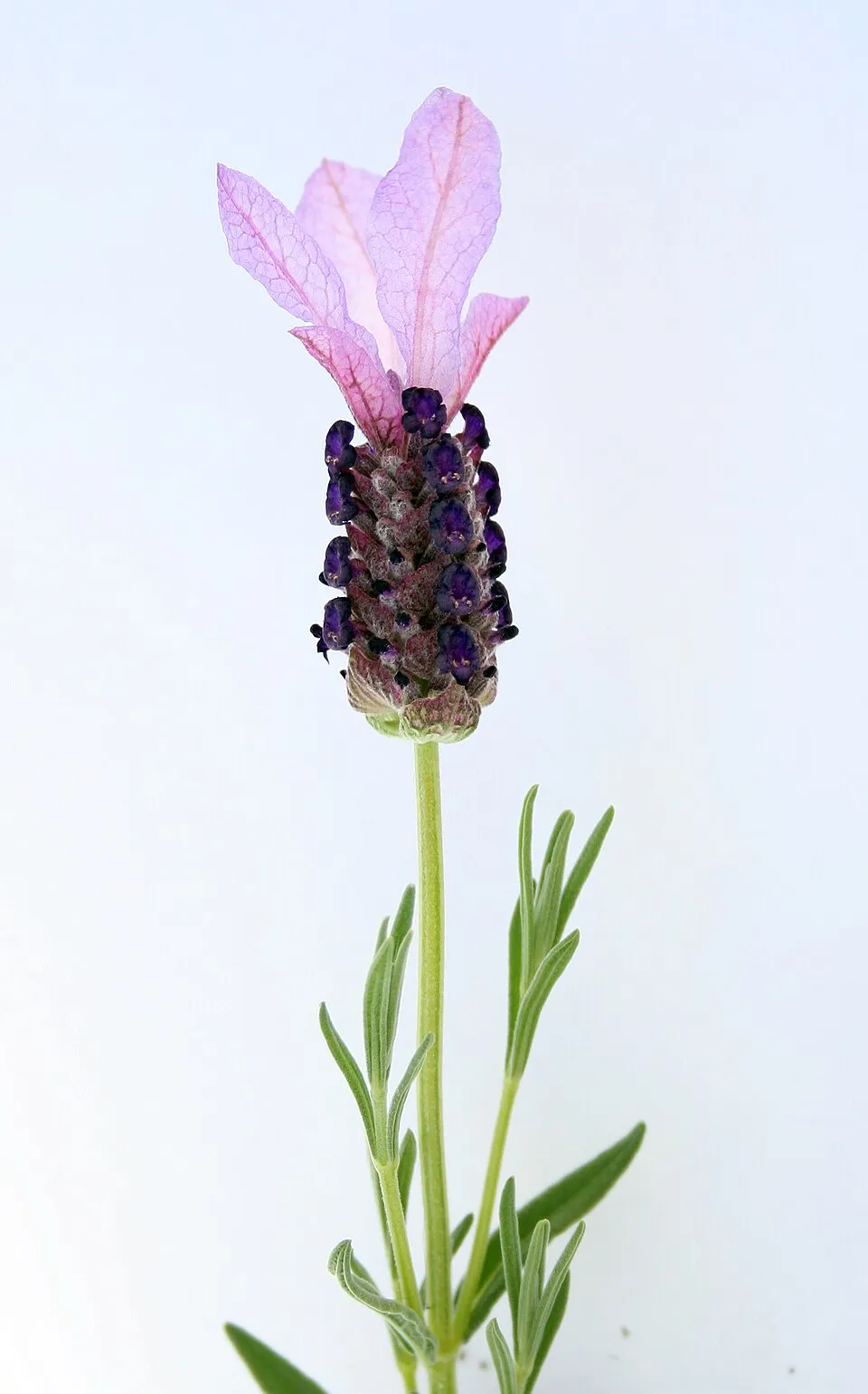
Spanish Lavender, scientifically known as Lavandula stoechas, is a captivating perennial herbaceous shrub within the Lamiaceae family, typically reaching heights of 30 to 60 centimeters. It is easily distinguished by its unique morphology, particularly the prominent, often purple or violet, petal-like bracts that crown its dense, elongated flower spikes, resembling small butterflies or 'bunny ears.' These aromatic leaves are narrow and linear, measuring approximately 3 to 6 centimeters, and emit a characteristic fragrant aroma when crushed, a hallmark of the mint family. The vibrant flowers bloom from late spring through early summer, attracting a diverse range of pollinators, including bees and butterflies, crucial for ecosystem health.
The stems are upright, with a base that becomes somewhat woody and grayish-brown, transitioning to a more herbaceous texture higher up. Native to the sun-drenched, rocky hillsides and dry habitats of the Mediterranean basin, particularly southern Spain and France, Spanish Lavender thrives in sandy, well-drained soils. Its resilience and adaptability to harsh, arid climates, characterized by full sun exposure and limited moisture, underscore its robust nature and make it a popular choice for xeriscaping and botanical gardens worldwide.
Trusted Scientific References
1. Authoritative external sources for Lavandula stoechas
1.1 Wikipedia — Lavandula stoechas
1.2 Kew POWO (Plants of the World Online)
1.3 PubMed — peer-reviewed research
1.4 NCBI Taxonomy Browser
1.5 GBIF — Global Biodiversity
1.6Spanish Lavender should be interpreted through verified botanical identity, practical care, and responsible safety language. This recovery note adds the missing context needed for a complete profile: match light to the plant's habit, use well-drained soil, water according to season, and avoid unsupported medicinal or edible claims. For publishing, the plant can be presented as a source-backed medicinal plant with clear care guidance, common problem diagnosis, and conservative safety wording.
1.1.Spanish Lavender — Defining Traits
- ✓Distinctive Floral Bracts — Characterized by prominent, often purple, petal-like bracts resembling 'bunny ears' or butterflies.
- ✓Robust Aromatic Profile — Emits a strong, camphoraceous, and herbaceous scent, distinct from other lavender species.
- ✓High Eucalyptol Content — Its essential oil is rich in 1,8-Cineole, which imparts significant medicinal properties.
- ✓Drought — Tolerant Nature — Exceptionally well-adapted to arid and semi-arid climates, requiring minimal water once established.
- ✓Attracts Pollinators — Its vibrant flowers are a magnet for bees, butterflies, and other beneficial insects.
- ✓Native to the Mediterranean — Thrives in rocky, well-drained soils typical of its indigenous region.
- ✓Ornamental and Medicinal Value — Prized both for its striking appearance in landscapes and its diverse therapeutic applications.
- ✓Resilience to Harsh Conditions — Demonstrates excellent hardiness in full sun and poor soil conditions.
- ✓Lamiaceae Family Member — Shares aromatic and structural characteristics with other mint family plants.
1.2.Spanish Lavender — Quick Summary
- ✓Distinctive Appearance — Features unique 'bunny ear' bracts atop its flower spikes.
- ✓Rich in 1,8-Cineole — Its essential oil is characterized by a high concentration of this potent compound.
- ✓Anti-inflammatory & Antioxidant — Key traditional and scientifically supported medicinal properties.
- ✓Emerging Anti-cancer Potential — Demonstrated in vitro activity against specific human cancer cell lines.
- ✓Mediterranean Native — A resilient plant thriving in dry, sunny, well-drained conditions.
- ✓Versatile Applications — Used in essential oils, infusions, and topical preparations for various health benefits.
2.Spanish Lavender — Scientific Profile
3.Spanish Lavender — Botanical Stats
4.Spanish Lavender — Morphological Account
5.Spanish Lavender — Habitat & Distribution
6.Spanish Lavender — Cultural & Traditional Roles
7.Spanish Lavender — Secondary Metabolites
- ✓Oxygenated Monoterpenes — The essential oil of Lavandula stoechas is notably rich in 1,8-Cineole (Eucalyptol), often comprising over 60% of its composition, which is responsible for its potent anti-inflammatory and respiratory benefits. Other important monoterpenes include fenchone and camphor, contributing to its distinct aroma and antiseptic qualities.
- ✓Monoterpene Hydrocarbons — Compounds like alpha-pinene and camphene are present, offering additional antiseptic and anti-inflammatory properties.
- ✓Sesquiterpenes — Beta-caryophyllene and related sesquiterpenes contribute to the plant's complex aroma and possess anti-inflammatory and analgesic effects.
- ✓Esters — While less dominant than in other lavender species, some esters like linalyl acetate may be present, contributing to its aromatic profile and potential calming effects.
- ✓Flavonoids — These powerful antioxidants, such as apigenin and luteolin, help protect cells from oxidative damage and exhibit anti-inflammatory activity.
- ✓Phenolic Acids — Caffeic acid and rosmarinic acid are prominent phenolic compounds, known for their significant antioxidant, anti-inflammatory, and antimicrobial properties.
- ✓Triterpenes — These compounds contribute to the plant's overall biological activity, often involved in anti-inflammatory and protective functions.
- ✓Coumarins — Minor constituents that may contribute to the plant's aromatic and medicinal properties, including potential anti-inflammatory effects.
8.Spanish Lavender — What Research Suggests
- ✓Anti-inflammatory Action — Spanish Lavender essential oil, rich in 1,8-Cineole, has demonstrated potent anti-inflammatory effects in studies, significantly reducing edema and inflammatory responses.
- ✓Antioxidant Properties — The plant contains phenolic compounds and flavonoids that scavenge free radicals, protecting cells from oxidative stress and supporting overall cellular health.
- ✓Emerging Anti-proliferative Effects — Research indicates that Lavandula stoechas essential oil shows significant in vitro activity against various cancer cell lines, including human gastric adenocarcinoma (AGS), melanoma (MV3), and breast carcinoma (MDA-MB-231).
- ✓Immune System Support — Traditional uses suggest it aids in bolstering general immune function, contributing to the body's natural defense mechanisms.
- ✓Digestive Health Aid — Historically used to soothe digestive complaints, its carminative properties may help alleviate bloating, gas, and indigestion.
- ✓Topical Analgesic — Applied topically, the essential oil can help reduce localized pain, often associated with its anti-inflammatory and muscle-relaxing qualities.
- ✓Respiratory Support — The high concentration of 1,8-Cineole makes it beneficial for respiratory health, potentially easing congestion and acting as an expectorant.
- ✓Antimicrobial Activity — Various constituents exhibit antibacterial and antifungal properties, contributing to its traditional use in wound care and as a natural disinfectant.
- ✓Anxiolytic and Sedative Effects — While less pronounced than true lavender, its aromatic profile can contribute to relaxation, stress reduction, and improved sleep quality.
- ✓Skin Health Promotion — Its anti-inflammatory and antiseptic properties make it valuable in skincare for soothing irritated skin, minor cuts, and promoting healing.
8.1.Spanish Lavender — Health Applications
9.Spanish Lavender — Risk Profile
9.1.Spanish Lavender — Reported Side Effects
- ✓Skin Irritation — Undiluted essential oil can cause skin irritation, redness, or contact dermatitis, especially in sensitive individuals.
- ✓Allergic Reactions — Some individuals may experience allergic responses, including rashes, itching, or respiratory symptoms, from topical or inhaled use.
- ✓Gastrointestinal Discomfort — Internal ingestion of large quantities, particularly essential oil, can lead to nausea, vomiting, or stomach upset.
- ✓Drowsiness — High doses or concomitant use with sedatives may induce excessive drowsiness or potentiate sedative effects.
- ✓Hypotension — In rare cases, very high internal doses may lead to a temporary drop in blood pressure.
- ✓Drug Interactions — Potential to interact with sedative medications, anticoagulants, or drugs for blood pressure regulation.
9.2.Spanish Lavender — Toxicity Assessment
- ✓Pregnancy and Breastfeeding — Avoid use due to insufficient safety data and potential effects on hormone levels; consult a healthcare professional.
- ✓Children — Use with extreme caution, especially essential oils; always dilute heavily and avoid internal use without expert guidance.
- ✓Individuals with Allergies — Contraindicated for those with known allergies to plants in the Lamiaceae family or to specific constituents like 1,8-Cineole.
- ✓Pre-Surgical Discontinuation — Advise discontinuation at least two weeks before scheduled surgery due to potential sedative effects or influence on blood clotting.
- ✓Topical Application — Always perform a patch test before widespread topical use and ensure essential oils are properly diluted in a carrier oil.
- ✓Internal Use — Not recommended for internal use, especially in concentrated forms like essential oil, without the supervision of a qualified medical herbalist or healthcare provider.
- ✓Chronic Conditions — Individuals with chronic health conditions, especially liver or kidney issues, should consult a doctor before using.
10.Spanish Lavender — Preparation & Dosage
- ✓Essential Oil Diffusion — A few drops of Spanish Lavender essential oil can be diffused to purify the air, alleviate respiratory congestion, or create a calming atmosphere.
- ✓Topical Application (Diluted) — The essential oil, diluted in a carrier oil (e.g., jojoba, almond), can be massaged onto muscles for pain relief, applied to insect bites, or used in skincare formulations.
- ✓Herbal Infusion/Tea — Dried flowers and leaves can be steeped in hot water to make a soothing tea, traditionally used for digestive complaints or as a general tonic.
- ✓Compresses and Poultices — Infusions or crushed fresh plant material can be applied as a compress to soothe skin irritations, minor burns, or inflammatory conditions.
- ✓Herbal Baths — Adding dried flowers or a few drops of essential oil to bathwater can provide a relaxing and aromatherapeutic experience, easing muscle tension and promoting calm.
- ✓Culinary Accent — While less common than English lavender, the flowers can be used sparingly as a unique, slightly camphoraceous culinary accent in certain savory dishes or desserts.
- ✓Aromatic Sachets — Dried flowers are excellent for creating aromatic sachets to freshen linens, repel moths, or provide a natural, calming scent in wardrobes or drawers.
11.Spanish Lavender — Growing Guide
- ✓Soil Requirements — Spanish Lavender thrives in well-drained, sandy or gravelly soils with a slightly alkaline to neutral pH (6.5-7.5).
- ✓Sunlight Exposure — It requires full sun exposure, ideally receiving at least 6-8 hours of direct sunlight daily, to ensure robust growth and abundant flowering.
- ✓Watering — Once established, Lavandula stoechas is highly drought-tolerant; water sparingly, allowing the soil to dry out completely between waterings.
- ✓Climate and Hardiness — Best suited for Mediterranean, subtropical, or temperate climates, it is hardy in USDA Zones 8-10, tolerating heat and some frost.
- ✓Propagation — Can be propagated from seeds, though germination can be slow, or more reliably from semi-hardwood cuttings taken in late spring or early summer.
- ✓Pruning — Regular pruning after the first flush of flowers encourages a bushier habit, prevents woodiness, and promotes a second bloom.
- ✓Fertilization — Generally, Spanish Lavender does not require heavy fertilization; an annual application of compost or a balanced, slow-release fertilizer in spring is sufficient.
- ✓Pest and Disease Resistance — This species is generally robust and resistant to most pests and diseases, particularly when grown in appropriate conditions.
Reviewed by the Flora Medical Global Botanical Review Panel
Multi-disciplinary editorial group · Botany · Ethnobotany · Herbal-medicine literature
Who reviewed this: This page was checked by the Flora Medical Global Botanical Review Panel — an in-house editorial group of botany graduates, ethnobotany researchers, and horticulture practitioners who collectively maintain our 7,000+ plant encyclopedia. Meet the team.
Our 4-step verification process
1. Taxonomic verification
Scientific names and synonyms cross-checked against Kew POWO, World Flora Online, and The Plant List.
2. Phytochemical & medicinal cross-reference
Active compounds, traditional uses, and reported activities are cross-referenced with PubMed, USDA Dr. Duke's database, and peer-reviewed ethnobotanical literature.
3. Conservation & distribution check
Distribution, ecology, and conservation status confirmed against GBIF occurrence records and the IUCN Red List.
4. Editorial & safety review
Every entry passes an editorial pass for clarity, originality, and safety notices (toxicity, contraindications, dosage caveats) before publication.
Last reviewed:
Important medical disclaimer: This content is for educational and research purposes only. It is not medical advice and is not a substitute for consultation with a licensed healthcare provider. Do not use any herb to self-treat a medical condition without professional guidance.
Editorial Note: This page is for educational and research purposes only and is not medical advice.
Written by: Flora Medical Global Editorial Team
Reviewed by: Flora Medical Global Botanical Review Panel
Last Updated: June 15, 2026






Spanish Lavender — Comments & Community Reviews
Rate this plant