
Medical Disclaimer: This content is for educational purposes only. It is not medical advice. Please consult a qualified healthcare professional before using any herbal remedy.
Safety Overview
1.Spathiphyllum Picasso — Introduction & Highlights
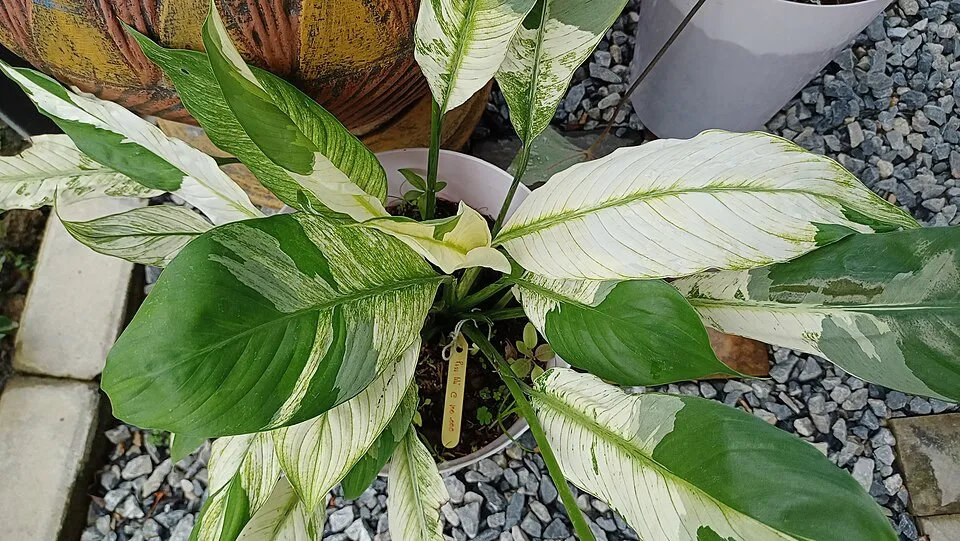
Spathiphyllum Picasso, affectionately known as the Picasso Peace Lily, is a distinguished cultivar within the Spathiphyllum genus, celebrated for its striking ornamental attributes. This elegant member of the Araceae family originates from the lush, tropical rainforests of Central and South America, where it thrives in the understory’s filtered light. Typically reaching an indoor height of 60 to 90 cm (2 to 3 feet), it presents a stately presence suitable for various interior settings.
Its most captivating feature is its large, glossy, lanceolate leaves, which span 40 to 76 cm (16 to 30 inches) and display a deep emerald green base beautifully variegated with creamy-white or pale green streaks, reminiscent of an artist's brushstrokes. The inflorescence is equally alluring, characterized by a pristine white spathe that gracefully encloses the spadix, often ascending to 30 cm (12 inches) above the foliage. Spathiphyllum Picasso flourishes in warm, humid conditions, mirroring its native tropical habitat, and is remarkably adaptable to indirect light, making it a favored choice for indoor cultivation.
Its smooth, sculptural stems and overall aesthetic appeal contribute significantly to its popularity as a decorative and air-purifying houseplant, embodying both natural elegance and functional benefits.
Trusted Scientific References
1. Authoritative external sources for Spathiphyllum picasso
1.1 Wikipedia — Spathiphyllum picasso
1.2 Kew POWO (Plants of the World Online)
1.3 PubMed — peer-reviewed research
1.4 NCBI Taxonomy Browser
1.5 GBIF — Global Biodiversity
1.6Spathiphyllum Picasso should be interpreted through verified botanical identity, practical care, and responsible safety language. This recovery note adds the missing context needed for a complete profile: match light to the plant's habit, use well-drained soil, water according to season, and avoid unsupported medicinal or edible claims. For publishing, the plant can be presented as a source-backed indoor plant with clear care guidance, common problem diagnosis, and conservative safety wording.
1.1.Spathiphyllum Picasso — Standout Qualities
- ✓Unique Variegated Foliage — Deep green leaves with creamy-white, brushstroke-like patterns.
- ✓Elegant White Spathe Flowers — Characteristic white, sail-like blooms enclosing a spadix.
- ✓Natural Air Purification — Effectively removes common indoor air pollutants like benzene and formaldehyde.
- ✓Humidity Regulator — Releases moisture into the air, improving ambient humidity levels.
- ✓Low Light Tolerance — Thrives in indirect, low-to-medium light conditions, ideal for indoors.
- ✓Easy Care and Maintenance — Considered beginner-friendly, forgiving of minor care mistakes.
- ✓Toxic to Pets and Humans — Contains calcium oxalate crystals, causing irritation upon ingestion.
- ✓Symbolic of Peace and Purity — Often associated with tranquility, hope, and new beginnings.
- ✓Enhances Mental Well — being — Contributes to a serene environment, reducing stress.
- ✓Versatile Aesthetic Appeal — Complements various interior decor styles, from modern to classic.
1.2.Spathiphyllum Picasso — In Brief
- ✓Spathiphyllum Picasso is an ornamental houseplant known for its unique variegated foliage and white flowers.
- ✓It serves as a natural indoor air purifier, effectively filtering common toxins.
- ✓This plant also acts as a natural humidity regulator, enhancing indoor comfort.
- ✓All parts of the plant are toxic if ingested due to calcium oxalate crystals, especially to pets and children.
- ✓It is relatively low-maintenance, preferring indirect light and consistent moisture.
- ✓Symbolizes peace, tranquility, and positive energy, often used in Feng Shui.
2.Spathiphyllum Picasso — Taxonomic Classification
3.Spathiphyllum Picasso — Reference Facts
4.Spathiphyllum Picasso — Plant Morphology
5.Spathiphyllum Picasso — Habitat & Distribution
6.Spathiphyllum Picasso — Ethnobotanical Uses
7.Spathiphyllum Picasso — Secondary Metabolites
- ✓Calcium Oxalate Crystals — Raphides of calcium oxalate are the primary irritants present throughout the plant, responsible for its toxicity upon ingestion, causing oral irritation and swelling.
- ✓Volatile Organic Compounds (VOCs) — While the plant is known to absorb environmental VOCs, it also produces a spectrum of its own trace VOCs that contribute to its subtle natural aroma and defense mechanisms.
- ✓Photosynthetic Pigments — Chlorophyll a and b, along with various carotenoids, are abundant in the leaves, essential for capturing light energy during photosynthesis and contributing to the plant's vibrant green and white coloration.
- ✓Flavonoids — General plant antioxidants such as quercetin derivatives and other phenolic compounds are likely present in trace amounts, offering cellular protection and contributing to plant health.
- ✓Terpenoids — Various terpenes may be present in low concentrations, contributing to the plant's defense against herbivores and potentially its subtle fragrance.
- ✓Alkaloids — Although not extensively studied for prominent medicinal alkaloids, trace amounts of diverse nitrogenous compounds, common in many plant species, may be found.
- ✓Polysaccharides — Structural carbohydrates like cellulose and hemicellulose form the plant's cell walls, providing physical integrity and potentially offering minor demulcent properties if parts were processed.
- ✓Enzymes — A wide array of enzymes are present, facilitating metabolic processes, including those potentially involved in the plant's observed air purification capabilities through the breakdown of atmospheric pollutants.
8.Spathiphyllum Picasso — What Research Suggests
- ✓Indoor Air Purification — Spathiphyllum Picasso effectively filters common indoor air toxins such as benzene, formaldehyde, trichloroethylene, and ammonia, contributing to healthier indoor air quality.
- ✓Natural Humidity Regulation — Through the process of transpiration, this plant releases moisture into the atmosphere, helping to maintain comfortable indoor humidity levels, which can alleviate dry skin and respiratory irritation.
- ✓Stress Reduction and Mental Well-being — The presence of lush greenery like the Picasso Peace Lily creates a serene and calming environment, which is associated with reduced stress, improved mood, and enhanced mental clarity.
- ✓Enhanced Sleep Quality — By purifying the air and regulating humidity in bedrooms, Spathiphyllum Picasso contributes to a cleaner, more comfortable sleeping environment, potentially leading to more restful sleep.
- ✓Boosted Motivation and Productivity — Placing this elegant plant in workspaces can foster a more pleasant and focused atmosphere, subtly enhancing concentration and overall productivity.
- ✓Aesthetic and Decorative Appeal — Its unique variegated foliage and elegant white flowers effortlessly elevate interior decor, making any space feel more inviting and visually appealing.
- ✓Symbolic and Spiritual Harmony — In traditional practices like Feng Shui, the Peace Lily is believed to bring peace, positive energy, and balanced chi into a home or office, promoting harmony and good fortune.
- ✓Mild Odor Neutralization — The plant's natural air-filtering capabilities can help to subtly neutralize common household odors, contributing to a fresher-smelling environment without artificial scents.
- ✓Support for Respiratory Comfort — By adding moisture to the air and filtering pollutants, it can offer minor relief for individuals experiencing discomfort from dry air or common airborne irritants.
8.1.Spathiphyllum Picasso — Conditions Traditionally Used For
9.Spathiphyllum Picasso — Risk Profile
9.1.Spathiphyllum Picasso — Possible Adverse Reactions
- ✓Oral Irritation — Ingestion of any part of the plant can cause immediate and intense burning, irritation, and swelling of the mouth, tongue, and throat due to calcium oxalate crystals.
- ✓Digestive Upset — Consumption may lead to nausea, vomiting, and difficulty swallowing, accompanied by significant discomfort.
- ✓Skin Irritation — Direct contact with the sap can cause mild skin irritation, redness, and itching in sensitive individuals.
- ✓Allergic Reactions — Although rare, some individuals may experience mild allergic responses to pollen or plant particles, such as sneezing or skin rashes.
- ✓Pet Toxicity — Highly toxic to cats and dogs, causing severe oral irritation, excessive drooling, vomiting, and difficulty breathing upon ingestion.
- ✓Growth Inhibition in Cold — Exposure to cold temperatures can lead to slowed growth, leaf damage, and overall plant stress, diminishing its aesthetic and functional benefits.
9.2.Spathiphyllum Picasso — Safety Profile
- ✓Do Not Ingest — Emphatically, no part of Spathiphyllum Picasso should be ingested by humans or animals due to its inherent toxicity from calcium oxalate crystals.
- ✓Keep Away from Children and Pets — Always place the plant in locations inaccessible to curious children and pets to prevent accidental ingestion.
- ✓Handle with Care — Wear gloves when handling the plant if you have sensitive skin, especially when pruning or repotting, to avoid potential sap irritation.
- ✓Not for Internal Medicinal Use — This plant is strictly for ornamental and environmental benefits; it is not recommended or safe for any form of internal medicinal application.
- ✓Seek Medical Attention — In case of accidental ingestion, immediately contact poison control or a medical professional for humans, or a veterinarian for pets.
- ✓Monitor for Allergic Reactions — While uncommon, individuals with plant sensitivities should observe for any signs of skin irritation or respiratory discomfort after handling.
- ✓Proper Ventilation — Ensure adequate air circulation in rooms where the plant is placed to support its air-purifying function and maintain overall healthy indoor environments.
10.Spathiphyllum Picasso — Preparation & Dosage
- ✓Indoor Air Purification Placement — Position Spathiphyllum Picasso in living rooms, offices, or bedrooms to maximize its ability to absorb common airborne toxins and improve indoor air quality.
- ✓Humidity Enhancement — Place in naturally humid areas like bathrooms or kitchens, or group with other plants to create a microclimate that boosts ambient moisture levels for respiratory comfort.
- ✓Aesthetic Home Decor — Utilize as a central decorative element on tabletops, shelves, or as a floor plant to add a touch of natural elegance and its unique variegated beauty to any interior space.
- ✓Stress-Reducing Presence — Integrate into personal relaxation zones or meditation spaces to leverage its calming visual appeal and the serene atmosphere it helps create for mental well-being.
- ✓Feng Shui Application — Consult Feng Shui principles to strategically place the plant in areas of the home or office designated for peace, harmony, and positive energy flow, such as the wealth or relationship corners.
- ✓Symbolic Gifting — Present the Picasso Peace Lily as a thoughtful gift to convey sympathy, support, new beginnings, or lasting care, aligning with its profound cultural symbolism.
- ✓Workspace Focus Aid — Keep a smaller specimen on a desk or in a study area to contribute to a cleaner, calmer environment that can subtly support concentration and productivity.
- ✓General Environmental Enrichment — Simply enjoy its presence as a living, breathing component of your indoor environment, contributing to a sense of connection with nature.
11.Spathiphyllum Picasso — Growth Requirements
- ✓Light — Provide bright, indirect light; direct sunlight can scorch its variegated leaves.
- ✓Watering — Keep the soil consistently moist but never waterlogged; allow the top inch of soil to dry slightly between waterings.
- ✓Humidity — Prefers high humidity, mimicking its tropical origins; mist regularly or use a pebble tray.
- ✓Temperature — Thrives in warm temperatures between 18-29°C (65-85°F); avoid cold drafts and temperatures below 10°C.
- ✓Soil — Use a well-draining, peat-based potting mix rich in organic matter to support healthy growth.
- ✓Fertilization — Feed with a balanced liquid fertilizer every 2-4 weeks during the active growing season (spring and summer), reducing in fall and winter.
- ✓Propagation — Easily propagated by division of the rhizomes during repotting, ensuring each section has roots and leaves.
- ✓Pest Management — Regularly inspect for common houseplant pests like spider mites, mealybugs, and aphids, treating with appropriate organic solutions if found.
Reviewed by the Flora Medical Global Botanical Review Panel
Multi-disciplinary editorial group · Botany · Ethnobotany · Herbal-medicine literature
Who reviewed this: This page was checked by the Flora Medical Global Botanical Review Panel — an in-house editorial group of botany graduates, ethnobotany researchers, and horticulture practitioners who collectively maintain our 7,000+ plant encyclopedia. Meet the team.
Our 4-step verification process
1. Taxonomic verification
Scientific names and synonyms cross-checked against Kew POWO, World Flora Online, and The Plant List.
2. Phytochemical & medicinal cross-reference
Active compounds, traditional uses, and reported activities are cross-referenced with PubMed, USDA Dr. Duke's database, and peer-reviewed ethnobotanical literature.
3. Conservation & distribution check
Distribution, ecology, and conservation status confirmed against GBIF occurrence records and the IUCN Red List.
4. Editorial & safety review
Every entry passes an editorial pass for clarity, originality, and safety notices (toxicity, contraindications, dosage caveats) before publication.
Last reviewed:
Important medical disclaimer: This content is for educational and research purposes only. It is not medical advice and is not a substitute for consultation with a licensed healthcare provider. Do not use any herb to self-treat a medical condition without professional guidance.
Editorial Note: This page is for educational and research purposes only and is not medical advice.
Written by: Flora Medical Global Editorial Team
Reviewed by: Flora Medical Global Botanical Review Panel
Last Updated: June 15, 2026





Spathiphyllum Picasso — Comments & Community Reviews
Rate this plant