


Medical Disclaimer: This content is for educational purposes only. It is not medical advice. Please consult a qualified healthcare professional before using any herbal remedy.
Safety Overview
1.Spigelia Marilandica — Botanical Snapshot
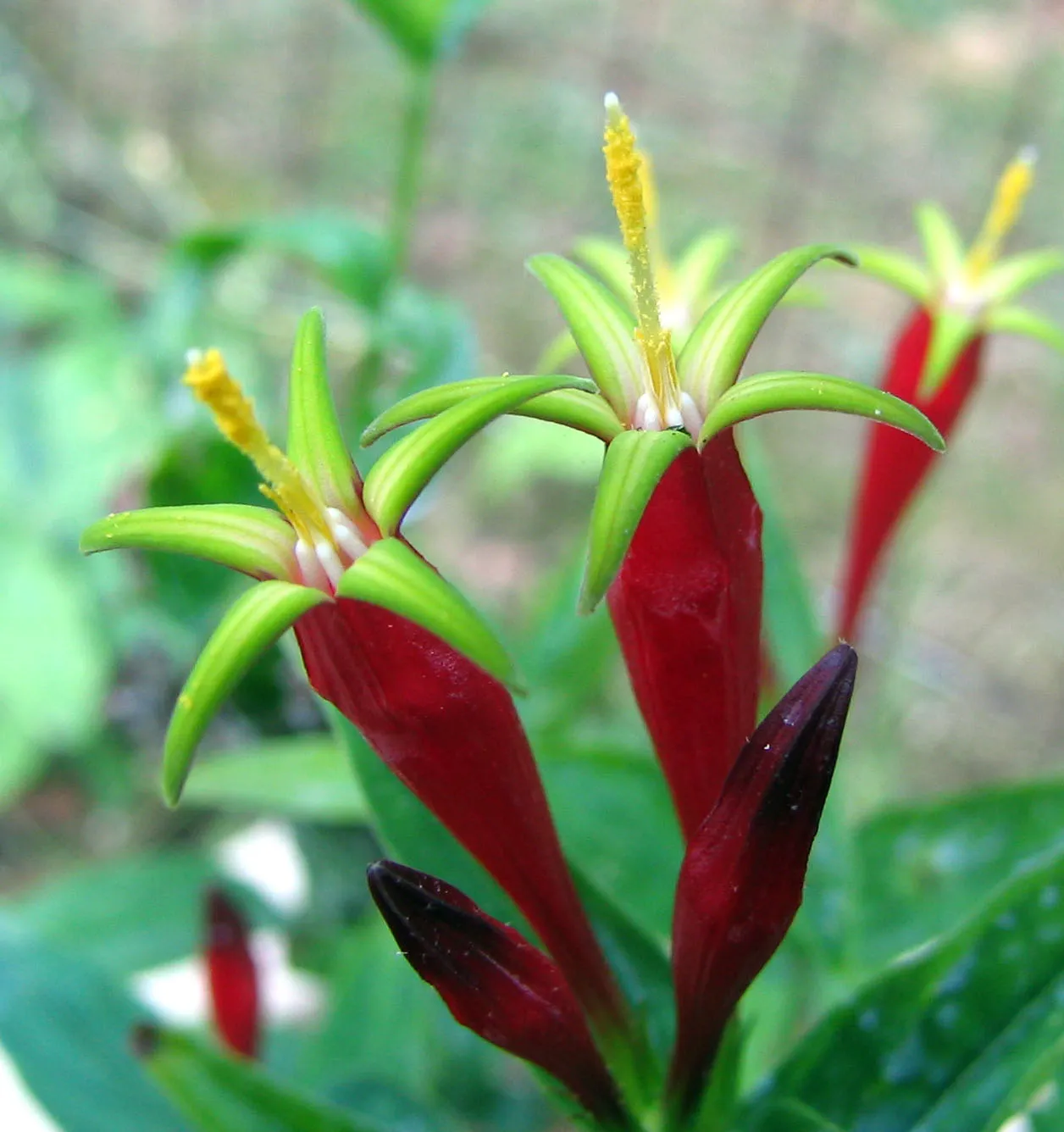
Spigelia marilandica, commonly known as Indian Pink, Pinkroot, or Wormgrass, is a strikingly beautiful herbaceous perennial native to the diverse ecosystems of the southeastern United States. Belonging to the Loganiaceae family, this captivating woodland plant is celebrated for its unique morphology. It features vibrant, tubular, scarlet-red flowers that boast a distinctive star-shaped yellow throat, blooming profusely from late spring through early summer.
These eye-catching blossoms are arranged in terminal, one-sided cymes, typically facing upward to reveal their intricate centers. The plant grows to an average height of 1 to 2 feet (30-60 cm) and forms attractive, well-behaved clumps, expanding gradually over time. Its foliage consists of lance-shaped, opposite, dark green leaves, which provide a lush backdrop for the brilliant flowers.
Indian Pink thrives naturally in moist, well-drained, humus-rich soils found in forested slopes, moist woods, and along stream banks. Its native range extends from New Jersey south to Florida and west to Illinois and Texas, making it adaptable to USDA hardiness zones 5 through 9.
This resilient perennial is a prized specimen for native plant gardens, shade gardens, and woodland borders, where its dramatic floral display offers a vivid splash of color and attracts vital pollinators, particularly hummingbirds. Despite its ornamental appeal, Spigelia marilandica is classified as a threatened or endangered species in some parts of its native habitat due to ongoing habitat loss, underscoring the importance of its conservation.
Trusted Scientific References
1. Authoritative external sources for Spigelia marilandica
1.1 Wikipedia — Spigelia marilandica
1.2 Kew POWO (Plants of the World Online)
1.3 PubMed — peer-reviewed research
1.4 NCBI Taxonomy Browser
1.5 GBIF — Global Biodiversity
1.6Spigelia Marilandica should be interpreted through verified botanical identity, practical care, and responsible safety language. This recovery note adds the missing context needed for a complete profile: match light to the plant's habit, use well-drained soil, water according to season, and avoid unsupported medicinal or edible claims. For publishing, the plant can be presented as a source-backed garden plant with clear care guidance, common problem diagnosis, and conservative safety wording.
1.1.Spigelia Marilandica — Distinguishing Points
- ✓Striking Ornamental — Features vibrant, tubular scarlet-red flowers with star-shaped yellow throats, blooming in late spring to early summer.
- ✓Native Perennial — Indigenous to the southeastern United States, thriving in woodland and shaded garden environments.
- ✓Hummingbird Magnet — Its brightly colored, trumpet-shaped flowers are highly attractive to hummingbirds and other pollinators.
- ✓Potent Anthelmintic (Historical) — Historically renowned and widely used as a powerful vermifuge for expelling intestinal parasites.
- ✓Highly Toxic — Contains the potent and dangerous alkaloid spigeline, making all parts of the plant, especially the root, highly poisonous if ingested.
- ✓Low Maintenance — An easy-to-grow plant requiring minimal care once established, suitable for various garden types.
- ✓Shade Loving — Prefers partial to full shade and consistently moist, well-drained, humus-rich soil.
- ✓Clumping Growth Habit — Forms attractive clumps of upright stems with lance-shaped, dark green leaves.
- ✓Ethnobotanical Significance — Holds a rich history in Native American and early American traditional medicine.
- ✓Conservation Concern — Classified as a threatened or endangered species in certain parts of its native range due to habitat loss.
1.2.Spigelia Marilandica — At-a-Glance Summary
- ✓Spigelia marilandica is a highly toxic herbaceous perennial native to the southeastern United States, known for its striking red and yellow tubular flowers.
- ✓Historically, it was a potent anthelmintic (vermifuge) used by Native Americans and early American physicians to expel intestinal parasites.
- ✓Its toxicity stems primarily from the indole alkaloid spigeline, which can cause severe neurological, cardiovascular, and gastrointestinal effects.
- ✓Modern internal use is strictly contraindicated without expert medical supervision due to its narrow therapeutic window and potential for fatal overdose.
- ✓Primarily valued today as an ornamental plant in native gardens, attracting hummingbirds and pollinators, and for botanical research.
- ✓Requires moist, well-drained soil and partial shade, thriving in USDA zones 5-9.
2.Spigelia Marilandica — Botanical Identity
3.Spigelia Marilandica — Vital Statistics
4.Spigelia Marilandica — Botanical Description
5.Spigelia Marilandica — Origin & Spread
6.Spigelia Marilandica — Heritage Uses
7.Spigelia Marilandica — Key Phytochemicals
- ✓Indole Alkaloids — Primarily contains spigeline, a highly potent alkaloid responsible for its anthelmintic activity and significant toxicity, along with other related indole structures like spigelosine.
- ✓Spigeline — The principal active constituent, a complex indole alkaloid known for its vermifuge properties and its direct impact on the nervous system, leading to its toxic effects.
- ✓Resins — Present in the root and rhizome, contributing to the plant's overall chemical matrix and possibly influencing the bioavailability or activity of other compounds.
- ✓Volatile Oils — Contains a small percentage of volatile compounds which may contribute to the plant's characteristic aroma and could possess minor ancillary biological activities.
- ✓Glycosides — Although not extensively characterized, plants in the Loganiaceae family often contain various glycosides, which can include iridoid types, influencing pharmacological profiles.
- ✓Phenolic Compounds — Likely present, including flavonoids and phenolic acids, which typically offer antioxidant properties and may modulate inflammatory responses, especially in aerial parts.
- ✓Triterpenoids — Common in many plant species, triterpenoids could be present, potentially contributing to anti-inflammatory or adaptogenic effects, though specific to Spigelia requires further research.
- ✓Saponins — These compounds, known for their foaming properties, may be found in Spigelia, potentially affecting cell membrane permeability and contributing to its overall bioactivity.
8.Spigelia Marilandica — Scientific Evidence
- ✓Potent Anthelmintic Activity — Historically recognized for its strong ability to expel intestinal worms, including roundworms and tapeworms, making it a valuable vermifuge in traditional medicine.
- ✓Parasitic Expulsion — Its primary traditional application involved inducing the expulsion of various internal parasites from the gastrointestinal tract due to its alkaloid content.
- ✓Historical Vermifuge — Documented in early American pharmacopoeias as an effective agent for combating helminthic infections, especially prior to the advent of safer synthetic drugs.
- ✓Traditional Fever Management — In some indigenous practices, its use was also associated with reducing fevers, possibly as a secondary effect of alleviating parasitic burdens.
- ✓Indole Alkaloid Source — Contains unique indole alkaloids, such as spigeline, which are responsible for its potent pharmacological actions, including its anthelmintic properties.
- ✓Gastrointestinal Cleansing (Traditional) — Employed traditionally to cleanse the digestive system of unwanted inhabitants, supporting overall gut health in historical contexts.
- ✓Narcotic Properties (Toxic Doses) — Historically noted to exhibit narcotic effects at higher, toxic dosages, impacting the central nervous system, which underscores its potent pharmacological profile.
- ✓Indigenous Therapeutic Agent — Valued by various Native American tribes for its powerful medicinal actions, particularly in managing internal parasitic infestations.
- ✓Ethnobotanical Significance — Holds significant ethnobotanical importance as a historical example of a highly effective, albeit toxic, natural remedy for parasitic diseases.
- ✓Pharmacopoeial Inclusion — Its efficacy led to its formal inclusion in historical pharmacopoeias, indicating its widespread acceptance and use by medical practitioners of the era.
8.1.Spigelia Marilandica — Therapeutic Indications
9.Spigelia Marilandica — Safety & Side Effects
9.1.Spigelia Marilandica — Side Effects & Warnings
- ✓Gastrointestinal Distress — Ingestion can cause severe nausea, persistent vomiting, intense abdominal pain, and diarrhea, indicative of its irritant and toxic nature.
- ✓Neurological Symptoms — High doses commonly lead to dizziness, blurred vision, pupil dilation, tremors, and in severe cases, convulsions or even paralysis.
- ✓Cardiovascular Effects — Toxic amounts can induce cardiac depression, irregular heartbeats (arrhythmias), and significant drops in blood pressure, posing a serious risk to heart function.
- ✓Respiratory Depression — Overdose may result in depression of the respiratory system, leading to slowed or shallow breathing, which can be life-threatening.
- ✓Central Nervous System Depression — The alkaloid spigeline can act as a potent neurotoxin, causing profound central nervous system depression, potentially leading to coma.
- ✓Fatal Toxicity — Ingestion of sufficient quantities, especially of the root and rhizome, can be lethal, making Spigelia marilandica a dangerously poisonous plant for internal use.
- ✓Allergic Reactions — While less common, individuals may experience allergic skin reactions or respiratory symptoms upon contact or inhalation of plant particles.
9.2.Spigelia Marilandica — Safety Overview
- ✓Highly Toxic — Spigelia marilandica is classified as a highly toxic plant; internal consumption is absolutely contraindicated for self-medication due to its potent alkaloid content.
- ✓Professional Use Only — Any potential therapeutic application must be under the direct and strict supervision of a qualified medical professional experienced in handling highly toxic botanicals.
- ✓Avoid Self-Medication — Due to its narrow therapeutic window and severe side effects, this plant should never be used for self-treatment of any condition.
- ✓Keep Out of Reach — Store all plant parts, especially roots, away from children and pets to prevent accidental ingestion, which can be fatal.
- ✓Pregnancy and Lactation — Absolutely contraindicated for pregnant or nursing individuals due to the risk of severe harm to both mother and fetus/infant.
- ✓Pre-existing Conditions — Individuals with cardiac issues, neurological disorders, or kidney/liver impairment should strictly avoid any exposure, even historical or accidental.
- ✓Handling Precautions — When handling the plant, especially roots, it is advisable to wear gloves to prevent potential skin irritation or absorption, and wash hands thoroughly afterwards.
10.Spigelia Marilandica — Preparation Methods
- ✓Historical Decoction — Traditionally, the dried root and rhizome were prepared as a decoction, boiled in water to extract active compounds, for internal administration as a potent anthelmintic.
- ✓Traditional Tincture — Early American physicians sometimes prepared tinctures from the root, allowing the plant material to macerate in alcohol, for more controlled historical dosing.
- ✓Powdered Root (Historical) — The dried root was historically ground into a fine powder and mixed with other substances or ingested directly to expel intestinal parasites.
- ✓Professional Medical Supervision ONLY — Due to its extreme toxicity, any internal use of Spigelia marilandica in modern practice is strictly contraindicated without direct, expert medical supervision.
- ✓External Applications (Limited) — While not a primary use, some historical accounts might mention poultices for external issues, though efficacy and safety are not well-documented and still carry risks.
- ✓Ornamental Cultivation — Safely utilized as a striking ornamental plant in native plant gardens, shade gardens, and woodland borders, valued for its vibrant flowers and attracting pollinators.
- ✓Research and Study — Primarily used in modern contexts for botanical research, phytochemical analysis, and historical study of traditional medicine practices, rather than therapeutic application.
- ✓Cautionary Use — Emphasize that Spigelia marilandica is NOT for self-medication and its historical internal uses are now largely superseded by safer, less toxic alternatives.
11.Spigelia Marilandica — Cultivation & Care
- ✓Soil Requirements — Thrives in rich, moist, well-drained, humus-rich soils with a high organic content and a slightly acidic pH, though it tolerates various soil textures with good drainage.
- ✓Light Conditions — Prefers partial to full shade, particularly in warmer climates, with dappled morning sun being ideal; can tolerate more sun in cooler regions if soil moisture is consistent.
- ✓Watering Regimen — Requires consistent moisture throughout the growing season for optimal health and flowering, but it is drought-tolerant once established; avoid prolonged waterlogging.
- ✓Planting Time & Spacing — Best planted in spring or fall, allowing 12-18 inches between plants to accommodate its clumping growth habit and eventual spread of one to two feet wide.
- ✓Hardiness Zones — Successfully cultivated in USDA hardiness zones 5 through 9, demonstrating good tolerance to both heat and moderate winter cold.
- ✓Maintenance — Considered a low-maintenance perennial, requiring minimal intervention once established; deadheading spent blooms can encourage sporadic reblooming into late summer.
- ✓Pest and Disease Resistance — Generally resistant to most common pests and diseases, though it may occasionally encounter issues with aphids or botrytis under specific environmental conditions.
- ✓Organic Matter — Benefits significantly from generous topdressing with compost at planting, especially in poor soils, to improve aeration, moisture retention, drainage, and nutrient availability.
Reviewed by the Flora Medical Global Botanical Review Panel
Multi-disciplinary editorial group · Botany · Ethnobotany · Herbal-medicine literature
Who reviewed this: This page was checked by the Flora Medical Global Botanical Review Panel — an in-house editorial group of botany graduates, ethnobotany researchers, and horticulture practitioners who collectively maintain our 7,000+ plant encyclopedia. Meet the team.
Our 4-step verification process
1. Taxonomic verification
Scientific names and synonyms cross-checked against Kew POWO, World Flora Online, and The Plant List.
2. Phytochemical & medicinal cross-reference
Active compounds, traditional uses, and reported activities are cross-referenced with PubMed, USDA Dr. Duke's database, and peer-reviewed ethnobotanical literature.
3. Conservation & distribution check
Distribution, ecology, and conservation status confirmed against GBIF occurrence records and the IUCN Red List.
4. Editorial & safety review
Every entry passes an editorial pass for clarity, originality, and safety notices (toxicity, contraindications, dosage caveats) before publication.
Last reviewed:
Important medical disclaimer: This content is for educational and research purposes only. It is not medical advice and is not a substitute for consultation with a licensed healthcare provider. Do not use any herb to self-treat a medical condition without professional guidance.
Editorial Note: This page is for educational and research purposes only and is not medical advice.
Written by: Flora Medical Global Editorial Team
Reviewed by: Flora Medical Global Botanical Review Panel
Last Updated: June 15, 2026





Spigelia Marilandica — Comments & Community Reviews
Rate this plant