
Medical Disclaimer: This content is for educational purposes only. It is not medical advice. Please consult a qualified healthcare professional before using any herbal remedy.
Safety Overview
1.Spiraea Tomentosa — Plant Snapshot
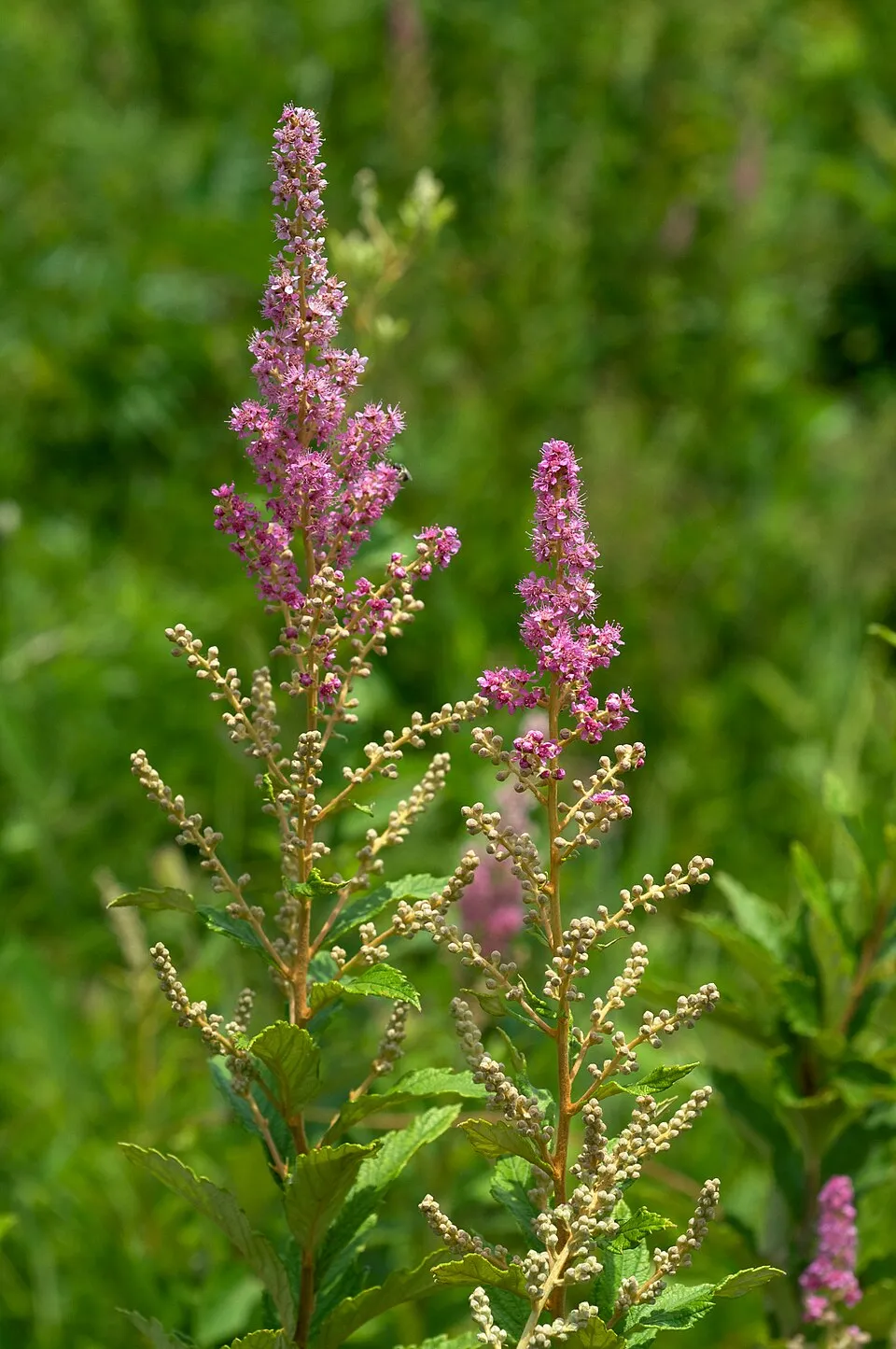
Spiraea tomentosa, commonly known as Steeplebush or Hardhack, is a distinctive deciduous shrub belonging to the Rosaceae family. Typically reaching heights of 0.6 to 1.2 meters (2-4 feet), it is characterized by its erect, often unbranched stems densely enveloped in a soft, woolly indumentum, giving it a unique texture. Its leaves are ovate to lanceolate, presenting a deep green hue on their upper surface and a striking whitish-tomentose coating underneath, with finely serrated margins.
From mid to late summer, the plant produces abundant small, delicate flowers ranging from pink to purplish-pink, clustered into dense, narrow, steeple-like panicles at the tips of its branches. These inflorescences are not only visually appealing but also attract various pollinators, including butterflies. The fruit matures into small, dry follicles.
Native to a wide range across eastern North America, from Nova Scotia south to Louisiana and Georgia, Steeplebush thrives in moist to wet, acidic environments such as meadows, pastures, bogs, and lake margins. It is a suckering shrub, capable of forming dense colonies, and its woody stems often die back to the ground in winter, regenerating vigorously in spring. While sometimes confused with related species like Spiraea japonica or Spiraea alba, its pronounced tomentose stems and specific flower structure help distinguish it.
Trusted Scientific References
1. Authoritative external sources for Spiraea tomentosa
1.1 Wikipedia — Spiraea tomentosa
1.2 Kew POWO (Plants of the World Online)
1.3 PubMed — peer-reviewed research
1.4 NCBI Taxonomy Browser
1.5 GBIF — Global Biodiversity
1.6Spiraea Tomentosa should be interpreted through verified botanical identity, practical care, and responsible safety language. This recovery note adds the missing context needed for a complete profile: match light to the plant's habit, use well-drained soil, water according to season, and avoid unsupported medicinal or edible claims. For publishing, the plant can be presented as a source-backed garden plant with clear care guidance, common problem diagnosis, and conservative safety wording.
1.1.Spiraea Tomentosa — Standout Qualities
- ✓Botanical Name — Spiraea tomentosa.
- ✓Common Names — Steeplebush, Hardhack.
- ✓Family — Rosaceae (Rose Family).
- ✓Growth Habit — Upright, multi-stemmed deciduous shrub, typically 2-4 feet tall.
- ✓Distinctive Morphology — Stems densely covered in woolly hairs (tomentose).
- ✓Flower Characteristics — Small, pink to purplish-pink flowers in dense, steeple-like panicles.
- ✓Primary Medicinal Properties — Astringent, diuretic, anti-inflammatory, antioxidant.
- ✓Key Chemical Constituents — Tannins, flavonoids, phenolic acids.
- ✓Native Range — Eastern North America, adapted to wet, acidic soils.
- ✓Ecological Role — Attracts butterflies and serves as a larval host plant for the New England Buck moth.
1.2.Spiraea Tomentosa — Concise Overview
- ✓Steeplebush (Spiraea tomentosa) is a native North American shrub with distinctive woolly stems and pink, steeple-like flowers.
- ✓Traditionally used by Native Americans as an astringent, diuretic, and tonic for conditions like diarrhea and fevers.
- ✓Rich in beneficial compounds, primarily tannins and flavonoids, contributing to its medicinal properties.
- ✓Thrives in moist, acidic environments, making it suitable for rain gardens and wetland restoration.
- ✓Generally considered safe for moderate use, but caution is advised for individuals with aspirin sensitivity or during pregnancy.
2.Spiraea Tomentosa — Scientific Profile
3.Spiraea Tomentosa — Quick Facts
4.Spiraea Tomentosa — Plant Morphology
5.Spiraea Tomentosa — Geographic Distribution
6.Spiraea Tomentosa — Cultural & Traditional Roles
7.Spiraea Tomentosa — Bioactive Constituents
- ✓Tannins — Predominantly gallotannins and ellagitannins, responsible for the plant's strong astringent properties and contributing to antioxidant effects.
- ✓Flavonoids — Including quercetin, kaempferol, and their glycosides, which are potent antioxidants and contribute to anti-inflammatory activity.
- ✓Phenolic Acids — Such as caffeic acid, chlorogenic acid, and gallic acid, enhancing the plant's overall antioxidant and protective profile.
- ✓Salicylates — Present in trace amounts, offering mild anti-inflammatory and analgesic effects, though less prominent than in other Spiraea species.
- ✓Triterpenes — Compounds with potential anti-inflammatory and adaptogenic properties, contributing to the plant's therapeutic actions.
- ✓Coumarins — May be present in minor quantities, potentially contributing to anti-inflammatory or mild anticoagulant effects.
- ✓Volatile Oils — Trace amounts of essential oils may contribute to the plant's subtle aroma and minor therapeutic activities.
- ✓Polysaccharides — Complex carbohydrates that could offer immune-modulating benefits and contribute to the plant's tonic properties.
- ✓Minerals — Contains various essential minerals, contributing to its nutritional profile when consumed as a herbal remedy.
8.Spiraea Tomentosa — What Research Suggests
- ✓Astringent Action — High tannin content helps constrict tissues and reduce secretions, making it beneficial for conditions like diarrhea and dysentery.
- ✓Antidiarrheal Properties — By tightening mucous membranes in the digestive tract, Steeplebush can help alleviate acute and chronic diarrhea.
- ✓Diuretic Effects — Traditionally used to promote increased urine flow, aiding in the reduction of fluid retention and supporting kidney function.
- ✓General Tonic — Historically valued as a mild tonic to improve overall well-being and strengthen the body.
- ✓Anti-inflammatory Support — Contains flavonoids and other phenolic compounds that may help reduce systemic and localized inflammation.
- ✓Antioxidant Activity — Flavonoids and tannins provide robust antioxidant protection, neutralizing free radicals and protecting cellular health.
- ✓Febrifuge (Fever Reducer) — Native American tribes traditionally employed Steeplebush preparations to help reduce fevers.
- ✓Wound Healing Aid — Its astringent properties can be applied topically to minor cuts and abrasions to promote healing and reduce bleeding.
- ✓Digestive Comfort — May soothe irritated gastrointestinal linings due to its demulcent and astringent effects.
- ✓Antimicrobial Potential — Tannins can exhibit mild antimicrobial activity, potentially inhibiting the growth of certain pathogens.
8.1.Spiraea Tomentosa — Therapeutic Indications
9.Spiraea Tomentosa — Adverse Effects
9.1.Spiraea Tomentosa — Possible Adverse Reactions
- ✓Gastrointestinal Upset — High tannin content can lead to nausea, stomach upset, or constipation in sensitive individuals, especially with excessive consumption.
- ✓Allergic Reactions — Rare, but individuals sensitive to plants in the Rosaceae family may experience skin rashes, itching, or respiratory symptoms.
- ✓Salicylate Sensitivity — Although less prominent than in other Spiraea species, individuals with aspirin allergy should exercise caution due to trace salicylate content.
- ✓Drug Interactions — Potential theoretical interactions with anticoagulant medications due to salicylates, or reduced absorption of iron supplements due to tannins.
- ✓Kidney Irritation — Overuse as a diuretic without adequate hydration could potentially strain the kidneys.
- ✓Pregnancy and Lactation — Lack of sufficient safety data advises against its use during pregnancy and breastfeeding.
- ✓Children — Use in infants and young children should be avoided or undertaken only under the strict supervision of a qualified healthcare practitioner.
9.2.Spiraea Tomentosa — Risk Assessment
- ✓Pregnancy and Lactation — Avoid use in pregnant or breastfeeding women due to insufficient safety data and potential effects.
- ✓Aspirin Allergy — Individuals with a known allergy or sensitivity to aspirin (salicylates) should avoid Spiraea tomentosa.
- ✓Medical Consultation — Always consult a healthcare professional before use, especially if you have pre-existing medical conditions or are taking other medications.
- ✓Dosage Adherence — Do not exceed recommended dosages to minimize the risk of gastrointestinal irritation or other adverse effects.
- ✓Hydration — When using as a diuretic, ensure adequate fluid intake to prevent dehydration.
- ✓Discontinue Use — If any adverse reactions such as skin rash, digestive distress, or allergic symptoms occur, discontinue use immediately.
- ✓Not for Prolonged Use — Avoid long-term continuous use without professional guidance, particularly for its diuretic action.
10.Spiraea Tomentosa — How to Use
- ✓Herbal Tea (Infusion) — Dried leaves and flowering tops can be steeped in hot water (1-2 teaspoons per cup) for 10-15 minutes for internal use, especially for digestive issues.
- ✓Decoction — Roots and woody stems are simmered in water for a longer period (20-30 minutes) to extract deeper constituents, suitable for a stronger tonic or external wash.
- ✓Tincture — A concentrated alcohol extract of the plant material (leaves, roots) taken in small doses for systemic effects.
- ✓Poultice — Fresh, crushed leaves can be applied directly to minor wounds, cuts, or skin irritations for their astringent and soothing properties.
- ✓External Wash/Compress — Diluted tea or decoction can be used to cleanse wounds, soothe inflamed skin, or as a gargle for sore throats.
- ✓Capsules/Powder — Dried and powdered plant material can be encapsulated for convenient oral administration, ensuring precise dosing.
- ✓Syrup — Infusions can be sweetened with honey or maple syrup to create a palatable remedy, particularly useful for children (under professional guidance).
- ✓Sitz Bath — A strong decoction can be added to bathwater for a sitz bath to address localized inflammation or discomfort.
11.Spiraea Tomentosa — Growing Guide
- ✓Site Selection — Thrives best in full sun to partial shade; full sun encourages maximum flower production.
- ✓Soil Requirements — Prefers moist to wet, acidic soils with a pH range of 4.5-6.5, tolerating various soil types including clay.
- ✓Watering — Requires consistent moisture, especially during establishment, but exhibits some drought tolerance once mature.
- ✓Pruning — Best pruned in late winter or early spring as it flowers on new wood; remove faded flower clusters to encourage further blooming and maintain shape.
- ✓Propagation — Spreads vigorously by suckers, forming colonies, and can be propagated by softwood cuttings in early summer.
- ✓Pest and Disease Management — Generally robust, but monitor for common Rosaceae issues like leaf spot, powdery mildew, fire blight, aphids, and scale insects.
- ✓Landscape Use — Excellent for rain gardens, wetland areas, or as a low hedge, providing habitat and nectar for pollinators.
- ✓Deer Resistance — Foliage is typically not preferred by white-tailed deer dues to its bitter and astringent taste.
Reviewed by the Flora Medical Global Botanical Review Panel
Multi-disciplinary editorial group · Botany · Ethnobotany · Herbal-medicine literature
Who reviewed this: This page was checked by the Flora Medical Global Botanical Review Panel — an in-house editorial group of botany graduates, ethnobotany researchers, and horticulture practitioners who collectively maintain our 7,000+ plant encyclopedia. Meet the team.
Our 4-step verification process
1. Taxonomic verification
Scientific names and synonyms cross-checked against Kew POWO, World Flora Online, and The Plant List.
2. Phytochemical & medicinal cross-reference
Active compounds, traditional uses, and reported activities are cross-referenced with PubMed, USDA Dr. Duke's database, and peer-reviewed ethnobotanical literature.
3. Conservation & distribution check
Distribution, ecology, and conservation status confirmed against GBIF occurrence records and the IUCN Red List.
4. Editorial & safety review
Every entry passes an editorial pass for clarity, originality, and safety notices (toxicity, contraindications, dosage caveats) before publication.
Last reviewed:
Important medical disclaimer: This content is for educational and research purposes only. It is not medical advice and is not a substitute for consultation with a licensed healthcare provider. Do not use any herb to self-treat a medical condition without professional guidance.
Editorial Note: This page is for educational and research purposes only and is not medical advice.
Written by: Flora Medical Global Editorial Team
Reviewed by: Flora Medical Global Botanical Review Panel
Last Updated: June 15, 2026





Spiraea Tomentosa — Comments & Community Reviews
Rate this plant