

Medical Disclaimer: This content is for educational purposes only. It is not medical advice. Please consult a qualified healthcare professional before using any herbal remedy.
Safety Overview
1.Squaw Vine — At a Glance
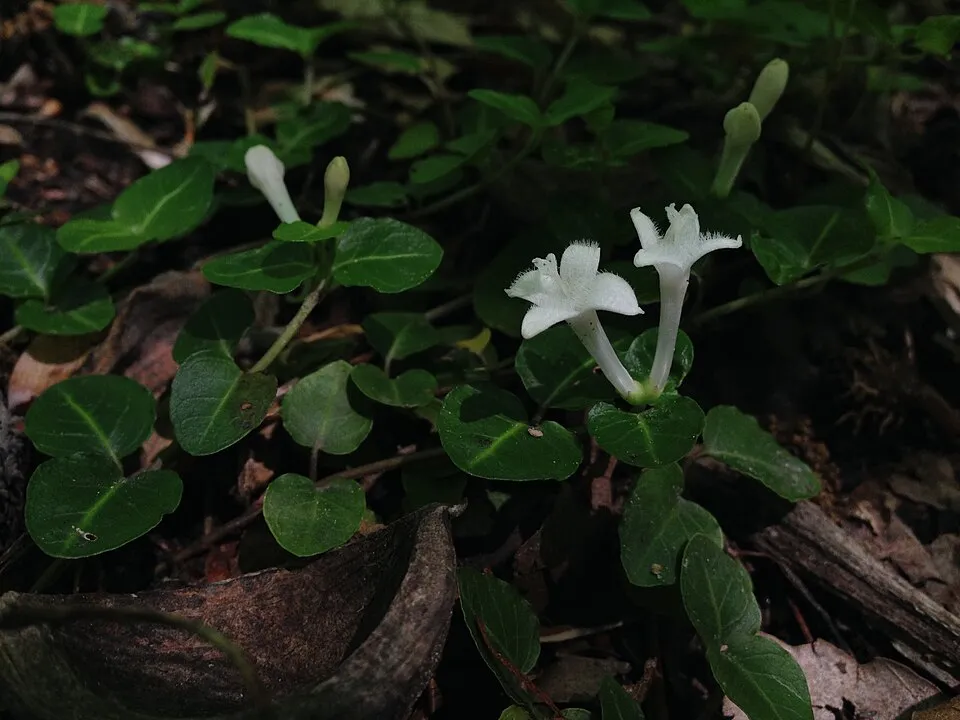
Mitchella repens, commonly known as Partridgeberry or Squaw Vine, is a charming and resilient evergreen, prostrate vine belonging to the Rubiaceae family. Native to the diverse landscapes of North America, its range extends impressively from central Florida northward to Newfoundland and Quebec, and westward into Texas and Minnesota, showcasing remarkable adaptability. This diminutive plant is characterized by its opposite, entire, leathery, ovate, and glabrous (smooth, hairless) leaves, which maintain their vibrant green hue throughout the year.
One of its most distinctive botanical features, lending to another common name 'Twinflower', is the production of two small, white, trumpet-shaped flowers that share a fused ovary. This unique characteristic results in a single, bright red berry that famously displays two 'eyes' or dimples, which are the remnants of the two floral calyces. These berries, while edible, are not particularly sweet, often described as having a mild, slightly astringent cucumber-like flavor.
Mitchella repens typically thrives in the understory of forests, preferring dappled shade and well-drained, acidic soils rich in organic matter, such as forest duff or sandy substrates. It is often found growing in association with conifers, particularly eastern hemlock, and other forest floor inhabitants, forming dense, creeping mats. Its low-growing habit and evergreen nature make it an important groundcover in its native ecosystems, and it holds significant historical value in the traditional medicine systems of indigenous North American peoples.
Trusted Scientific References
1. Authoritative external sources for Mitchella repens
1.1 Wikipedia — Mitchella repens
1.2 Kew POWO (Plants of the World Online)
1.3 PubMed — peer-reviewed research
1.4 NCBI Taxonomy Browser
1.5 GBIF — Global Biodiversity
1.6Squaw Vine should be interpreted through verified botanical identity, practical care, and responsible safety language. This recovery note adds the missing context needed for a complete profile: match light to the plant's habit, use well-drained soil, water according to season, and avoid unsupported medicinal or edible claims. For publishing, the plant can be presented as a source-backed medicinal plant with clear care guidance, common problem diagnosis, and conservative safety wording.
1.1.Squaw Vine — Notable Characteristics
- ✓Native North American — Native North American medicinal plant, also known as Partridgeberry or Twinflower.
- ✓Belongs to the — Belongs to the Rubiaceae family, characterized by its prostrate, evergreen vine habit.
- ✓Distinctive twin flowers — Distinctive twin flowers that mature into a single red berry with 'two eyes'.
- ✓Historically significant in — Historically significant in Native American traditional medicine for women's health.
- ✓Renowned for its — Renowned for its traditional use in easing childbirth and regulating menstrual cycles.
- ✓Rich phytochemical profile — Rich phytochemical profile including tannins, flavonoids (quercetin, kaempferol), and alkaloids.
- ✓Possesses notable astringent, anti — inflammatory, and antioxidant properties.
- ✓Classified as UNSAFE — Classified as UNSAFE for use during pregnancy due to potential to induce miscarriage.
- ✓Listed on the United Plant Savers 'to — watch' list, highlighting conservation importance.
- ✓Berries are edible — Berries are edible but have a unique, slightly astringent, cucumber-like flavor.
1.2.Squaw Vine — Quick Summary
- ✓Native North American evergreen vine, Mitchella repens, known as Partridgeberry.
- ✓Traditionally revered for women's reproductive health, childbirth, and menstrual support.
- ✓Rich in beneficial compounds like tannins, flavonoids (quercetin, kaempferol), and alkaloids.
- ✓Exhibits astringent, anti-inflammatory, and antioxidant properties.
- ✓CRITICALLY UNSAFE during pregnancy due to abortifacient potential; avoid during breastfeeding.
- ✓Conservation concern — listed on United Plant Savers 'to-watch' list, emphasizing sustainable practices.
2.Squaw Vine — Scientific Identity
3.Squaw Vine — Fact Sheet
4.Squaw Vine — Botanical Features
5.Squaw Vine — Ecological Habitat
6.Squaw Vine — Folk Medicine Applications
7.Squaw Vine — Key Phytochemicals
- ✓Flavonoids — Key compounds include quercetin and kaempferol, renowned for their potent antioxidant, anti-inflammatory, and potentially anticarcinogenic activities.
- ✓Tannins — Predominantly proanthocyanidins, these compounds are responsible for the plant's significant astringent properties, contributing to its traditional use for tissue toning and diarrhea.
- ✓Alkaloids — Mitchelin is one identified alkaloid, though its specific pharmacological actions and concentrations are not extensively detailed in current literature.
- ✓Glycosides — Various glycosidic compounds, including iridoid glycosides, are present, which may contribute to its anti-inflammatory and other medicinal effects.
- ✓Saponins — These compounds may exhibit expectorant, anti-inflammatory, and immune-modulating properties, though their specific role in Mitchella repens is under ongoing investigation.
- ✓Organic Acids — Organic acids contribute to the plant's overall chemical profile and may play a role in its diuretic and tonic actions.
- ✓Resins — Present in the plant, resins often possess protective and sometimes antimicrobial properties, contributing to the plant's defense mechanisms.
- ✓Volatile Oils — While not a primary constituent, trace amounts of volatile compounds may contribute to the plant's aroma and subtle therapeutic actions.
- ✓Phenolic Acids — Beyond flavonoids, other phenolic acids are present, augmenting the plant's antioxidant capacity and overall phytochemical complexity.
8.Squaw Vine — Pharmacological Findings
- ✓Support for Women's Reproductive Health — Traditionally highly valued for its role in easing labor pains and promoting a smoother delivery, earning it the historical moniker 'parturient herb'.
- ✓Menstrual Regulation — Historically employed as an emmenagogue to help regulate menstrual cycles and alleviate discomfort associated with menstrual disorders.
- ✓Astringent Properties — Rich in tannins, Mitchella repens acts as an astringent, traditionally used to tone tissues and reduce excessive fluid discharges, including vaginal discharges.
- ✓Digestive Health Aid — Its astringent qualities make it a traditional remedy for addressing digestive complaints such as diarrhea, chronic dysentery, and colitis by toning the intestinal lining.
- ✓Diuretic Action — Traditionally used to promote urine output, assisting the body in managing water retention (edema) and supporting kidney function.
- ✓Topical Relief for Sore Nipples — Applied externally as a wash or poultice, it was traditionally used by nursing mothers to soothe and heal sore nipples.
- ✓Anxiety and Insomnia Support — In traditional practices, Squaw Vine was sometimes used to calm nerves, alleviate anxiety, and promote restful sleep, though modern evidence is limited.
- ✓Postpartum Wellness — Beyond childbirth, it was traditionally used to aid in recovery and address issues like postpartum depression and to improve the flow of breast milk.
- ✓Anti-inflammatory Effects — Preliminary modern pharmacological research suggests the presence of bioactive compounds, like flavonoids, that may contribute to anti-inflammatory actions.
- ✓Antioxidant Activity — Phytochemicals such as flavonoids (e.g., quercetin, kaempferol) are known for their antioxidant properties, helping to protect cells from oxidative stress.
- ✓Immune System Support — While not a primary use, its general tonic and antioxidant properties may indirectly contribute to overall immune system wellness.
- ✓Styptic Properties — Its astringency also lends it traditional use as a styptic, helping to staunch minor bleeding.
8.1.Squaw Vine — Therapeutic Indications
9.Squaw Vine — Safety & Side Effects
9.1.Squaw Vine — Warnings
- ✓Pregnancy — It is UNSAFE to use Squaw Vine during pregnancy due to evidence suggesting it may induce miscarriage or early labor.
- ✓Breastfeeding — Avoid use during breastfeeding as there is insufficient information regarding its safety for nursing infants.
- ✓Gastrointestinal Upset — High tannin content may cause mild digestive discomfort, constipation, or nausea in sensitive individuals if consumed in large quantities.
- ✓Allergic Reactions — As with any plant, individuals may experience allergic reactions, though these are rare.
- ✓Drug Interactions — Potential for interaction with medications, particularly those affecting blood clotting or hormone levels, due to its traditional uses and chemical constituents.
- ✓Skin Irritation — While traditionally used topically, insufficient scientific data exists to confirm safety for all skin types; patch testing is advisable.
- ✓Dosage Sensitivity — Overconsumption may lead to adverse effects; adherence to traditional or professional dosages is crucial.
9.2.Squaw Vine — Safety Overview
- ✓Contraindicated in Pregnancy — Absolutely avoid Squaw Vine (Mitchella repens) throughout all stages of pregnancy due to its traditional abortifacient and labor-inducing properties.
- ✓Caution During Breastfeeding — Due to a lack of sufficient safety data, it is strongly advised to avoid using this herb while breastfeeding.
- ✓Professional Consultation — Always consult a qualified healthcare professional or medical herbalist before using Mitchella repens, especially if you have underlying health conditions or are on medication.
- ✓Dosage Adherence — Natural products are potent; adhere strictly to recommended dosages and do not exceed them without expert guidance.
- ✓Children — Insufficient safety data exists for use in children; avoid administering to pediatric populations.
- ✓Topical Use — While traditionally applied topically, proceed with caution and perform a patch test to check for skin sensitivity or irritation.
- ✓Existing Health Conditions — Individuals with heart, kidney, or liver conditions should exercise extreme caution and seek medical advice prior to use.
10.Squaw Vine — Usage Guide
- ✓Herbal Tea/Infusion — Dried or fresh leaves and stems can be steeped in hot water to create an infusion, traditionally consumed for women's health and digestive support.
- ✓Tincture Preparation — A fresh plant tincture, made by soaking the aerial parts in alcohol, is a concentrated form often used for systemic effects.
- ✓Decoction — The tougher stems and roots can be simmered in water to create a decoction, yielding a more potent extract for specific traditional uses.
- ✓Topical Poultice or Compress — Crushed fresh leaves or a strong tea can be applied externally as a poultice or compress for skin irritations like sore nipples.
- ✓Edible Berries — The red berries are edible, though not particularly sweet; they can be consumed fresh as a trailside snack or incorporated into salads for a unique, slightly astringent flavor.
- ✓Herbal Baths — Infusions can be added to bathwater for soothing skin and promoting relaxation, particularly for traditional postpartum care.
- ✓Standardized Extracts — While less common, future research may lead to standardized extracts for more precise dosing in therapeutic applications.
- ✓Herbal Syrups — Infusions or decoctions can be combined with honey or other sweeteners to create a palatable syrup, especially for children's remedies (with caution and professional advice).
11.Squaw Vine — Cultivation & Care
- ✓Preferred Habitat — Thrives in shaded to partially shaded environments, mimicking its natural forest understory habitat.
- ✓Soil Requirements — Prefers well-drained, consistently moist, and acidic soil, ideally rich in organic matter such as leaf mold or forest duff.
- ✓Propagation from Cuttings — Easily propagated from stem cuttings taken in spring or early summer, which root readily in a suitable medium.
- ✓Seed Propagation — Seeds require cold stratification and can be slow to germinate, making this a less common but viable method.
- ✓Root Division — Established clumps can be carefully divided in spring or fall, ensuring each division has adequate roots and stems.
- ✓Watering — Requires consistent moisture, especially during dry periods, but avoids waterlogging to prevent root rot.
- ✓Conservation — Listed on the United Plant Savers 'to-watch' list; ethical wildcrafting or cultivation is encouraged to prevent overharvesting.
- ✓Evergreen Groundcover — An excellent choice for woodland gardens or shaded areas where an attractive, low-maintenance evergreen groundcover is desired.
Reviewed by the Flora Medical Global Botanical Review Panel
Multi-disciplinary editorial group · Botany · Ethnobotany · Herbal-medicine literature
Who reviewed this: This page was checked by the Flora Medical Global Botanical Review Panel — an in-house editorial group of botany graduates, ethnobotany researchers, and horticulture practitioners who collectively maintain our 7,000+ plant encyclopedia. Meet the team.
Our 4-step verification process
1. Taxonomic verification
Scientific names and synonyms cross-checked against Kew POWO, World Flora Online, and The Plant List.
2. Phytochemical & medicinal cross-reference
Active compounds, traditional uses, and reported activities are cross-referenced with PubMed, USDA Dr. Duke's database, and peer-reviewed ethnobotanical literature.
3. Conservation & distribution check
Distribution, ecology, and conservation status confirmed against GBIF occurrence records and the IUCN Red List.
4. Editorial & safety review
Every entry passes an editorial pass for clarity, originality, and safety notices (toxicity, contraindications, dosage caveats) before publication.
Last reviewed:
Important medical disclaimer: This content is for educational and research purposes only. It is not medical advice and is not a substitute for consultation with a licensed healthcare provider. Do not use any herb to self-treat a medical condition without professional guidance.
Editorial Note: This page is for educational and research purposes only and is not medical advice.
Written by: Flora Medical Global Editorial Team
Reviewed by: Flora Medical Global Botanical Review Panel
Last Updated: June 15, 2026





Squaw Vine — Comments & Community Reviews
Rate this plant