

Medical Disclaimer: This content is for educational purposes only. It is not medical advice. Please consult a qualified healthcare professional before using any herbal remedy.
Safety Overview
1.Stachyurus Praecox — Essential Profile
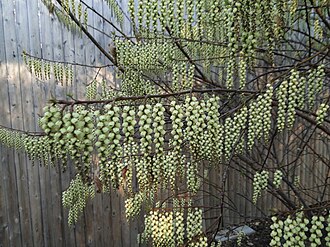
Stachyurus praecox, commonly known as early-flowering stachyurus or spring-flowering stachyurus, is a captivating deciduous shrub indigenous to the temperate regions of Japan. It is a distinguished member of the Stachyuraceae family, a small family of woody plants. This elegant shrub typically attains a height of 1.5 to 3 meters (5 to 10 feet) with a graceful, spreading, and often arching habit, making it a prominent feature in any landscape. Its foliage consists of alternate, simple leaves that are ovate to oblong in shape, measuring 5-12 cm (2-5 inches) long and 2-5 cm (1-2 inches) wide. The margins are distinctly serrated, and the venation is prominent, contributing to its textural appeal.
The most remarkable characteristic of Stachyurus praecox is its early spring floral display. In late winter to early spring, often before the emergence of new leaves, it produces striking pendulous racemes of flowers. These racemes are typically 5-10 cm (2-4 inches) in length and bear numerous small, bell-shaped flowers. The blossoms are usually a delicate pale yellow to greenish-yellow, sometimes subtly tinged with pink, providing a much-needed splash of color during the transition from winter to spring. Each flower possesses four petals and four sepals and is borne on slender pedicels.
Following the flowering period, small, ovoid capsule fruits develop, maturing in late summer or autumn. Stachyurus praecox is renowned for its robustness and adaptability, thriving in a range of conditions, though it exhibits a preference for moist, well-drained, acidic to neutral soil and partial shade. Its ornamental value is highly regarded, and its relative resistance to pests and diseases contributes to its ease of cultivation, making it a cherished choice for gardens and botanical collections worldwide.
Trusted Scientific References
1. Authoritative external sources for Stachyurus praecox
1.1 Wikipedia — Stachyurus praecox
1.2 Kew POWO (Plants of the World Online)
1.3 PubMed — peer-reviewed research
1.4 NCBI Taxonomy Browser
1.5 GBIF — Global Biodiversity
1.1.Stachyurus Praecox — Notable Characteristics
- ✓Early Spring Blooms — Produces striking pendulous racemes of pale yellow flowers before leaves emerge.
- ✓Deciduous Shrub — Offers attractive foliage with serrated, ovate-oblong leaves.
- ✓Native to Japan — Thrives in temperate climates, adaptable to various garden settings.
- ✓Low Maintenance — Generally resistant to pests and diseases, easy to grow.
- ✓Unique Floral Display — Provides welcome color during the late winter to early spring.
- ✓Moderate Size — Typically grows 1.5 to 3 meters (5-10 feet) tall and wide.
- ✓Spreading Habit — Features graceful, arching branches.
- ✓Partial Shade Tolerant — Prefers dappled sunlight but can adapt to full sun with adequate moisture.
- ✓Horticultural Value — Highly prized for its ornamental appeal in gardens.
- ✓Resilient Plant — Withstands a range of environmental conditions once established.
1.2.Stachyurus Praecox — Quick Summary
- ✓Ornamental Shrub — Valued for its unique early spring floral display.
- ✓Native to Japan — A deciduous plant with an elegant, spreading habit.
- ✓Phytochemical Potential — Hypothetically rich in flavonoids, phenolic acids, and tannins.
- ✓Research Gaps — Limited to no scientific studies on its medicinal efficacy.
- ✓Primary Use — Exclusively for horticultural and landscape beauty.
- ✓Safety Precaution — Not for internal medicinal use; specific side effects are unknown.
2.Stachyurus Praecox — Botanical Identity
3.Stachyurus Praecox — Fact Sheet
4.Stachyurus Praecox — Botanical Description
5.Stachyurus Praecox — Origin & Spread
6.Stachyurus Praecox — Traditional Uses
7.Stachyurus Praecox — Chemical Profile
- ✓Flavonoids — Expected to contain various flavonoid glycosides like quercetin and kaempferol derivatives, which are known for their antioxidant, anti-inflammatory, and vasoprotective activities.
- ✓Phenolic Acids — Likely to contain phenolic acids such as caffeic acid and ferulic acid, contributing to antioxidant and potentially antimicrobial properties.
- ✓Tannins — Both hydrolyzable and condensed tannins are anticipated in the bark and leaves, providing astringent and potential antimicrobial effects.
- ✓Saponins — Glycosides with surfactant properties may be present, potentially contributing to mild expectorant or anti-inflammatory actions.
- ✓Triterpenoids — Compounds like ursolic acid and oleanolic acid, often found in woody plants, could contribute to anti-inflammatory and hepatoprotective (hypothetically) activities.
- ✓Polysaccharides — Complex carbohydrates are common in plant cell walls and may offer immunomodulatory or demulcent properties.
- ✓Lignans — Phytoestrogenic compounds with antioxidant properties may be present, though typically in lower concentrations.
- ✓Volatile Organic Compounds — While not a primary constituent, trace amounts of essential oil components might be found, contributing to the plant's natural aroma and potentially possessing mild antimicrobial properties.
8.Stachyurus Praecox — Scientific Evidence
- ✓Antioxidant Support — While not extensively studied for Stachyurus praecox specifically, many plants, particularly those rich in phenolic compounds and flavonoids, are known to offer cellular protection against oxidative stress by neutralizing free radicals.
- ✓Anti-inflammatory Potential — Hypothetically, certain plant constituents often found in woody shrubs, such as triterpenoids or specific flavonoids, could possess mild anti-inflammatory properties, which may help soothe minor topical irritations.
- ✓Astringent Properties — Tannins, which are commonly found in the bark and leaves of woody plants like Stachyurus praecox, could provide astringent effects, potentially beneficial for tightening tissues, reducing minor bleeding, or topical application.
- ✓Antimicrobial Activity — Some plant extracts exhibit broad-spectrum antimicrobial properties against bacteria and fungi; this potential in Stachyurus praecox would require specific research to confirm.
- ✓Potential Vasoprotective Effects — Flavonoids, if present in sufficient quantities, are often associated with strengthening capillary walls and improving microcirculation, offering hypothetical vasoprotective benefits.
- ✓Skin Soothing — General plant extracts can sometimes offer demulcent or emollient effects, which could hypothetically contribute to soothing minor skin discomfort or irritation if applied topically.
- ✓Digestive Support (External/Hypothetical) — In traditional herbalism, plants with astringent properties are sometimes used topically for mild digestive discomforts or as gargles, though internal use of Stachyurus praecox is not established.
- ✓Wound Healing Support (Hypothetical) — The combined potential of astringent, antioxidant, and antimicrobial properties could theoretically support the natural healing process of minor cuts or abrasions, though this is speculative for Stachyurus praecox.
8.1.Stachyurus Praecox — Therapeutic Indications
9.Stachyurus Praecox — Safety & Side Effects
9.1.Stachyurus Praecox — Possible Adverse Reactions
- ✓Unknown Specifics — Due to the lack of recognized medicinal use, specific side effects for Stachyurus praecox are not documented.
- ✓Allergic Reactions — As with any plant, individuals may experience hypersensitivity or allergic reactions upon contact or ingestion.
- ✓Skin Irritation — Direct contact with plant sap or leaves might potentially cause mild dermatitis or irritation in sensitive individuals.
- ✓Ingestion Risk — Stachyurus praecox is not intended for consumption; ingestion could potentially lead to gastrointestinal upset or unknown toxic effects.
- ✓Herb-Drug Interactions — Undetermined; there is no research on potential interactions with pharmaceutical medications.
- ✓Pregnancy and Lactation — Should be avoided by pregnant or nursing women due to the complete absence of safety data for internal or topical use.
9.2.Stachyurus Praecox — Safety Overview
- ✓Not for Internal Use — Stachyurus praecox is strictly an ornamental plant; internal consumption is not recommended or supported by any scientific or traditional evidence.
- ✓Patch Test Recommended — For any hypothetical topical application, a small patch test on the skin is advisable to check for sensitivity or allergic reactions.
- ✓Consult a Professional — Always consult a qualified medical herbalist or healthcare provider before any experimental use of this plant.
- ✓Keep Out of Reach of Children — Standard safety practice for all plants not known to be edible or medicinal.
- ✓No Known Toxicity Data — Specific toxicity studies on Stachyurus praecox are lacking, emphasizing caution in any application.
- ✓Pregnant/Nursing Women — Due to insufficient safety information, pregnant and lactating individuals should completely avoid use.
- ✓Ornamental Use Only — Its established and safe use is solely for horticultural and landscape purposes.
10.Stachyurus Praecox — Preparation Methods
- ✓Currently, Stachyurus praecox is primarily cultivated as an ornamental plant and is not recognized for internal medicinal use in traditional or modern herbalism. Any preparations mentioned below are purely hypothetical for research or external application if specific medicinal properties are confirmed.
- ✓Research Extracts — Prepared using solvents (e.g., ethanol, water) from leaves or bark for phytochemical analysis and in-vitro biological activity screening.
- ✓Topical Infusions — If astringent or soothing skin properties are confirmed, a gentle infusion of leaves could be hypothetically used as a skin wash or compress.
- ✓Decoction for External Wash — Bark or woody stems could be decocted for a more concentrated extract, hypothetically for external antimicrobial or astringent applications.
- ✓Tincture Preparation (for Research) — Plant material macerated in alcohol to extract compounds for laboratory study, not for self-administration.
- ✓Poultice (Hypothetical External) — Crushed fresh leaves could be hypothetically applied as a poultice for minor skin irritations, pending safety and efficacy studies.
- ✓Ornamental Landscaping — Its established and primary use is for aesthetic enhancement in gardens, parks, and botanical collections.
11.Stachyurus Praecox — How to Grow
- ✓Climate Zone — Thrives best in USDA Hardiness Zones 6-9, tolerating moderate winter cold.
- ✓Soil Preference — Prefers moist, well-drained, organically rich soil with an acidic to neutral pH (6.0-7.0).
- ✓Light Requirements — Performs optimally in partial shade, especially in hotter climates, but can tolerate full sun with consistent moisture.
- ✓Watering — Requires consistent moisture, particularly during dry spells and in its establishment phase; avoid waterlogging.
- ✓Propagation — Can be propagated by seeds (requiring cold stratification) or semi-hardwood cuttings taken in summer.
- ✓Pruning — Minimal pruning is needed, primarily to remove dead or crossing branches, best done immediately after flowering.
- ✓Fertilization — Benefits from a balanced, slow-release granular fertilizer applied in early spring, especially if soil is poor.
Reviewed by the Flora Medical Global Botanical Review Panel
Multi-disciplinary editorial group · Botany · Ethnobotany · Herbal-medicine literature
Who reviewed this: This page was checked by the Flora Medical Global Botanical Review Panel — an in-house editorial group of botany graduates, ethnobotany researchers, and horticulture practitioners who collectively maintain our 7,000+ plant encyclopedia. Meet the team.
Our 4-step verification process
1. Taxonomic verification
Scientific names and synonyms cross-checked against Kew POWO, World Flora Online, and The Plant List.
2. Phytochemical & medicinal cross-reference
Active compounds, traditional uses, and reported activities are cross-referenced with PubMed, USDA Dr. Duke's database, and peer-reviewed ethnobotanical literature.
3. Conservation & distribution check
Distribution, ecology, and conservation status confirmed against GBIF occurrence records and the IUCN Red List.
4. Editorial & safety review
Every entry passes an editorial pass for clarity, originality, and safety notices (toxicity, contraindications, dosage caveats) before publication.
Last reviewed:
Important medical disclaimer: This content is for educational and research purposes only. It is not medical advice and is not a substitute for consultation with a licensed healthcare provider. Do not use any herb to self-treat a medical condition without professional guidance.
Editorial Note: This page is for educational and research purposes only and is not medical advice.
Written by: Flora Medical Global Editorial Team
Reviewed by: Flora Medical Global Botanical Review Panel
Last Updated: June 15, 2026





Stachyurus Praecox — Comments & Community Reviews
Rate this plant