
Medical Disclaimer: This content is for educational purposes only. It is not medical advice. Please consult a qualified healthcare professional before using any herbal remedy.
Safety Overview
1.Stapelia Grandiflora — Essential Profile
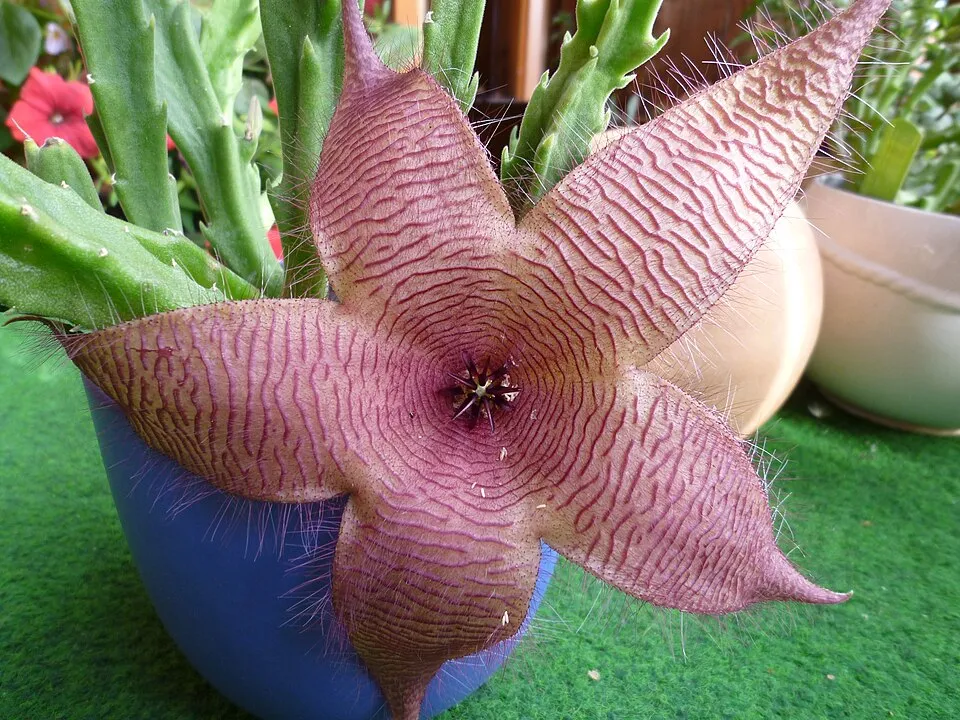
Stapelia grandiflora, widely recognized as the Carrion Flower or Starfish Flower, is a distinctive succulent perennial belonging to the Apocynaceae family. Native to the arid and semi-arid regions of Southern Africa, particularly South Africa and Namibia, this plant is remarkably adapted to harsh, dry conditions. It typically grows to a height of 12 to 18 inches (30 to 46 cm), featuring robust, fleshy stems that can reach up to 2 inches (5 cm) in thickness.
These greenish-brown stems are characterized by prominent, raised ridges and a rough texture, providing both structural integrity and visual interest. The leaves are highly reduced to rudimentary spines, a common xerophytic adaptation that minimizes water loss and contributes to the plant's leafless appearance. The most striking feature of Stapelia grandiflora is its large, star-shaped flowers, which can span an impressive 10 inches (25 cm) in diameter.
These blooms exhibit stunning shades of deep maroon or chocolate brown, often accentuated with creamy yellow markings. Their unique coloration and texture, combined with a strong, pungent odor resembling decaying flesh, are specialized adaptations designed to attract specific pollinators, primarily flies. This fascinating plant thrives in well-draining, sandy soils and requires minimal water, making it a popular choice for succulent enthusiasts and xeriscaping.
Trusted Scientific References
1. Authoritative external sources for Stapelia grandiflora
1.1 Wikipedia — Stapelia grandiflora
1.2 Kew POWO (Plants of the World Online)
1.3 PubMed — peer-reviewed research
1.4 NCBI Taxonomy Browser
1.5 GBIF — Global Biodiversity
1.6Stapelia Grandiflora should be interpreted through verified botanical identity, practical care, and responsible safety language. This recovery note adds the missing context needed for a complete profile: match light to the plant's habit, use well-drained soil, water according to season, and avoid unsupported medicinal or edible claims. For publishing, the plant can be presented as a source-backed indoor plant with clear care guidance, common problem diagnosis, and conservative safety wording.
1.1.Stapelia Grandiflora — Highlights
- ✓Common Names — Carrion Flower, Starfish Flower, Giant Toad Plant.
- ✓Botanical Family — Apocynaceae, known for its diverse succulents and milkweeds.
- ✓Succulent Morphology — Features thick, fleshy, ridged stems adapted for efficient water retention.
- ✓Striking Flowers — Produces large, star-shaped blooms, often deep maroon or chocolate brown with creamy markings.
- ✓Distinctive Scent — Emits a strong carrion odor, a unique adaptation to attract specific fly pollinators.
- ✓Arid Habitat Adaptation — Highly drought-tolerant and prefers well-draining soils, indicative of its native Southern African habitat.
- ✓Topical Traditional Use — Historically used for minor skin abrasions and irritations in some African traditions.
- ✓Ornamental Value — Highly prized for its unusual aesthetic and dramatic flowering in cultivation.
- ✓Low Water Needs — An excellent choice for water-wise gardening and xeriscaping.
- ✓Easy Propagation — Readily grows from stem cuttings, making it simple to propagate new plants.
1.2.Stapelia Grandiflora — In Brief
- ✓Ornamental Succulent — Valued primarily for its striking, carrion-scented, star-shaped flowers.
- ✓Native to Southern Africa — Thrives in arid, well-draining conditions with minimal water.
- ✓Limited Traditional Medicinal Use — Primarily topical for minor skin issues in some indigenous practices.
- ✓Unique Pollination Strategy — Attracts flies with its distinctive scent and decaying flesh mimicry.
- ✓Low Maintenance Plant — Ideal for xeriscaping and succulent enthusiasts due to its resilience.
- ✓Contains Alkaloids & Flavonoids — Chemical profile warrants caution; internal use is not advised.
2.Stapelia Grandiflora — Scientific Identity
3.Stapelia Grandiflora — Fact Sheet
4.Stapelia Grandiflora — Botanical Description
5.Stapelia Grandiflora — Native Range & Habitat
6.Stapelia Grandiflora — Folk Medicine Applications
7.Stapelia Grandiflora — Key Phytochemicals
- ✓Alkaloids — Nitrogen-containing organic compounds, potentially including steroidal alkaloids or pyridine alkaloids, which can exhibit diverse pharmacological activities, often influencing the nervous system or cardiac function in other Apocynaceae species.
- ✓Flavonoids — Polyphenolic compounds such as anthocyanins (responsible for the distinctive flower coloration) and various quercetin derivatives, recognized for their antioxidant, anti-inflammatory, and potentially antimicrobial properties.
- ✓Saponins — Glycosides that produce a foam in water, potentially possessing hemolytic, anti-inflammatory, or immune-modulating effects, though specific actions in Stapelia grandiflora are not extensively documented.
- ✓Phenolic Acids — A class of aromatic compounds including caffeic acid and ferulic acid, which are known for their antioxidant capacity and play a role in the plant's defense mechanisms against environmental stressors.
- ✓Terpenoids — A diverse group of organic compounds, including monoterpenes and triterpenes, which contribute to the plant's unique aroma and may possess insecticidal or antimicrobial properties.
- ✓Glycosides — Compounds where a sugar is bound to a non-sugar moiety, potentially including cardiac glycosides (common in the Apocynaceae family), which can influence heart function, though their specific presence and activity in S. grandiflora require further confirmation.
- ✓Sterols — Plant sterols such as beta-sitosterol, which are crucial for plant cell membrane structure and have been studied for their potential health benefits, including cholesterol-lowering effects in humans.
- ✓Volatile Organic Compounds (VOCs) — Compounds like indoles, sulfides, and amines that are primarily responsible for the distinctive carrion-like scent of the flowers, functioning as a powerful attractant for specific insect pollinators.
- ✓Fatty Acids — Essential components of plant cell membranes and energy storage, including both saturated and unsaturated varieties, vital for overall plant health and metabolic processes.
- ✓Waxes and Cuticular Lipids — Hydrophobic compounds forming the protective outer layer of the stems, crucial for reducing water loss and defending against pathogens in the plant's arid native environment.
8.Stapelia Grandiflora — Pharmacological Findings
- ✓Traditional Topical Application — Historically, sap from the stems of Stapelia grandiflora has been applied topically to minor skin irritations and abrasions in some indigenous Southern African communities, believed to offer a soothing effect.
- ✓Minor Antimicrobial Action — Anecdotal reports suggest a very localized, weak antimicrobial property when fresh plant material is directly applied to superficial skin lesions, though this lacks robust scientific validation.
- ✓Ornamental Value for Well-being — The striking and unique appearance of Stapelia grandiflora flowers provides significant aesthetic pleasure, contributing to mental well-being and stress reduction in horticultural therapy contexts.
- ✓Air Quality Improvement (Indoor) — As a living plant, Stapelia grandiflora contributes to indoor air quality by absorbing carbon dioxide and releasing oxygen during photosynthesis, enhancing a healthy living environment.
- ✓Educational and Botanical Interest — Cultivating Stapelia grandiflora offers educational benefits, promoting understanding of succulent adaptation, unique pollination strategies, and botanical diversity, which can be mentally stimulating.
- ✓Homeopathic Preparations — Historically, this plant has been utilized in certain homeopathic remedies, where highly diluted preparations are believed to address specific symptoms, though this practice is outside conventional medicine.
- ✓Cultural Significance (Ornamental) — In some indigenous cultures, while not used for direct healing, the plant's unusual beauty holds cultural appreciation, often integrated into ornamental gardens or specific ceremonial displays.
- ✓Drought Tolerance for Sustainable Gardening — Its ability to thrive in arid conditions makes it a beneficial plant for water-wise gardening, promoting sustainable practices and reducing water consumption, contributing to ecological well-being.
- ✓Pest Deterrence (Pollinator Specific) — The carrion-like scent attracts specific fly pollinators but may deter other common garden pests, indirectly benefiting surrounding plants by reducing pest pressure.
- ✓Habitat Support (Specific Pollinators) — By attracting flies, Stapelia grandiflora supports a niche group of pollinators, contributing to local biodiversity and ecological balance, which is an indirect environmental benefit.
- ✓Low Maintenance Care — Its resilience and minimal care requirements make it accessible for many gardeners, fostering a sense of accomplishment and connection with nature without significant effort, supporting mental relaxation.
- ✓Aesthetic Appeal in Xeriscaping — The plant's unique form and striking flowers make it an excellent choice for xeriscaping, promoting water conservation while maintaining visually appealing landscapes.
8.1.Stapelia Grandiflora — Health Applications
9.Stapelia Grandiflora — Safety Considerations
9.1.Stapelia Grandiflora — Side Effects & Warnings
- ✓Skin Irritation — Direct contact with the sap of Stapelia grandiflora may cause mild skin irritation or allergic reactions in individuals with sensitive skin.
- ✓Unpleasant Odor — The strong, carrion-like scent emitted by the flowers can be significantly unpleasant, particularly in enclosed spaces, and may induce nausea or discomfort in sensitive individuals.
- ✓Allergic Reactions — Although uncommon, individuals may experience allergic responses to pollen or other plant compounds, potentially leading to respiratory symptoms or dermal reactions.
- ✓Ingestion Risk (Unverified Toxicity) — While not intended for internal consumption, ingesting parts of the plant, especially given that other members of the Apocynaceae family contain cardiac glycosides, could potentially be toxic; internal use is strongly discouraged.
- ✓Pest Attraction — During its blooming period, the carrion scent, while attracting specific fly pollinators, can also attract unwanted common flies and other insects into indoor environments.
- ✓Oral Mucosa Irritation — If plant sap comes into contact with sensitive mucous membranes, such as those of the mouth or eyes, it could cause localized irritation or discomfort.
9.2.Stapelia Grandiflora — Safety Overview
- ✓External Use Only — Stapelia grandiflora is strictly for external or ornamental use; internal consumption is not recommended and should be avoided due to unknown toxicity and potential presence of harmful compounds.
- ✓Keep Out of Reach — Always keep the plant away from children and pets, as accidental ingestion could lead to adverse effects, especially considering the potential for cardiac glycosides in the Apocynaceae family.
- ✓Skin Patch Test — Individuals with sensitive skin should perform a patch test on a small area before applying any sap or plant material to a larger area to check for potential allergic reactions.
- ✓Ventilation During Bloom — Ensure adequate ventilation when the plant is flowering indoors to dissipate the strong carrion-like odor and prevent discomfort or nausea.
- ✓Avoid Eye Contact — Prevent sap or plant juices from coming into contact with the eyes, as it may cause irritation; if exposure occurs, rinse the affected area thoroughly with clean water.
- ✓Pregnant/Nursing Women — Pregnant or nursing individuals should exercise caution and avoid any traditional topical applications due to insufficient safety data regarding potential systemic absorption.
- ✓Medical Consultation — Always consult a healthcare professional before considering any plant for medicinal purposes, particularly if you have underlying health conditions or are taking other medications.
10.Stapelia Grandiflora — Preparation Methods
- ✓Traditional Topical Application — In historical Southern African practices, the fresh sap or macerated stems of Stapelia grandiflora were directly applied to minor skin abrasions, small cuts, or insect bites as a traditional soothing poultice.
- ✓Ornamental Display — Primarily cultivated as an ornamental plant, Stapelia grandiflora is best displayed in pots, hanging baskets, or rock gardens where its unique flowers can be appreciated, often placed outdoors or in well-ventilated indoor areas during bloom.
- ✓Homeopathic Dilutions — For homeopathic preparations, specific methods of dilution and succussion are followed to create highly diluted tinctures, believed to carry the plant's energetic imprint according to homeopathic principles.
- ✓Propagation for Horticulture — Stem cuttings are taken from healthy plants, allowed to dry and callus for several days to prevent rot, then planted in moist, well-draining soil to grow new plants for cultivation or sharing.
- ✓Scent Management — Due to the strong, carrion-like odor of its flowers, strategic placement in well-ventilated areas or outdoors during its blooming period is highly recommended to minimize the impact of the fragrance indoors.
- ✓Educational Tool — Utilized in botanical gardens, educational institutions, and science exhibits to illustrate unique pollination strategies, extreme succulent adaptations, and the remarkable diversity within the Apocynaceae family.
11.Stapelia Grandiflora — Garden Cultivation
- ✓Soil Requirements — Thrives in extremely well-draining, gritty succulent potting mix, often composed of pumice, perlite, and a small amount of organic matter, with an ideal pH between 6.0 and 7.0 to prevent root rot.
- ✓Light Conditions — Prefers bright, indirect sunlight or partial shade; exposure to intense, direct afternoon sun can lead to scorching of its fleshy stems, while insufficient light may inhibit flowering.
- ✓Watering Schedule — Water sparingly and deeply, allowing the soil to dry out completely between waterings. Reduce watering significantly during the cooler, dormant winter months to prevent fungal issues.
- ✓Temperature and Humidity — Best grown in warm conditions, with ideal temperatures ranging from 60-80°F (15-27°C). It tolerates low humidity well, reflecting its native arid habitat.
- ✓Fertilization — Apply a diluted, balanced succulent fertilizer (e.g., 5-10-10 or 10-10-10) once or twice during the active growing season (spring and summer), avoiding over-fertilization which can harm the plant.
- ✓Propagation — Easily propagated from stem cuttings, which should be allowed to callus for several days in a dry, shaded area before being planted in well-draining soil to encourage rooting.
- ✓Pest and Disease Management — Generally resilient to pests, but can occasionally be susceptible to mealybugs and scale insects if conditions are too humid or crowded. Root rot is the primary disease concern, caused by overwatering.
- ✓Repotting — Repot only when the plant has outgrown its container, typically every 2-3 years, using fresh succulent mix to replenish nutrients and ensure continued good drainage.
Reviewed by the Flora Medical Global Botanical Review Panel
Multi-disciplinary editorial group · Botany · Ethnobotany · Herbal-medicine literature
Who reviewed this: This page was checked by the Flora Medical Global Botanical Review Panel — an in-house editorial group of botany graduates, ethnobotany researchers, and horticulture practitioners who collectively maintain our 7,000+ plant encyclopedia. Meet the team.
Our 4-step verification process
1. Taxonomic verification
Scientific names and synonyms cross-checked against Kew POWO, World Flora Online, and The Plant List.
2. Phytochemical & medicinal cross-reference
Active compounds, traditional uses, and reported activities are cross-referenced with PubMed, USDA Dr. Duke's database, and peer-reviewed ethnobotanical literature.
3. Conservation & distribution check
Distribution, ecology, and conservation status confirmed against GBIF occurrence records and the IUCN Red List.
4. Editorial & safety review
Every entry passes an editorial pass for clarity, originality, and safety notices (toxicity, contraindications, dosage caveats) before publication.
Last reviewed:
Important medical disclaimer: This content is for educational and research purposes only. It is not medical advice and is not a substitute for consultation with a licensed healthcare provider. Do not use any herb to self-treat a medical condition without professional guidance.
Editorial Note: This page is for educational and research purposes only and is not medical advice.
Written by: Flora Medical Global Editorial Team
Reviewed by: Flora Medical Global Botanical Review Panel
Last Updated: June 15, 2026





Stapelia Grandiflora — Comments & Community Reviews
Rate this plant