
Medical Disclaimer: This content is for educational purposes only. It is not medical advice. Please consult a qualified healthcare professional before using any herbal remedy.
Safety Overview
1.Statice Sinuata — Introduction & Highlights
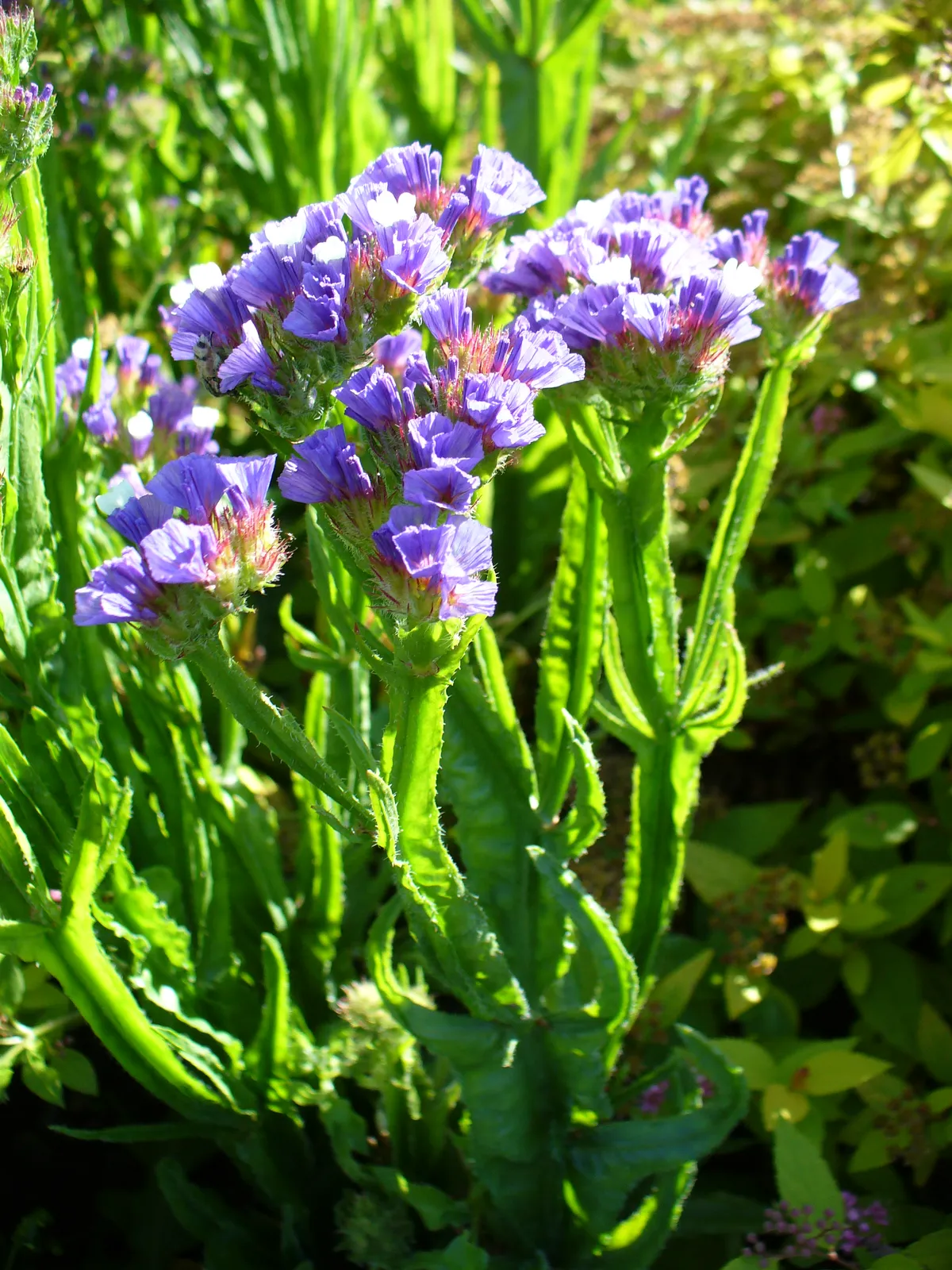
Limonium sinuatum, commonly known as Statice or Waved Sea-holly, is a resilient annual or short-lived perennial belonging to the Plumbaginaceae family, renowned for its enduring, papery blooms. Native to the arid and saline coastal regions of the Mediterranean, this species thrives in challenging environments, showcasing a remarkable adaptation to drought and salty soils. The plant typically forms a robust basal rosette of distinctively lobed or sinuate-margined leaves, from which numerous erect, often winged, wiry stems emerge, reaching heights of 30 to 90 cm.
Each stem branches gracefully, culminating in dense clusters of small, inconspicuous true flowers, usually white or pale yellow, which are magnificently framed by vibrant, persistent, papery bracts. These showy bracts, ranging in color from deep violet and blue to pink, lavender, yellow, and white, are the primary source of its ornamental appeal, maintaining their vivid hues and structural integrity long after cutting. The botanical name 'Limonium' is derived from the Greek 'leimon,' signifying 'meadow,' which refers to its natural habitat in coastal meadows or salt marshes.
The specific epithet 'sinuatum' aptly describes the wavy or undulating margins of its foliage and flower stalks, a key identifying feature. Beyond its widespread use in floristry for both fresh and dried arrangements, Statice holds a historical place in various traditional medicinal practices, where different plant parts were valued for their purported therapeutic properties. Its aesthetic charm, coupled with its ecological hardiness and traditional applications, makes Limonium sinuatum a plant of multifaceted interest.
Trusted Scientific References
1. Authoritative external sources for Limonium sinuatum
1.1 Wikipedia — Limonium sinuatum
1.2 Kew POWO (Plants of the World Online)
1.3 PubMed — peer-reviewed research
1.4 NCBI Taxonomy Browser
1.5 GBIF — Global Biodiversity
1.6Statice Sinuata should be interpreted through verified botanical identity, practical care, and responsible safety language. This recovery note adds the missing context needed for a complete profile: match light to the plant's habit, use well-drained soil, water according to season, and avoid unsupported medicinal or edible claims. For publishing, the plant can be presented as a source-backed garden plant with clear care guidance, common problem diagnosis, and conservative safety wording.
1.1.Statice Sinuata — Key Features
- ✓Distinctive Wavy Leaves — Characterized by sinuate or lobed basal leaves and winged stems.
- ✓Persistent Papery Bracts — The primary ornamental feature, retaining color and form for extended periods.
- ✓Mediterranean Origin — Thrives in coastal, saline, and arid environments.
- ✓Drought — Tolerant — Highly adaptable to dry conditions once established.
- ✓Versatile Floral Use — Excellent for both fresh cut flower arrangements and dried displays.
- ✓Traditional Medicinal Plant — Historically employed for its astringent and anti-inflammatory attributes.
- ✓Rich in Phenolic Compounds — Contains flavonoids and tannins contributing to its therapeutic potential.
- ✓Low Maintenance Cultivation — Easy to grow in suitable conditions with minimal care.
- ✓Long Vase Life — Cut flowers last exceptionally long, making them a florist favorite.
- ✓Varied Color Palette — Bracts come in a wide array of vibrant colors including violet, blue, pink, yellow, and white.
1.2.Statice Sinuata — Concise Overview
- ✓Limonium sinuatum is a Mediterranean plant known for its long-lasting, papery flowers.
- ✓Valued ornamentally for fresh and dried floral arrangements.
- ✓Traditionally used for astringent, anti-inflammatory, and wound-healing properties.
- ✓Rich in flavonoids, tannins, and phenolic acids, contributing to its medicinal profile.
- ✓Requires full sun and well-drained soil; drought-tolerant once established.
- ✓Exercise caution during pregnancy, lactation, and with pre-existing health conditions.
2.Statice Sinuata — Systematic Position
3.Statice Sinuata — Botanical Stats
4.Statice Sinuata — Structural Profile
5.Statice Sinuata — Habitat & Distribution
6.Statice Sinuata — Historical Applications
7.Statice Sinuata — Active Compounds
- ✓Flavonoids — Key compounds include quercetin and kaempferol derivatives, which are potent antioxidants and contribute to anti-inflammatory and vascular protective effects.
- ✓Tannins — Predominantly hydrolyzable tannins, responsible for the plant's significant astringent properties, contributing to wound healing and anti-diarrheal actions.
- ✓Phenolic Acids — Such as gallic acid, caffeic acid, and ferulic acid, which exhibit strong antioxidant, anti-inflammatory, and antimicrobial activities.
- ✓Anthocyanins — Pigments found in the colorful bracts, providing antioxidant benefits and potentially contributing to cellular protection.
- ✓Triterpenoids — Compounds like ursolic acid and oleanolic acid, which may possess anti-inflammatory, hepatoprotective, and cytotoxic properties.
- ✓Saponins — Glycosides that can have expectorant, anti-inflammatory, and immune-modulating effects, though specific types and concentrations vary.
- ✓Coumarins — A group of compounds with potential anticoagulant, anti-inflammatory, and antimicrobial activities, contributing to overall therapeutic potential.
- ✓Polysaccharides — Complex carbohydrates that can possess immune-modulating and prebiotic properties, supporting gut health and immune responses.
- ✓Volatile Oils — Present in trace amounts, contributing to the plant's characteristic aroma and potentially offering mild antiseptic qualities.
- ✓Alkaloids — While not a primary constituent, some species in the Plumbaginaceae family may contain trace amounts, warranting further investigation into their specific pharmacological roles.
8.Statice Sinuata — Modern Studies
- ✓Astringent Properties — Traditional medicine utilizes Statice for its notable astringent qualities, which can help to constrict tissues and reduce secretions, making it beneficial for minor skin irritations and mucosal inflammation.
- ✓Anti-inflammatory Support — Extracts of Limonium sinuatum have been traditionally applied to soothe inflammation, potentially due to the presence of certain phenolic compounds that may modulate inflammatory pathways.
- ✓Wound Healing Acceleration — Historically, the plant has been employed topically to aid in the healing of minor cuts and abrasions, with its astringent and potential antimicrobial actions contributing to tissue regeneration.
- ✓Digestive Aid — In some traditional systems, preparations from Statice were consumed to alleviate mild gastrointestinal discomfort, acting as a gentle tonic to support digestive function.
- ✓Respiratory System Relief — Traditional practices suggest its use for supporting respiratory health, particularly in conditions involving excess mucus, where its drying and astringent effects might be beneficial.
- ✓Antioxidant Activity — Phytochemical analysis indicates the presence of compounds with antioxidant potential, which can help protect the body from oxidative stress and cellular damage.
- ✓Diuretic Effects — Certain traditional uses point to a mild diuretic action, aiding the body in flushing out excess fluids and supporting kidney function.
- ✓Antimicrobial Potential — Preliminary traditional observations suggest an inhibitory effect against some microbial pathogens, which warrants further scientific investigation.
- ✓Skin Health Promotion — Due to its astringent and anti-inflammatory attributes, Statice has been incorporated into traditional remedies for promoting clearer, healthier skin and managing minor dermatological issues.
- ✓Oral Health Maintenance — Gargles or mouth rinses made from Statice were traditionally used to address minor oral inflammations and maintain gum health, leveraging its astringent properties.
8.1.Statice Sinuata — Indications & Uses
9.Statice Sinuata — Risk Profile
9.1.Statice Sinuata — Warnings
- ✓Allergic Reactions — Individuals sensitive to plants in the Plumbaginaceae family may experience skin irritation, rash, or respiratory symptoms upon contact or ingestion.
- ✓Gastrointestinal Upset — High doses or sensitive individuals may experience mild stomach upset, nausea, or diarrhea due to its astringent nature.
- ✓Skin Irritation — Direct contact with plant sap or fresh material may cause mild skin irritation or dermatitis in some individuals.
- ✓Drug Interactions — Potential interactions with medications, especially those affecting blood clotting or fluid balance, should be considered due to its constituent profile.
- ✓Photosensitivity — While uncommon, some plant compounds can increase sensitivity to sunlight, particularly with prolonged topical use.
- ✓Bitter Taste — Internal preparations may have a bitter taste, which could cause discomfort for some users.
- ✓Oral Discomfort — Prolonged use of strong oral preparations might lead to temporary drying or astringent sensation in the mouth.
9.2.Statice Sinuata — Risk Assessment
- ✓Pregnancy and Lactation — Avoid use during pregnancy and breastfeeding due to insufficient safety data and potential effects of its active constituents.
- ✓Children — Not recommended for use in young children without professional medical advice due to lack of specific pediatric safety studies.
- ✓Pre-existing Conditions — Individuals with kidney disease, bleeding disorders, or severe gastrointestinal issues should consult a healthcare professional before use.
- ✓Allergic History — Exercise caution if you have known allergies to other plants, especially within the Plumbaginaceae family.
- ✓Dosage — Adhere to recommended dosages for traditional preparations; excessive intake may lead to adverse effects.
- ✓Topical Use — Perform a patch test on a small skin area before widespread topical application to check for sensitivity or allergic reactions.
- ✓Storage — Store dried plant material and preparations in airtight containers away from direct sunlight and moisture to maintain potency and prevent degradation.
10.Statice Sinuata — Application Forms
- ✓Herbal Tea Infusion — Dried flowers and leaves can be steeped in hot water to create a mild herbal tea, traditionally used for digestive and respiratory support.
- ✓Tincture Preparation — Macerate fresh or dried plant material in alcohol to extract beneficial compounds, used internally for systemic support or externally for topical application.
- ✓Poultice Application — Crush fresh leaves or flowers and apply directly to minor skin irritations, cuts, or bruises to leverage its astringent and wound-healing properties.
- ✓Decoction for External Wash — Boil roots or more fibrous plant parts to create a concentrated decoction, used as a wash for skin conditions or as a gargle for oral health.
- ✓Dried Floral Arrangements — Harvest mature stems and hang upside down in a cool, dry, dark place for 2-3 weeks to create long-lasting dried flowers for decorative purposes.
- ✓Infused Oil — Macerate dried flowers in a carrier oil (e.g., olive oil) under gentle heat or sunlight to create an infused oil for topical skin applications.
- ✓Herbal Compress — Soak a cloth in a strong infusion or decoction and apply as a warm or cool compress to inflamed areas or for muscle relaxation.
- ✓Salve and Ointment — Incorporate a Statice-infused oil into beeswax and other ingredients to create a topical salve for skin protection and healing.
11.Statice Sinuata — Growing Guide
- ✓Seed Starting — Sow seeds indoors 6-8 weeks before the last spring frost date to ensure strong transplant establishment.
- ✓Soil Requirements — Prefers well-drained soil, ideally sandy or loamy, with a pH ranging from slightly acidic to slightly alkaline (6.0-8.0).
- ✓Sunlight Exposure — Requires full sun exposure for optimal growth and abundant flowering, needing at least 6-8 hours of direct sunlight daily.
- ✓Watering Practice — Water sparingly once established; it is drought-tolerant. Avoid overhead watering to prevent rot and fungal issues; drip irrigation is ideal.
- ✓Spacing & Support — Plant seedlings 9-12 inches apart to allow for proper air circulation and growth. Netting or staking is generally not required.
- ✓Fertilization — Benefits from a balanced, slow-release fertilizer at planting, but generally thrives in moderately fertile soil without heavy feeding.
- ✓Harvesting — Harvest stems when most of the papery blooms are fully open but before they show signs of browning for best vase life and drying quality.
- ✓Succession Planting — For continuous blooms, plant successions every 2-3 weeks from late spring through early summer.
Reviewed by the Flora Medical Global Botanical Review Panel
Multi-disciplinary editorial group · Botany · Ethnobotany · Herbal-medicine literature
Who reviewed this: This page was checked by the Flora Medical Global Botanical Review Panel — an in-house editorial group of botany graduates, ethnobotany researchers, and horticulture practitioners who collectively maintain our 7,000+ plant encyclopedia. Meet the team.
Our 4-step verification process
1. Taxonomic verification
Scientific names and synonyms cross-checked against Kew POWO, World Flora Online, and The Plant List.
2. Phytochemical & medicinal cross-reference
Active compounds, traditional uses, and reported activities are cross-referenced with PubMed, USDA Dr. Duke's database, and peer-reviewed ethnobotanical literature.
3. Conservation & distribution check
Distribution, ecology, and conservation status confirmed against GBIF occurrence records and the IUCN Red List.
4. Editorial & safety review
Every entry passes an editorial pass for clarity, originality, and safety notices (toxicity, contraindications, dosage caveats) before publication.
Last reviewed:
Important medical disclaimer: This content is for educational and research purposes only. It is not medical advice and is not a substitute for consultation with a licensed healthcare provider. Do not use any herb to self-treat a medical condition without professional guidance.
Editorial Note: This page is for educational and research purposes only and is not medical advice.
Written by: Flora Medical Global Editorial Team
Reviewed by: Flora Medical Global Botanical Review Panel
Last Updated: June 15, 2026





Statice Sinuata — Comments & Community Reviews
Rate this plant