


Medical Disclaimer: This content is for educational purposes only. It is not medical advice. Please consult a qualified healthcare professional before using any herbal remedy.
Safety Overview
1.Stevia — Essential Profile
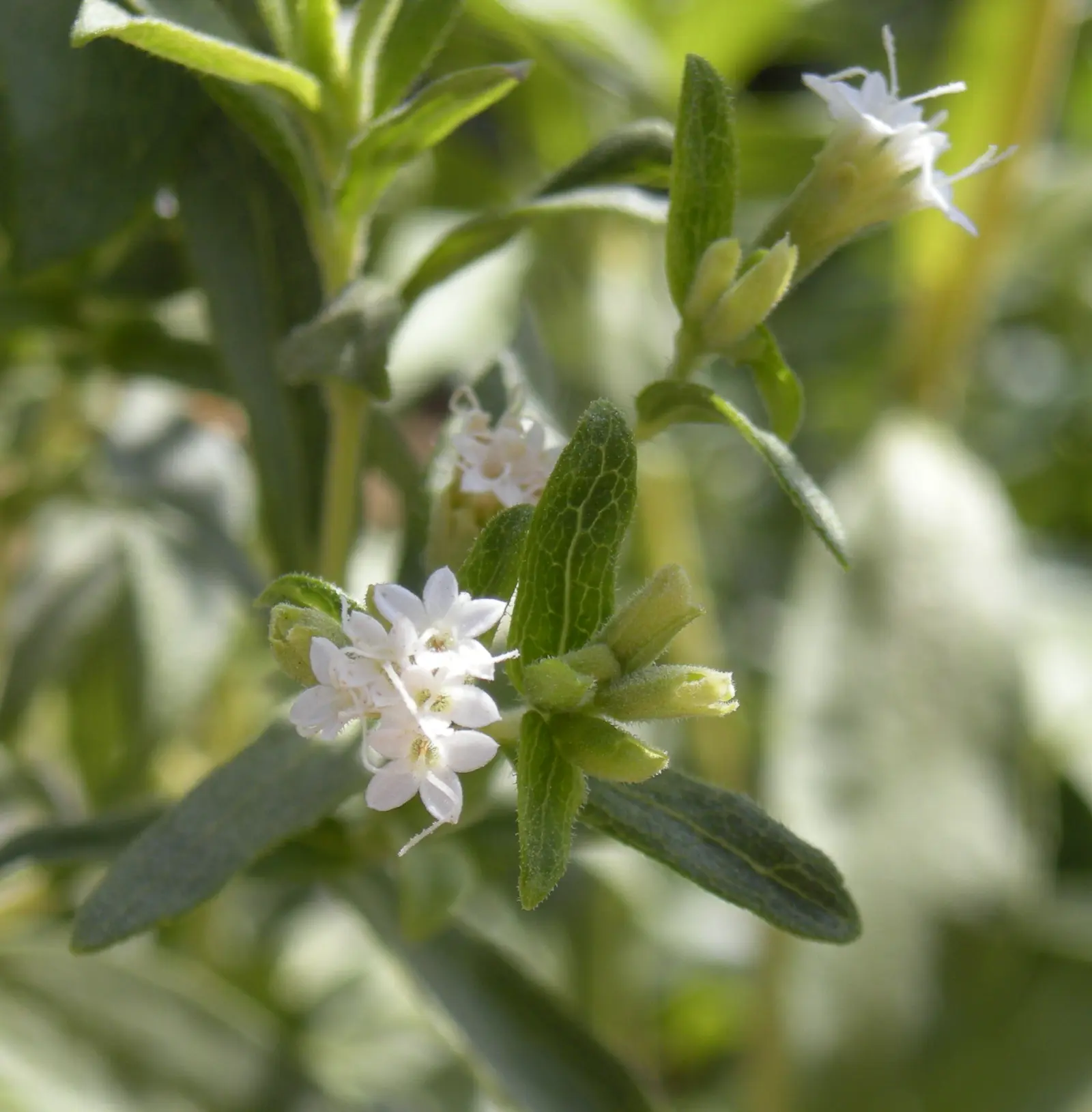
Stevia rebaudiana, commonly known as stevia, is a diminutive perennial herbaceous plant belonging to the Asteraceae family, the same botanical lineage as sunflowers and daisies. Native to the subtropical highlands of Paraguay and Brazil, this tender herb is particularly renowned for the extraordinary sweetness of its leaves, which is attributed to a concentration of natural compounds called steviol glycosides. Morphologically, Stevia rebaudiana typically grows to about 60-80 centimeters in height, featuring slender, branched stems and small, lanceolate to obovate leaves arranged oppositely along the stem.
Its inconspicuous white flowers bloom in clusters, though it is the foliage that holds the plant's primary economic and medicinal value. Historically, the Guaraní people of South America have utilized 'kaʼa heʼẽ' (sweet herb) for centuries, not only as a potent sweetener for local beverages and foods but also for various traditional medicinal applications. Today, its cultivation has expanded globally to numerous regions with suitable climates, including Asia (China, Japan, Korea), North America, and parts of Europe, making Stevia rebaudiana a universally recognized natural, non-caloric sugar substitute.
Trusted Scientific References
1. Authoritative external sources for Stevia rebaudiana
1.1 Wikipedia — Stevia rebaudiana
1.2 Kew POWO (Plants of the World Online)
1.3 PubMed — peer-reviewed research
1.4 NCBI Taxonomy Browser
1.5 GBIF — Global Biodiversity
1.6Stevia should be interpreted through verified botanical identity, practical care, and responsible safety language. This recovery note adds the missing context needed for a complete profile: match light to the plant's habit, use well-drained soil, water according to season, and avoid unsupported medicinal or edible claims. For publishing, the plant can be presented as a source-backed garden plant with clear care guidance, common problem diagnosis, and conservative safety wording.
1.1.Stevia — Notable Characteristics
- ✓Natural Sweetener — Provides intense sweetness without artificial compounds.
- ✓Zero Calories — Offers sweetness without contributing to caloric intake.
- ✓Diabetic — Friendly — Does not impact blood glucose or insulin levels.
- ✓Antioxidant Rich — Contains compounds that combat oxidative stress.
- ✓Anti — inflammatory — May help reduce inflammation in the body.
- ✓South American Native — Originates from Paraguay and Brazil.
- ✓Versatile Use — Suitable for cooking, baking, beverages, and traditional remedies.
- ✓Oral Health Benefits — Non-cariogenic and may inhibit oral bacteria.
- ✓Sustainable Alternative — Can be grown sustainably as a sugar substitute.
- ✓Widely Cultivated — Grown globally for commercial production.
1.2.Stevia — At-a-Glance Summary
- ✓Natural, zero-calorie sweetener derived from Stevia rebaudiana.
- ✓Key compounds are steviol glycosides, notably stevioside and rebaudioside A.
- ✓Supports blood sugar management and may aid in weight control.
- ✓Possesses antioxidant and anti-inflammatory properties.
- ✓Traditionally used in South America for sweetness and medicinal purposes.
- ✓Generally considered safe in its purified extract form.
2.Stevia — Nomenclature & Classification
3.Stevia — Fact Sheet
4.Stevia — Botanical Features
5.Stevia — Origin & Spread
6.Stevia — Folk Medicine Applications
7.Stevia — Phytochemistry
- ✓Steviol Glycosides — These are the primary sweetening compounds, diterpene glycosides, with stevioside and rebaudioside A being the most abundant and potent. Other significant glycosides include rebaudioside B, C, D, E, F, and dulcoside A. These compounds interact with sweet taste receptors without being metabolized, thus providing sweetness without calories or glycemic impact.
- ✓Flavonoids — Stevia leaves contain various flavonoids such as quercetin, kaempferol, and apigenin derivatives. These compounds are known for their strong antioxidant, anti-inflammatory, and potential cardioprotective activities.
- ✓Phenolic Acids — Chlorogenic acid and caffeic acid are present, contributing to the plant's overall antioxidant capacity and potential health benefits.
- ✓Terpenes and Terpenoids — Beyond the steviol glycosides, other volatile terpenes contribute to the plant's aroma and may possess additional biological activities.
- ✓Volatile Oils — A complex mixture of essential oils, though not the primary active constituents, contributes to the plant's characteristic fragrance and flavor profile.
- ✓Vitamins and Minerals — Stevia leaves contain trace amounts of vitamins like Vitamin C and A, and minerals such as zinc, magnesium, and iron, although not in therapeutically significant quantities.
- ✓Chlorophyll — The green pigment responsible for photosynthesis, also offering some antioxidant properties.
- ✓Amino Acids — Various free amino acids are present, contributing to the plant's nutritional composition.
8.Stevia — Scientific Evidence
- ✓Glycemic Control — Stevia rebaudiana's steviol glycosides do not raise blood glucose levels, making it an excellent non-caloric sweetener for individuals managing diabetes or seeking to stabilize blood sugar.
- ✓Weight Management — As a zero-calorie sweetener, stevia can aid in reducing overall caloric intake when used as a sugar substitute, thereby supporting weight loss and preventing obesity.
- ✓Antioxidant Properties — The plant contains various phenolic compounds and flavonoids, which contribute to its significant antioxidant activity, helping to neutralize free radicals and reduce oxidative stress.
- ✓Anti-inflammatory Effects — Research suggests that certain steviol glycosides and other compounds in stevia possess anti-inflammatory properties, potentially mitigating inflammatory responses in the body.
- ✓Blood Pressure Regulation — Some studies indicate that stevioside may have a mild hypotensive effect, contributing to the management of high blood pressure, though more research is needed.
- ✓Oral Health Support — Unlike sugar, stevia does not contribute to dental caries; in fact, it may inhibit the growth of certain oral bacteria, promoting better dental hygiene.
- ✓Digestive Aid — Traditionally, stevia has been used to soothe an upset stomach and aid digestion, possibly due to its anti-inflammatory and mild carminative properties.
- ✓Diuretic Action — Indigenous cultures utilized stevia as a mild diuretic, which could assist in managing fluid retention and supporting kidney function.
- ✓Skin Health — The antioxidant and anti-inflammatory compounds may contribute to healthier skin, potentially aiding in the management of minor skin irritations or blemishes.
- ✓Potential Anti-cancer Activity — Preliminary in vitro studies have explored the potential anti-proliferative effects of steviol glycosides on certain cancer cell lines, suggesting an area for future research.
8.1.Stevia — Therapeutic Indications
9.Stevia — Safety & Side Effects
9.1.Stevia — Side Effects & Warnings
- ✓Digestive Discomfort — Some individuals may experience bloating, gas, or mild nausea, especially with large doses or certain forms of stevia.
- ✓Allergic Reactions — Though rare, individuals sensitive to plants in the Asteraceae family (e.g., ragweed, marigolds) may experience allergic reactions.
- ✓Hypoglycemia Risk — While generally beneficial for blood sugar, high doses in conjunction with diabetes medications could theoretically lead to excessively low blood sugar levels.
- ✓Blood Pressure Changes — Due to its potential hypotensive effects, individuals on blood pressure medication should monitor their blood pressure when consuming large amounts of stevia.
- ✓Endocrine Disruption — Early studies on crude stevia extracts raised concerns about potential effects on fertility, but purified steviol glycosides are generally considered safe.
- ✓Metallic Taste — A lingering metallic or licorice-like aftertaste is sometimes reported, particularly with certain stevia products or higher concentrations.
9.2.Stevia — Clinical Safety Notes
- ✓GRAS Status — High-purity steviol glycoside extracts (e.g., Rebaudioside A) are generally recognized as safe (GRAS) by regulatory bodies like the FDA.
- ✓Pregnancy and Lactation — While purified steviol glycosides are considered safe, the safety of whole leaf stevia or crude extracts during pregnancy and breastfeeding is not fully established; caution is advised.
- ✓Children — Purified stevia extracts are considered safe for children within recommended daily intake levels.
- ✓Diabetes Management — Can be a safe and effective sugar substitute for diabetics, but individuals on medication should consult a healthcare professional to monitor blood sugar levels.
- ✓Blood Pressure Medication — Individuals taking antihypertensive drugs should use stevia cautiously and monitor blood pressure due to potential additive hypotensive effects.
- ✓Asteraceae Allergy — People with known allergies to plants in the Asteraceae family should avoid stevia to prevent potential allergic reactions.
- ✓Kidney Function — While traditionally used as a diuretic, individuals with pre-existing kidney conditions should consult a doctor before regular or high-dose consumption.
10.Stevia — Preparation Methods
- ✓Dried Leaves — Whole or crushed dried stevia leaves can be steeped in hot water to make a sweet tea or infused into beverages and culinary creations.
- ✓Liquid Extract — Homemade or commercially prepared liquid extracts are versatile and can be added to drinks, desserts, and cooking where a concentrated sweetness is desired.
- ✓Powdered Extract — High-purity steviol glycoside powder is a highly concentrated sweetener, suitable for baking, cooking, and sweetening beverages; use sparingly.
- ✓Stevia Tea — Fresh or dried leaves can be brewed as a standalone herbal tea for its sweet taste and traditional health benefits.
- ✓Culinary Sweetener — Use stevia extracts or powders as a sugar substitute in recipes for baked goods, sauces, dressings, and confectionery, adjusting quantities carefully due to its intense sweetness.
- ✓Topical Application — Infusions or poultices of stevia leaves have been traditionally applied topically for skin conditions, though this use is less common in modern herbalism.
- ✓Oral Rinse — A mild stevia infusion can be used as a natural mouthwash to promote oral hygiene.
11.Stevia — How to Grow
- ✓Climate Preference — Stevia thrives in subtropical to warm temperate climates, preferring consistent warmth and humidity.
- ✓Soil Requirements — Well-drained, fertile loamy soil with a pH between 6.0 and 7.0 is ideal; it is sensitive to waterlogging.
- ✓Light Exposure — Full sun to partial shade is preferred, with at least 6 hours of direct sunlight daily for optimal growth and glycoside production.
- ✓Propagation — Can be propagated from seeds, though germination rates can be low and variable; cuttings are more reliable for genetic consistency and faster growth.
- ✓Watering — Requires consistent moisture, especially during dry periods, but avoid overwatering to prevent root rot.
- ✓Fertilization — Benefits from balanced organic fertilizers or compost, particularly during the active growing season, but avoid excessive nitrogen which can reduce sweetness.
- ✓Pest and Disease Management — Generally robust, but watch for common garden pests like aphids and whiteflies, and fungal diseases in overly wet conditions.
- ✓Harvesting — Leaves are typically harvested when the plant reaches maturity, just before flowering, as this is when steviol glycoside content is highest.
Reviewed by the Flora Medical Global Botanical Review Panel
Multi-disciplinary editorial group · Botany · Ethnobotany · Herbal-medicine literature
Who reviewed this: This page was checked by the Flora Medical Global Botanical Review Panel — an in-house editorial group of botany graduates, ethnobotany researchers, and horticulture practitioners who collectively maintain our 7,000+ plant encyclopedia. Meet the team.
Our 4-step verification process
1. Taxonomic verification
Scientific names and synonyms cross-checked against Kew POWO, World Flora Online, and The Plant List.
2. Phytochemical & medicinal cross-reference
Active compounds, traditional uses, and reported activities are cross-referenced with PubMed, USDA Dr. Duke's database, and peer-reviewed ethnobotanical literature.
3. Conservation & distribution check
Distribution, ecology, and conservation status confirmed against GBIF occurrence records and the IUCN Red List.
4. Editorial & safety review
Every entry passes an editorial pass for clarity, originality, and safety notices (toxicity, contraindications, dosage caveats) before publication.
Last reviewed:
Important medical disclaimer: This content is for educational and research purposes only. It is not medical advice and is not a substitute for consultation with a licensed healthcare provider. Do not use any herb to self-treat a medical condition without professional guidance.
Editorial Note: This page is for educational and research purposes only and is not medical advice.
Written by: Flora Medical Global Editorial Team
Reviewed by: Flora Medical Global Botanical Review Panel
Last Updated: June 15, 2026





Stevia — Comments & Community Reviews
Rate this plant