
Medical Disclaimer: This content is for educational purposes only. It is not medical advice. Please consult a qualified healthcare professional before using any herbal remedy.
Safety Overview
1.Stokesia Laevis — Essential Profile
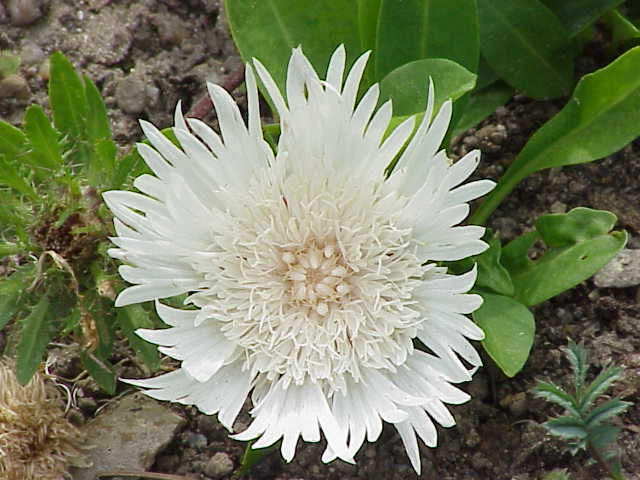
Stokesia laevis, commonly known as Stokes' aster or cornflower aster, is an exquisite perennial herbaceous plant indigenous to the southeastern United States. It is a proud member of the expansive Asteraceae family, recognized for its characteristic daisy-like inflorescences. This robust plant typically forms dense clumps of basal, lance-shaped leaves that remain evergreen in warmer climates, providing year-round visual interest.
From this verdant base, sturdy, upright stems emerge, culminating in large, strikingly showy flower heads. The blooms, which grace the landscape from early summer well into the fall, are most frequently observed in shades of lavender-blue, although horticultural cultivars offer a spectrum from pristine white to vibrant pink and deep purple. Each individual flower head can span an impressive diameter of up to 4 inches, featuring distinctive fringed ray florets encircling a central disk composed of numerous smaller, fertile florets.
Beyond its aesthetic appeal, Stokes' aster is a highly favored selection for garden beds, borders, and naturalized areas, celebrated for its extended blooming period, vivid coloration, and its undeniable allure to a diverse array of pollinators. It thrives optimally in conditions of full sun exposure and well-drained soil, effortlessly infusing any cultivated or wild landscape with a touch of untamed beauty and ecological vitality.
Trusted Scientific References
1. Authoritative external sources for Stokesia Laevis
1.1 Wikipedia — Stokesia Laevis
1.2 Kew POWO (Plants of the World Online)
1.3 PubMed — peer-reviewed research
1.4 NCBI Taxonomy Browser
1.5 GBIF — Global Biodiversity
1.6Stokesia Laevis should be interpreted through verified botanical identity, practical care, and responsible safety language. This recovery note adds the missing context needed for a complete profile: match light to the plant's habit, use well-drained soil, water according to season, and avoid unsupported medicinal or edible claims. For publishing, the plant can be presented as a source-backed garden plant with clear care guidance, common problem diagnosis, and conservative safety wording.
1.1.Stokesia Laevis — Distinguishing Points
- ✓Native Perennial — Indigenous to the southeastern United States, returning reliably year after year.
- ✓Showy Flowers — Produces large (up to 4 inches), fringed, lavender-blue daisy-like blooms.
- ✓Long Blooming Period — Flowers prolifically from early summer through fall, providing extended color.
- ✓Pollinator Magnet — Highly attractive to a wide range of pollinators, including bees and butterflies.
- ✓Low Maintenance — Requires minimal care, making it an easy-to-grow garden plant.
- ✓Drought — Tolerant — Once established, it can withstand periods of dry weather.
- ✓Evergreen Foliage — Maintains its lance-shaped basal leaves throughout the winter in warmer climates.
- ✓Adaptable — Tolerates various soil types as long as they are well-drained.
- ✓Garden Versatility — Excellent for borders, mass plantings, naturalized areas, and cut flower arrangements.
1.2.Stokesia Laevis — Snapshot Summary
- ✓Stokes' aster is a native perennial from the southeastern US, primarily valued for its ornamental beauty.
- ✓It features showy, long-blooming lavender-blue flowers that are highly attractive to pollinators.
- ✓This plant is exceptionally low-maintenance, drought-tolerant, and thrives in full sun with well-drained soil.
- ✓There is no documented traditional or scientific medicinal use for Stokesia laevis.
- ✓Potential benefits are speculative, based on general phytochemistry of the Asteraceae family, but lack specific research.
- ✓Recommended solely for gardening, landscaping, and supporting local ecosystems.
2.Stokesia Laevis — Botanical Identity
3.Stokesia Laevis — Key Data
4.Stokesia Laevis — Physical Description
5.Stokesia Laevis — Native Range & Habitat
6.Stokesia Laevis — Folk Medicine Applications
7.Stokesia Laevis — Key Phytochemicals
- ✓Flavonoids — These ubiquitous plant pigments, such as quercetin and kaempferol derivatives, are widely distributed in the Asteraceae family and are generally associated with antioxidant, anti-inflammatory, and potentially antiallergic activities, though specific profiles for Stokesia laevis are not well-detailed.
- ✓Phenolic Acids — Compounds like caffeic acid, chlorogenic acid, and ferulic acid are commonly found in plants, contributing to their defense mechanisms and overall antioxidant capacity. Their presence in Stokesia laevis is expected but not thoroughly characterized.
- ✓Terpenoids — A diverse group of compounds, including monoterpenes and sesquiterpenes, which are often responsible for plant fragrances and can exhibit various biological activities such as anti-inflammatory or antimicrobial effects. Specific terpenoid profiles for Stokes' aster are largely unresearched.
- ✓Saponins (Potential) — While not definitively confirmed for Stokesia laevis, saponins are common in many Asteraceae species and can possess surfactant properties, sometimes linked to immune-stimulating or cholesterol-lowering effects.
- ✓Polysaccharides (Potential) — Complex carbohydrates found in plant cell walls, which can sometimes have immune-modulating properties. The specific types and bioactivities of polysaccharides in Stokes' aster are not documented.
- ✓Coumarins (Potential) — A class of aromatic organic chemical compounds found in various plants, sometimes exhibiting anti-inflammatory, anticoagulant, or antimicrobial activities. Their occurrence in Stokesia laevis is speculative.
- ✓Phytosterols (Potential) — Plant sterols structurally similar to cholesterol, which can be found in many plant species and are sometimes associated with cholesterol-lowering effects. Specific data for Stokesia laevis is lacking.
- ✓Volatile Oils (Trace) — While not a primary characteristic, some plants in the Asteraceae contain trace amounts of volatile compounds that contribute to their aroma, though their medicinal significance in Stokes' aster is unestablished.
8.Stokesia Laevis — Scientific Evidence
- ✓Potential Antioxidant Support — While specific research on Stokesia laevis is notably lacking, many plants within the Asteraceae family are rich in flavonoids and phenolic acids, compounds generally known for their capacity to neutralize free radicals and offer cellular protection.
- ✓Hypothesized Anti-inflammatory Action — Related species in the Asteraceae often exhibit anti-inflammatory properties due to various terpenoids and other phytochemicals; however, direct scientific evidence confirming such effects for Stokes' aster remains unsubstantiated.
- ✓Possible Immune Modulation — Some plant-derived polysaccharides are recognized for their potential to support and modulate immune responses, and while Stokesia laevis may contain similar constituents, their specific immunomodulatory roles have not been investigated.
- ✓Speculative Antimicrobial Activity — Certain plant secondary metabolites, including some found in Asteraceae, possess antimicrobial properties; nonetheless, any such activity in Stokesia laevis is purely theoretical without dedicated research.
- ✓Unconfirmed Digestive Aid — In traditional herbalism, some bitter principles from Asteraceae plants are used to stimulate digestion, but there is no historical or scientific basis to attribute this benefit to Stokes' aster.
- ✓Theoretical Cardioprotective Effects — Flavonoids, commonly present in the Asteraceae, are sometimes linked to cardiovascular health benefits; however, these are not established for Stokesia laevis and are purely speculative.
- ✓Undocumented Anticarcinogenic Potential — Many plant compounds are explored for their chemopreventive properties, but there is no specific research or evidence to suggest Stokesia laevis possesses any anticarcinogenic effects.
- ✓No Documented Traditional Medicinal Use — It is crucial to note that despite its ornamental value, Stokesia laevis has no recognized history of traditional medicinal use in any major ethnobotanical system like Ayurveda, TCM, or Unani.
- ✓Primary Ecological Benefit — The most significant and well-documented 'benefit' of Stokes' aster is its role as an exceptional pollinator attractant, supporting local insect populations and biodiversity.
8.1.Stokesia Laevis — Therapeutic Indications
9.Stokesia Laevis — Safety & Side Effects
9.1.Stokesia Laevis — Caution Notes
- ✓Allergic Reactions — As a member of the Asteraceae family, Stokesia laevis may cause contact dermatitis or allergic reactions in sensitive individuals, similar to ragweed or chrysanthemums.
- ✓Skin Irritation — Direct handling of the plant, especially the sap, might lead to mild skin irritation or rash in susceptible people.
- ✓Ingestion Toxicity (Undocumented) — While not known to be highly toxic, the safety of ingesting any part of Stokesia laevis by humans or pets is not established and should be avoided.
- ✓Gastrointestinal Upset — Accidental ingestion, particularly of large quantities, could potentially lead to mild gastrointestinal discomfort due to unknown compounds.
- ✓Cross-reactivity — Individuals with known allergies to other Asteraceae family members should exercise caution when handling Stokes' aster.
- ✓Photosensitivity (Rare) — Though uncommon, some plant compounds can induce photosensitivity; this is not documented for Stokesia laevis but remains a theoretical possibility.
9.2.Stokesia Laevis — Clinical Safety Notes
- ✓Not for Internal Use — Due to the complete lack of scientific research and traditional medicinal history, Stokesia laevis should never be ingested for medicinal purposes.
- ✓Topical Caution — Individuals with sensitive skin or known plant allergies should wear gloves when handling the plant to prevent potential contact dermatitis.
- ✓Keep Out of Reach of Children and Pets — To prevent accidental ingestion and potential unknown effects, ensure the plant is not accessible to young children or domestic animals.
- ✓Allergic Sensitization — Be aware of potential allergic reactions, especially if you have sensitivities to other plants in the Asteraceae family.
- ✓Consult Healthcare Professional — If considering any plant for health purposes, always consult a qualified healthcare provider, especially given the unknown medicinal profile of Stokes' aster.
- ✓Ornamental Use Only — The plant is strictly recommended for ornamental and ecological purposes; its safety as a medicinal agent is entirely unverified.
- ✓Pregnancy and Lactation — No safety data exists for pregnant or lactating individuals; therefore, use should be strictly avoided.
10.Stokesia Laevis — Preparation Methods
- ✓Ornamental Gardening — Primarily used as an attractive, long-blooming perennial in garden beds, borders, and cottage gardens, adding vibrant color.
- ✓Pollinator Gardens — An excellent choice for attracting a wide range of pollinators, including bees, butterflies, and other beneficial insects, enhancing ecological diversity.
- ✓Native Plant Landscaping — Ideal for naturalized areas and native plant landscapes, supporting local ecosystems and requiring minimal care once established.
- ✓Cut Flowers — The large, showy blooms of Stokes' aster make excellent and long-lasting cut flowers for floral arrangements, bringing garden beauty indoors.
- ✓Edging and Borders — Its compact size and lush evergreen foliage (in warmer climates) make it perfect for defining pathways or the front of perennial beds.
- ✓Wildlife Support — Provides nectar for adult pollinators and potentially serves as a host plant for certain insect species, contributing to local biodiversity.
- ✓Erosion Control (Minor) — In naturalized settings, its clumping habit can offer minor soil stabilization on gentle slopes, especially when planted en masse.
11.Stokesia Laevis — Cultivation & Care
- ✓Sun Exposure — Stokes' aster thrives in full sun (at least 6 hours of direct sunlight daily) to part shade conditions, offering flexibility in garden placement.
- ✓Soil Requirements — Prefers well-drained soil; it tolerates various soil types, including sandy or clay, as long as drainage is adequate.
- ✓Watering — Once established (typically after the first year), Stokesia laevis is remarkably drought-tolerant, requiring minimal supplemental irrigation.
- ✓Maintenance — This perennial is considered super low maintenance, needing little care to flourish and return year after year from the same rootstock.
- ✓Planting — Best planted in spring or fall. Space plants appropriately to allow for mature clump formation, typically 12-18 inches apart.
- ✓Fertilization — Generally does not require heavy fertilization; a light application of balanced slow-release fertilizer in spring can be beneficial in poor soils.
- ✓Pruning — Deadhead spent flowers to encourage continuous blooming and prevent self-seeding, though some may prefer to leave seed heads for winter interest.
Reviewed by the Flora Medical Global Botanical Review Panel
Multi-disciplinary editorial group · Botany · Ethnobotany · Herbal-medicine literature
Who reviewed this: This page was checked by the Flora Medical Global Botanical Review Panel — an in-house editorial group of botany graduates, ethnobotany researchers, and horticulture practitioners who collectively maintain our 7,000+ plant encyclopedia. Meet the team.
Our 4-step verification process
1. Taxonomic verification
Scientific names and synonyms cross-checked against Kew POWO, World Flora Online, and The Plant List.
2. Phytochemical & medicinal cross-reference
Active compounds, traditional uses, and reported activities are cross-referenced with PubMed, USDA Dr. Duke's database, and peer-reviewed ethnobotanical literature.
3. Conservation & distribution check
Distribution, ecology, and conservation status confirmed against GBIF occurrence records and the IUCN Red List.
4. Editorial & safety review
Every entry passes an editorial pass for clarity, originality, and safety notices (toxicity, contraindications, dosage caveats) before publication.
Last reviewed:
Important medical disclaimer: This content is for educational and research purposes only. It is not medical advice and is not a substitute for consultation with a licensed healthcare provider. Do not use any herb to self-treat a medical condition without professional guidance.
Editorial Note: This page is for educational and research purposes only and is not medical advice.
Written by: Flora Medical Global Editorial Team
Reviewed by: Flora Medical Global Botanical Review Panel
Last Updated: June 15, 2026





Stokesia Laevis — Comments & Community Reviews
Rate this plant