
Medical Disclaimer: This content is for educational purposes only. It is not medical advice. Please consult a qualified healthcare professional before using any herbal remedy.
Safety Overview
1.String of Watermelons — Overview
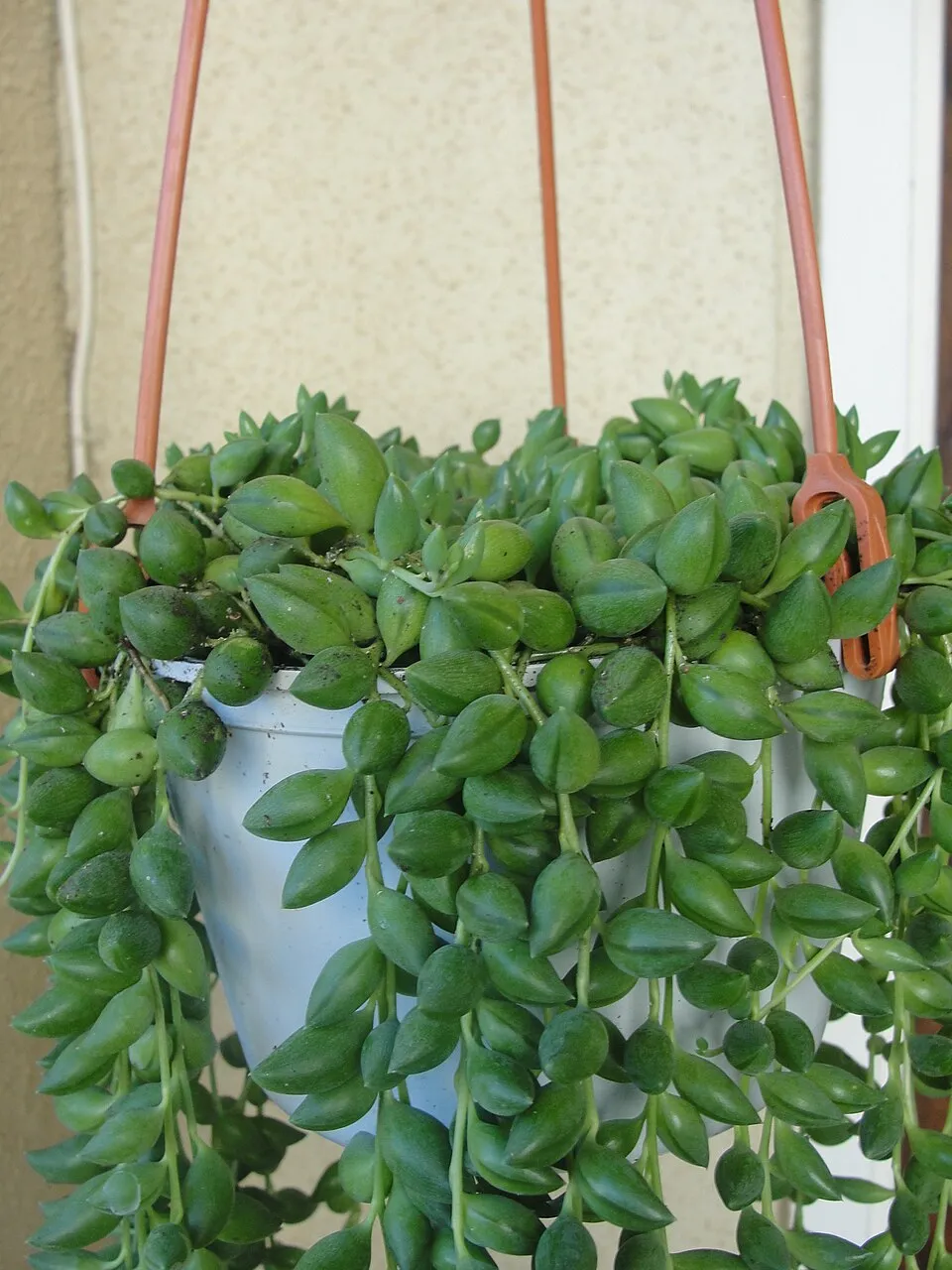
Curio herreianus, commonly known as String of Watermelons, is a captivating succulent plant belonging to the Asteraceae family. This species is characterized by its slender, trailing stems that can extend over 30 centimeters (12 inches) in length, creating an elegant cascading effect. Its most distinctive feature is its leaves, which are ovoid to egg-shaped, resembling miniature watermelons, typically measuring 2 to 4 centimeters.
These leaves display a vibrant green hue, often adorned with delicate darker green or purplish stripes, and possess characteristic translucent 'windows' that allow light penetration for photosynthesis in arid environments. Native to the arid regions of Namibia and South Africa, Curio herreianus thrives in well-drained soils and bright, indirect light, mimicking its natural habitat. While primarily cultivated for its striking foliage, it produces small, brush-like, creamy-white to pale yellow flowers on long stalks, typically blooming from spring to fall, though flowering indoors is less common.
Taxonomically, it was formerly classified under the genus Senecio (as Senecio herreanus or Senecio herreianus) before being reclassified into Curio. This plant is highly valued as an ornamental houseplant, adding a unique aesthetic to indoor spaces due to its low-maintenance nature and architectural form. Its ability to root at nodes when creeping along the ground or trailing from a pot contributes to its propagation ease and vigorous growth habit.
Trusted Scientific References
1. Authoritative external sources for Curio herreianus var.
1.1 Wikipedia — Curio herreianus var.
1.2 Kew POWO (Plants of the World Online)
1.3 PubMed — peer-reviewed research
1.4 NCBI Taxonomy Browser
1.5 GBIF — Global Biodiversity
1.6String of Watermelons should be interpreted through verified botanical identity, practical care, and responsible safety language. This recovery note adds the missing context needed for a complete profile: match light to the plant's habit, use well-drained soil, water according to season, and avoid unsupported medicinal or edible claims. For publishing, the plant can be presented as a source-backed indoor plant with clear care guidance, common problem diagnosis, and conservative safety wording.
1.1.String of Watermelons — Standout Qualities
- ✓Distinctive 'watermelon' patterned — Distinctive 'watermelon' patterned leaves with translucent 'windows'.
- ✓Trailing growth habit, — Trailing growth habit, ideal for hanging baskets.
- ✓Succulent plant, requiring — Succulent plant, requiring minimal watering.
- ✓Member of the — Member of the Asteraceae family, formerly Senecio herreianus.
- ✓Native to arid — Native to arid regions of Namibia and South Africa.
- ✓Produces small, creamy — white flowers (rarely indoors).
- ✓Low — maintenance and adaptable as an indoor plant.
- ✓Non — edible and toxic if ingested.
- ✓Adds significant ornamental — Adds significant ornamental value to interiors.
- ✓Easy to propagate — Easy to propagate from stem cuttings.
1.2.String of Watermelons — Snapshot Summary
- ✓Unique 'watermelon' patterned leaves and trailing habit make it a popular ornamental succulent.
- ✓Belongs to the Asteraceae family, native to Namibia and South Africa.
- ✓Requires bright, indirect light and well-draining soil; drought-tolerant.
- ✓All parts are toxic if ingested due to potential pyrrolizidine alkaloids.
- ✓Primarily valued for aesthetic appeal and potential indirect air purification benefits.
- ✓Low-maintenance houseplant, easy to propagate from cuttings.
2.String of Watermelons — Taxonomic Classification
3.String of Watermelons — Quick Facts
4.String of Watermelons — Plant Morphology
5.String of Watermelons — Where It Grows
6.String of Watermelons — Cultural & Traditional Roles
7.String of Watermelons — Secondary Metabolites
- ✓Terpenoids — Predominantly sesquiterpenoids and diterpenoids, these compounds are common in Asteraceae and are known for potential anti-inflammatory, antimicrobial, and cytotoxic properties, often contributing to bitterness.
- ✓Flavonoids — Ubiquitous plant pigments and antioxidants, flavonoids in Asteraceae species typically exhibit anti-inflammatory, antiviral, and cardioprotective effects, scavenging free radicals.
- ✓Alkaloids — Certain Senecio species, to which Curio is closely related, contain pyrrolizidine alkaloids (PAs), which can be hepatotoxic, necessitating caution.
- ✓Phenolic Acids — These compounds, including caffeic and chlorogenic acids, possess antioxidant and anti-inflammatory activities, contributing to the plant's defense mechanisms.
- ✓Saponins — Glycosides that can have detergent-like properties, some saponins show adaptogenic, anti-inflammatory, and immune-modulating effects.
- ✓Fatty Acids — Essential components of cell membranes, fatty acids in plants can have various physiological roles, including signaling and energy storage.
- ✓Polysaccharides — Complex carbohydrates that can contribute to immune modulation and have demulcent properties, though less prominent in succulents.
- ✓Volatile Organic Compounds (VOCs) — While not extensively studied in Curio herreianus, many plants release VOCs that contribute to scent and may possess antimicrobial or insect-repellent qualities.
8.String of Watermelons — Modern Studies
- ✓Air Purification — While direct scientific evidence for Curio herreianus is limited, many houseplants, including succulents, contribute to improved indoor air quality by absorbing common volatile organic compounds (VOCs) like formaldehyde and benzene, thereby enhancing the living environment.
- ✓Aesthetic Stress Reduction — The presence of lush, unique foliage like the String of Watermelons has been shown to reduce psychological stress, improve mood, and enhance cognitive performance, fostering a calming atmosphere.
- ✓Biophilic Connection — Interacting with plants like Curio herreianus strengthens the human-nature bond, promoting mental well-being and a sense of tranquility, which can indirectly support overall health.
- ✓Humidity Regulation — Succulents release moisture through transpiration, subtly increasing ambient humidity, which can be beneficial for respiratory health in dry indoor climates.
- ✓Visual Stimulation — The distinctive shape and coloration of the 'watermelon' leaves provide engaging visual interest, potentially aiding in focus and reducing mental fatigue through passive observation.
- ✓Low Allergen Potential — As a non-flowering or rarely flowering indoor plant, Curio herreianus produces minimal pollen, making it suitable for individuals sensitive to airborne allergens.
- ✓Indirect Antimicrobial Environment — A healthy plant environment can support a balanced indoor microbiome, potentially reducing the proliferation of harmful microbes, though not directly through plant compounds.
- ✓Cognitive Enhancement — Studies suggest that indoor plants can improve concentration and memory, possibly due to the calming effect and increased oxygen levels, though Curio herreianus specific studies are absent.
8.1.String of Watermelons — Conditions Traditionally Used For
9.String of Watermelons — Adverse Effects
9.1.String of Watermelons — Possible Adverse Reactions
- ✓Toxicity Risk — All parts of Curio herreianus are considered toxic if ingested, due to the presence of pyrrolizidine alkaloids.
- ✓Skin Irritation — Direct contact with sap may cause mild skin irritation or allergic reactions in sensitive individuals.
- ✓Nausea and Vomiting — Ingestion can lead to gastrointestinal upset, including nausea, vomiting, and diarrhea.
- ✓Liver Damage — Prolonged or significant ingestion of pyrrolizidine alkaloid-containing plants can cause severe liver damage.
- ✓Pet and Child Hazard — Keep out of reach of children and pets due to significant ingestion risk and associated toxicity.
- ✓Allergic Reactions — Although rare, some individuals may experience allergic symptoms upon exposure or contact.
9.2.String of Watermelons — Safety Profile
- ✓Ingestion Warning — Curio herreianus is toxic; ingestion by humans or animals can cause serious health issues.
- ✓Keep Out of Reach — Always place this plant where children and pets cannot access it.
- ✓Handle with Gloves — Wear gloves when handling to avoid potential skin irritation from sap.
- ✓Hand Washing — Wash hands thoroughly after touching the plant, especially before eating.
- ✓Emergency Protocol — In case of ingestion, seek immediate medical or veterinary attention.
- ✓Avoid Self-Medication — Never use any part of this plant for medicinal purposes due to its toxicity.
- ✓Educational Awareness — Inform household members about the plant's toxic nature and handling precautions.
10.String of Watermelons — Preparation & Dosage
- ✓Ornamental Display — Best used as a decorative houseplant in hanging baskets or elevated pots to showcase its trailing habit.
- ✓Aesthetic Enhancement — Place in living areas, offices, or bedrooms to add a natural, calming element to the decor.
- ✓Biophilic Design — Incorporate into interior design schemes to foster a connection with nature and improve occupant well-being.
- ✓Air Quality Support — Utilize as part of a diverse indoor plant collection to potentially contribute to ambient air purification.
- ✓Gifting — An excellent choice for a unique and low-maintenance gift for plant enthusiasts.
- ✓Educational Tool — Can serve as an example of succulent adaptation and unique plant morphology in botanical education.
- ✓Terrarium Inclusion — Suitable for open terrariums or succulent arrangements where its trailing form can be highlighted.
- ✓Photography Subject — Its distinctive 'watermelon' leaves make it a popular subject for botanical photography.
11.String of Watermelons — Growth Requirements
- ✓Light — Provide bright, indirect light; direct sunlight can scorch leaves, while too little light leads to leggy growth.
- ✓Soil — Use a well-draining succulent or cactus potting mix to prevent root rot, ensuring adequate aeration.
- ✓Watering — Water thoroughly when the soil is completely dry, typically every 2-4 weeks, reducing frequency in winter.
- ✓Temperature — Maintain average room temperatures between 65-80°F (18-27°C); protect from frost.
- ✓Humidity — Tolerates average indoor humidity; does not require high humidity.
- ✓Fertilizing — Feed sparingly with a diluted balanced liquid succulent fertilizer during the growing season (spring/summer).
- ✓Propagation — Easily propagated from stem cuttings; allow cuttings to callus before planting in moist soil.
- ✓Repotting — Repot only when the plant outgrows its container, typically every 2-3 years, using fresh succulent mix.
Reviewed by the Flora Medical Global Botanical Review Panel
Multi-disciplinary editorial group · Botany · Ethnobotany · Herbal-medicine literature
Who reviewed this: This page was checked by the Flora Medical Global Botanical Review Panel — an in-house editorial group of botany graduates, ethnobotany researchers, and horticulture practitioners who collectively maintain our 7,000+ plant encyclopedia. Meet the team.
Our 4-step verification process
1. Taxonomic verification
Scientific names and synonyms cross-checked against Kew POWO, World Flora Online, and The Plant List.
2. Phytochemical & medicinal cross-reference
Active compounds, traditional uses, and reported activities are cross-referenced with PubMed, USDA Dr. Duke's database, and peer-reviewed ethnobotanical literature.
3. Conservation & distribution check
Distribution, ecology, and conservation status confirmed against GBIF occurrence records and the IUCN Red List.
4. Editorial & safety review
Every entry passes an editorial pass for clarity, originality, and safety notices (toxicity, contraindications, dosage caveats) before publication.
Last reviewed:
Important medical disclaimer: This content is for educational and research purposes only. It is not medical advice and is not a substitute for consultation with a licensed healthcare provider. Do not use any herb to self-treat a medical condition without professional guidance.
Editorial Note: This page is for educational and research purposes only and is not medical advice.
Written by: Flora Medical Global Editorial Team
Reviewed by: Flora Medical Global Botanical Review Panel
Last Updated: June 15, 2026





String of Watermelons — Comments & Community Reviews
Rate this plant