
Medical Disclaimer: This content is for educational purposes only. It is not medical advice. Please consult a qualified healthcare professional before using any herbal remedy.
Safety Overview
1.Strophanthus — Overview
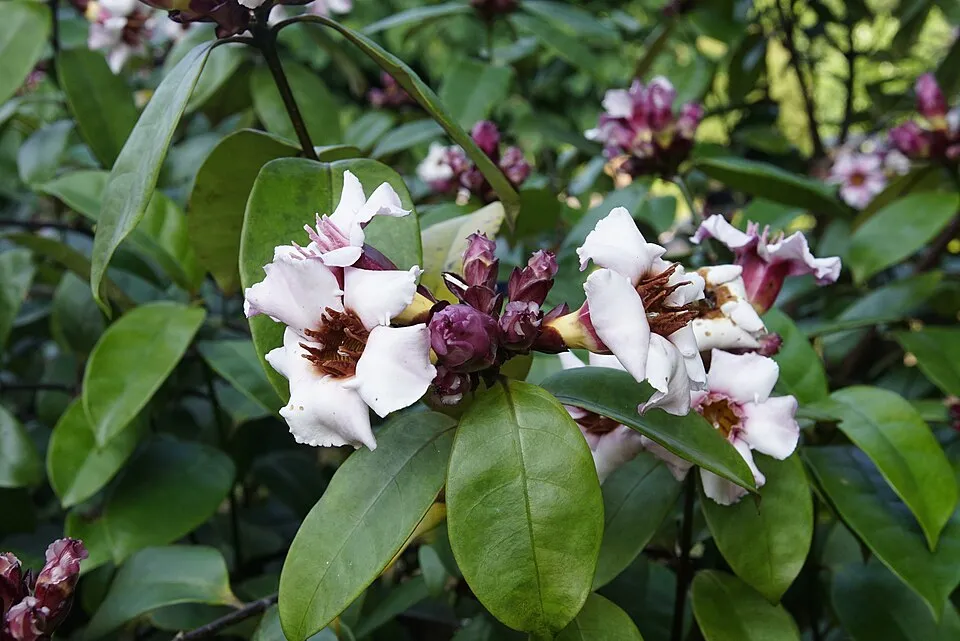
Strophanthus gratus, commonly recognized as the blondie vine or strophanthus, is an impressive perennial woody climber native to the lush tropical regions of West Africa. This robust liana can ascend to remarkable heights of up to 10 meters (33 feet) in its preferred growing conditions, twining around other vegetation for support. Its foliage consists of glossy green, elliptical to lanceolate leaves, typically measuring between 10 to 15 cm (4 to 6 inches) in length, which contrast beautifully against its sturdy stems.
The plant's bark is smooth, ranging from dark brown to grayish, with a subtly fibrous texture that assists in its identification. A distinguishing feature of Strophanthus gratus is its striking tubular flowers, approximately 3-5 cm (1.2-2 inches) long, which bloom in axillary racemes. These blossoms display a vibrant spectrum from yellow to deep crimson, often adorned with a captivating white or pinkish-orange throat, effectively attracting a variety of pollinators to its delicate nectar.
Following successful pollination, the plant produces elongated, flattened seed pods containing numerous flat seeds, which are the primary source of its potent medicinal compounds upon maturity. Thriving in well-draining, fertile soils, Strophanthus gratus is typically found in dense forested areas and on the fringes of clearings, playing a role in supporting local biodiversity by providing sustenance for specific insect species.
Trusted Scientific References
1. Authoritative external sources for Strophanthus gratus
1.1 Wikipedia — Strophanthus gratus
1.2 Kew POWO (Plants of the World Online)
1.3 PubMed — peer-reviewed research
1.4 NCBI Taxonomy Browser
1.5 GBIF — Global Biodiversity
1.6Strophanthus should be interpreted through verified botanical identity, practical care, and responsible safety language. This recovery note adds the missing context needed for a complete profile: match light to the plant's habit, use well-drained soil, water according to season, and avoid unsupported medicinal or edible claims. For publishing, the plant can be presented as a source-backed medicinal plant with clear care guidance, common problem diagnosis, and conservative safety wording.
1.1.Strophanthus — Key Features
- ✓Scientific Name — Strophanthus gratus
- ✓Family — Apocynaceae (Dogbane family)
- ✓Common Names — Blondie Vine, Strophanthus, Kombe, Graines de Strophantus
- ✓Native Region — Tropical West Africa
- ✓Plant Type — Perennial woody climber or liana
- ✓Distinctive Flowers — Tubular, yellow to deep crimson with a striking white or pinkish-orange throat
- ✓Key Compounds — Cardiac glycosides, primarily strophanthin-G (ouabain) and k-strophanthin
- ✓Primary Traditional Use — Cardiotonic, arrow poison, and historically for cardiac ailments
- ✓Extreme Toxicity — Highly poisonous, especially the seeds, posing severe risk of cardiac arrest and death upon ingestion
- ✓Ecological Role — Supports local pollinators and contributes to biodiversity in its native forested habitats.
1.2.Strophanthus — At-a-Glance Summary
- ✓Potent Cardiac Glycoside Source — Contains powerful compounds like strophanthin affecting heart function, but with extreme toxicity.
- ✓Historically Used as Arrow Poison — Known for its rapid and lethal toxic effects, traditionally applied to hunting weapons.
- ✓Traditional Cardiac Remedy (High Risk) — Employed in traditional African medicine for heart ailments, but with profound caution and high mortality rates.
- ✓Highly Toxic Plant — Oral ingestion is extremely dangerous and often fatal without the most stringent medical oversight.
- ✓Numerous Drug Interactions — Poses significant and potentially lethal risks when combined with various pharmaceutical medications.
- ✓Absolutely Contraindicated in Pregnancy — Can induce uterine contractions and lead to miscarriage.
2.Strophanthus — Systematic Position
3.Strophanthus — Reference Facts
4.Strophanthus — Morphological Account
5.Strophanthus — Geographic Distribution
6.Strophanthus — Cultural & Traditional Roles
7.Strophanthus — Active Compounds
- ✓Cardiac Glycosides — The most prominent active compounds, including strophanthin-G (ouabain), k-strophanthin, and other cardenolides, which exert potent effects on cardiac muscle contractility by inhibiting the Na+/K+-ATPase pump, leading to increased intracellular calcium.
- ✓Steroidal Saponins — These compounds may contribute to the plant's overall biological activity, potentially influencing membrane permeability and absorption of other constituents, though their direct medicinal role is secondary to cardiac glycosides.
- ✓Flavonoids — Present in many plants, flavonoids in Strophanthus gratus could offer antioxidant and anti-inflammatory properties, though their specific roles in the plant's potent effects are less studied compared to its cardiac glycosides.
- ✓Phenolic Compounds — A diverse group of secondary metabolites known for their antioxidant and potential anti-inflammatory properties, contributing to plant defense mechanisms and overall plant health.
- ✓Triterpenes — These compounds are widely distributed in the plant kingdom and may possess various biological activities, including anti-inflammatory or cytotoxic effects, which are minor compared to the primary cardiac glycosides in Strophanthus.
- ✓Fatty Acids — Seeds contain various fatty acids, which are essential for plant metabolism and energy storage but are not typically considered primary medicinal constituents responsible for the plant's potent pharmacological actions.
- ✓Phytosterols — Plant sterols such as beta-sitosterol may be present, known for their potential to influence cholesterol absorption, though not a primary active component of Strophanthus gratus's medicinal profile.
- ✓Sugars and Polysaccharides — Basic carbohydrates present in plant tissues, serving as energy reserves and structural components, but not directly responsible for the specific potent effects for which Strophanthus is known.
8.Strophanthus — Modern Studies
- ✓Cardiotonic Effects — Historically, compounds like strophanthin were recognized for their ability to influence myocardial contractility, potentially strengthening heartbeats, although direct herbal use is extremely dangerous.
- ✓Blood Pressure Regulation (Traditional) — In some traditional systems, Strophanthus gratus was employed with the aim of modulating elevated blood pressure, though modern scientific validation for safe use is critically lacking.
- ✓Anti-arrhythmic Potential (Historical) — Early medicinal applications suggested a role in addressing irregular heart rhythms, leveraging its cardiac glycoside content, but this was always under conditions of extreme risk.
- ✓Diuretic Action (Traditional) — Certain traditional practices utilized the plant for its perceived diuretic properties, aiding in fluid balance, but with significant toxicological concerns.
- ✓Blood Sugar Modulation (Chemical Basis) — Research indicates that certain Strophanthus compounds possess properties that can influence blood glucose levels, potentially lowering them, however, this effect is severely outweighed by its toxicity.
- ✓Traditional Arrow Poison Component — Historically, the potent cardiac glycosides were extracted and applied as an arrow poison in Africa, showcasing its rapid and powerful physiological effects leading to paralysis and death.
- ✓Anti-Inflammatory (Exploratory) — While not a primary traditional use for Strophanthus gratus, some preliminary research into related Strophanthus species suggests potential anti-inflammatory activities of its constituents, warranting further study in controlled environments.
- ✓Anthelmintic (Traditional) — Certain African traditional medicines have historically used parts of Strophanthus for expelling parasitic worms, though its highly toxic nature makes this application extremely hazardous and obsolete.
8.1.Strophanthus — Indications & Uses
9.Strophanthus — Adverse Effects
9.1.Strophanthus — Caution Notes
- ✓Gastrointestinal Distress — Can cause severe nausea, vomiting, abdominal pain, and diarrhea due to its potent compounds irritating the digestive tract.
- ✓Neurological Symptoms — May induce headaches, dizziness, confusion, and visual disturbances, including blurred vision or altered color perception (yellow-green halos).
- ✓Cardiac Arrhythmias — Poses a significant risk of causing irregular heartbeats, including potentially life-threatening bradycardia, tachycardia, and ventricular fibrillation, due to its cardiotoxic properties.
- ✓Electrolyte Imbalance — Can interfere with potassium levels in the body, leading to hypokalemia, which exacerbates its cardiac effects and overall toxicity.
- ✓Muscle Weakness and Fatigue — Systemic toxicity can lead to generalized muscle weakness, lethargy, and severe fatigue.
- ✓Central Nervous System Depression — In higher doses, it can cause severe central nervous system depression, potentially leading to respiratory failure.
- ✓Fatal Outcomes — Due to its extreme potency and narrow therapeutic window, ingestion of Strophanthus gratus can lead to severe poisoning and death, even in small quantities.
9.2.Strophanthus — Toxicity Assessment
- ✓EXTREMELY UNSAFE for Oral Use — Ingestion of Strophanthus gratus without strict medical supervision is highly dangerous and can lead to severe poisoning or death; it is not recommended for self-medication.
- ✓Contraindicated in Pregnancy — Absolutely unsafe for pregnant individuals as it can induce uterine contractions and potentially cause miscarriage or harm to the fetus.
- ✓Contraindicated During Breastfeeding — Should not be used by breastfeeding mothers due to the potential for toxic cardiac glycosides to pass into breast milk, endangering the infant.
- ✓Cardiac Contraindication — Individuals with pre-existing heart conditions, including arrhythmias, heart failure, or 'hardening of the arteries' (arteriosclerosis), should strictly avoid Strophanthus due to its high risk of exacerbating cardiac issues.
- ✓Severe Drug Interactions — Potentially lethal interactions with various medications, including digoxin (Lanoxin), corticosteroids, quinidine, quinine, stimulant laxatives, and diuretic drugs, all of which can increase its toxicity.
- ✓Narrow Therapeutic Index — The difference between an effective dose and a toxic dose is very small, making safe administration exceptionally difficult and dangerous, requiring precise medical titration.
- ✓Professional Supervision Only — Any potential therapeutic use must be under the direct and continuous supervision of a highly qualified healthcare professional in a controlled clinical setting, never as a home remedy.
10.Strophanthus — Application Forms
- ✓Traditional Cardiac Preparations — Historically, highly diluted and carefully prepared extracts from the seeds, rich in cardiac glycosides, were administered by traditional healers for managing heart conditions, strictly under expert supervision due to extreme toxicity.
- ✓Arrow Poison — The potent extracts from Strophanthus seeds were widely used as a formidable arrow poison in indigenous African cultures, demonstrating its rapid and lethal effects on the cardiovascular and nervous systems.
- ✓Topical Applications (Historical, Limited) — In some extremely limited traditional contexts, highly diluted preparations might have been applied externally for specific ailments, though this carries significant risk of systemic absorption and is not recommended.
- ✓Decoctions (Traditional, Highly Regulated) — Traditional healers might have prepared decoctions from specific plant parts, but the dosage control was rudimentary and fraught with danger, leading to high mortality rates.
- ✓Infusions (Traditional Leaf Use) — While seeds are the primary source of cardiac glycosides, some traditional African practices reportedly used infusions of leaves for certain conditions, albeit with high caution and understanding of its toxicity.
- ✓Research and Pharmaceutical Extraction — Modern use is primarily restricted to controlled pharmaceutical extraction of purified cardiac glycosides (like ouabain) for specific, highly regulated medical applications, not direct herbal use or self-medication.
- ✓Veterinary Use (Historical) — Historically, Strophanthus extracts were sometimes used in veterinary medicine, particularly as an emetic or purgative, but this practice is now largely abandoned due to its toxicity.
11.Strophanthus — Growth Requirements
- ✓Climate — Prefers warm, humid tropical climates, mimicking its native West African environment, with consistent temperatures above 20°C (68°F) and high annual rainfall.
- ✓Soil Requirements — Thrives in rich, well-draining, fertile loamy soils with a slightly acidic to neutral pH (6.0-7.0), essential for healthy root development and nutrient uptake.
- ✓Light Exposure — Benefits from partial shade, especially in its early growth stages, though mature plants can tolerate more direct sun exposure in humid conditions, provided soil moisture is adequate.
- ✓Propagation — Primarily propagated from seeds, which require specific stratification and germination conditions, or vegetatively through stem cuttings for faster establishment and genetic consistency.
- ✓Support Structure — As a vigorous woody climber, Strophanthus gratus necessitates robust trellises, arbors, fences, or other sturdy plants for support to facilitate its characteristic twining growth habit.
- ✓Watering — Requires consistent moisture, particularly during dry spells, but avoiding waterlogging to prevent root rot; prefers high atmospheric humidity and regular irrigation.
- ✓Fertilization — Benefits from periodic application of balanced organic fertilizers to support its vigorous growth and flowering, especially in nutrient-depleted soils.
- ✓Pest and Disease Management — Generally resilient, but monitoring for common tropical pests like scale insects or mealybugs and fungal diseases in overly humid conditions is advisable.
Reviewed by the Flora Medical Global Botanical Review Panel
Multi-disciplinary editorial group · Botany · Ethnobotany · Herbal-medicine literature
Who reviewed this: This page was checked by the Flora Medical Global Botanical Review Panel — an in-house editorial group of botany graduates, ethnobotany researchers, and horticulture practitioners who collectively maintain our 7,000+ plant encyclopedia. Meet the team.
Our 4-step verification process
1. Taxonomic verification
Scientific names and synonyms cross-checked against Kew POWO, World Flora Online, and The Plant List.
2. Phytochemical & medicinal cross-reference
Active compounds, traditional uses, and reported activities are cross-referenced with PubMed, USDA Dr. Duke's database, and peer-reviewed ethnobotanical literature.
3. Conservation & distribution check
Distribution, ecology, and conservation status confirmed against GBIF occurrence records and the IUCN Red List.
4. Editorial & safety review
Every entry passes an editorial pass for clarity, originality, and safety notices (toxicity, contraindications, dosage caveats) before publication.
Last reviewed:
Important medical disclaimer: This content is for educational and research purposes only. It is not medical advice and is not a substitute for consultation with a licensed healthcare provider. Do not use any herb to self-treat a medical condition without professional guidance.
Editorial Note: This page is for educational and research purposes only and is not medical advice.
Written by: Flora Medical Global Editorial Team
Reviewed by: Flora Medical Global Botanical Review Panel
Last Updated: June 15, 2026





Strophanthus — Comments & Community Reviews
Rate this plant