
Medical Disclaimer: This content is for educational purposes only. It is not medical advice. Please consult a qualified healthcare professional before using any herbal remedy.
Safety Overview
1.Sulcorebutia Rauschii — Overview
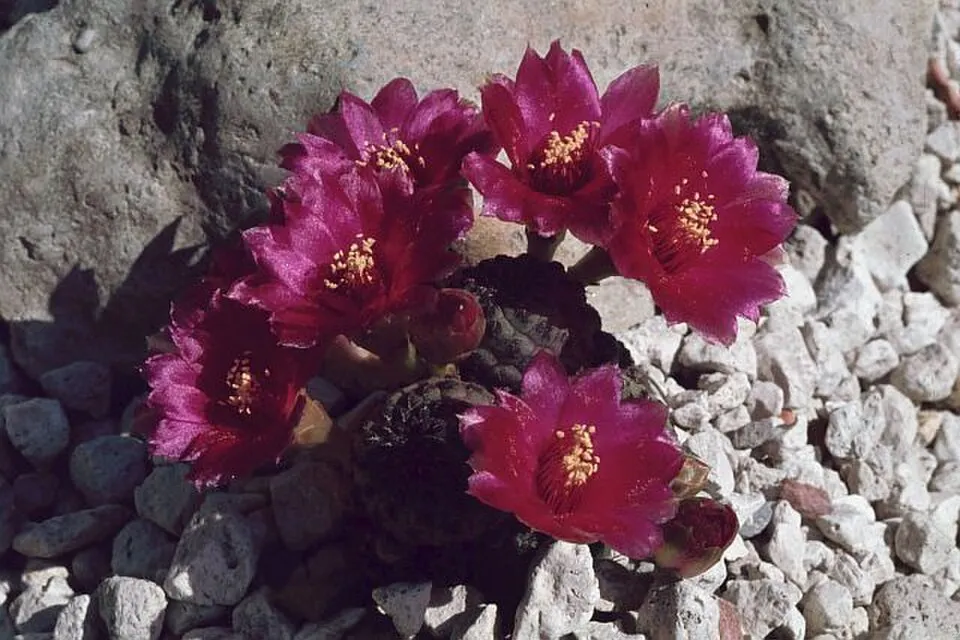
Sulcorebutia rauschii, a captivating perennial succulent, is an esteemed member of the Cactaceae family, native to the arid, rocky slopes of the Bolivian Andes, specifically found at elevations between 2,500 and 3,500 meters. This specific epithet honors Walter Rausch, a prominent Austrian botanist and cactus expert, highlighting its taxonomic significance. Characteristically small and compact, this species typically forms a solitary, globular to slightly cylindrical stem, reaching a modest height of approximately 10-15 cm and a diameter of 5-8 cm. Over time, mature specimens may produce offsets, forming small clusters or mounds. The stem is distinguished by its deep, often dark green to brownish-purple coloration, a hue that intensifies under strong sunlight, providing a striking contrast to its vibrant blooms.
The surface of the stem is elegantly adorned with prominent, spiraling ribs, which are divided into small, conical tubercles. Each tubercle hosts a small areole, typically producing short, stiff, white or yellowish spines that are not particularly dense or aggressive, contributing to its appealing, 'soft' aesthetic. The root system is generally fibrous but can develop a somewhat thickened taproot in older specimens, aiding in water storage during prolonged dry periods. The most celebrated feature of Sulcorebutia rauschii is undoubtedly its spectacular floral display. In late spring to early summer, funnel-shaped flowers emerge profusely from the apex of the stem, often completely obscuring the plant body.
These blooms are renowned for their intense and varied coloration, ranging from brilliant yellows and fiery oranges to deep reds, magentas, and even violet shades, frequently with contrasting throats. The vibrant hues and delicate petals make them highly sought after by collectors. As a member of the Cactaceae, Sulcorebutia rauschii exhibits classic xerophytic adaptations, including a thick cuticle, CAM (Crassulacean Acid Metabolism) photosynthesis for efficient water use, and specialized stem tissues for water storage. Its natural habitat, characterized by high altitudes, intense sunlight, and well-drained mineral soils, underscores its resilience and specific environmental requirements.
Trusted Scientific References
1. Authoritative external sources for Sulcorebutia rauschii
1.1 Wikipedia — Sulcorebutia rauschii
1.2 Kew POWO (Plants of the World Online)
1.3 PubMed — peer-reviewed research
1.4 NCBI Taxonomy Browser
1.5 GBIF — Global Biodiversity
1.1.Sulcorebutia Rauschii — Key Features
- ✓Striking Stem Coloration — Dark green to brownish-purple stems intensify in strong sunlight.
- ✓Profuse, Bright Flowers — Produces funnel-shaped flowers in yellows, oranges, reds, and magentas.
- ✓Compact, Globular Form — Small, solitary or clustering growth habit ideal for pots and collections.
- ✓Xerophytic Adaptations — Highly adapted to arid environments with efficient water storage.
- ✓Easy to Care For — Relatively low maintenance once its specific light and water needs are met.
- ✓Bolivian Andes Native — Originates from high-altitude, rocky regions of Bolivia.
- ✓Spiraling Ribs and Tubercles — Distinctive stem texture with small, soft spines.
- ✓Cold Hardiness — Tolerates mild frost, but prefers cool, dry winter dormancy.
- ✓Collector's Item — Highly sought after by succulent and cactus enthusiasts globally.
- ✓CAM Photosynthesis — Efficiently conserves water by opening stomata at night.
1.2.Sulcorebutia Rauschii — At-a-Glance Summary
- ✓Sulcorebutia rauschii is a small, vibrant Bolivian cactus known for its striking stem colors and profuse, colorful flowers.
- ✓It's highly prized by collectors for its aesthetic appeal and relatively easy care requirements.
- ✓This xerophytic plant thrives in full sun and well-draining mineral soil, requiring minimal water.
- ✓Primarily an ornamental plant, it offers psychological well-being through cultivation.
- ✓Care involves careful watering, adequate light, and protection from excessive moisture in winter.
- ✓While not traditionally medicinal, its presence may contribute to a calming environment.
2.Sulcorebutia Rauschii — Systematic Position
3.Sulcorebutia Rauschii — Botanical Stats
4.Sulcorebutia Rauschii — Structural Profile
5.Sulcorebutia Rauschii — Geographic Distribution
6.Sulcorebutia Rauschii — Historical Applications
7.Sulcorebutia Rauschii — Bioactive Constituents
- ✓Alkaloids — While not extensively studied in Sulcorebutia rauschii, many Cactaceae species contain various alkaloids, often phenethylamines or isoquinolines, which can have diverse pharmacological effects.
- ✓Flavonoids — These are common plant pigments and antioxidants, likely present in S. rauschii, contributing to its cellular protection and potentially offering anti-inflammatory benefits.
- ✓Phenolic Acids — Widespread in plants, these compounds contribute to antioxidant activity and defense mechanisms, expected to be found in the tissues of S. rauschii.
- ✓Mucilage — Present in many cacti, this polysaccharide-rich viscous substance helps with water retention and may offer emollient or soothing properties if extracted.
- ✓Terpenoids — These diverse organic compounds, including carotenoids responsible for flower coloration, are likely present and may have various biological activities.
- ✓Betalains — These nitrogen-containing pigments are often responsible for red, purple, and yellow colors in cacti and are known for their antioxidant properties.
- ✓Sterols — Plant sterols are essential components of cell membranes and may have implications for cell signaling and defense within the plant.
- ✓Oxalates — Calcium oxalate crystals are common in cacti, serving as a defense mechanism against herbivores and for calcium regulation.
8.Sulcorebutia Rauschii — Modern Studies
- ✓Stress Reduction — The aesthetic appeal of Sulcorebutia rauschii, like many houseplants, can contribute to a calming environment, potentially reducing psychological stress and improving mood.
- ✓Air Purification (Minor) — While not a primary air purifier, cacti like S. rauschii perform CAM photosynthesis, absorbing carbon dioxide at night, which can subtly contribute to indoor air quality.
- ✓Wound Healing (Hypothetical) — Some cacti mucilage contains compounds with emollient properties; however, direct evidence for S. rauschii in wound healing is lacking and would require specific preparation.
- ✓Anti-inflammatory Properties (Speculative) — Certain cactus species contain flavonoids and phenolic compounds with reported anti-inflammatory effects, but this is not specifically studied for S. rauschii.
- ✓Antioxidant Activity (Unconfirmed) — Cacti are known to produce antioxidants to combat environmental stressors; the specific antioxidant profile and potency of S. rauschii remain uncharacterized.
- ✓Digestive Aid (Traditional Context) — Some cactus species are traditionally used for digestive health due to mucilage content, but S. rauschii is not typically consumed for this purpose.
- ✓Skin Hydration (Topical, Unproven) — Mucilaginous extracts from certain cacti can offer topical hydration; this application for S. rauschii is purely theoretical and not supported by evidence.
- ✓Immune Support (Indirect) — Aesthetically pleasing plants can reduce stress, which in turn can positively impact overall immune function; no direct immunomodulatory effects are known for S. rauschii.
- ✓Psychological Well-being — Cultivating and caring for plants, including S. rauschii, has been shown to enhance mental well-being, provide a sense of accomplishment, and foster connection with nature.
- ✓Bioactive Compound Source (Potential) — As a member of Cactaceae, S. rauschii likely contains various secondary metabolites, some of which might possess as-yet-undiscovered biological activities.
8.1.Sulcorebutia Rauschii — Therapeutic Indications
9.Sulcorebutia Rauschii — Risk Profile
9.1.Sulcorebutia Rauschii — Possible Adverse Reactions
- ✓Skin Irritation — While spines are not aggressive, accidental pricks can cause minor skin irritation or discomfort.
- ✓Allergic Reactions — Rare, but some individuals may experience allergic reactions to plant sap or pollen.
- ✓Toxicity (Ingestion) — Not intended for ingestion; general caution is advised as specific toxicity data for S. rauschii is lacking.
- ✓Rot from Overwatering — Excessive watering can lead to root rot and plant death, a common issue with cacti.
- ✓Pest Infestation — Susceptible to common succulent pests like mealybugs or spider mites if not properly cared for.
- ✓Fungal Diseases — Poor air circulation or high humidity can lead to fungal infections on the stem.
9.2.Sulcorebutia Rauschii — Clinical Safety Notes
- ✓Non-toxic (Ornamental Use) — Considered safe for ornamental purposes; not known to be toxic through casual contact.
- ✓Keep Out of Reach — Advised to keep away from small children and pets to prevent accidental ingestion or injury from spines.
- ✓Handling Precautions — Wear gloves when handling to avoid minor pricks from spines, though they are generally soft.
- ✓Avoid Ingestion — Not for internal consumption; specific medicinal uses are not established for this species.
- ✓Proper Ventilation — Ensure good air circulation when growing indoors to prevent mold and mildew.
- ✓Pest Management — Regularly inspect for pests and treat promptly with appropriate, non-toxic solutions to maintain plant health.
- ✓Environmental Suitability — Grow in conditions mimicking its natural arid habitat to ensure plant vitality and reduce stress.
10.Sulcorebutia Rauschii — Preparation & Dosage
- ✓Ornamental Cultivation — Primarily grown as an ornamental succulent for its unique form and vibrant flowers in rock gardens, xeriscapes, or indoor collections.
- ✓Home Decor — Used as a decorative houseplant, adding natural beauty and a touch of the desert to indoor spaces.
- ✓Xeriscaping — Ideal for drought-tolerant landscaping due to its minimal water requirements and adaptability to arid conditions.
- ✓Educational Display — Featured in botanical gardens and educational exhibits to showcase Cactaceae diversity and xerophytic adaptations.
- ✓Photography Subject — Highly valued by photographers for its striking colors and intricate structures, especially during its blooming phase.
- ✓Plant Collection — A prized specimen for cactus and succulent collectors due to its aesthetic appeal and relatively easy care.
11.Sulcorebutia Rauschii — Growth Requirements
- ✓Sunlight — Requires full sun to light shade; strong light enhances stem coloration and flower production.
- ✓Watering — Water moderately during the growing season (spring/summer), allowing soil to dry completely between waterings; keep strictly dry in winter.
- ✓Soil — Prefers a very permeable, coarse mineral soil with excellent drainage to prevent root rot.
- ✓Temperature — Frost hardy down to -5°C (23°F) but best overwintered in a cool, dry place (0-10°C) for optimal health and flowering.
- ✓Potting — Use deep pots to accommodate its taproot; repot every 2-3 years with fresh, well-draining potting mix.
- ✓Fertilization — Apply a high-potassium liquid feed occasionally during the active growing period for robust growth and flowering.
- ✓Air Circulation — Good air circulation is crucial to prevent fungal diseases, especially in humid conditions.
- ✓Propagation — Easily propagated from offsets (pups) or by seeds, which require specific germination conditions.
Reviewed by the Flora Medical Global Botanical Review Panel
Multi-disciplinary editorial group · Botany · Ethnobotany · Herbal-medicine literature
Who reviewed this: This page was checked by the Flora Medical Global Botanical Review Panel — an in-house editorial group of botany graduates, ethnobotany researchers, and horticulture practitioners who collectively maintain our 7,000+ plant encyclopedia. Meet the team.
Our 4-step verification process
1. Taxonomic verification
Scientific names and synonyms cross-checked against Kew POWO, World Flora Online, and The Plant List.
2. Phytochemical & medicinal cross-reference
Active compounds, traditional uses, and reported activities are cross-referenced with PubMed, USDA Dr. Duke's database, and peer-reviewed ethnobotanical literature.
3. Conservation & distribution check
Distribution, ecology, and conservation status confirmed against GBIF occurrence records and the IUCN Red List.
4. Editorial & safety review
Every entry passes an editorial pass for clarity, originality, and safety notices (toxicity, contraindications, dosage caveats) before publication.
Last reviewed:
Important medical disclaimer: This content is for educational and research purposes only. It is not medical advice and is not a substitute for consultation with a licensed healthcare provider. Do not use any herb to self-treat a medical condition without professional guidance.
Editorial Note: This page is for educational and research purposes only and is not medical advice.
Written by: Flora Medical Global Editorial Team
Reviewed by: Flora Medical Global Botanical Review Panel
Last Updated: June 15, 2026





Sulcorebutia Rauschii — Comments & Community Reviews
Rate this plant