


Medical Disclaimer: This content is for educational purposes only. It is not medical advice. Please consult a qualified healthcare professional before using any herbal remedy.
Safety Overview
1.Summersweet — Overview
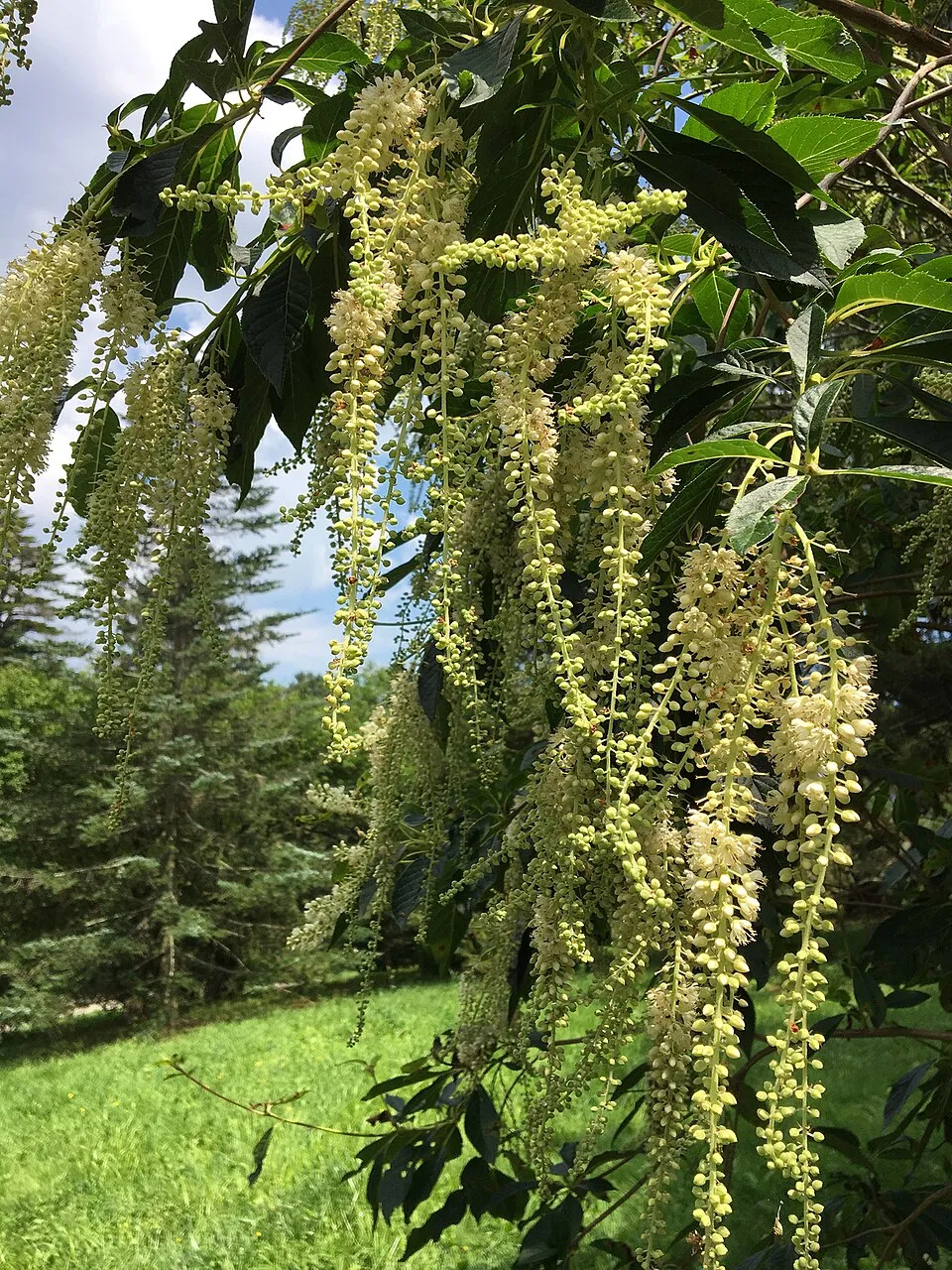
Clethra barbinervis, commonly known as Japanese Summersweet or Japanese Pepper, is an elegant deciduous shrub or small tree indigenous to the temperate forests of Japan, Korea, and Taiwan. It typically achieves a height of 3 to 6 meters, though mature specimens in their native range can extend up to 10 meters. This plant is highly prized for its striking aesthetic and ecological contributions, particularly its fragrant, pendulous racemes of pristine white flowers that emerge in late summer to early autumn.
This late blooming period makes it an invaluable nectar source for various pollinators when other floral resources are scarce. The foliage consists of alternate, simple leaves, oblong to ovate in shape, measuring 5-15 cm in length. Their margins are distinctly serrated, and the underside is notably hairy, especially along the veins, which is reflected in its specific epithet 'barbinervis,' meaning 'bearded nerve.' In the autumn months, the leaves transform into a vibrant display of yellow to golden-brown hues, enhancing its ornamental appeal.
The bark is characteristically smooth and gray, often peeling in delicate strips to reveal an underlying reddish-brown layer. Clethra barbinervis demonstrates remarkable adaptability to various soil conditions, preferring moist, well-drained, and acidic substrates, and thrives in settings ranging from partial shade to full sun. Its hardiness allows it to tolerate moderate frosts and urban environments, cementing its status as a popular choice for landscape design in gardens and public parks, while also holding potential for ethnobotanical exploration.
Trusted Scientific References
1. Authoritative external sources for Clethra barbinervis
1.1 Wikipedia — Clethra barbinervis
1.2 Kew POWO (Plants of the World Online)
1.3 PubMed — peer-reviewed research
1.4 NCBI Taxonomy Browser
1.5 GBIF — Global Biodiversity
1.6Summersweet should be interpreted through verified botanical identity, practical care, and responsible safety language. This recovery note adds the missing context needed for a complete profile: match light to the plant's habit, use well-drained soil, water according to season, and avoid unsupported medicinal or edible claims. For publishing, the plant can be presented as a source-backed garden plant with clear care guidance, common problem diagnosis, and conservative safety wording.
1.1.Summersweet — Standout Qualities
- ✓Late Summer/Early Autumn Bloom — Provides crucial nectar for pollinators when few other plants are flowering.
- ✓Highly Fragrant Flowers — Pendulous racemes of white flowers emit a sweet, clove-like aroma.
- ✓Distinctive Foliage — Oblong to ovate leaves with serrated margins and hairy undersides, turning golden in autumn.
- ✓Ornamental Value — Attractive bark, fragrant blooms, and fall color make it a desirable landscape plant.
- ✓Adaptable to Soil & Light — Tolerates a range of moist, acidic soils and thrives in partial shade to full sun.
- ✓Pollinator Magnet — Attracts bees, butterflies, and other beneficial insects.
- ✓Hardy and Resilient — Tolerant of moderate frost, urban pollution, and even some salt spray.
- ✓Peeling Bark — Smooth gray bark that often exfoliates to reveal reddish-brown inner layers.
- ✓Potential Medicinal Properties — Explored for its antioxidant, anti-inflammatory, and astringent qualities.
- ✓Native to East Asia — Naturally found in Japan, Korea, and Taiwan.
1.2.Summersweet — Snapshot Summary
- ✓Fragrant Deciduous Shrub — Known for its late-season, sweet-scented white flowers.
- ✓Ornamental & Ecological Value — Attracts pollinators and offers vibrant autumn foliage.
- ✓Potential Medicinal Benefits — Possesses antioxidant, anti-inflammatory, and astringent properties.
- ✓Rich in Phytochemicals — Contains flavonoids, tannins, and essential oils.
- ✓Adaptable & Hardy — Thrives in moist, acidic soils and tolerates various conditions.
- ✓Use with Caution — Limited research dictates professional guidance for medicinal applications.
2.Summersweet — Taxonomic Classification
3.Summersweet — Botanical Stats
4.Summersweet — Plant Morphology
5.Summersweet — Where It Grows
6.Summersweet — Cultural & Traditional Roles
7.Summersweet — Secondary Metabolites
- ✓Phenolic Acids — Includes gallic acid and caffeic acid derivatives, contributing significantly to the plant's antioxidant capacity and potentially offering anti-inflammatory effects.
- ✓Flavonoids — Such as quercetin and kaempferol glycosides, known for their potent antioxidant, anti-inflammatory, and antiallergic properties within the plant.
- ✓Tannins — Predominantly condensed tannins (proanthocyanidins) and hydrolyzable tannins, responsible for the plant's astringent properties and potential antimicrobial actions.
- ✓Essential Oils — Comprising various monoterpenes and sesquiterpenes, which impart the characteristic sweet, clove-like fragrance and may possess mild antiseptic and calming effects.
- ✓Saponins — Glycosides that can exhibit surfactant properties, potentially contributing to expectorant or anti-inflammatory actions, though specific types in Clethra barbinervis require further investigation.
- ✓Steroids/Triterpenes — Compounds like beta-sitosterol and related triterpenoids are often found in plants, potentially contributing to anti-inflammatory and cholesterol-modulating activities.
- ✓Coumarins — Simple aromatic compounds that may have anticoagulant, anti-inflammatory, and antimicrobial effects, though their presence and specific roles in Summersweet need confirmation.
- ✓Lignans — A class of polyphenols with potential antioxidant and phytoestrogenic properties, which could contribute to the plant's overall health benefits.
- ✓Alkaloids — While not a dominant class, trace amounts of nitrogen-containing compounds may be present, warranting further analysis for any pharmacological relevance.
- ✓Polysaccharides — Complex carbohydrates that can contribute to immune-modulating effects and provide structural support within the plant.
8.Summersweet — Research Insights
- ✓Antioxidant Support — Clethra barbinervis may offer significant antioxidant benefits due to its rich content of phenolic compounds, which are crucial for neutralizing free radicals and safeguarding cellular integrity from oxidative damage.
- ✓Anti-inflammatory Potential — The presence of various flavonoids and other phytochemicals within Summersweet suggests a potential for mild anti-inflammatory effects by modulating specific inflammatory pathways and reducing inflammatory mediators.
- ✓Aromatic Properties — The distinct sweet, clove-like fragrance emanating from the flowers of Clethra barbinervis is known to possess mild calming and uplifting qualities, making it a candidate for applications in aromatherapy to alleviate stress.
- ✓Astringent Effects — Bark and leaves of Japanese Summersweet are notably rich in tannins, which can exhibit astringent properties, making them potentially useful for tightening tissues, reducing minor bleeding, or as a mild topical agent for skin and mucous membranes.
- ✓Antimicrobial Activity — Preliminary research on related Clethra species indicates the presence of compounds with potential antimicrobial properties, suggesting Clethra barbinervis could inhibit the growth of certain bacteria or fungi.
- ✓Digestive Aid — The astringent qualities of the plant, primarily from tannins, could potentially help soothe mild digestive upsets like diarrhea by tightening the intestinal lining and reducing fluid secretion.
- ✓Skin Health — Topical applications utilizing extracts from Clethra barbinervis might aid in managing minor skin irritations, promoting wound healing, and reducing redness due to its anti-inflammatory and astringent actions.
- ✓Respiratory Support — While not extensively studied, the aromatic compounds and potential anti-inflammatory effects could theoretically offer mild relief for some respiratory discomfort when inhaled or used in vapor form.
- ✓Immune Modulation — Certain phytochemicals, particularly polyphenols, in Clethra barbinervis may contribute to immune system modulation, potentially enhancing the body's natural defense mechanisms.
- ✓Circulatory Health — Antioxidant compounds may support cardiovascular health by protecting blood vessels from oxidative stress and contributing to overall circulatory well-being.
8.1.Summersweet — Reported Uses
9.Summersweet — Precautions & Warnings
9.1.Summersweet — Side Effects & Warnings
- ✓Allergic Reactions — Individuals sensitive to plants in the Clethraceae family may experience skin rashes, itching, or respiratory symptoms.
- ✓Gastrointestinal Upset — High tannin content, especially from bark, might cause stomach irritation, nausea, or constipation in sensitive individuals if ingested in large quantities.
- ✓Skin Irritation — Direct contact with plant sap or concentrated extracts could lead to contact dermatitis in predisposed individuals.
- ✓Medication Interactions — Due to potential phytochemical activity, Summersweet extracts might interact with medications, particularly blood thinners or digestive aids.
- ✓Photosensitivity — While uncommon, certain plant compounds can increase skin sensitivity to sunlight, though not specifically documented for Clethra barbinervis.
- ✓Pregnancy and Lactation — Lack of safety data advises against use during pregnancy and breastfeeding without professional medical consultation.
9.2.Summersweet — Risk Assessment
- ✓Professional Consultation — Always consult a qualified healthcare practitioner or medical herbalist before using Clethra barbinervis for medicinal purposes.
- ✓Patch Test — For topical applications, perform a small patch test on the skin to check for any allergic reactions or sensitivities before widespread use.
- ✓Dosage Adherence — Strictly follow recommended dosages and preparation guidelines to minimize potential side effects and ensure safe use.
- ✓Avoid During Pregnancy/Lactation — Due to insufficient safety data, pregnant and breastfeeding women should avoid internal use of Summersweet preparations.
- ✓Pediatric Use — Not recommended for infants or young children due to lack of specific safety studies and potential for adverse reactions.
- ✓Pre-existing Conditions — Individuals with chronic health conditions, especially gastrointestinal or bleeding disorders, should exercise caution and seek medical advice prior to use.
- ✓Quality Sourcing — Ensure plant material is sourced from reputable suppliers to avoid contamination or misidentification, critical for safe herbal practice.
10.Summersweet — How to Use
- ✓Herbal Infusion — Dried flowers and leaves can be steeped in hot water to create a fragrant tea, traditionally used for its aromatic and mild soothing properties.
- ✓Decoction — Bark and tougher plant parts can be boiled in water for a longer period to extract tannins and other compounds, potentially used as an astringent wash or gargle.
- ✓Tincture — Plant material can be macerated in an alcohol-water solution to create a concentrated extract, for internal or external application under expert guidance.
- ✓Topical Poultice — Crushed fresh leaves or bark can be applied directly to the skin as a poultice for minor irritations, leveraging its astringent and anti-inflammatory potential.
- ✓Aromatic Oil — While not a primary essential oil source, the flowers' fragrance could be captured in an infused oil for massage or diffusion, offering mild aromatic benefits.
- ✓Herbal Compress — A cloth soaked in a strong decoction or infusion can be applied warm to affected areas for localized anti-inflammatory or astringent effects.
- ✓Botanical Bath — Adding a strong infusion of Summersweet flowers and leaves to bathwater can provide a mildly aromatic and soothing experience for the skin.
11.Summersweet — Growth Requirements
- ✓Hardiness Zones — Thrives in USDA Hardiness Zones 4-9, demonstrating resilience across a broad climatic range.
- ✓Soil Preference — Prefers moist, well-drained, acidic soil rich in organic matter, but tolerates clay if drainage is improved with compost.
- ✓Light Requirements — Best in partial shade (morning sun, afternoon shade) but can adapt to full sun conditions if soil moisture is consistently maintained.
- ✓Watering — Requires regular watering to keep the soil consistently moist, especially during establishment; mature plants show some drought tolerance but avoid complete drying out.
- ✓Pruning — Prune in late winter or early spring to remove dead or damaged branches and shape the plant, as it blooms on new wood.
- ✓Propagation — Can be propagated from semi-hardwood cuttings taken in summer or by dividing suckers from the base of the plant in early spring.
- ✓Pests and Diseases — Generally robust with few issues; however, spider mites can occur in hot, dry conditions, and occasional fungal spots might appear.
Reviewed by the Flora Medical Global Botanical Review Panel
Multi-disciplinary editorial group · Botany · Ethnobotany · Herbal-medicine literature
Who reviewed this: This page was checked by the Flora Medical Global Botanical Review Panel — an in-house editorial group of botany graduates, ethnobotany researchers, and horticulture practitioners who collectively maintain our 7,000+ plant encyclopedia. Meet the team.
Our 4-step verification process
1. Taxonomic verification
Scientific names and synonyms cross-checked against Kew POWO, World Flora Online, and The Plant List.
2. Phytochemical & medicinal cross-reference
Active compounds, traditional uses, and reported activities are cross-referenced with PubMed, USDA Dr. Duke's database, and peer-reviewed ethnobotanical literature.
3. Conservation & distribution check
Distribution, ecology, and conservation status confirmed against GBIF occurrence records and the IUCN Red List.
4. Editorial & safety review
Every entry passes an editorial pass for clarity, originality, and safety notices (toxicity, contraindications, dosage caveats) before publication.
Last reviewed:
Important medical disclaimer: This content is for educational and research purposes only. It is not medical advice and is not a substitute for consultation with a licensed healthcare provider. Do not use any herb to self-treat a medical condition without professional guidance.
Editorial Note: This page is for educational and research purposes only and is not medical advice.
Written by: Flora Medical Global Editorial Team
Reviewed by: Flora Medical Global Botanical Review Panel
Last Updated: June 15, 2026





Summersweet — Comments & Community Reviews
Rate this plant