
Medical Disclaimer: This content is for educational purposes only. It is not medical advice. Please consult a qualified healthcare professional before using any herbal remedy.
Safety Overview
1.Sunflower Teddy Bear — Essential Profile
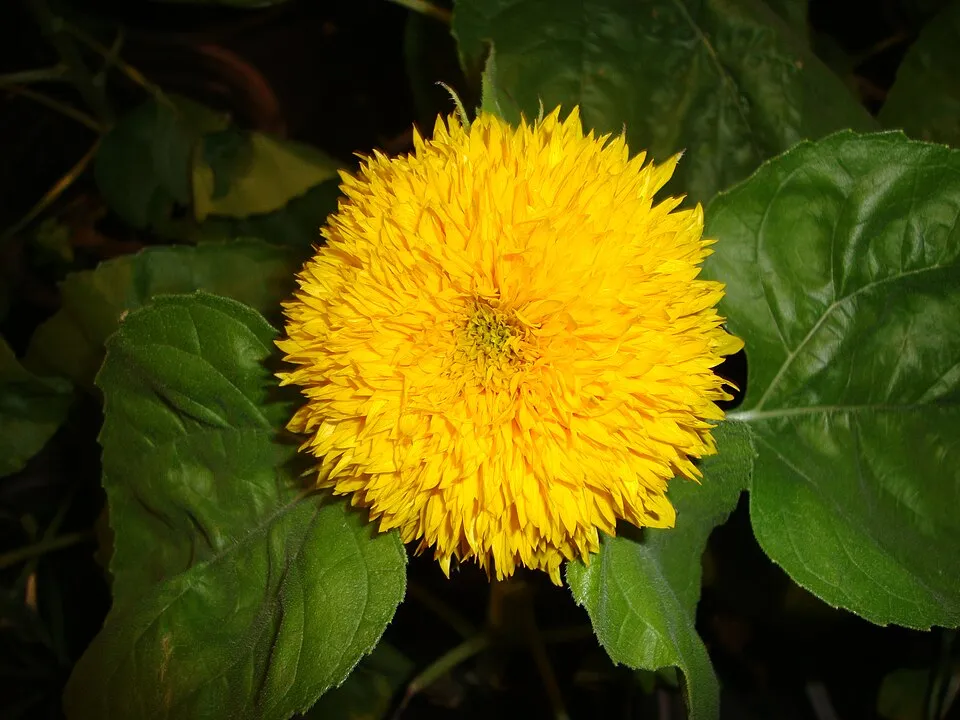
The Sunflower 'Teddy Bear' (Helianthus annuus 'Teddy') is a charming annual cultivar of the widespread common sunflower, primarily celebrated for its distinctive ornamental appeal. Unlike the towering, single-headed classic sunflowers, 'Teddy Bear' typically reaches a compact height of 2 to 3 feet, making it an ideal choice for smaller gardens, containers, and decorative borders. Its most striking feature is its fully double, golden-yellow blooms, which are entirely composed of densely packed ray florets, creating a fluffy, pom-pom-like appearance that truly evokes the warmth of a 'teddy bear'.
These delightful flowers, usually 4 to 6 inches in diameter, lack a visible central disk, contributing to their unique, shaggy texture. Originating from the broader Helianthus annuus species native to North America and Mexico, this cultivar retains the hardy, sun-loving characteristics of its wild ancestors. It is a prolific bloomer, producing multiple flowers from mid-summer until the first hard frost, attracting a variety of pollinators such as bees and butterflies, and providing excellent material for cut flower arrangements.
While 'Teddy Bear' is cultivated for its aesthetic value, the parent species, Helianthus annuus, has a rich ethnobotanical history, with its seeds, leaves, and roots traditionally utilized across various cultures for their nutritional and medicinal properties.
Trusted Scientific References
1. Authoritative external sources for Helianthus annuus Teddy
1.1 Wikipedia — Helianthus annuus Teddy
1.2 Kew POWO (Plants of the World Online)
1.3 PubMed — peer-reviewed research
1.4 NCBI Taxonomy Browser
1.5 GBIF — Global Biodiversity
1.6Sunflower Teddy Bear should be interpreted through verified botanical identity, practical care, and responsible safety language. This recovery note adds the missing context needed for a complete profile: match light to the plant's habit, use well-drained soil, water according to season, and avoid unsupported medicinal or edible claims. For publishing, the plant can be presented as a source-backed garden plant with clear care guidance, common problem diagnosis, and conservative safety wording.
1.1.Sunflower Teddy Bear — Notable Characteristics
- ✓Unique 'Teddy Bear' — Unique 'Teddy Bear' cultivar of Helianthus annuus.
- ✓Distinctive fully double, golden — yellow, pom-pom-like blooms.
- ✓Compact, dwarf growth habit, typically 2 — 3 feet tall.
- ✓Prolific bloomer, producing multiple flowers from mid — summer until first frost.
- ✓Excellent ornamental plant — Excellent ornamental plant for gardens, containers, and cut flower arrangements.
- ✓Attracts a variety — Attracts a variety of pollinators, including bees and butterflies.
- ✓Seeds (from H. — Seeds (from H. annuus species) are highly nutritious, rich in healthy fats, vitamins, and minerals.
- ✓Supports cardiovascular, immune, — Supports cardiovascular, immune, and skin health (species benefits).
- ✓Exhibits good resistance — Exhibits good resistance to common pests and diseases for a sunflower cultivar.
- ✓Versatile plant, offering — Versatile plant, offering both aesthetic appeal and significant health benefits from its species.
1.2.Sunflower Teddy Bear — Quick Summary
- ✓Helianthus annuus 'Teddy Bear' is a unique dwarf ornamental sunflower cultivar.
- ✓Features distinctive fluffy, fully double, golden-yellow, pom-pom-like blooms.
- ✓The broader Helianthus annuus species is a nutritional powerhouse, especially its seeds and oil.
- ✓Rich in healthy fats, Vitamin E, B vitamins, and essential minerals like magnesium, selenium, and zinc.
- ✓Offers significant medicinal benefits for cardiovascular health, immune support, and skin nourishment.
- ✓An easy-to-grow annual plant, it thrives in full sun and attracts beneficial pollinators.
2.Sunflower Teddy Bear — Botanical Identity
3.Sunflower Teddy Bear — Vital Statistics
4.Sunflower Teddy Bear — Botanical Features
5.Sunflower Teddy Bear — Ecological Habitat
6.Sunflower Teddy Bear — Traditional Uses
7.Sunflower Teddy Bear — Phytochemistry
- ✓Fatty Acids — Predominantly Linoleic acid (omega-6) and Oleic acid (omega-9), essential for cellular integrity, energy storage, and anti-inflammatory processes.
- ✓Vitamin E (Tocopherols) — Primarily alpha-tocopherol, a powerful lipid-soluble antioxidant crucial for cell protection, immune function, and skin health.
- ✓B Vitamins — Includes Thiamine (B1) and Pyridoxine (B6), vital coenzymes for carbohydrate metabolism, nerve function, and red blood cell formation.
- ✓Minerals — Rich in Magnesium, Selenium, Zinc, Copper, and Manganese, which act as cofactors for numerous enzymatic reactions, support bone health, and enhance antioxidant defenses.
- ✓Flavonoids — Compounds like Quercetin and Kaempferol, found in petals and leaves, provide antioxidant and anti-inflammatory benefits.
- ✓Phenolic Acids — Such as Chlorogenic acid and Caffeic acid, potent antioxidants that contribute to the plant's protective mechanisms and health benefits.
- ✓Phytosterols — Including Beta-sitosterol, which structurally resembles cholesterol and can help reduce its absorption in the gut, supporting cardiovascular health.
- ✓Proteins and Amino Acids — Sunflower seeds are a good source of plant-based protein, providing essential amino acids necessary for tissue repair and enzyme synthesis.
- ✓Dietary Fiber — Both soluble and insoluble fibers contribute to digestive health, blood sugar regulation, and satiety.
8.Sunflower Teddy Bear — Pharmacological Findings
- ✓Antioxidant Protection — Rich in Vitamin E, flavonoids, and phenolic acids, sunflower components effectively scavenge free radicals, protecting cellular structures from oxidative damage.
- ✓Cardiovascular Health Support — The healthy balance of polyunsaturated and monounsaturated fats (linoleic and oleic acids), fiber, and phytosterols in sunflower seeds helps lower LDL ('bad') cholesterol and supports overall heart function.
- ✓Anti-inflammatory Effects — Vitamin E and various phenolic compounds exhibit anti-inflammatory properties, potentially mitigating chronic inflammation throughout the body.
- ✓Immune System Boosting — High levels of zinc, selenium, and Vitamin E contribute to a robust immune response, enhancing the body's ability to fight off infections.
- ✓Skin Health Enhancement — Topically applied sunflower oil, abundant in linoleic acid and Vitamin E, acts as an emollient, supporting the skin barrier, reducing dryness, and promoting healing.
- ✓Digestive Regularity — The dietary fiber present in sunflower seeds aids in maintaining healthy bowel function, preventing constipation, and supporting gut microbiome balance.
- ✓Bone Health Maintenance — Essential minerals like magnesium, copper, and manganese found in sunflower seeds play crucial roles in bone formation and density, reducing the risk of osteoporosis.
- ✓Energy Metabolism Support — B vitamins such as thiamine and pyridoxine are vital cofactors in energy production pathways, helping convert food into usable energy.
- ✓Hormonal Balance — Selenium and zinc are important for thyroid function and hormone regulation, contributing to overall endocrine system health.
- ✓Nervous System Function — Magnesium and B vitamins are critical for neurotransmitter synthesis and nerve impulse transmission, supporting cognitive function and reducing neurological stress.
8.1.Sunflower Teddy Bear — Therapeutic Indications
9.Sunflower Teddy Bear — Cautions & Contraindications
9.1.Sunflower Teddy Bear — Caution Notes
- ✓Allergic Reactions — Individuals sensitive to the Asteraceae family (ragweed, marigolds) may experience allergic reactions to sunflower pollen or seeds, including skin rashes, asthma, or anaphylaxis.
- ✓Digestive Upset — Consuming large quantities of sunflower seeds, particularly due to their high fiber content, can lead to bloating, gas, or diarrhea in some individuals.
- ✓Weight Gain — Due to their high calorie and fat content, excessive consumption of sunflower seeds can contribute to unwanted weight gain if not balanced with overall dietary intake.
- ✓Selenium Toxicity — While selenium is essential, very high intake from excessive sunflower seed consumption (especially from selenium-rich soils) can lead to selenosis, causing hair loss, nail brittleness, and neurological symptoms.
- ✓Phytic Acid Content — Sunflower seeds contain phytic acid, which can bind to minerals like zinc, iron, and calcium, potentially reducing their absorption if consumed in very large amounts.
- ✓Pesticide Residues — Non-organic sunflower products may contain pesticide residues, which can pose health risks. Opt for organic whenever possible.
- ✓Heavy Metal Accumulation — Sunflowers are known bioaccumulators of certain heavy metals from soil, so sourcing from clean environments is important.
9.2.Sunflower Teddy Bear — Safety Profile
- ✓Allergy Precaution — Individuals with known allergies to ragweed or other Asteraceae family plants should exercise caution due to potential cross-reactivity.
- ✓Moderation in Consumption — Consume sunflower seeds and oil in moderation as part of a balanced diet to avoid excessive calorie intake or potential over-ingestion of certain minerals like selenium.
- ✓Pregnancy and Lactation — While generally considered safe in food amounts, pregnant or lactating individuals should consult a healthcare professional before using sunflower products in medicinal doses.
- ✓Drug Interactions — High doses of Vitamin E, present in sunflower products, theoretically could interact with anticoagulant medications; however, dietary intake is usually not significant enough to cause concern.
- ✓Children — Sunflower seeds and oil are generally safe for children in appropriate food portions, but choking hazards from whole seeds should be considered for very young children.
- ✓Quality Sourcing — Opt for organic, cold-pressed sunflower oil and seeds from reputable sources to minimize exposure to pesticides, heavy metals, and ensure product purity and quality.
- ✓Storage — Store sunflower seeds and oil in cool, dark, airtight containers to prevent rancidity, which can lead to the formation of unhealthy compounds.
10.Sunflower Teddy Bear — Preparation Methods
- ✓Raw or Roasted Seeds — Consume sunflower seeds as a nutritious snack, or add them to salads, yogurts, and cereals for a boost of healthy fats, protein, and fiber.
- ✓Cold-Pressed Oil — Utilize sunflower oil (from the species H. annuus) in culinary applications for dressings, light sautéing, or as a base for homemade skincare products due to its emollient properties.
- ✓Herbal Infusion — Prepare an infusion from dried sunflower leaves or petals (from the general H. annuus species) for a mild herbal tea, traditionally used for its purported diuretic or expectorant qualities.
- ✓Topical Poultice — A paste made from crushed sunflower seeds or leaves can be applied topically as a poultice to soothe minor skin irritations, wounds, or inflammatory conditions in traditional practices.
- ✓Sprouted Seeds — Sprouting sunflower seeds can enhance their nutritional profile, making them an excellent addition to salads and sandwiches for increased digestibility and nutrient bioavailability.
- ✓Tincture or Extract — In traditional herbalism, extracts or tinctures made from sunflower roots or leaves have been prepared for internal use, though this requires careful dosage and professional guidance.
- ✓Culinary Ingredient — Incorporate sunflower seeds into baked goods like bread, muffins, or granola bars, or use sunflower butter as an alternative to nut butters for a nutritious spread.
11.Sunflower Teddy Bear — Cultivation & Care
- ✓Site Selection — Choose a location with full sun exposure, receiving at least 6-8 hours of direct sunlight daily.
- ✓Soil Preparation — Plant in moderately fertile, well-draining sandy loam soil with a pH between 6.0 and 6.8. Amend with compost to enrich fertility.
- ✓Sowing Seeds — Direct sow 'Teddy Bear' sunflower seeds outdoors after the last frost, when soil temperatures consistently reach 60-85°F (15-29°C).
- ✓Planting Depth and Spacing — Plant seeds 1/2 inch deep and 2 inches apart. Once seedlings emerge and are sturdy, thin them to 18 inches apart to allow for proper growth.
- ✓Watering — Provide approximately one inch of water per week, adjusting for rainfall. Water deeply when the top 2 inches of soil feel dry, ensuring soil is moist to 6 inches deep, but avoid overwatering to prevent root rot.
- ✓Fertilization — Before planting, incorporate compost or a balanced NPK 10-10-10 fertilizer. For sustained growth, a monthly application of liquid fertilizer can be beneficial, especially in less fertile soils or for container-grown plants.
- ✓Deadheading — Regularly remove spent blooms (deadhead) to encourage the plant to produce more flowers throughout the growing season, extending its beautiful display until the first frost.
Reviewed by the Flora Medical Global Botanical Review Panel
Multi-disciplinary editorial group · Botany · Ethnobotany · Herbal-medicine literature
Who reviewed this: This page was checked by the Flora Medical Global Botanical Review Panel — an in-house editorial group of botany graduates, ethnobotany researchers, and horticulture practitioners who collectively maintain our 7,000+ plant encyclopedia. Meet the team.
Our 4-step verification process
1. Taxonomic verification
Scientific names and synonyms cross-checked against Kew POWO, World Flora Online, and The Plant List.
2. Phytochemical & medicinal cross-reference
Active compounds, traditional uses, and reported activities are cross-referenced with PubMed, USDA Dr. Duke's database, and peer-reviewed ethnobotanical literature.
3. Conservation & distribution check
Distribution, ecology, and conservation status confirmed against GBIF occurrence records and the IUCN Red List.
4. Editorial & safety review
Every entry passes an editorial pass for clarity, originality, and safety notices (toxicity, contraindications, dosage caveats) before publication.
Last reviewed:
Important medical disclaimer: This content is for educational and research purposes only. It is not medical advice and is not a substitute for consultation with a licensed healthcare provider. Do not use any herb to self-treat a medical condition without professional guidance.
Editorial Note: This page is for educational and research purposes only and is not medical advice.
Written by: Flora Medical Global Editorial Team
Reviewed by: Flora Medical Global Botanical Review Panel
Last Updated: June 15, 2026





Sunflower Teddy Bear — Comments & Community Reviews
Rate this plant