
Medical Disclaimer: This content is for educational purposes only. It is not medical advice. Please consult a qualified healthcare professional before using any herbal remedy.
Safety Overview
1.Sweet Clover — At a Glance
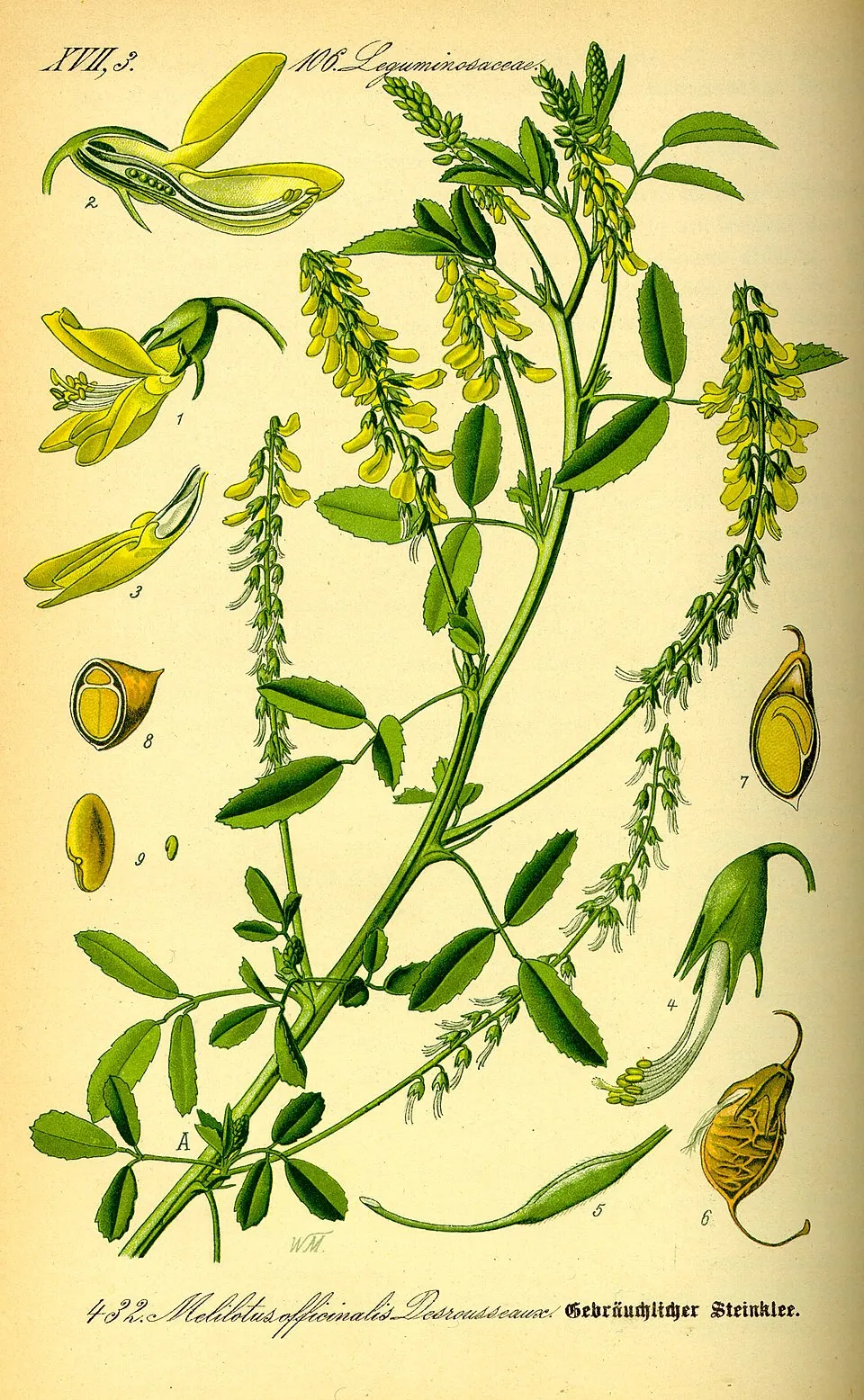
Sweet Clover (Melilotus officinalis), a distinguished member of the Fabaceae family, is a robust perennial herb renowned for its distinctive morphology and significant medicinal properties. This adaptable plant typically attains a height of 30 to 120 cm, characterized by smooth, erect stems that often display a subtle reddish hue, lending it a unique visual appeal in its natural settings. Its leaves are elegantly compound and trifoliate, with each individual leaflet measuring approximately 2 to 4 cm in length. These leaflets are notably lanceolate in shape and feature finely serrated margins, contributing to the plant's delicate yet resilient appearance.
The plant's vibrant flowering period extends from late spring through early autumn, during which it produces elongated racemes abundantly adorned with numerous small, intensely fragrant yellowish-white flowers. Each flower, about 4-6 mm in length, exhibits the characteristic papilionaceous structure typical of leguminous plants, making it a strong attractant for various pollinators, particularly bees. Following successful pollination, the plant develops elongated seed pods, each containing 1 to 4 seeds. These pods mature into a brown, distinctively hairy texture as they dry, signifying the completion of their reproductive cycle.
Sweet Clover demonstrates remarkable ecological versatility, thriving across a diverse range of habitats including open meadows, roadsides, and disturbed soils throughout its native Eurasia, and has successfully naturalized across extensive regions of North America. Taxonomically, Melilotus officinalis is classified within the order Fabales and the genus Melilotus, a genus widely recognized for its crucial nitrogen-fixing capabilities that profoundly enhance soil fertility. This combination of botanical features, ecological adaptability, and beneficial soil interactions underscores its widespread presence in both wild and cultivated environments.
Trusted Scientific References
1. Authoritative external sources for Melilotus officinalis
1.1 Wikipedia — Melilotus officinalis
1.2 Kew POWO (Plants of the World Online)
1.3 PubMed — peer-reviewed research
1.4 NCBI Taxonomy Browser
1.5 GBIF — Global Biodiversity
1.1.Sweet Clover — Distinguishing Points
- ✓Botanical Name — Melilotus officinalis, commonly known as Sweet Clover.
- ✓Family — Fabaceae (Legume family), known for nitrogen fixation.
- ✓Active Compounds — Rich in coumarins (including melilotoside), flavonoids, and phenolic acids.
- ✓Medicinal Uses — Primarily for venous insufficiency, lymphatic edema, bruises, and anti-inflammatory support.
- ✓Distinctive Scent — Emits a sweet, hay-like fragrance, especially when dried, due to coumarin.
- ✓Nitrogen Fixer — Enhances soil fertility, making it valuable in agriculture and ecological restoration.
- ✓Perennial Herb — A hardy, long-lived plant capable of growing 30-120 cm tall.
- ✓Yellowish — White Flowers — Produces numerous small, fragrant flowers in elongated racemes.
- ✓Global Distribution — Native to Eurasia, widely naturalized across North America.
- ✓Cautionary Use — Known for potential interactions with blood thinners and liver concerns.
1.2.Sweet Clover — In Brief
- ✓Sweet Clover (Melilotus officinalis) is a renowned herb from the Fabaceae family.
- ✓Key for vascular health, improving venous insufficiency and lymphatic drainage.
- ✓Contains coumarins, flavonoids, and phenolic acids.
- ✓Used traditionally and in modern herbalism for anti-inflammatory and antioxidant benefits.
- ✓Requires careful dosing due to potential for liver damage and bleeding risks.
- ✓Thrives in temperate climates, easy to cultivate in full sun and well-drained soil.
2.Sweet Clover — Nomenclature & Classification
3.Sweet Clover — Key Data
4.Sweet Clover — Physical Description
5.Sweet Clover — Native Range & Habitat
6.Sweet Clover — Heritage Uses
7.Sweet Clover — Key Phytochemicals
- ✓Coumarins — The most prominent active compounds, including coumarin and its precursor melilotoside. Coumarin is metabolized in the body to form dicoumarol, a potent anticoagulant, and is primarily responsible for the plant's venotonic and lymphatic drainage properties.
- ✓Flavonoids — A diverse group of polyphenols such as kaempferol, quercetin, and their glycosides, contributing to the plant's antioxidant, anti-inflammatory, and capillary-strengthening effects.
- ✓Phenolic Acids — Compounds like caffeic acid and p-coumaric acid, which possess strong antioxidant activity and contribute to the overall protective effects against oxidative stress.
- ✓Saponins — Triterpenoid saponins are found in Sweet Clover, known for their potential expectorant and anti-inflammatory properties, although they are less prominent than coumarins.
- ✓Volatile Oils — Present in small quantities, these contribute to the plant's characteristic fragrance and may possess mild antiseptic qualities.
- ✓Alkaloids — Various nitrogen-containing compounds are present, though their specific medicinal contributions in Sweet Clover are less understood compared to coumarins and flavonoids.
- ✓Tannins — Astringent compounds that may contribute to the plant's traditional use in wound healing and tissue toning.
- ✓Resins — Complex mixtures of organic compounds that often accompany other phytochemicals and may contribute to the plant's overall therapeutic profile.
8.Sweet Clover — Pharmacological Findings
- ✓Venous Insufficiency Support — Sweet Clover is widely recognized for its efficacy in improving symptoms associated with chronic venous insufficiency, such as leg swelling, pain, and heaviness, primarily due to its coumarin content which enhances lymphatic flow and reduces capillary permeability.
- ✓Lymphatic Drainage Enhancement — The plant's active compounds, particularly coumarin, stimulate lymphatic circulation, aiding in the reduction of edema and swelling in conditions like lymphedema.
- ✓Anti-inflammatory Action — Flavonoids and phenolic acids present in Sweet Clover contribute to its anti-inflammatory properties, helping to alleviate localized inflammation and discomfort.
- ✓Antioxidant Protection — Rich in various polyphenolic compounds, Melilotus officinalis offers significant antioxidant benefits, combating oxidative stress and protecting cells from free radical damage.
- ✓Bruise and Hematoma Resolution — Topically, Sweet Clover preparations are used to accelerate the healing of bruises and hematomas by improving local circulation and aiding in the reabsorption of extravasated blood.
- ✓Wound Healing Promotion — Extracts from Sweet Clover have been traditionally applied to promote the healing of minor wounds and skin lesions, attributed to its anti-inflammatory and circulatory-enhancing effects.
- ✓Circulatory Support — By influencing blood flow and vessel integrity, Sweet Clover supports overall healthy circulation, particularly beneficial for peripheral vascular conditions.
- ✓Post-Surgical Edema Reduction — Some research suggests that coumarin, a key compound in Sweet Clover, can help reduce post-operative swelling and edema, facilitating faster recovery.
- ✓Diabetic Neuropathy Symptom Relief — Early studies indicate potential for Sweet Clover extracts to help manage nerve pain and discomfort associated with diabetic peripheral neuropathy, though more research is needed.
- ✓Digestive Health Aid — Traditionally, it has been used to support digestive wellness, though this aspect requires more scientific validation to fully understand the mechanisms.
8.1.Sweet Clover — Indications & Uses
9.Sweet Clover — Safety Considerations
9.1.Sweet Clover — Side Effects & Warnings
- ✓Liver Damage — High doses or prolonged use, especially of fermented plant material containing dicoumarol, can lead to liver toxicity and damage.
- ✓Bleeding Risk — Due to its coumarin content, which can be converted to anticoagulant dicoumarol, excessive intake can increase the risk of bleeding or bruising.
- ✓Allergic Reactions — Some individuals may experience allergic reactions, such as skin rashes or gastrointestinal upset.
- ✓Gastrointestinal Discomfort — Nausea, vomiting, or diarrhea may occur, particularly with higher doses.
- ✓Headaches — Infrequent reports of headaches have been associated with Sweet Clover use.
- ✓Dizziness — Occasional dizziness can occur, especially when starting treatment.
9.2.Sweet Clover — Risk Assessment
- ✓Pregnancy and Breastfeeding — Avoid use during pregnancy and breastfeeding due to insufficient reliable information and potential risks.
- ✓Liver Disease — Contraindicated in individuals with existing liver disease, as it may exacerbate liver damage.
- ✓Bleeding Disorders and Surgery — Discontinue use at least two weeks before any scheduled surgery or dental procedures, and avoid if you have bleeding disorders or are on anticoagulant medications.
- ✓Drug Interactions — Potentiates the effects of anticoagulant and antiplatelet drugs, increasing bleeding risk. Also interacts with hepatotoxic medications.
- ✓Dosage — Use appropriate doses as recommended by a healthcare professional; large amounts are possibly unsafe.
- ✓Product Quality — Ensure products are sourced from reputable suppliers to avoid contaminated or improperly processed material, which can contain harmful levels of dicoumarol.
10.Sweet Clover — Preparation Methods
- ✓Herbal Tea (Infusion) — Dried leaves and flowering tops can be steeped in hot water to create a tea, often consumed for general circulatory support or mild inflammation.
- ✓Tincture — Alcohol-based extracts are prepared from the aerial parts, offering a concentrated form for internal use, typically dosed in drops.
- ✓Poultice or Compress — Fresh or dried crushed plant material can be applied topically as a poultice or infused into a compress to reduce swelling, bruises, and promote wound healing.
- ✓Ointments and Creams — Extracts are incorporated into topical ointments and creams for external application, particularly for varicose veins, edema, and superficial injuries.
- ✓Standardized Extracts — Available in capsule or tablet form, these provide precise dosages of active compounds, often standardized for coumarin content.
- ✓Sitz Bath — For conditions like hemorrhoids or perineal discomfort, an infusion can be added to bathwater for a soothing sitz bath.
- ✓Essential Oil (Rare) — While not a primary use, some extracts may yield trace amounts of volatile compounds, though not typically used as an essential oil.
11.Sweet Clover — Garden Cultivation
- ✓Soil Preference — Thrives in well-drained, fertile loamy or sandy soils, tolerating a range of pH levels from slightly acidic to alkaline (pH 6.0-8.0).
- ✓Sunlight Requirements — Requires full sun exposure for optimal growth, at least 6-8 hours of direct sunlight daily.
- ✓Watering Regimen — Drought-tolerant once established, but benefits from moderate, regular watering, especially during dry spells and flowering periods.
- ✓Propagation — Primarily propagated by seeds, which can be sown directly in spring or fall. Scarification or cold stratification may improve germination rates.
- ✓Climate Adaptability — Best suited for temperate climates, demonstrating good cold hardiness. It can also adapt to subtropical zones if not excessively hot and humid.
- ✓Harvesting — Aerial parts (leaves, stems, flowering tops) are typically harvested during the flowering period when the concentration of active compounds is highest.
- ✓Pest and Disease Resistance — Generally robust, showing good resistance to common pests and diseases, though proper air circulation helps prevent fungal issues.
- ✓Nitrogen Fixation — As a legume, it enriches soil fertility by fixing atmospheric nitrogen through symbiotic bacteria in its root nodules.
Reviewed by the Flora Medical Global Botanical Review Panel
Multi-disciplinary editorial group · Botany · Ethnobotany · Herbal-medicine literature
Who reviewed this: This page was checked by the Flora Medical Global Botanical Review Panel — an in-house editorial group of botany graduates, ethnobotany researchers, and horticulture practitioners who collectively maintain our 7,000+ plant encyclopedia. Meet the team.
Our 4-step verification process
1. Taxonomic verification
Scientific names and synonyms cross-checked against Kew POWO, World Flora Online, and The Plant List.
2. Phytochemical & medicinal cross-reference
Active compounds, traditional uses, and reported activities are cross-referenced with PubMed, USDA Dr. Duke's database, and peer-reviewed ethnobotanical literature.
3. Conservation & distribution check
Distribution, ecology, and conservation status confirmed against GBIF occurrence records and the IUCN Red List.
4. Editorial & safety review
Every entry passes an editorial pass for clarity, originality, and safety notices (toxicity, contraindications, dosage caveats) before publication.
Last reviewed:
Important medical disclaimer: This content is for educational and research purposes only. It is not medical advice and is not a substitute for consultation with a licensed healthcare provider. Do not use any herb to self-treat a medical condition without professional guidance.
Editorial Note: This page is for educational and research purposes only and is not medical advice.
Written by: Flora Medical Global Editorial Team
Reviewed by: Flora Medical Global Botanical Review Panel
Last Updated: June 15, 2026





Sweet Clover — Comments & Community Reviews
Rate this plant