

Medical Disclaimer: This content is for educational purposes only. It is not medical advice. Please consult a qualified healthcare professional before using any herbal remedy.
Safety Overview
1.Syngonium Albo Variegatum — Botanical Snapshot
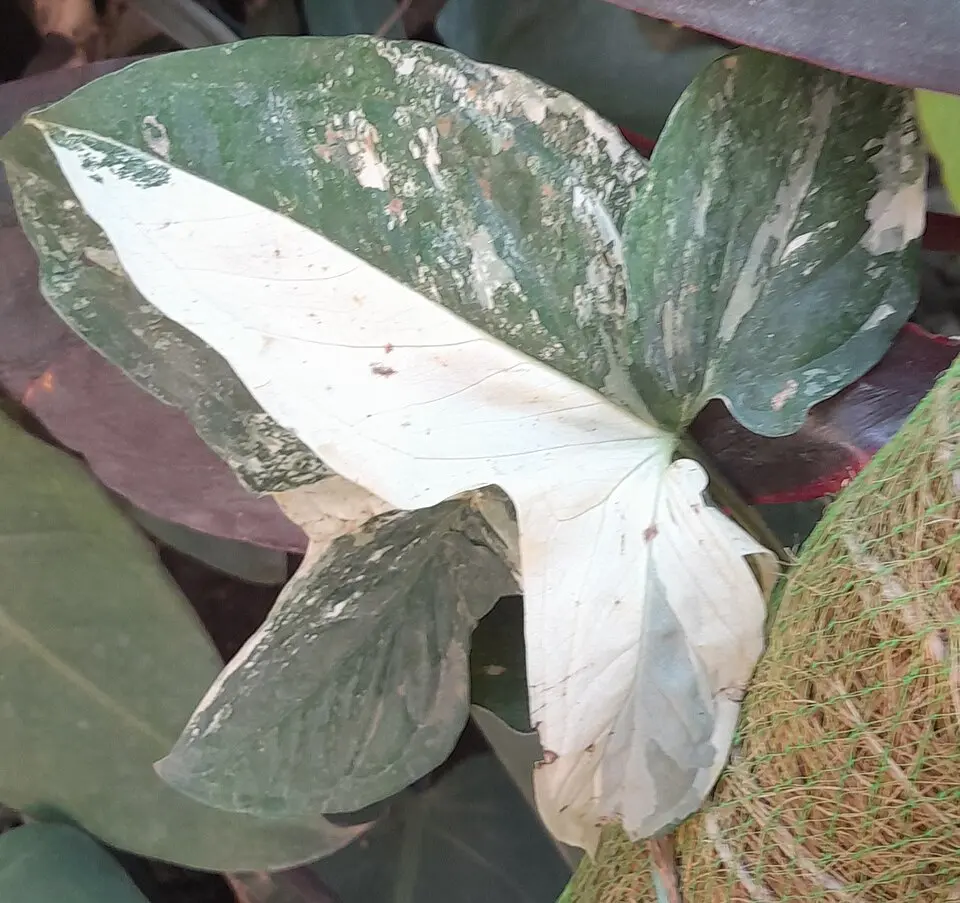
Syngonium podophyllum 'Albo Variegatum', often known as the Arrowhead Plant or Nephthytis, is an exquisite perennial herb within the Araceae family, highly prized for its ornamental value. This specific cultivar stands out due to its striking foliar variegation, where deep green leaves are dramatically adorned with splashes and sectors of pure white, creating a visually captivating display. The plant exhibits a remarkable ontogenetic heteroblasty, meaning its leaf morphology changes significantly with age.
Juvenile leaves are typically arrowhead or heart-shaped, while mature leaves develop into a more deeply lobed or multi-lobed form, a characteristic trait of the Syngonium podophyllum species. In its native tropical and subtropical habitats, spanning from southern Mexico through Central and South America, it thrives as a vigorous hemi-epiphyte, utilizing adventitious roots to climb trees and other vegetation, reaching lengths of 10-20 meters. As an indoor specimen, its adaptable growth habit allows it to be trained as a climber, cascaded from hanging baskets, or maintained as a compact desk plant through consistent pruning.
The unique white variegation, a result of genetic mutation causing localized chlorophyll deficiency, varies individually and is influenced by environmental conditions. While primarily cultivated for aesthetics, the species Syngonium podophyllum is also recognized for its air-purifying capabilities, as noted in the NASA Clean Air Study, demonstrating its potential to remove certain volatile organic compounds from indoor environments. Its natural distribution is widespread, making it a robust and adaptable species.
Trusted Scientific References
1. Authoritative external sources for Syngonium podophyllum Albo Variegatum
1.1 Wikipedia — Syngonium podophyllum Albo Variegatum
1.2 Kew POWO (Plants of the World Online)
1.3 PubMed — peer-reviewed research
1.4 NCBI Taxonomy Browser
1.5 GBIF — Global Biodiversity
1.6Syngonium Albo Variegatum should be interpreted through verified botanical identity, practical care, and responsible safety language. This recovery note adds the missing context needed for a complete profile: match light to the plant's habit, use well-drained soil, water according to season, and avoid unsupported medicinal or edible claims. For publishing, the plant can be presented as a source-backed indoor plant with clear care guidance, common problem diagnosis, and conservative safety wording.
1.1.Syngonium Albo Variegatum — Notable Characteristics
- ✓Striking Variegation — Features vibrant green leaves with prominent white splashes and sectors.
- ✓Ontogenetic Heteroblasty — Exhibits a fascinating change in leaf shape from juvenile (arrowhead) to mature (lobed).
- ✓Air Purifying — Contributes to cleaner indoor air by absorbing certain VOCs.
- ✓Hemi — Epiphytic Growth — Naturally climbs in its native habitat, adaptable to trailing or climbing indoors.
- ✓Low Light Tolerance — Can tolerate lower light conditions, though variegation may diminish.
- ✓High Humidity Lover — Thrives in humid environments, typical of its tropical origin.
- ✓Toxic to Ingest — Contains calcium oxalate crystals, making it poisonous if consumed.
- ✓Easy to Propagate — Readily grows from stem cuttings, making it simple to share and multiply.
- ✓Versatile Display — Can be grown in pots, hanging baskets, or trained on supports.
- ✓Popular Houseplant — Highly sought after for its decorative value and ease of care.
1.2.Syngonium Albo Variegatum — Snapshot Summary
- ✓Syngonium Albo Variegatum is an ornamental aroid known for stunning white and green variegated leaves.
- ✓Primarily an indoor plant, valued for aesthetic appeal and air-purifying qualities.
- ✓Contains calcium oxalate crystals, making it toxic if ingested and an irritant upon contact.
- ✓Requires bright, indirect light, high humidity, and consistent watering for optimal growth.
- ✓Easy to care for, adaptable, and popular among plant enthusiasts and collectors.
- ✓Integral to biophilic design, enhancing indoor environments and well-being.
2.Syngonium Albo Variegatum — Botanical Identity
3.Syngonium Albo Variegatum — Key Data
4.Syngonium Albo Variegatum — Physical Description
5.Syngonium Albo Variegatum — Origin & Spread
6.Syngonium Albo Variegatum — Heritage Uses
7.Syngonium Albo Variegatum — Key Phytochemicals
- ✓Calcium Oxalate Crystals — Present in all parts of the plant, primarily as insoluble needle-like raphides, responsible for irritant effects upon ingestion or contact.
- ✓Flavonoids — Antioxidant compounds contributing to plant defense mechanisms and potentially offering minor anti-inflammatory properties if processed correctly.
- ✓Saponins — Glycosides that can have foaming properties and may exhibit some antimicrobial activity in certain plant species, though their role in Syngonium's medicinal profile is limited.
- ✓Alkaloids — Complex nitrogen-containing organic compounds, often with significant physiological effects, present in trace amounts in some Araceae members.
- ✓Terpenoids — A diverse class of organic chemicals, contributing to plant fragrance and defense, with potential insect repellent properties.
- ✓Glycosides — Compounds composed of a sugar and a non-sugar component, often contributing to various plant functions and defense.
- ✓Anthocyanins — Pigments responsible for red, purple, and blue colors in plants, though not prominent in the 'Albo Variegatum' cultivar, they are found in other Syngonium varieties.
- ✓Tannins — Astringent compounds that can bind to proteins, potentially offering protective effects against herbivores and pathogens.
- ✓Organic Acids — Various acids that contribute to plant metabolism and defense, found broadly across plant species.
- ✓Polysaccharides — Complex carbohydrates that play roles in plant structure and energy storage.
8.Syngonium Albo Variegatum — Scientific Evidence
- ✓Air Purification — The species Syngonium podophyllum has been noted in the NASA Clean Air Study for its ability to remove volatile organic compounds (VOCs) like formaldehyde and benzene from indoor air, improving air quality.
- ✓Ornamental Appeal — Primarily valued for its aesthetic beauty, the 'Albo Variegatum' cultivar enhances mental well-being and reduces stress through biophilic design principles.
- ✓Humidity Increase — As a tropical plant, it naturally releases moisture into the air through transpiration, which can help alleviate dry air conditions, beneficial for respiratory health and skin.
- ✓Mood Enhancement — The presence of lush, variegated foliage in living spaces can contribute to improved mood, reduced fatigue, and increased comfort, fostering a sense of calm.
- ✓Low Maintenance Care — Its relative ease of care makes it accessible for many, reducing the stress associated with complex plant husbandry and encouraging engagement with nature.
- ✓Adaptability to Light — Thrives in various light conditions, making it suitable for diverse indoor environments and promoting a wider adoption of plant-based wellness.
- ✓Soil Stabilization (in natural habitat) — In its native environment, its vigorous climbing and rooting habit helps in preventing soil erosion on forest floors and slopes.
- ✓Biofiltration — Beyond VOCs, plants can filter particulate matter from the air, contributing to cleaner indoor environments, though specific studies for Syngonium are ongoing.
- ✓Aesthetic Therapy — The unique patterns and colors of its variegated leaves provide visual stimulation, which can be therapeutic and aid in cognitive engagement.
- ✓Natural Decor — Integrates natural elements into home and office settings, known to positively impact productivity, focus, and overall psychological comfort.
8.1.Syngonium Albo Variegatum — Therapeutic Indications
9.Syngonium Albo Variegatum — Cautions & Contraindications
9.1.Syngonium Albo Variegatum — Reported Side Effects
- ✓Oral Irritation — Ingestion causes immediate, intense burning and irritation of the mouth, throat, and digestive tract.
- ✓Swelling — Contact with sap or ingestion can lead to swelling of lips, tongue, and airways, potentially causing difficulty breathing.
- ✓Skin Irritation — Direct skin contact with the sap can cause dermatitis, redness, itching, and irritation.
- ✓Eye Irritation — Sap contact with eyes can cause pain, tearing, and corneal irritation.
- ✓Nausea and Vomiting — Ingesting plant material can lead to gastrointestinal distress, including nausea and vomiting.
- ✓Pet Toxicity — Highly toxic to pets; symptoms include oral pain, drooling, vomiting, and difficulty swallowing.
- ✓Allergic Reactions — Rare, but some individuals may experience allergic contact dermatitis.
9.2.Syngonium Albo Variegatum — Risk Assessment
- ✓Contains Calcium Oxalate — All parts of the plant contain insoluble calcium oxalate crystals, making it toxic if ingested.
- ✓Keep Out of Reach of Children and Pets — Essential to prevent accidental ingestion due to its irritant properties.
- ✓Wear Gloves When Handling — Advised when pruning or repotting to prevent skin irritation from sap.
- ✓Avoid Eye Contact — Exercise caution to prevent sap from entering the eyes, which can cause pain and irritation.
- ✓Do Not Ingest Any Part — Explicitly not for internal consumption, as it is a known irritant.
- ✓Wash Hands After Handling — Always wash hands thoroughly after touching the plant, especially before eating.
- ✓Seek Medical Attention — In case of ingestion or severe contact, consult a medical professional or veterinarian immediately.
10.Syngonium Albo Variegatum — Preparations & Uses
- ✓Ornamental Display — Primarily cultivated as an indoor decorative plant, enhancing home and office aesthetics.
- ✓Air Purification — Position in living spaces to passively contribute to indoor air quality improvement.
- ✓Biophilic Design — Integrate into interior design to foster a connection with nature and promote well-being.
- ✓Trailing Plant — Allow it to cascade from hanging baskets or shelves for a graceful display.
- ✓Climbing Plant — Train on a moss pole or trellis to encourage upward growth and larger foliage.
- ✓Ground Cover (in suitable climates) — In tropical regions, it can be used as an attractive ground cover in shaded areas.
- ✓Propagation — Easily propagated from stem cuttings in water or moist soil for new plants or sharing.
- ✓Terrarium/Vivarium Plant — Suitable for high-humidity enclosed environments due to its tropical origins.
11.Syngonium Albo Variegatum — Garden Cultivation
- ✓Light — Prefers bright, indirect light; direct sunlight can scorch variegated leaves, while deep shade reduces variegation.
- ✓Watering — Water thoroughly when the top inch of soil feels dry; ensure good drainage to prevent root rot.
- ✓Humidity — Thrives in high humidity (60%+); mist regularly, use a pebble tray, or place near a humidifier.
- ✓Soil — Use a well-draining, airy potting mix rich in organic matter, such as a blend for aroids.
- ✓Temperature — Maintain indoor temperatures between 18-29°C (65-85°F); avoid cold drafts.
- ✓Fertilization — Feed with a balanced liquid fertilizer diluted to half strength every 2-4 weeks during the growing season (spring and summer).
- ✓Pruning — Trim regularly to maintain desired shape and size, promoting bushier growth and managing its vining habit.
- ✓Support — Provide a moss pole or trellis for climbing varieties to encourage larger leaf development.
Reviewed by the Flora Medical Global Botanical Review Panel
Multi-disciplinary editorial group · Botany · Ethnobotany · Herbal-medicine literature
Who reviewed this: This page was checked by the Flora Medical Global Botanical Review Panel — an in-house editorial group of botany graduates, ethnobotany researchers, and horticulture practitioners who collectively maintain our 7,000+ plant encyclopedia. Meet the team.
Our 4-step verification process
1. Taxonomic verification
Scientific names and synonyms cross-checked against Kew POWO, World Flora Online, and The Plant List.
2. Phytochemical & medicinal cross-reference
Active compounds, traditional uses, and reported activities are cross-referenced with PubMed, USDA Dr. Duke's database, and peer-reviewed ethnobotanical literature.
3. Conservation & distribution check
Distribution, ecology, and conservation status confirmed against GBIF occurrence records and the IUCN Red List.
4. Editorial & safety review
Every entry passes an editorial pass for clarity, originality, and safety notices (toxicity, contraindications, dosage caveats) before publication.
Last reviewed:
Important medical disclaimer: This content is for educational and research purposes only. It is not medical advice and is not a substitute for consultation with a licensed healthcare provider. Do not use any herb to self-treat a medical condition without professional guidance.
Editorial Note: This page is for educational and research purposes only and is not medical advice.
Written by: Flora Medical Global Editorial Team
Reviewed by: Flora Medical Global Botanical Review Panel
Last Updated: June 15, 2026





Syngonium Albo Variegatum — Comments & Community Reviews
Rate this plant