
Medical Disclaimer: This content is for educational purposes only. It is not medical advice. Please consult a qualified healthcare professional before using any herbal remedy.
Safety Overview
1.Syngonium Rayii — Plant Snapshot
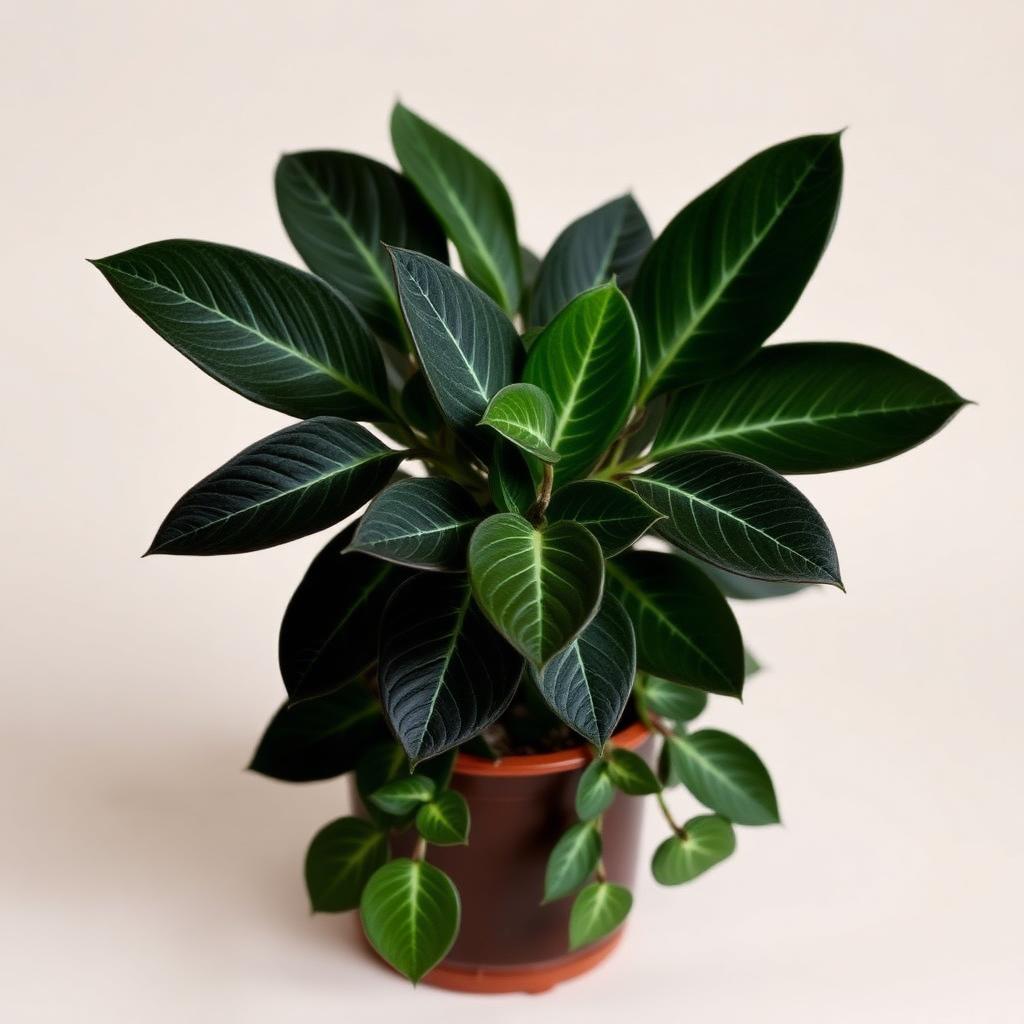
Syngonium rayii, a captivating species within the Araceae family, is a tropical evergreen native to the lush rainforests of Central America, predominantly found in Costa Rica and Panama. This climbing or vining aroid typically reaches heights of 1 to 3 meters, supporting itself with aerial roots that cling to tree trunks and other structures. Its distinctive foliage features arrow-shaped to heart-shaped leaves, growing up to 25 cm (10 inches) long, characterized by a striking variegation of light green to deep emerald with prominent creamy white or yellowish veins.
The leaf surface is notably smooth and glossy, enhancing its ornamental appeal. While members of the Araceae family are known for their unique inflorescences—a greenish-white spadix subtended by a spathe—flowering is rare in cultivated indoor settings for Syngonium rayii. The stems are slender, developing a slightly woody texture as they mature, providing robust support for its climbing habit.
Taxonomically, Syngonium rayii belongs to the subfamily Aroideae, a diverse group renowned for its ornamental foliage and unique reproductive structures, such as the spadix and spathe. The plant's biology, especially its adaptations in spathe and spadix morphology, is still being actively studied by botanists in its native habitats, revealing the intricate diversity within the aroid family.
Trusted Scientific References
1. Authoritative external sources for Syngonium rayii
1.1 Wikipedia — Syngonium rayii
1.2 Kew POWO (Plants of the World Online)
1.3 PubMed — peer-reviewed research
1.4 NCBI Taxonomy Browser
1.5 GBIF — Global Biodiversity
1.6Syngonium Rayii should be interpreted through verified botanical identity, practical care, and responsible safety language. This recovery note adds the missing context needed for a complete profile: match light to the plant's habit, use well-drained soil, water according to season, and avoid unsupported medicinal or edible claims. For publishing, the plant can be presented as a source-backed indoor plant with clear care guidance, common problem diagnosis, and conservative safety wording.
1.1.Syngonium Rayii — Key Features
- ✓Striking Variegated Foliage — Leaves display beautiful patterns of light green, emerald, and creamy veins.
- ✓Climbing/Vining Growth Habit — Naturally grows upwards with aerial roots, making it suitable for trellises.
- ✓Arrow to Heart — Shaped Leaves — Distinctive leaf morphology characteristic of the Syngonium genus.
- ✓Glossy Leaf Surface — Contributes to its ornamental value and vibrant appearance.
- ✓Air — Purifying Qualities — Known to help filter common indoor air toxins.
- ✓Tropical Origin — Native to the humid rainforests of Central America.
- ✓Low Maintenance (Indoor) — Relatively easy to care for under ideal indoor conditions.
- ✓Fast Growth Rate — Can grow quickly with proper care, developing lush foliage.
- ✓Member of Araceae Family — Characterized by unique inflorescence and calcium oxalate presence.
- ✓Heteroblasty — Juvenile and mature leaves can exhibit significant morphological differences.
1.2.Syngonium Rayii — Snapshot Summary
- ✓Syngonium rayii is a tropical Central American aroid known for its striking variegated foliage.
- ✓Primarily grown as an ornamental houseplant for its aesthetic and air-purifying benefits.
- ✓Contains calcium oxalate crystals, making it toxic if ingested and irritating upon contact.
- ✓Requires bright, indirect light, consistent moisture, and high humidity for optimal growth.
- ✓Not traditionally used in herbal medicine but contributes to indoor air quality and well-being.
- ✓Essential to handle with care and keep away from children and pets due to toxicity.
2.Syngonium Rayii — Taxonomic Classification
3.Syngonium Rayii — Reference Facts
4.Syngonium Rayii — Plant Morphology
5.Syngonium Rayii — Habitat & Distribution
6.Syngonium Rayii — Ethnobotanical Uses
7.Syngonium Rayii — Active Compounds
- ✓Calcium Oxalate Crystals — Present in all tissues, these needle-shaped (raphides) crystals are a primary defense mechanism against herbivory and cause irritation upon ingestion.
- ✓Flavonoids — Generally found in plants, these compounds often exhibit antioxidant and anti-inflammatory properties, though specific to S. rayii are not well-documented.
- ✓Saponins — Plant glycosides that can have foaming properties and sometimes exhibit medicinal actions, but their role in S. rayii is primarily defensive.
- ✓Triterpenoids — A diverse group of compounds with various biological activities; their specific presence and function in S. rayii require further research.
- ✓Alkaloids — Nitrogen-containing organic compounds, often with significant pharmacological effects, though specific alkaloids in S. rayii are not yet characterized.
- ✓Phenolic Compounds — Broad class of compounds known for antioxidant activity, contributing to plant defense and potentially cellular protection.
- ✓Volatile Organic Compounds (VOCs) — Released during normal plant metabolic processes, contributing to air purification by absorbing other VOCs like formaldehyde.
- ✓Cellulose and Lignin — Primary structural components providing rigidity to cell walls and stems, typical of all vascular plants.
8.Syngonium Rayii — What Research Suggests
- ✓Air Purification — Syngonium species are recognized for their ability to absorb common indoor air toxins like formaldehyde and xylene, contributing to improved indoor air quality.
- ✓Stress Reduction — The presence of indoor plants, including Syngonium rayii, is associated with a reduction in psychological stress and an increase in feelings of well-being.
- ✓Humidity Enhancement — Plants naturally release moisture into the air through transpiration, which can help increase ambient humidity levels, potentially benefiting respiratory health.
- ✓Aesthetic Therapy — The visual appeal of lush, green foliage is known to have calming effects, acting as a form of passive aesthetic therapy that promotes mental tranquility.
- ✓Biophilic Connection — Interacting with plants fosters a connection to nature, which can reduce anxiety and improve mood, aligning with biophilic design principles.
- ✓Focus Improvement — Studies suggest that working in environments with plants can enhance concentration and productivity, possibly due to reduced cognitive fatigue.
- ✓Noise Reduction — While minor, dense foliage can help absorb sound waves, contributing to a quieter indoor environment.
- ✓Oxygen Production — Like all green plants, Syngonium rayii performs photosynthesis, converting carbon dioxide into oxygen, albeit in small quantities for a single houseplant.
8.1.Syngonium Rayii — Indications & Uses
9.Syngonium Rayii — Adverse Effects
9.1.Syngonium Rayii — Reported Side Effects
- ✓Skin Irritation — Direct contact with sap can cause skin irritation, redness, and itching due to calcium oxalate crystals.
- ✓Oral Irritation — Ingestion causes immediate pain, burning sensation, and swelling of the mouth, tongue, and throat.
- ✓Digestive Upset — May lead to nausea, vomiting, and diarrhea if ingested, even in small amounts.
- ✓Swelling of Airways — Severe ingestion can cause difficulty breathing due to swelling of the pharynx and larynx.
- ✓Eye Irritation — Contact with eye can cause pain, tearing, and conjunctivitis.
- ✓Toxicity to Pets — Highly toxic to cats and dogs, causing similar symptoms of oral and digestive irritation.
9.2.Syngonium Rayii — Safety Profile
- ✓Keep Out of Reach of Children — Ensure the plant is placed where young children cannot access or ingest any part of it.
- ✓Pet Safety — Highly toxic to pets; keep away from cats, dogs, and other household animals.
- ✓Wear Gloves — Always wear gloves when handling the plant, especially during pruning or repotting, to avoid skin contact with sap.
- ✓Hand Washing — Wash hands thoroughly with soap and water after handling the plant.
- ✓Avoid Ingestion — Absolutely do not ingest any part of Syngonium rayii due to its high calcium oxalate content.
- ✓First Aid for Contact — In case of skin contact, wash affected area thoroughly; for eye contact, flush with plenty of water and seek medical attention.
- ✓Emergency Protocol — If ingested, seek immediate medical attention or contact a poison control center immediately.
10.Syngonium Rayii — Application Forms
- ✓Indoor Ornamental Plant — Primarily cultivated for its striking foliage and air-purifying qualities in homes and offices.
- ✓Air Purification Device — Strategically place around living spaces to help mitigate indoor air pollutants.
- ✓Aesthetic Enhancement — Used in interior design to add natural beauty and a tropical ambiance.
- ✓Stress Relief Aid — Incorporate into environments designed for relaxation and mental well-being.
- ✓Humidity Regulator — Position near other humidity-loving plants or in drier rooms to subtly increase local humidity.
- ✓Biophilic Design Element — Integrate into architectural and interior designs to connect occupants with nature.
- ✓Educational Specimen — Utilized in botanical gardens or educational settings to showcase aroid diversity.
11.Syngonium Rayii — Propagation & Care
- ✓Light — Prefers bright, indirect light; direct sunlight can scorch its delicate leaves.
- ✓Watering — Keep soil consistently moist but never waterlogged; allow the top inch of soil to dry between waterings.
- ✓Humidity — Thrives in high humidity (60-80%); mist regularly or use a pebble tray/humidifier.
- ✓Temperature — Ideal temperatures range from 18-29°C (65-85°F); avoid cold drafts.
- ✓Soil — Use a well-draining, aerated potting mix rich in organic matter.
- ✓Fertilizer — Feed monthly during the growing season (spring/summer) with a balanced liquid fertilizer diluted to half strength.
- ✓Pruning — Prune to maintain shape and encourage bushier growth, especially vining stems.
- ✓Support — Provide a moss pole or trellis for its climbing habit to encourage larger leaf development.
Reviewed by the Flora Medical Global Botanical Review Panel
Multi-disciplinary editorial group · Botany · Ethnobotany · Herbal-medicine literature
Who reviewed this: This page was checked by the Flora Medical Global Botanical Review Panel — an in-house editorial group of botany graduates, ethnobotany researchers, and horticulture practitioners who collectively maintain our 7,000+ plant encyclopedia. Meet the team.
Our 4-step verification process
1. Taxonomic verification
Scientific names and synonyms cross-checked against Kew POWO, World Flora Online, and The Plant List.
2. Phytochemical & medicinal cross-reference
Active compounds, traditional uses, and reported activities are cross-referenced with PubMed, USDA Dr. Duke's database, and peer-reviewed ethnobotanical literature.
3. Conservation & distribution check
Distribution, ecology, and conservation status confirmed against GBIF occurrence records and the IUCN Red List.
4. Editorial & safety review
Every entry passes an editorial pass for clarity, originality, and safety notices (toxicity, contraindications, dosage caveats) before publication.
Last reviewed:
Important medical disclaimer: This content is for educational and research purposes only. It is not medical advice and is not a substitute for consultation with a licensed healthcare provider. Do not use any herb to self-treat a medical condition without professional guidance.
Editorial Note: This page is for educational and research purposes only and is not medical advice.
Written by: Flora Medical Global Editorial Team
Reviewed by: Flora Medical Global Botanical Review Panel
Last Updated: June 15, 2026





Syngonium Rayii — Comments & Community Reviews
Rate this plant