
Medical Disclaimer: This content is for educational purposes only. It is not medical advice. Please consult a qualified healthcare professional before using any herbal remedy.
Safety Overview
1.Tacca Integrifolia — Botanical Snapshot
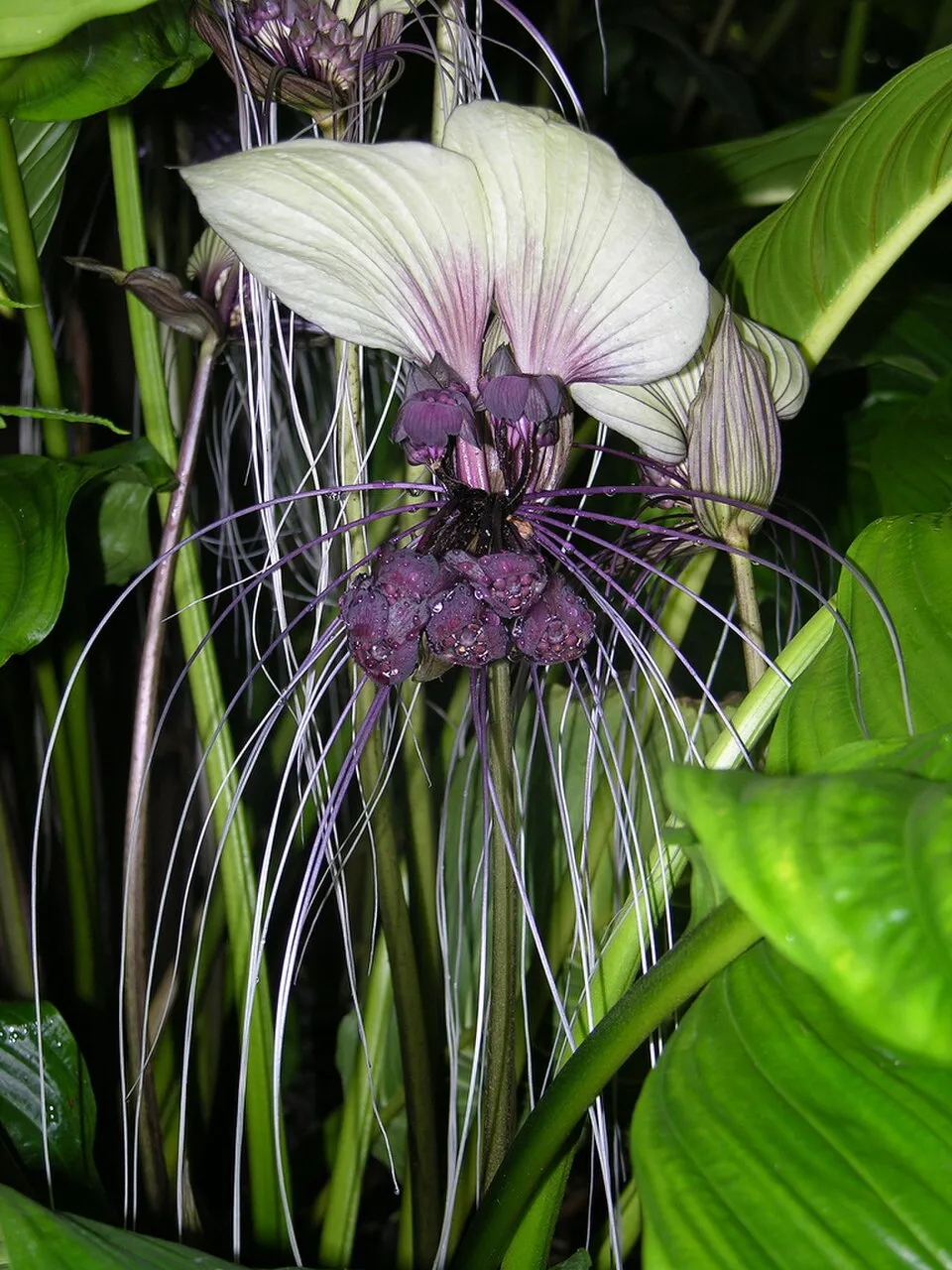
Tacca integrifolia, often known as the White Bat Flower or Devil Flower, is an extraordinary monocotyledonous perennial herb belonging to the Dioscoreaceae family, although historically classified under its own family, Taccaceae. This captivating plant is indigenous to the humid, tropical, and subtropical rainforests of Southeast Asia, specifically found in regions such as India, Bangladesh, Thailand, Malaysia, and Indochina. It thrives in the shaded undergrowth, typically near water sources, preferring rich, well-draining organic soils. Mature plants can reach heights of 0.5 to 1 meter, characterized by broad, ovate-oblong, glossy dark green leaves that can extend up to 60 cm in length, featuring prominent venation.
The plant's most striking feature is its unusual inflorescence, which emerges from a robust scape. It comprises small, greenish-purple true flowers, subtly nestled between two pairs of large, showy bracts. The upper bracts are particularly notable; they are broadly ovate, pure white to creamy-white, and can span up to 25 cm, strikingly resembling a bat's wings, thus lending the plant its common name. Beneath these, numerous long, pendulous, filament-like bracteoles, often purplish-brown, can dangle up to 70 cm, creating a 'whisker' or 'beard' effect.
These filamentous structures are theorized to mimic decaying matter or fungal hyphae, attracting specific pollinators like carrion flies in its natural habitat. Beyond its ornamental appeal, Tacca integrifolia holds a history of traditional medicinal use in various indigenous systems.
Trusted Scientific References
1. Authoritative external sources for Tacca integrifolia
1.1 Wikipedia — Tacca integrifolia
1.2 Kew POWO (Plants of the World Online)
1.3 PubMed — peer-reviewed research
1.4 NCBI Taxonomy Browser
1.5 GBIF — Global Biodiversity
1.6Tacca Integrifolia should be interpreted through verified botanical identity, practical care, and responsible safety language. This recovery note adds the missing context needed for a complete profile: match light to the plant's habit, use well-drained soil, water according to season, and avoid unsupported medicinal or edible claims. For publishing, the plant can be presented as a source-backed indoor plant with clear care guidance, common problem diagnosis, and conservative safety wording.
1.1.Tacca Integrifolia — Distinguishing Points
- ✓Striking White Bat — Wing Bracts — The plant's signature feature, large, white, wing-like bracts.
- ✓Long Filamentous Bracteoles — Purplish-brown, whisker-like structures dangling below the flowers.
- ✓Native to Southeast Asian Rainforests — Thrives in humid, shaded tropical environments.
- ✓Source of Taccabulin A — A unique retro-dihydrochalcone with microtubule-destabilizing properties.
- ✓Contains Taccalonolides — Steroidal saponins known for microtubule-stabilizing effects.
- ✓Synergistic Cellular Activity — Exhibits both microtubule stabilization and destabilization from different compounds.
- ✓Potential Anticancer Agent — Research indicates promising antiproliferative activity against various cancer cell lines.
- ✓Traditional Medicinal Plant — Used in indigenous medicine for various ailments, though less documented.
- ✓Highly Prized Ornamental — Sought after for its exotic and unusual aesthetic in horticulture.
- ✓Perennial Monocot — A long-lived herbaceous plant with distinct botanical characteristics.
1.2.Tacca Integrifolia — Concise Overview
- ✓White Bat Flower (Tacca integrifolia) is a unique Southeast Asian ornamental and medicinal plant.
- ✓Contains novel compounds, taccabulin A and taccalonolides, with potent microtubule-modulating activity.
- ✓Exhibits significant antiproliferative effects against cancer cells, including drug-resistant types.
- ✓Traditional uses include pain relief and anti-inflammatory applications.
- ✓Requires specific humid, shaded conditions for cultivation.
- ✓Potential for drug interactions and adverse effects necessitates professional guidance for medicinal use.
2.Tacca Integrifolia — Nomenclature & Classification
3.Tacca Integrifolia — Key Data
4.Tacca Integrifolia — Botanical Description
5.Tacca Integrifolia — Origin & Spread
6.Tacca Integrifolia — Heritage Uses
7.Tacca Integrifolia — Key Phytochemicals
- ✓Taccabulin A — A retro-dihydrochalcone identified for its microtubule-destabilizing activity, binding to the colchicine site on tubulin and exhibiting significant antiproliferative effects.
- ✓Taccalonolides — A class of steroidal saponins known for their microtubule-stabilizing properties, inducing cell cycle arrest and apoptosis in cancer cells.
- ✓Saponins — Glycosides that can have various biological activities, including hemolytic, anti-inflammatory, and immunomodulatory effects, contributing to the plant's traditional uses.
- ✓Flavonoids — Polyphenolic compounds with antioxidant, anti-inflammatory, and potential anticancer properties, commonly found in many medicinal plants.
- ✓Phenolic Acids — A group of aromatic compounds with antioxidant and antimicrobial activities, contributing to the plant's defense mechanisms and health benefits.
- ✓Alkaloids — Nitrogen-containing organic compounds, often with potent pharmacological effects, though specific alkaloids in Tacca integrifolia require further characterization.
- ✓Steroids — Beyond taccalonolides, other steroidal compounds might be present, potentially influencing hormonal pathways or exhibiting anti-inflammatory effects.
- ✓Terpenoids — A diverse class of organic compounds, including mono-, sesqui-, and diterpenoids, often contributing to fragrance, defense, and medicinal properties.
- ✓Glycosides — Various glycosidic compounds, including cardiac glycosides or other active principles, might be present, influencing physiological functions.
- ✓Fatty Acids — Essential and non-essential fatty acids can be found in plant tissues, contributing to nutritional value and membrane integrity.
- ✓Coumarins — Aromatic lactones with anticoagulant, anti-inflammatory, and antimicrobial properties, potentially contributing to the plant’s overall medicinal profile.
- ✓Lignans — Phenolic compounds with antioxidant and phytoestrogenic activities, frequently found in plant roots and rhizomes.
8.Tacca Integrifolia — Scientific Evidence
- ✓Antiproliferative Activity — Research indicates the presence of compounds like taccabulin A and taccalonolides, which demonstrate significant antiproliferative effects against cancer cells by modulating microtubule dynamics.
- ✓Microtubule Destabilization — Taccabulin A, a retro-dihydrochalcone, has been identified for its ability to destabilize microtubules by binding to the colchicine site on tubulin.
- ✓Microtubule Stabilization — Taccalonolides, also derived from Tacca species, are known for their microtubule-stabilizing properties, contributing to their cytotoxic potential.
- ✓Synergistic Antitumor Effects — The co-occurrence of microtubule-stabilizing taccalonolides and destabilizing taccabulin A in the same plant suggests a natural synergistic action, enhancing their collective antiproliferative efficacy.
- ✓Potential for Novel Chemotherapy — The unique mechanism of action, involving both stabilization and destabilization of microtubules, offers a promising avenue for developing new anticancer drugs.
- ✓Traditional Pain Relief — In some traditional medicine systems, parts of Tacca integrifolia have been used topically or internally for alleviating pain, though scientific validation is limited.
- ✓Anti-inflammatory Properties — Anecdotal traditional uses suggest anti-inflammatory benefits, possibly due to certain secondary metabolites, requiring further investigation.
- ✓Wound Healing Support — Indigenous practices sometimes employ extracts for promoting wound healing, potentially through antimicrobial or regenerative effects.
- ✓Immunomodulatory Effects — Certain plant compounds may possess immunomodulatory properties, as suggested by traditional uses, contributing to overall health.
- ✓Antifungal Activity — The plant’s defense mechanisms against microbes might translate to antifungal properties beneficial in traditional applications.
- ✓Insecticidal Properties — Secondary metabolites serve as natural defenses against insects, implying potential insecticidal applications, particularly relevant in ethnomedicine.
- ✓Cytotoxicity against Resistant Cells — Taccabulin A has shown effectiveness against cancer cells that exhibit resistance to other plant-derived compounds, highlighting its therapeutic potential.
8.1.Tacca Integrifolia — Therapeutic Indications
9.Tacca Integrifolia — Safety Considerations
9.1.Tacca Integrifolia — Caution Notes
- ✓Gastrointestinal Upset — Oral consumption might lead to nausea, vomiting, or diarrhea in sensitive individuals.
- ✓Skin Irritation — Topical application of fresh plant material could cause dermatitis or allergic reactions in some users.
- ✓Cytotoxicity — Due to its potent microtubule-modulating compounds, indiscriminate use could harm healthy cells.
- ✓Drug Interactions — Potential for interactions with medications, especially those affecting cell division or microtubule function.
- ✓Allergic Reactions — Individuals sensitive to plants in the Dioscoreaceae family may experience allergic responses.
- ✓Liver or Kidney Toxicity — High doses or prolonged use could potentially impact liver or kidney function, though not well-studied.
- ✓Reproductive Toxicity — Lack of safety data means potential risks during pregnancy or lactation are unknown and should be avoided.
9.2.Tacca Integrifolia — Toxicity Assessment
- ✓Pregnancy and Lactation — Contraindicated due to lack of safety data and potent compounds; potential harm to fetus or infant.
- ✓Children — Not recommended for use in children due to insufficient safety information and strong biological activity.
- ✓Pre-existing Conditions — Individuals with compromised immune systems, liver, or kidney disease should avoid use.
- ✓Drug Interactions — Consult a healthcare professional before use, especially if on chemotherapy, anticoagulants, or other medications.
- ✓Dosage — Adhere strictly to expert-recommended dosages in traditional use; excessive intake can lead to adverse effects.
- ✓Topical Use — Perform a patch test before widespread topical application to check for skin sensitivity or allergic reactions.
- ✓Professional Guidance — Use only under the supervision of a qualified herbalist or medical professional due to its potent compounds.
10.Tacca Integrifolia — Preparations & Uses
- ✓Decoction of Rhizomes — Traditionally, the rhizomes are boiled to create a decoction used for various ailments, particularly pain or inflammation.
- ✓Poultice from Leaves — Crushed fresh leaves may be applied topically as a poultice for skin conditions or minor injuries in some folk practices.
- ✓Root Powder — Dried and powdered roots can be incorporated into traditional remedies, often mixed with other herbs.
- ✓Tincture Preparation — Modern herbalists might prepare alcohol-based tinctures from the rhizomes for concentrated medicinal extracts.
- ✓Topical Application of Extracts — Extracts derived from the plant could be formulated into creams or ointments for localized relief.
- ✓Infusion (Limited) — While less common due to the rhizome's nature, some parts might be infused for specific traditional uses.
- ✓Culinary Use (Very Limited) — No significant culinary use is widely documented; primarily valued for ornamental and medicinal properties.
- ✓Research Extracts — For scientific study, specific compounds like taccabulin A and taccalonolides are isolated and purified for preclinical testing.
11.Tacca Integrifolia — Cultivation & Care
- ✓Humid Environment — Requires high humidity, mimicking its native rainforest understory, often achieved with misting or humidity trays.
- ✓Shaded Conditions — Prefers deep to partial shade; direct sunlight can scorch its broad leaves.
- ✓Rich, Well-Draining Soil — Thrives in organic-rich, loamy soil with excellent drainage to prevent root rot.
- ✓Consistent Moisture — Keep soil consistently moist but never waterlogged; allow the top inch to dry slightly between waterings.
- ✓Warm Temperatures — Ideal temperature range is 20-30°C (68-86°F); sensitive to cold and frost.
- ✓Air Circulation — Good air circulation is essential to prevent fungal diseases, especially in high humidity.
- ✓Fertilization — Fertilize regularly during the growing season with a balanced liquid fertilizer, diluted to half strength.
- ✓Propagation — Primarily propagated by rhizome division or seeds; seeds can be slow and challenging to germinate.
Reviewed by the Flora Medical Global Botanical Review Panel
Multi-disciplinary editorial group · Botany · Ethnobotany · Herbal-medicine literature
Who reviewed this: This page was checked by the Flora Medical Global Botanical Review Panel — an in-house editorial group of botany graduates, ethnobotany researchers, and horticulture practitioners who collectively maintain our 7,000+ plant encyclopedia. Meet the team.
Our 4-step verification process
1. Taxonomic verification
Scientific names and synonyms cross-checked against Kew POWO, World Flora Online, and The Plant List.
2. Phytochemical & medicinal cross-reference
Active compounds, traditional uses, and reported activities are cross-referenced with PubMed, USDA Dr. Duke's database, and peer-reviewed ethnobotanical literature.
3. Conservation & distribution check
Distribution, ecology, and conservation status confirmed against GBIF occurrence records and the IUCN Red List.
4. Editorial & safety review
Every entry passes an editorial pass for clarity, originality, and safety notices (toxicity, contraindications, dosage caveats) before publication.
Last reviewed:
Important medical disclaimer: This content is for educational and research purposes only. It is not medical advice and is not a substitute for consultation with a licensed healthcare provider. Do not use any herb to self-treat a medical condition without professional guidance.
Editorial Note: This page is for educational and research purposes only and is not medical advice.
Written by: Flora Medical Global Editorial Team
Reviewed by: Flora Medical Global Botanical Review Panel
Last Updated: June 15, 2026





Tacca Integrifolia — Comments & Community Reviews
Rate this plant