

Medical Disclaimer: This content is for educational purposes only. It is not medical advice. Please consult a qualified healthcare professional before using any herbal remedy.
Safety Overview
1.Talisa — At a Glance
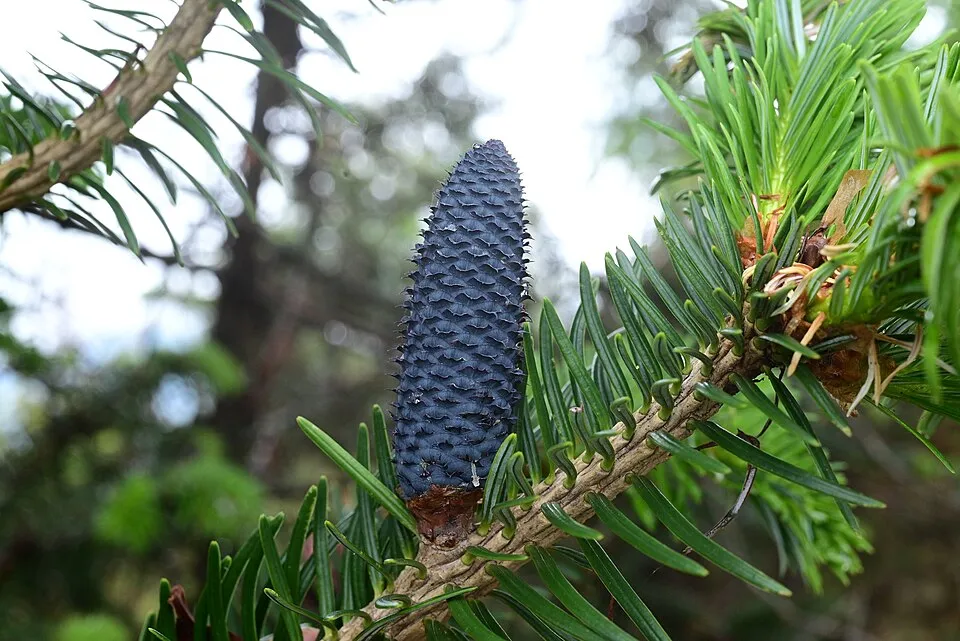
Abies spectabilis, widely known as the East Himalayan fir or Talisa, is a magnificent coniferous tree native to the high-altitude regions of the eastern Himalayas, thriving at elevations between 2,500 and 3,000 meters. This majestic species can reach impressive heights of up to 60 meters, making it a prominent feature of the subalpine and temperate forests where it often coexists with oak and birch. Its distinctive morphology includes flat, linear needles, typically 2 to 4 cm long, displaying a vibrant dark green on the upper surface contrasted by two prominent white stomatal bands underneath.
The bark of Abies spectabilis is rough, grayish-brown, and deeply furrowed, offering resilience against harsh mountain climates. Cylindrical cones, maturing to a pale brown, measure 8 to 14 cm and characteristically hang downwards when ripe, releasing winged seeds. The tree prefers moist, temperate climates and flourishes in well-drained, acidic soils rich in organic matter, favoring full sunlight to partial shade.
Belonging to the Pinaceae family, Talisa shares close botanical ties with other fir species. Historically, various indigenous cultures and traditional medicine systems, notably Ayurveda and Tibetan medicine, have revered and utilized different parts of this tree for their therapeutic properties, establishing its significant role in ethnobotanical practices across its native range.
Trusted Scientific References
1. Authoritative external sources for Abies spectabilis
1.1 Wikipedia — Abies spectabilis
1.2 Kew POWO (Plants of the World Online)
1.3 PubMed — peer-reviewed research
1.4 NCBI Taxonomy Browser
1.5 GBIF — Global Biodiversity
1.6Talisa should be interpreted through verified botanical identity, practical care, and responsible safety language. This recovery note adds the missing context needed for a complete profile: match light to the plant's habit, use well-drained soil, water according to season, and avoid unsupported medicinal or edible claims. For publishing, the plant can be presented as a source-backed medicinal plant with clear care guidance, common problem diagnosis, and conservative safety wording.
1.1.Talisa — Distinguishing Points
- ✓East Himalayan Fir — Native to subalpine forests of the Eastern Himalayas.
- ✓Respiratory Health Support — Highly valued as an expectorant and antitussive.
- ✓Anti — inflammatory Properties — Effective in managing pain and swelling.
- ✓Rich Phytochemical Profile — Contains essential oils, flavonoids, and steroids.
- ✓Ayurvedic Significance — A key ingredient in traditional formulations like Talisadi Churna.
- ✓Antimicrobial Action — Offers protection against various bacterial and fungal pathogens.
- ✓Adaptogenic Potential — May help the body adapt to stress, traditionally linked to anxiolytic effects.
- ✓Sustainable Sourcing — Emphasizes ethical harvesting practices for wild populations.
- ✓Distinctive Morphology — Known for its flat needles and downward-hanging cones.
- ✓High — Altitude Resilience — Thrives in challenging mountain climates and specific soil conditions.
1.2.Talisa — Snapshot Summary
- ✓Abies spectabilis (Talisa) is a majestic East Himalayan fir tree.
- ✓Renowned in Ayurveda for respiratory and anti-inflammatory benefits.
- ✓Rich in essential oils, flavonoids, and phytosterols.
- ✓Traditionally used for coughs, asthma, and digestive issues.
- ✓Requires careful dosage; avoid in pregnancy without expert advice.
- ✓Favors high-altitude, moist, acidic soil environments.
2.Talisa — Botanical Identity
3.Talisa — Fact Sheet
4.Talisa — Physical Description
5.Talisa — Origin & Spread
6.Talisa — Traditional Uses
7.Talisa — Key Phytochemicals
- ✓Terpenoids — Essential oils are rich in monoterpenes like alpha-pinene, beta-pinene, limonene, camphene, and bornyl acetate, which contribute to its characteristic aroma and exert antimicrobial, anti-inflammatory, and bronchodilatory effects.
- ✓Flavonoids and Biflavonoids — Compounds such as abiestin and other biflavonoids are present, known for their antioxidant, anti-inflammatory, and mast cell stabilizing properties, crucial for allergic and inflammatory conditions.
- ✓Glycosides — Betuloside and methylbetuloside are found, contributing to various pharmacological activities, potentially including anti-inflammatory and analgesic effects.
- ✓Steroids and Phytosterols — Beta-sitosterol and other steroid compounds are present, recognized for their anti-inflammatory, immune-modulating, and hypolipidemic potential.
- ✓Alkaloids — Specific alkaloids like 1-(4′-methoxyphenyl)-aziridine have been identified, which may contribute to its central nervous system depressant and anxiolytic properties.
- ✓Tannins — These phenolic compounds contribute to the plant's astringent taste and possess antioxidant, antimicrobial, and anti-inflammatory actions, often used in traditional wound healing.
- ✓Saponins — Present in various parts, saponins are known for their expectorant, anti-inflammatory, and immune-stimulating activities.
- ✓Lipids and Fatty Acids — Various lipids are found, playing roles in cell membrane integrity and potentially contributing to its overall therapeutic profile.
- ✓Amino Acids — Essential building blocks of proteins, contributing to the plant's nutritional and metabolic functions.
8.Talisa — Evidence-Based Benefits
- ✓Respiratory Support — Talisa resin and leaf extracts are traditionally used as expectorants and antitussives, helping to clear airways, reduce cough frequency, and dissolve thick mucus, making breathing easier in conditions like asthma and bronchitis.
- ✓Anti-inflammatory Action — The plant contains compounds that exhibit significant anti-inflammatory properties, useful in alleviating pain and swelling associated with conditions such as rheumatism and general inflammatory responses.
- ✓Antimicrobial Activity — Essential oils extracted from Talisa needles possess broad-spectrum antibacterial and antifungal properties, contributing to its traditional use in combating various infections and promoting wound healing.
- ✓Digestive Aid — Talisa is recognized in Ayurvedic medicine for improving digestive fire (agni), stimulating appetite, and alleviating symptoms like abdominal distension, indigestion, and amoebiasis.
- ✓Antispasmodic Effects — Its constituents help relax involuntary muscles, providing relief from spasms, particularly beneficial for respiratory discomfort and certain gastrointestinal issues.
- ✓Febrifuge Properties — Traditionally, Talisa has been employed to reduce fever, acting as a natural antipyretic agent, especially in conjunction with its anti-inflammatory effects.
- ✓Anxiolytic Potential — Some phytochemicals in Talisa are thought to exert a calming effect on the central nervous system, potentially reducing stress and anxiety, as indicated by traditional uses.
- ✓Antioxidant Protection — The presence of bioflavonoids and other phenolic compounds provides potent antioxidant activity, helping to neutralize free radicals and protect cells from oxidative damage.
- ✓Oral Health — In traditional practices, Talisa has been utilized to address various mouth disorders and dental problems, likely due to its antimicrobial and anti-inflammatory actions.
- ✓Detoxification Support — It is believed to aid in the removal of toxins (ama in Ayurveda) from the body, supporting overall systemic cleansing and metabolic balance.
8.1.Talisa — Conditions Traditionally Used For
9.Talisa — Safety Considerations
9.1.Talisa — Caution Notes
- ✓Mouth Ulcers — Excessive internal consumption, particularly of concentrated forms, may lead to irritation of oral mucous membranes.
- ✓Heartburn — High doses can potentially exacerbate or induce symptoms of heartburn due to its 'hot' potency (Ushna Virya) in Ayurveda.
- ✓Stomach Irritation — Overuse may cause gastric discomfort or irritation in sensitive individuals.
- ✓Vertigo — In rare cases, extremely high doses or individual sensitivity might lead to dizziness or vertigo.
- ✓Allergic Reactions — As with any plant product, individuals may experience allergic reactions such as skin rashes or respiratory distress.
- ✓Drug Interactions — Potential interactions with certain medications, especially those affecting blood clotting or liver enzymes, are possible and warrant caution.
- ✓Pregnancy and Lactation Concerns — Not recommended for use during pregnancy or lactation without strict medical supervision due to insufficient safety data.
9.2.Talisa — Risk Assessment
- ✓Medical Supervision — Always consult a qualified healthcare practitioner before using Talisa, especially for chronic conditions or if on other medications.
- ✓Dosage Adherence — Strictly follow recommended dosages to avoid adverse effects like gastric irritation or mouth ulcers.
- ✓Pregnancy and Lactation — Contraindicated during pregnancy and breastfeeding unless specifically advised and monitored by a physician.
- ✓Children — Use in children should be approached with caution and only under professional medical guidance.
- ✓Pre-existing Conditions — Individuals with gastrointestinal sensitivities, ulcers, or bleeding disorders should exercise extreme caution.
- ✓Quality Sourcing — Ensure the plant material is sourced from reputable suppliers to guarantee purity and prevent contamination or adulteration.
- ✓Allergic Sensitivity — Discontinue use if any signs of allergic reaction, such as rash, itching, or difficulty breathing, occur.
10.Talisa — Preparations & Uses
- ✓Decoctions — Leaves and bark can be simmered in water to create a concentrated liquid, traditionally used for respiratory ailments and as an anti-inflammatory.
- ✓Infusions — Dried Talisa leaves are steeped in hot water to make a tea, often consumed for coughs, colds, and to aid digestion.
- ✓Powders (Churna) — Dried leaves are finely ground into a powder, known as Talispatra Churna in Ayurveda, and taken with honey or warm water for respiratory and digestive issues.
- ✓Essential Oil — Extracted from needles, the essential oil can be diffused for respiratory support, or diluted and applied topically for localized pain and inflammation.
- ✓Syrups — Resin or leaf extracts can be incorporated into medicinal syrups, particularly effective for soothing coughs and promoting expectoration.
- ✓Topical Pastes — Crushed leaves or bark paste mixed with a carrier (e.g., oil, water) can be applied externally for rheumatic pains or skin conditions.
- ✓Dosage — For powdered leaves, a typical Ayurvedic dosage is 1-2 grams, usually taken once or twice daily, under the guidance of a qualified practitioner.
- ✓Blending — Often combined with other herbs in traditional formulations (e.g., Talisadi Churna) to enhance therapeutic efficacy and balance properties.
11.Talisa — Garden Cultivation
- ✓Altitude and Climate — Thrives in high-altitude regions (2,500-3,000 m) with moist, temperate climates, experiencing cold winters and moderate summers.
- ✓Soil Preference — Requires well-drained, acidic soils rich in organic matter; loamy or sandy-loam textures are ideal for optimal growth.
- ✓Light Requirements — Prefers full sunlight to partial shade, with young saplings often benefiting from some protection from intense direct sun.
- ✓Propagation — Primarily propagated by seeds, which require a period of stratification to break dormancy before germination.
- ✓Water Needs — Needs consistent moisture, especially during establishment, but is sensitive to waterlogging; natural rainfall in its habitat usually suffices.
- ✓Spacing and Growth — As a large tree, it requires ample space for root development and crown expansion; exhibits a relatively slow to moderate growth rate.
- ✓Pest and Disease Management — Generally robust, but young trees can be susceptible to fungal diseases or insect infestations, requiring monitoring and appropriate organic interventions.
- ✓Conservation — Due to its medicinal value and habitat specificities, sustainable harvesting and conservation efforts are crucial for wild populations.
Reviewed by the Flora Medical Global Botanical Review Panel
Multi-disciplinary editorial group · Botany · Ethnobotany · Herbal-medicine literature
Who reviewed this: This page was checked by the Flora Medical Global Botanical Review Panel — an in-house editorial group of botany graduates, ethnobotany researchers, and horticulture practitioners who collectively maintain our 7,000+ plant encyclopedia. Meet the team.
Our 4-step verification process
1. Taxonomic verification
Scientific names and synonyms cross-checked against Kew POWO, World Flora Online, and The Plant List.
2. Phytochemical & medicinal cross-reference
Active compounds, traditional uses, and reported activities are cross-referenced with PubMed, USDA Dr. Duke's database, and peer-reviewed ethnobotanical literature.
3. Conservation & distribution check
Distribution, ecology, and conservation status confirmed against GBIF occurrence records and the IUCN Red List.
4. Editorial & safety review
Every entry passes an editorial pass for clarity, originality, and safety notices (toxicity, contraindications, dosage caveats) before publication.
Last reviewed:
Important medical disclaimer: This content is for educational and research purposes only. It is not medical advice and is not a substitute for consultation with a licensed healthcare provider. Do not use any herb to self-treat a medical condition without professional guidance.
Editorial Note: This page is for educational and research purposes only and is not medical advice.
Written by: Flora Medical Global Editorial Team
Reviewed by: Flora Medical Global Botanical Review Panel
Last Updated: June 15, 2026





Talisa — Comments & Community Reviews
Rate this plant