

Medical Disclaimer: This content is for educational purposes only. It is not medical advice. Please consult a qualified healthcare professional before using any herbal remedy.
Safety Overview
1.Tendu — Essential Profile
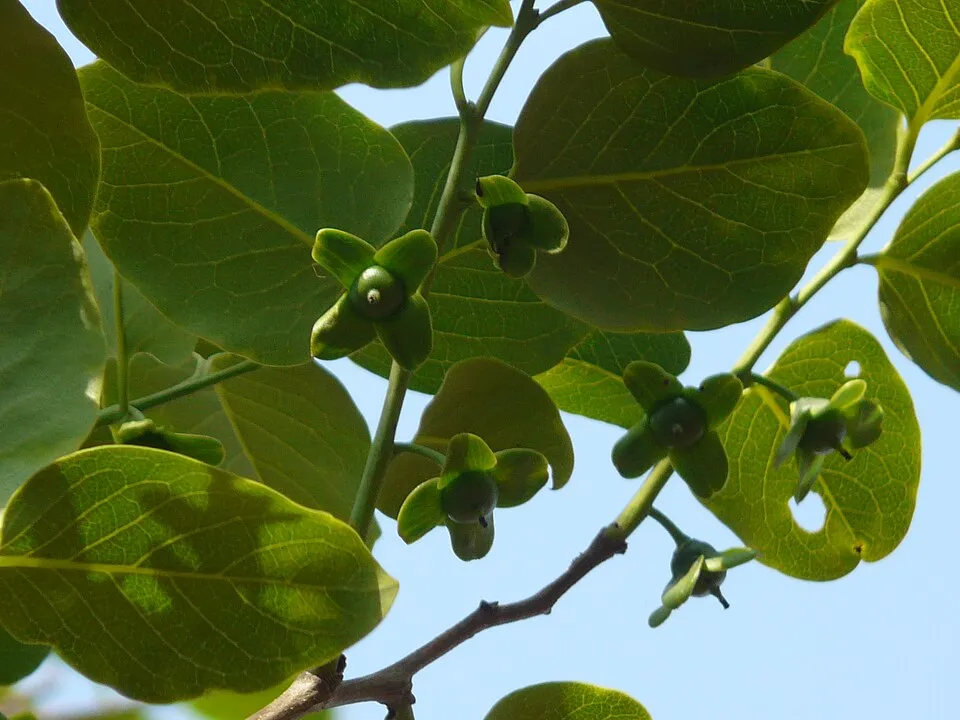
Diospyros melanoxylon, commonly recognized as Tendu or Kendu, is a notable deciduous tree belonging to the Ebenaceae family, a group renowned for its valuable hardwoods, including ebony. This species typically attains a moderate height, often reaching up to 25 meters. Its bark is distinctively dark, ranging from grey to black, and exhibits a rough, deeply furrowed texture, often peeling off in rectangular scales as the tree matures. The leaves are a striking feature, simple and lanceolate to elliptic-oblong, coriaceous, and can grow up to 35 cm in length.
While young, the leaves are softly hairy on both surfaces, later developing a smooth, shiny, dark green upper surface that contrasts with a lighter underside. Tendu is a dioecious species, meaning male and female flowers are borne on separate trees. The small, bell-shaped flowers are typically mauve or yellowish-white, appearing in clusters during the warmer months. Male flowers are often found in clusters of three, while female flowers are larger and appear in pairs or solitary.
The tree produces ovoid or globose berries, about 3-4 cm across, which are olive green when unripe, maturing into a yellow, soft, and sweet pulp containing one to eight compressed, oblong, shiny seeds. Native and endemic to India, Diospyros melanoxylon thrives across tropical and subtropical regions of Asia, particularly in dry deciduous forests, preferring well-drained sandy or loamy soils in plains, plateaus, and sub-mountainous areas. Beyond its ecological role, Tendu holds significant ethnobotanical, medicinal, and economic value, especially its leaves used in the beedi industry and its fruits as an edible resource.
Trusted Scientific References
1. Authoritative external sources for Diospyros melanoxylon
1.1 Wikipedia — Diospyros melanoxylon
1.2 Kew POWO (Plants of the World Online)
1.3 PubMed — peer-reviewed research
1.4 NCBI Taxonomy Browser
1.5 GBIF — Global Biodiversity
1.6Tendu should be interpreted through verified botanical identity, practical care, and responsible safety language. This recovery note adds the missing context needed for a complete profile: match light to the plant's habit, use well-drained soil, water according to season, and avoid unsupported medicinal or edible claims. For publishing, the plant can be presented as a source-backed medicinal plant with clear care guidance, common problem diagnosis, and conservative safety wording.
1.1.Tendu — Distinguishing Points
- ✓Native to India — Native to India and tropical Asia, thriving in dry deciduous forests.
- ✓Distinctive dark, furrowed — Distinctive dark, furrowed bark and large, shiny, elliptic-oblong leaves.
- ✓Dioecious species with — Dioecious species with separate male and female mauve or yellowish-white flowers.
- ✓Produces edible, sweet, yellow — pulped berries with multiple seeds.
- ✓Ethnobotanically significant, supporting — Ethnobotanically significant, supporting rural livelihoods through leaf harvest.
- ✓Possesses strong astringent, anti — inflammatory, and antioxidant properties.
- ✓Traditional uses span — Traditional uses span digestive health, wound healing, diabetes, and respiratory support.
- ✓Contains a rich — Contains a rich phytochemical profile including flavonoids, tannins, and alkaloids.
- ✓Valued in Ayurvedic — Valued in Ayurvedic and Unani medicine for its diverse therapeutic applications.
- ✓A key non — timber forest product (NTFP) with economic and cultural importance.
1.2.Tendu — At-a-Glance Summary
- ✓Diospyros melanoxylon (Tendu) is a prominent Indian deciduous tree valued for its medicinal properties.
- ✓Traditionally used in Ayurveda and Unani for conditions like diabetes, inflammation, and digestive issues.
- ✓Rich in bioactive compounds like flavonoids, tannins, and alkaloids, contributing to its therapeutic effects.
- ✓Exhibits antioxidant, anti-inflammatory, antidiabetic, and antimicrobial pharmacological activities.
- ✓Economically important for its leaves in the beedi industry and edible fruits.
- ✓Requires careful use and professional consultation due to potential side effects and drug interactions.
2.Tendu — Botanical Identity
3.Tendu — Fact Sheet
4.Tendu — Botanical Features
5.Tendu — Native Range & Habitat
6.Tendu — Folk Medicine Applications
7.Tendu — Phytochemistry
- ✓Flavonoids — Key compounds include quercetin and its derivatives, known for their potent antioxidant, anti-inflammatory, and antidiabetic activities, contributing to cellular protection and metabolic regulation.
- ✓Tannins — Predominantly gallotannins and condensed tannins, these compounds are responsible for Tendu's significant astringent properties, acting as natural hemostatics and antimicrobials, and supporting gastrointestinal health.
- ✓Alkaloids — Various alkaloidal compounds are present, which may contribute to the plant's diverse pharmacological actions, including potential effects on the nervous system and fever reduction.
- ✓Phenolic Acids — Compounds like gallic acid and caffeic acid are found, offering strong antioxidant and anti-inflammatory benefits, crucial for combating oxidative stress and inflammation.
- ✓Saponins — These glycosides are known for their surfactant properties and contribute to the plant's potential immunomodulatory and hypocholesterolemic effects, though their precise role in Tendu's medicinal profile is still being explored.
- ✓Triterpenoids — A class of compounds often associated with anti-inflammatory, hepatoprotective, and adaptogenic activities, contributing to the overall therapeutic spectrum of Diospyros melanoxylon.
- ✓Steroids — Plant steroids may be present, influencing hormonal balance and exhibiting anti-inflammatory properties, supporting the traditional uses of the plant in various conditions.
- ✓Glycosides — Various glycosidic compounds, including cardiac glycosides, may contribute to the plant's effects on heart function and other physiological processes, requiring careful study due to their potency.
8.Tendu — Scientific Evidence
- ✓Anti-inflammatory Action — Tendu exhibits significant anti-inflammatory properties, with extracts traditionally used to soothe various inflammatory conditions, a benefit supported by its rich phenolic content.
- ✓Antidiabetic Effects — Traditionally employed in Ayurvedic medicine for diabetes management, Diospyros melanoxylon shows antidiabetic potential by helping regulate blood glucose levels.
- ✓Antioxidant Activity — Rich in phenolic compounds, Tendu provides potent antioxidant effects, protecting cells from oxidative stress and free radical damage.
- ✓Antimicrobial Properties — Extracts from Tendu, particularly the leaves and twigs, demonstrate antimicrobial activity, contributing to its traditional use in oral hygiene and wound care.
- ✓Astringent Qualities — The bark and leaves possess strong astringent properties, making them effective in treating conditions like diarrhea, dysentery, and bleeding gums by constricting tissues.
- ✓Diuretic Support — Traditionally, the leaves are used as a diuretic, aiding in increased urine production and supporting kidney function, which can be beneficial for urinary disorders.
- ✓Gastrointestinal Relief — The fruits and bark are known for their cooling and astringent effects, traditionally used to alleviate stomach disorders, dyspepsia, and general digestive discomfort.
- ✓Respiratory Health — Tendu leaves are traditionally utilized for treating respiratory ailments such as bronchitis and cough, suggesting a bronchodilatory or expectorant action.
- ✓Wound Healing — Applied externally, Tendu leaves and bark pastes are used to promote wound healing and reduce inflammation due to their astringent and antimicrobial properties.
- ✓Nervous System Support — The seeds have been traditionally used to address nervous disorders, mental imbalances, and heart palpitations, indicating potential neuroprotective or calming effects.
- ✓Blood Purification — Traditional systems like Unani medicine report benefits of flowers in enhancing blood quality and treating blood-related diseases, possibly through detoxifying actions.
- ✓Ocular Comfort — Bark extract in Ayurveda serves as an astringent eye lotion, providing relief from ocular discomfort and minor eye irritations.
8.1.Tendu — Indications & Uses
9.Tendu — Safety Considerations
9.1.Tendu — Possible Adverse Reactions
- ✓Gastrointestinal Upset — High doses of Tendu, particularly parts rich in tannins, may cause constipation or stomach irritation in sensitive individuals.
- ✓Allergic Reactions — Some individuals may experience allergic reactions such as skin rashes or respiratory irritation, especially with topical application or inhalation of plant dust.
- ✓Drug Interactions — Tendu's potential antidiabetic and diuretic effects could interact with prescription medications for diabetes or hypertension, altering their efficacy.
- ✓Pregnancy & Lactation — Due to insufficient safety data, Tendu use is generally not recommended for pregnant or breastfeeding women.
- ✓Children — Internal use in young children should be approached with caution due to limited research on pediatric safety.
- ✓Kidney Conditions — Individuals with pre-existing kidney conditions should use Tendu with caution, especially if using diuretic preparations, as it may exacerbate certain conditions.
9.2.Tendu — Safety Overview
- ✓Professional Guidance — Always consult a qualified healthcare practitioner or medical herbalist before using Tendu, especially for internal applications or chronic conditions.
- ✓Dosage Adherence — Strictly follow recommended dosages to minimize the risk of adverse effects, as excessive intake can lead to toxicity.
- ✓Patch Testing — For topical applications, perform a patch test on a small skin area to check for any allergic reactions before widespread use.
- ✓Pregnancy & Breastfeeding — Avoid use during pregnancy and lactation due to the lack of comprehensive safety studies in these populations.
- ✓Children & Infants — Not recommended for internal use in infants and young children without specific medical advice.
- ✓Pre-existing Conditions — Individuals with chronic health conditions, particularly diabetes, kidney issues, or cardiovascular disease, should exercise extreme caution and seek medical advice.
- ✓Quality Sourcing — Ensure Tendu products are sourced from reputable suppliers to guarantee authenticity and minimize contamination risks.
10.Tendu — Usage Guide
- ✓Leaf Decoction — Dried Tendu leaves are boiled in water to create a decoction, traditionally used internally for diabetes, bronchitis, cough, and as a diuretic.
- ✓Bark Decoction — The bark is similarly prepared into a decoction, frequently administered for treating diarrhea, dyspepsia, and as a general astringent.
- ✓Oral Health Twigs — Fresh Tendu twigs are chewed directly to promote oral hygiene, strengthen gums, and combat gum diseases due to their antimicrobial properties.
- ✓Topical Paste — A paste made from crushed Tendu leaves or bark is applied externally to wounds, skin infections, and inflammatory areas to aid healing and reduce swelling.
- ✓Fruit Consumption — Ripe Tendu fruits are consumed fresh for their cooling and astringent properties, traditionally helping with stomach disorders and as a nutritious food source.
- ✓Flower Infusion — Dried Tendu flowers can be steeped in hot water to make an infusion, traditionally used for urinary disorders, leucorrhoea, and to improve blood quality.
- ✓Seed Powder — The dried seeds are ground into a fine powder, which is then taken orally, often mixed with honey or water, for nervous disorders and heart palpitations.
- ✓Eye Lotion — A diluted bark extract or decoction, after careful straining, is used as an astringent eye wash to relieve ocular discomfort in traditional Ayurvedic practices.
11.Tendu — How to Grow
- ✓Climate — Thrives in tropical and subtropical climates with distinct dry and wet seasons, tolerating high temperatures.
- ✓Soil — Prefers well-drained, sandy to loamy soils; can adapt to poor soils but performs best in fertile conditions.
- ✓Propagation — Primarily propagated by seeds, which require proper scarification or pre-treatment for optimal germination rates.
- ✓Sunlight — Requires full sun exposure for robust growth, characteristic of its dry deciduous forest habitat.
- ✓Watering — Young plants need regular watering; mature trees are drought-tolerant but benefit from supplemental irrigation during prolonged dry spells.
- ✓Pests & Diseases — Generally hardy, but susceptible to common forest pests and fungal infections, requiring vigilant monitoring.
- ✓Spacing — Plant saplings at appropriate distances to allow for mature canopy development and root expansion, typically 5-7 meters apart.
- ✓Harvesting — Leaves for commercial use are harvested when mature, while fruits are collected when ripe, typically in late summer.
Reviewed by the Flora Medical Global Botanical Review Panel
Multi-disciplinary editorial group · Botany · Ethnobotany · Herbal-medicine literature
Who reviewed this: This page was checked by the Flora Medical Global Botanical Review Panel — an in-house editorial group of botany graduates, ethnobotany researchers, and horticulture practitioners who collectively maintain our 7,000+ plant encyclopedia. Meet the team.
Our 4-step verification process
1. Taxonomic verification
Scientific names and synonyms cross-checked against Kew POWO, World Flora Online, and The Plant List.
2. Phytochemical & medicinal cross-reference
Active compounds, traditional uses, and reported activities are cross-referenced with PubMed, USDA Dr. Duke's database, and peer-reviewed ethnobotanical literature.
3. Conservation & distribution check
Distribution, ecology, and conservation status confirmed against GBIF occurrence records and the IUCN Red List.
4. Editorial & safety review
Every entry passes an editorial pass for clarity, originality, and safety notices (toxicity, contraindications, dosage caveats) before publication.
Last reviewed:
Important medical disclaimer: This content is for educational and research purposes only. It is not medical advice and is not a substitute for consultation with a licensed healthcare provider. Do not use any herb to self-treat a medical condition without professional guidance.
Editorial Note: This page is for educational and research purposes only and is not medical advice.
Written by: Flora Medical Global Editorial Team
Reviewed by: Flora Medical Global Botanical Review Panel
Last Updated: June 15, 2026





Tendu — Comments & Community Reviews
Rate this plant