

Medical Disclaimer: This content is for educational purposes only. It is not medical advice. Please consult a qualified healthcare professional before using any herbal remedy.
Safety Overview
1.Tephrosia — Overview
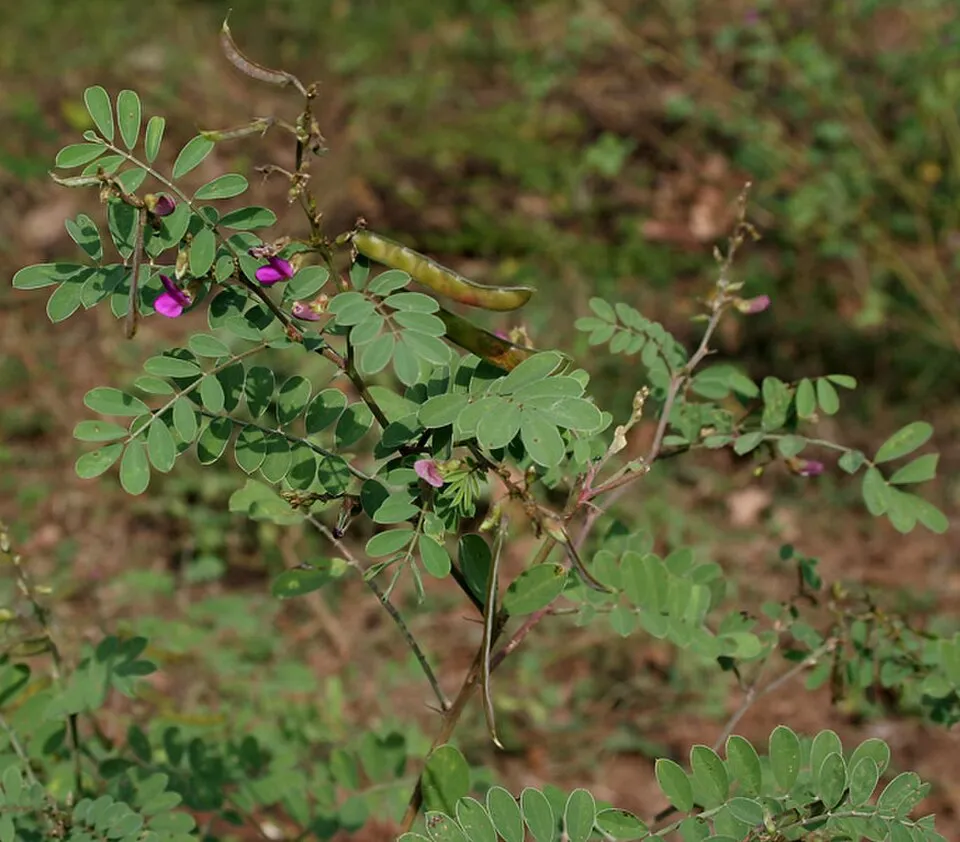
Tephrosia purpurea, widely recognized as purple tephrosia or wild indigo, is an enduring herbaceous plant within the Fabaceae family, specifically the subfamily Faboideae and tribe Millettieae. This species typically establishes a bushy form, reaching heights of 0.5 to 1 meter with a robustly branched base. Its foliage consists of alternately arranged, imparipinnate leaves, composed of narrow, oblanceolate leaflets that collectively measure 5 to 15 cm in length, often covered with fine, velvety hairs.
The plant's distinctive flowers, vibrant purple often accented with yellow, are borne in compact racemes, each bloom spanning 2 to 3 cm, effectively drawing various pollinators. Following flowering, it produces slender, linear pods, typically 3 to 5 cm long, which contain 5 to 10 seeds. The bark presents a smooth, greyish-brown texture, contrasting with its colorful inflorescence.
Tephrosia purpurea thrives predominantly in tropical and subtropical regions across Africa and Asia, including the upper Gangetic plains and western Himalayas, adapting well to dry, sandy, rocky, and loamy soils, frequently colonizing roadsides and disturbed habitats. Its rich ethnobotanical history and diverse chemical profile, featuring compounds like saponins, flavonoids, and alkaloids, underscore its significance in traditional medicine systems and ongoing scientific inquiry.
Trusted Scientific References
1. Authoritative external sources for Tephrosia purpurea
1.1 Wikipedia — Tephrosia purpurea
1.2 Kew POWO (Plants of the World Online)
1.3 PubMed — peer-reviewed research
1.4 NCBI Taxonomy Browser
1.5 GBIF — Global Biodiversity
1.6Tephrosia should be interpreted through verified botanical identity, practical care, and responsible safety language. This recovery note adds the missing context needed for a complete profile: match light to the plant's habit, use well-drained soil, water according to season, and avoid unsupported medicinal or edible claims. For publishing, the plant can be presented as a source-backed medicinal plant with clear care guidance, common problem diagnosis, and conservative safety wording.
1.1.Tephrosia — Defining Traits
- ✓Botanical Classification — Member of the Fabaceae family, tribe Millettieae.
- ✓Growth Habit — Bushy, suberect herbaceous perennial, typically 0.5-1m tall.
- ✓Distinctive Flowers — Vibrant purple blooms often with yellow markings, in racemes.
- ✓Medicinal Heritage — Deeply rooted in Ayurvedic and Traditional African Medicine.
- ✓Phytochemical Richness — Abundant in flavonoids, rotenoids, saponins, and alkaloids.
- ✓Traditional Uses — Addresses inflammation, digestive issues, liver, spleen, and kidney health.
- ✓Adaptable Habitat — Flourishes in diverse tropical soils including sandy, rocky, and loamy.
- ✓Nitrogen Fixer — Contributes to soil fertility as a legume, often used as green manure.
- ✓Antiparasitic Potential — Valued for its traditional use against intestinal parasites.
- ✓Skin Health Benefits — Applied externally for various dermatological conditions.
1.2.Tephrosia — Quick Summary
- ✓Tephrosia purpurea is a perennial Fabaceae plant revered in traditional medicine.
- ✓Known for anti-inflammatory, digestive, and liver-supporting properties.
- ✓Rich in flavonoids, chalcones, rotenoids, and other bioactive compounds.
- ✓Traditionally used for ailments from arthritis to intestinal worms.
- ✓Requires careful dosage; contraindications for pregnancy and specific conditions.
- ✓Thrives in tropical, well-drained soils, widely distributed in Africa and Asia.
2.Tephrosia — Taxonomic Classification
3.Tephrosia — Quick Facts
4.Tephrosia — Morphological Account
5.Tephrosia — Habitat & Distribution
6.Tephrosia — Ethnobotanical Uses
7.Tephrosia — Active Compounds
- ✓Flavonoids — This broad class includes flavones, flavanones, and prenylated flavonoids, such as those isolated from Tephrosia purpurea, known for their antioxidant, anti-inflammatory, and hepatoprotective activities.
- ✓Chalcones — Identified in Tephrosia purpurea, chalcones are precursors to flavonoids and exhibit diverse biological activities including anti-inflammatory, antimicrobial, and anticancer properties.
- ✓Rotenoids — These are a group of isoflavonoids, also present in Tephrosia purpurea, recognized for their insecticidal properties, but also showing potential as antiparasitic and anticancer agents.
- ✓Saponins — Found throughout the plant, saponins contribute to its traditional uses as a digestive aid and may possess anti-inflammatory and cholesterol-lowering effects.
- ✓Alkaloids — While not extensively detailed, the presence of alkaloids suggests potential pharmacological activities affecting the nervous system or exhibiting antimicrobial effects.
- ✓Aromatic Esters — A specific aromatic ester has been isolated from the aerial parts, contributing to the plant's unique phytochemical profile, though its precise biological activity requires further investigation.
- ✓Sesquiterpenes — Including rare rotundane skeleton compounds, sesquiterpenes are a diverse group of compounds with reported anti-inflammatory, antimicrobial, and cytotoxic activities, contributing to the plant's medicinal properties.
- ✓Glycosides — Various glycosides are likely present, influencing the plant's overall therapeutic effects by modifying the bioavailability and activity of other compounds.
8.Tephrosia — Modern Studies
- ✓Anti-inflammatory Action — Tephrosia purpurea is traditionally used to alleviate inflammatory conditions like arthritis and muscular pain, attributed to its potential to modulate inflammatory pathways.
- ✓Analgesic Properties — The plant's extracts are utilized in traditional medicine for pain relief, suggesting an ability to reduce the perception of bodily aches and discomfort.
- ✓Digestive Aid — Decoctions prepared from the roots are believed to support healthy digestion and alleviate gastrointestinal disorders such as dyspepsia, colic, dysentery, and chronic diarrhea.
- ✓Hepatoprotective Effects — Historically, the dried plant is considered beneficial for obstructions of the liver and spleen, implying a protective or restorative action on these vital organs.
- ✓Renal Support — Traditional practitioners recommend Tephrosia purpurea for kidney obstructions, suggesting diuretic properties that aid in urinary system health and detoxification.
- ✓Blood Purification — It is highly valued as a blood purifier in traditional systems, used to treat skin conditions like boils and pimples by cleansing the internal system.
- ✓Antiparasitic Activity — A root decoction is traditionally employed as a nematicide against intestinal worms and Toxocora canis larvae, highlighting its potential anthelmintic properties.
- ✓Respiratory Health — The dried plant is a traditional remedy for bronchitis, suggesting bronchodilatory or expectorant actions that help clear respiratory passages.
- ✓Antipyretic Use — It is traditionally used to manage bilious febrile attacks, indicating potential fever-reducing properties.
- ✓Skin Healing — External application of leaves is a common traditional practice for treating various skin ailments, promoting healing and reducing local inflammation.
8.1.Tephrosia — Health Applications
9.Tephrosia — Precautions & Warnings
9.1.Tephrosia — Reported Side Effects
- ✓Livestock Poisoning — In certain regions like Australia, Tephrosia purpurea has been reported to cause toxicity in livestock if consumed in large quantities.
- ✓Gastrointestinal Upset — High doses or improper preparation may lead to nausea, vomiting, or stomach discomfort in sensitive individuals.
- ✓Allergic Reactions — Some individuals may experience allergic responses such as skin rashes or itching, especially with topical application.
- ✓Potential for Drug Interactions — Due to its active compounds, it may interact with certain medications, particularly those affecting liver enzymes or blood coagulation.
- ✓Hepatotoxicity (Theoretical) — While traditionally used for liver support, very high doses of certain phytochemicals could theoretically pose a risk to liver function.
- ✓Central Nervous System Effects — The presence of alkaloids suggests a potential for CNS effects if consumed excessively, though specific human data is limited.
9.2.Tephrosia — Clinical Safety Notes
- ✓Pregnancy and Lactation — Avoid use during pregnancy and breastfeeding due to insufficient safety data and potential abortifacient or teratogenic risks.
- ✓Liver and Kidney Conditions — Individuals with pre-existing severe liver or kidney diseases should exercise caution and consult a healthcare professional before use.
- ✓Children — Not recommended for use in infants and young children due to lack of specific dosage guidelines and potential sensitivity.
- ✓Drug Interactions — May interact with anticoagulants, anti-diabetic medications, and drugs metabolized by the liver; consult a physician for concurrent use.
- ✓Dosage Adherence — Adhere strictly to traditional or expert-recommended dosages to minimize the risk of adverse effects.
- ✓Allergic Sensitivity — Discontinue use if signs of allergic reaction such as skin rash, itching, or respiratory distress occur.
- ✓Professional Consultation — Always consult a qualified medical herbalist or healthcare provider before integrating Tephrosia purpurea into a therapeutic regimen.
10.Tephrosia — How to Use
- ✓Decoction (Roots) — Prepare by simmering dried roots in water for 15-20 minutes; traditionally used for digestive issues, liver support, and as an antihelminthic.
- ✓Poultice (Leaves) — Crush fresh leaves and apply directly to the skin for external treatment of boils, pimples, and inflammatory skin conditions.
- ✓Infusion (Aerial Parts) — Steep dried leaves and stems in hot water to create a tea, often consumed for blood purification and general tonic effects.
- ✓Powdered Herb — Dried plant material can be finely ground and mixed with honey or water for internal administration, particularly for systemic conditions like bronchitis.
- ✓Fruit Extract — A concentrated extract from the fruits is traditionally used to alleviate bodily pains and inflammatory problems.
- ✓Topical Application (Oil/Paste) — Incorporate plant extracts into carrier oils or pastes for localized relief of muscular pain and inflammation.
11.Tephrosia — Propagation & Care
- ✓Climate — Thrives in tropical and subtropical climates with ample sunlight.
- ✓Soil Preference — Adaptable to a wide range of soils including sandy, rocky, and loamy, but prefers well-drained conditions.
- ✓Propagation — Primarily propagated by seeds; direct sowing is common, often utilized as a green manure.
- ✓Sunlight — Requires full sun exposure for optimal growth and flowering.
- ✓Water Requirements — Drought-tolerant once established, but benefits from moderate watering during dry spells.
- ✓Fertilization — Generally low nutrient requirements; can enrich soil as a nitrogen fixer.
- ✓Pest and Disease Control — Relatively hardy with few significant pest or disease issues, making it suitable for low-input farming.
- ✓Harvesting — Aerial parts can be harvested after flowering; roots are typically collected from mature plants.
Reviewed by the Flora Medical Global Botanical Review Panel
Multi-disciplinary editorial group · Botany · Ethnobotany · Herbal-medicine literature
Who reviewed this: This page was checked by the Flora Medical Global Botanical Review Panel — an in-house editorial group of botany graduates, ethnobotany researchers, and horticulture practitioners who collectively maintain our 7,000+ plant encyclopedia. Meet the team.
Our 4-step verification process
1. Taxonomic verification
Scientific names and synonyms cross-checked against Kew POWO, World Flora Online, and The Plant List.
2. Phytochemical & medicinal cross-reference
Active compounds, traditional uses, and reported activities are cross-referenced with PubMed, USDA Dr. Duke's database, and peer-reviewed ethnobotanical literature.
3. Conservation & distribution check
Distribution, ecology, and conservation status confirmed against GBIF occurrence records and the IUCN Red List.
4. Editorial & safety review
Every entry passes an editorial pass for clarity, originality, and safety notices (toxicity, contraindications, dosage caveats) before publication.
Last reviewed:
Important medical disclaimer: This content is for educational and research purposes only. It is not medical advice and is not a substitute for consultation with a licensed healthcare provider. Do not use any herb to self-treat a medical condition without professional guidance.
Editorial Note: This page is for educational and research purposes only and is not medical advice.
Written by: Flora Medical Global Editorial Team
Reviewed by: Flora Medical Global Botanical Review Panel
Last Updated: June 15, 2026





Tephrosia — Comments & Community Reviews
Rate this plant