
Medical Disclaimer: This content is for educational purposes only. It is not medical advice. Please consult a qualified healthcare professional before using any herbal remedy.
Safety Overview
1.Tetrastigma Voinierianum — At a Glance
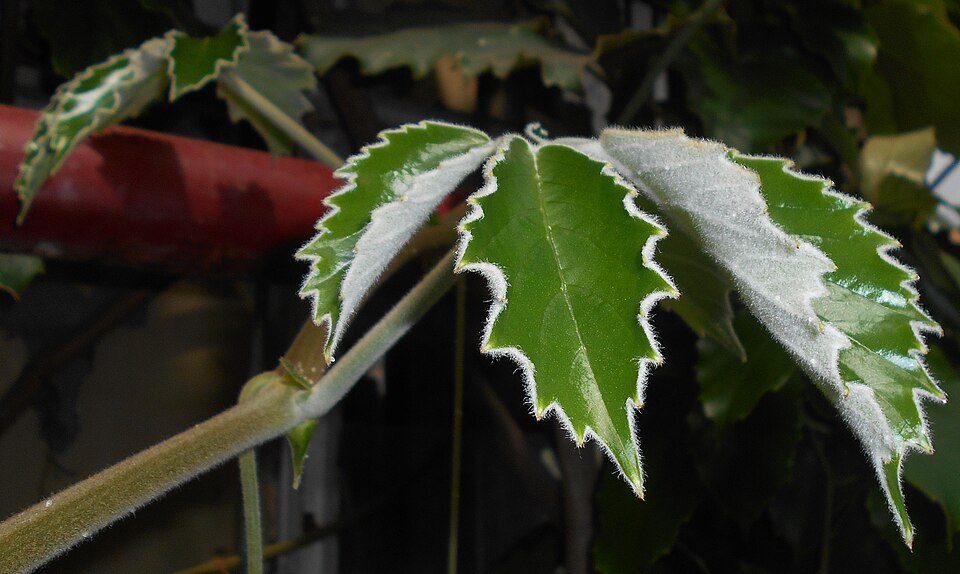
Tetrastigma voinierianum, commonly known as Chestnut Vine or Lizard Plant, is a robust, evergreen woody liana belonging to the Vitaceae family, which notably includes cultivated grapes. Native to the tropical and subtropical rainforests of Laos and Vietnam, this vigorous climber was botanically described by Jean Baptiste Louis Pierre in 1904. In its natural habitat, it demonstrates an impressive ability to ascend and sprawl over large trees and rock formations, forming dense canopies.
The plant is characterized by its dramatic, palmately compound leaves, typically comprising three to five deeply lobed leaflets, each often reaching lengths of up to 30 cm. These leaflets exhibit prominent venation and serrated margins, with the undersides frequently covered in fine, reddish-brown hairs, contributing to its distinctive appearance. While it produces small, inconspicuous greenish-yellow flowers arranged in cymes in its native environment, followed by grape-like fruits, these reproductive structures are seldom observed in cultivated settings.
As an ornamental, Tetrastigma voinierianum is highly valued for its rapid growth and striking foliage, making it a popular choice for large indoor spaces, conservatories, and 'living wall' installations where its robust nature and relatively low maintenance are appreciated. Its ecological role includes providing habitat and food sources for various forest organisms, while its botanical classification within Vitaceae suggests potential shared phytochemical profiles with other members of the family.
Trusted Scientific References
1. Authoritative external sources for Tetrastigma voinierianum
1.1 Wikipedia — Tetrastigma voinierianum
1.2 Kew POWO (Plants of the World Online)
1.3 PubMed — peer-reviewed research
1.4 NCBI Taxonomy Browser
1.5 GBIF — Global Biodiversity
1.6Tetrastigma Voinierianum should be interpreted through verified botanical identity, practical care, and responsible safety language. This recovery note adds the missing context needed for a complete profile: match light to the plant's habit, use well-drained soil, water according to season, and avoid unsupported medicinal or edible claims. For publishing, the plant can be presented as a source-backed indoor plant with clear care guidance, common problem diagnosis, and conservative safety wording.
1.1.Tetrastigma Voinierianum — Notable Characteristics
- ✓Common Names — Chestnut Vine, Lizard Plant, Tetrastigma voinierianum.
- ✓Botanical Family — Vitaceae (Grape Family).
- ✓Native Range — Laos, Vietnam.
- ✓Growth Habit — Robust, woody, evergreen liana.
- ✓Leaf Morphology — Large, palmately compound, 3-5 deeply lobed leaflets, serrated margins.
- ✓Medicinal Uses — Traditional anti-inflammatory, analgesic, and hepatoprotective properties.
- ✓Phytochemicals — Rich in flavonoids, terpenoids, tannins, and phenolic acids.
- ✓Ornamental Value — Highly prized for dramatic foliage and rapid growth in large indoor spaces.
- ✓Environmental Role — Provides habitat and forms dense canopies in tropical forests.
- ✓Distinctive Feature — Reddish-brown hairs on leaf undersides and prominent venation.
1.2.Tetrastigma Voinierianum — At-a-Glance Summary
- ✓Tetrastigma voinierianum is a vigorous woody vine from Southeast Asia, known for its large, dramatic foliage.
- ✓Traditionally used in folk medicine for anti-inflammatory, analgesic, and other therapeutic purposes.
- ✓Rich in phytochemicals like flavonoids, terpenoids, and tannins with significant bioactivities.
- ✓Primarily valued as an ornamental plant for its rapid growth and striking appearance in large spaces.
- ✓Requires warm, humid conditions and support for optimal growth.
- ✓Potential applications in pain relief, inflammation reduction, and antioxidant support.
2.Tetrastigma Voinierianum — Scientific Identity
3.Tetrastigma Voinierianum — Fact Sheet
4.Tetrastigma Voinierianum — Botanical Description
5.Tetrastigma Voinierianum — Origin & Spread
6.Tetrastigma Voinierianum — Traditional Uses
7.Tetrastigma Voinierianum — Key Phytochemicals
- ✓Flavonoids — A major and characteristic class of compounds in Tetrastigma, including quercetin, kaempferol, and their glycosides, known for their potent antioxidant, anti-inflammatory, and hepatoprotective activities.
- ✓Terpenoids — Diverse group of organic compounds, such as triterpenes and diterpenes, contributing to anti-inflammatory and potentially antitumor effects.
- ✓Steroids — Including phytosterols, which can have various biological activities, such as anti-inflammatory and cholesterol-lowering properties.
- ✓Phenylpropanoids — A group of plant metabolites involved in plant defense and exhibiting antioxidant and antimicrobial properties.
- ✓Alkaloids — Nitrogen-containing organic compounds that can have significant pharmacological effects, though typically present in smaller quantities in this genus.
- ✓Tannins — Astringent compounds with antioxidant and antimicrobial properties, contributing to its traditional uses for wound healing and inflammation.
- ✓Saponins — Glycosides with detergent-like properties, potentially contributing to anti-inflammatory and immune-modulating effects.
- ✓Phenolic Acids — Such as caffeic acid and ferulic acid, known for their antioxidant and anti-inflammatory benefits.
- ✓Resveratrol Derivatives — Compounds structurally related to resveratrol, a potent antioxidant found in grapes, implying similar health benefits.
- ✓Polysaccharides — Complex carbohydrates that can possess immune-modulating and anti-inflammatory properties, supporting cellular health.
8.Tetrastigma Voinierianum — Pharmacological Findings
- ✓Anti-inflammatory — Contains compounds like flavonoids and triterpenes that help reduce swelling and pain associated with inflammatory conditions.
- ✓Analgesic — Traditionally used to alleviate pain, particularly muscular and rheumatic pain, likely due to its anti-inflammatory properties.
- ✓Antioxidant — Rich in flavonoids, which scavenge free radicals and protect cells from oxidative stress, contributing to overall cellular health.
- ✓Antitumor Activity — Preliminary studies on the genus Tetrastigma indicate potential inhibitory effects on cancer cell proliferation, though specific research on T. voinierianum is limited.
- ✓Hepatoprotective — Some species within the genus have shown protective effects on liver cells, suggesting potential for liver health support.
- ✓Antiviral — Certain extracts from Tetrastigma species have demonstrated antiviral properties, which could be beneficial in combating various viral infections.
- ✓Menstrual Disorder Relief — Folk medicine in Southeast Asia uses Tetrastigma species to address menstrual irregularities and discomfort.
- ✓Rheumatic Pain Management — Used traditionally to mitigate the discomfort and inflammation associated with rheumatic conditions.
- ✓Bruise Healing — Applied topically in some traditional practices to aid in the healing of bruises and contusions.
- ✓Gastralgia Relief — Historically employed to soothe stomach pain and discomfort, indicating potential gastroprotective effects.
8.1.Tetrastigma Voinierianum — Indications & Uses
9.Tetrastigma Voinierianum — Safety & Side Effects
9.1.Tetrastigma Voinierianum — Warnings
- ✓Allergic Reactions — Skin irritation or respiratory issues in sensitive individuals.
- ✓Gastrointestinal Upset — Nausea, stomach discomfort, or diarrhea, especially with high doses.
- ✓Drug Interactions — Potential interference with blood thinners or other medications due to phytochemical content.
- ✓Hypotension — Possible blood pressure lowering effects, especially when combined with antihypertensive drugs.
- ✓Pregnancy/Lactation Risks — Lack of safety data; generally advised against use.
- ✓Photosensitivity — Rare, but some plant compounds can increase sun sensitivity.
- ✓Liver Toxicity — Extremely high or prolonged doses could potentially stress the liver, though not widely reported for T. voinierianum specifically.
9.2.Tetrastigma Voinierianum — Toxicity Assessment
- ✓Consult a Healthcare Professional — Always consult a doctor or qualified herbalist before using T. voinierianum, especially if pregnant, nursing, or on medication.
- ✓Patch Test for Topical Use — Perform a patch test on a small skin area to check for allergic reactions before widespread topical application.
- ✓Adhere to Recommended Dosages — Do not exceed suggested dosages to minimize the risk of adverse effects.
- ✓Avoid During Pregnancy and Lactation — Insufficient safety data warrants avoidance by pregnant or breastfeeding individuals.
- ✓Monitor for Drug Interactions — Be cautious if taking medications, particularly anticoagulants, antidiabetics, or hypotensive drugs.
- ✓Not for Young Children — Safety for pediatric use has not been established.
- ✓Source from Reputable Suppliers — Ensure plant material is correctly identified and free from contaminants.
10.Tetrastigma Voinierianum — Preparation Methods
- ✓Decoction (Traditional) — Roots or stems are boiled in water to extract medicinal compounds for internal use, often for pain or inflammation.
- ✓Poultice (Traditional) — Crushed leaves or stems are applied topically to bruises, sprains, or inflammatory areas.
- ✓Tincture — Plant material steeped in alcohol to create a concentrated liquid extract for internal or external application.
- ✓Herbal Tea — Dried leaves steeped in hot water, consumed for general wellness or specific mild ailments.
- ✓Topical Ointment/Cream — Extracts incorporated into balms or creams for localized pain relief or skin conditions.
- ✓Infusion (Traditional) — Less vigorous boiling, typically with leaves, for gentler medicinal preparations.
- ✓Capsule/Tablet (Modern) — Standardized extracts processed into convenient dosage forms for systemic effects.
- ✓Vapor Inhalation (Rare) — Certain aromatic compounds might be inhaled for respiratory benefits, though not common for this species.
11.Tetrastigma Voinierianum — Cultivation & Care
- ✓Climate — Thrives in tropical to subtropical climates, requiring warm temperatures and high humidity.
- ✓Light — Prefers bright, indirect light; direct intense sun can scorch leaves.
- ✓Soil — Requires well-draining, fertile soil rich in organic matter.
- ✓Watering — Keep soil consistently moist but not waterlogged; reduce watering in cooler months.
- ✓Support — As a vigorous vine, it needs a strong support structure like a trellis, moss pole, or nearby trees.
- ✓Pruning — Regular pruning is necessary to manage its rapid growth and maintain desired shape.
- ✓Propagation — Easily propagated from stem cuttings in water or moist soil with rooting hormone.
- ✓Fertilization — Feed with a balanced liquid fertilizer every 2-4 weeks during the growing season.
Reviewed by the Flora Medical Global Botanical Review Panel
Multi-disciplinary editorial group · Botany · Ethnobotany · Herbal-medicine literature
Who reviewed this: This page was checked by the Flora Medical Global Botanical Review Panel — an in-house editorial group of botany graduates, ethnobotany researchers, and horticulture practitioners who collectively maintain our 7,000+ plant encyclopedia. Meet the team.
Our 4-step verification process
1. Taxonomic verification
Scientific names and synonyms cross-checked against Kew POWO, World Flora Online, and The Plant List.
2. Phytochemical & medicinal cross-reference
Active compounds, traditional uses, and reported activities are cross-referenced with PubMed, USDA Dr. Duke's database, and peer-reviewed ethnobotanical literature.
3. Conservation & distribution check
Distribution, ecology, and conservation status confirmed against GBIF occurrence records and the IUCN Red List.
4. Editorial & safety review
Every entry passes an editorial pass for clarity, originality, and safety notices (toxicity, contraindications, dosage caveats) before publication.
Last reviewed:
Important medical disclaimer: This content is for educational and research purposes only. It is not medical advice and is not a substitute for consultation with a licensed healthcare provider. Do not use any herb to self-treat a medical condition without professional guidance.
Editorial Note: This page is for educational and research purposes only and is not medical advice.
Written by: Flora Medical Global Editorial Team
Reviewed by: Flora Medical Global Botanical Review Panel
Last Updated: June 15, 2026





Tetrastigma Voinierianum — Comments & Community Reviews
Rate this plant